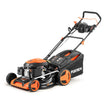
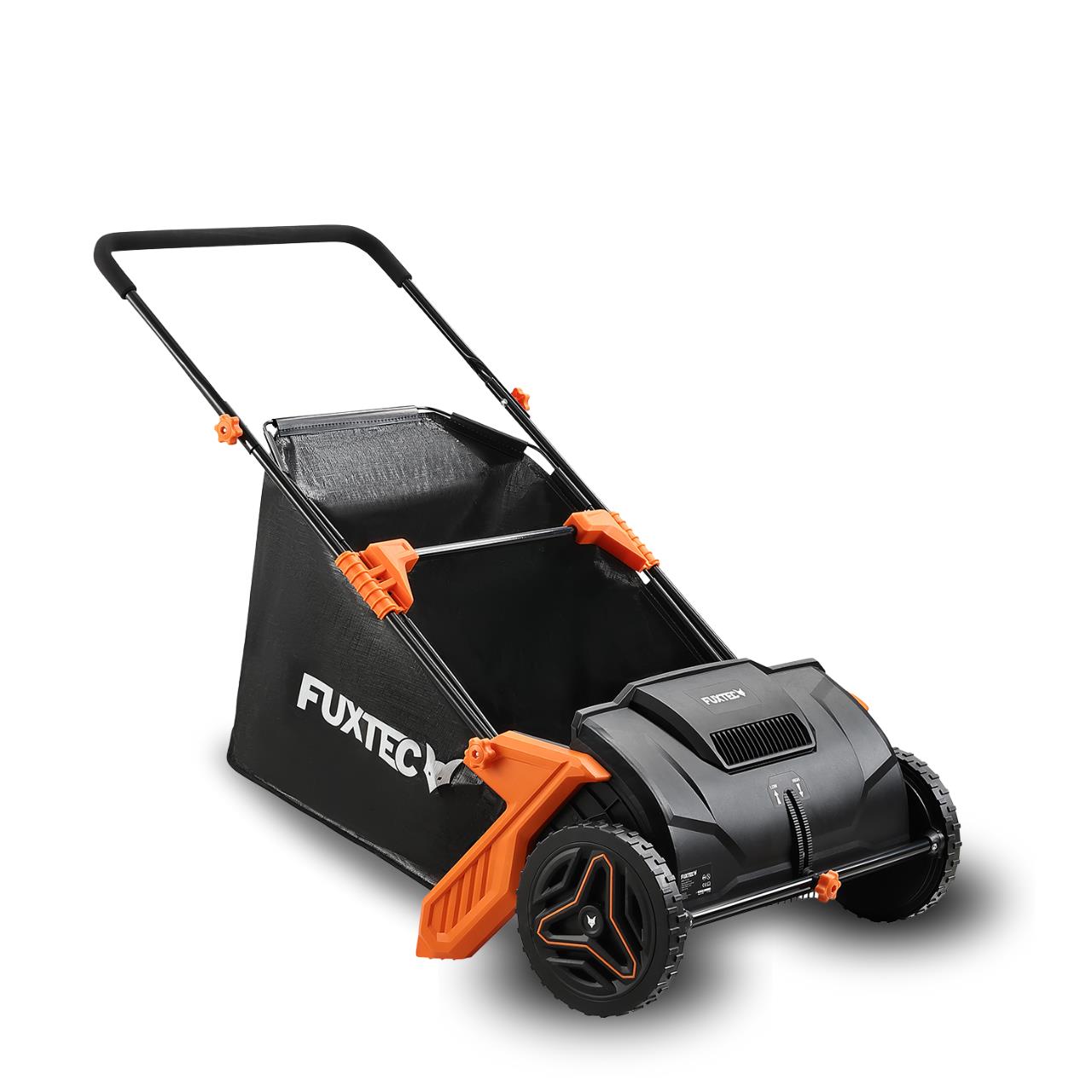
The apple tree is wearing its autumn colours, the borders are glowing one last time – and the lawn is already covered in another layer of fallen leaves. Lovely to look at, sure. Just not something you want lying around for weeks on end. A leaf sweeper helps you clear open garden areas regularly, without having to rake up every single leaf by hand.
The FX-LS52 works manually: you push, and the machine collects. That suits a garden session where you'd rather get straight on with it instead of charging batteries or unwinding cables first. What matters most for a good result is the condition of the ground, how damp the leaves are, and getting the settings right.
How does the leaf sweeper work?
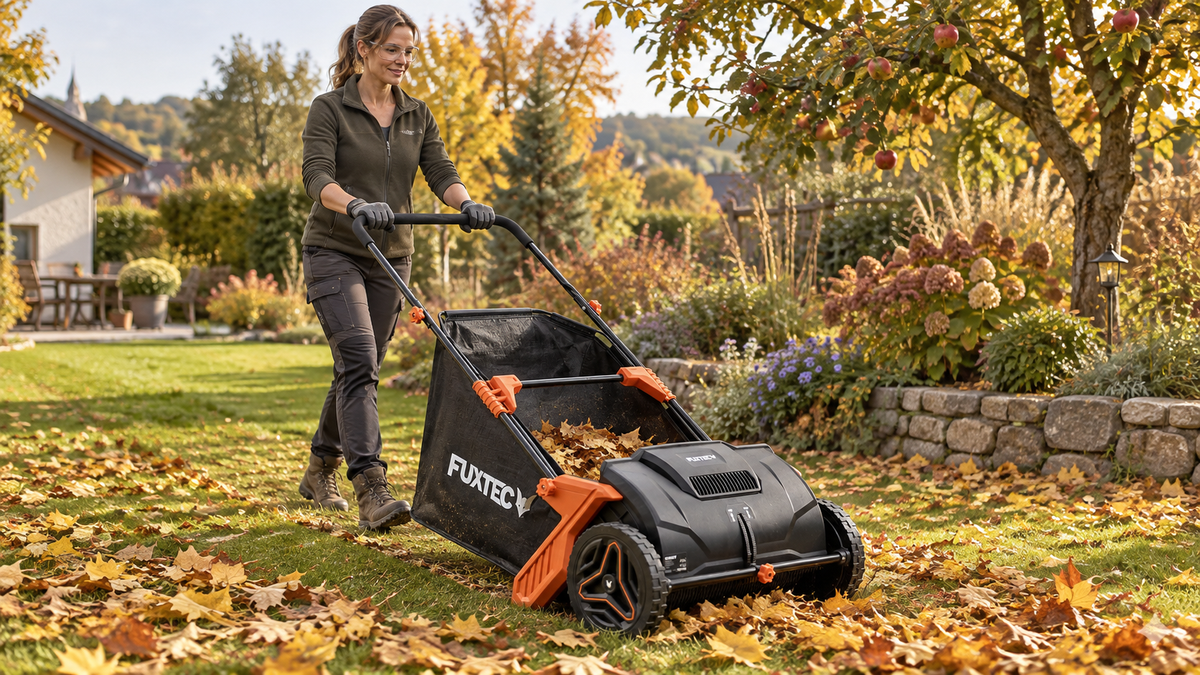
As you push it forward, the brushes are driven by the wheels. They rotate, lift loose plant debris and sweep it into the collection box at the back of the machine. The FUXTEC leaf and lawn sweeper combines two jobs in one: sweeping up and collecting.
You can picture the principle as a small lawn sweeper. A classic sweeper for paved areas, though, is built for a different job: it mainly deals with loose dirt on hard surfaces. The FX-LS52 is designed for light garden debris and can also be used on suitable paths.
Important for everyday garden use: this machine doesn't mow or shred. Whatever goes in at the front comes out largely uncut at the back. So you should empty a full collection bag in good time, rather than keep pressing more leaves in.
Working width, collection volume and weight: what the FX-LS52 offers
| Feature |
Manufacturer spec |
What this means for you |
| Sweeping path |
53 cm working width |
Comfortable for continuous passes between borders and hedges. |
| Height adjustment |
0–40 mm |
You can adjust how closely it contacts the ground. |
| Collection box |
around 100 litres |
Plenty of room for light, loose leaves. |
| Net weight |
6.5 kg |
The empty machine is relatively easy to manoeuvre around. |
The fabric collection unit is a collection bag; there's no rigid collection basket fitted here. The large volume also tells you little about how heavy a full load will be: damp plant material is noticeably heavier than dry. Better to do one extra emptying run than an unnecessary strain on your back.
Which surfaces work well for collecting leaves?
It works most comfortably on reasonably level, firm lawns with short grass. When the leaves are dry, the bristles can grip them more easily. Deep ruts, molehills or dense, long grass make collection harder.
If loose grass clippings are left on the surface after mowing, the sweeper can help there too. Mowing itself is still a job for your lawnmower. For advice on timing your last cut of the season, see our guide on the final mow before winter.
Wet leaves, on the other hand, often cling to the ground like a soggy blanket. Let them dry out where possible. A stuck-on layer can be carefully loosened beforehand; on waterlogged ground, it's better to postpone the job. Otherwise you risk compacting the soil while trying to tidy up.
Large areas can also be tackled in sections. Plan the route to your collection point too: long trips to empty the bag and lots of obstacles often cost more time in practice than working a slightly narrower path.
Collecting leaves without a rake: the FX-LS52 for your autumn tidy-up
On open lawns, the manual FUXTEC leaf sweeper picks up loose autumn leaves and light grass clippings as you push it, collecting the material directly in the large collection bag.
Manual leaf collection
Leaf sweeper FX-LS52
This lightweight push-along helper collects leaves, grass clippings and light garden debris as you push it – no battery, cable or motor needed.
- 53 cm working width
- Working height adjustable from 0 to 40 mm
- Collection bag with around 100 litres capacity
Autumn tip: Dry, loose leaves are much easier to collect than a wet layer of leaves. Set the working height carefully at first and, after a short test run, check that the brushes are picking up the material without putting unnecessary strain on the turf.
How to set up the sweeper and work efficiently
You can tell a good height setting by the result, not by how hard the machine scrapes along the ground. The bristle tips should reach the material without roughing up the turf.
- Check the area: Clear away toys, stones and thick branches beforehand. Check any hidden corners for wildlife.
- Do a short test run: Start with minimal ground contact and adjust the setting gradually.
- Push forward at an even pace: Walk at a steady speed and let each pass overlap slightly with the last.
- Check what's being collected: If a lot is left behind, check the setting, fill level and moisture.
- Empty in good time: Set the machine down safely and keep your fingers away from moving parts.
Push as ergonomically as possible: shoulders relaxed, back upright, and the handle close enough to your body. The sweeper cuts down on repetitive bending when picking up leaves. That said, your garden work will still involve some physical effort – especially on slopes and when carrying a full load. Wear sturdy shoes, long trousers, gloves and the eye protection specified in the manual; keep other people well away from the working area.
What's the alternative for border edges and tight corners?
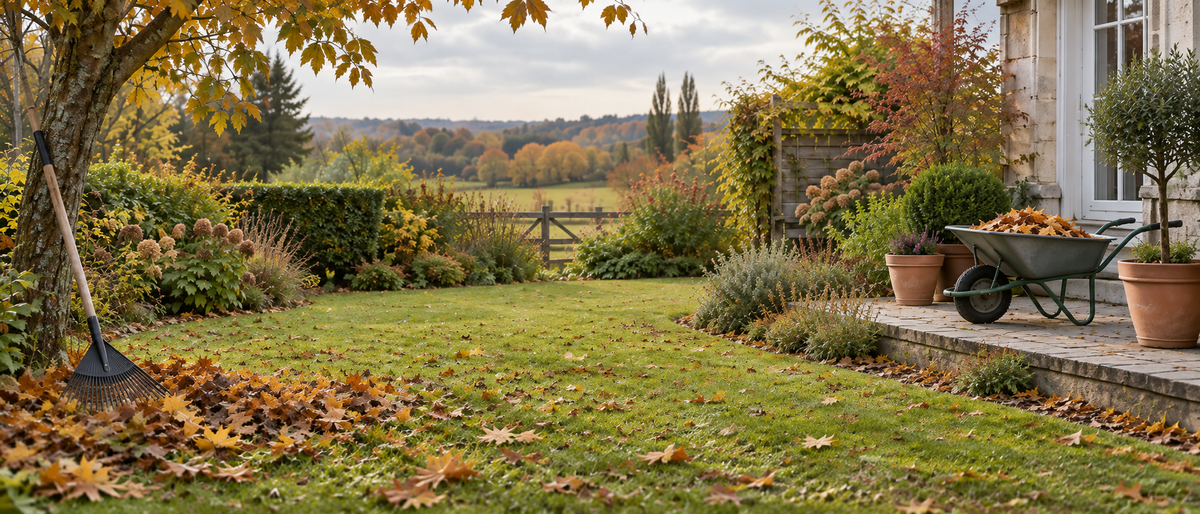
Between perennials, under garden furniture and around small shrubs, hand tools are still the practical choice. A leaf rake reaches narrow spots, and a leaf grabber makes it easy to pick up prepared piles. When using a rake on delicate turf, work carefully so the tines don't tear out grass.
A separate leaf bag works well as temporary storage while transporting material. So it's not a case of either/or: the push-along sweeper handles the open stretches, while you take care of the fiddly bits along the borders.
What should you do with the leaves you've collected?
On the lawn, regularly clearing leaves stops the grass being shaded for too long. Under suitable shrubs and trees, however, healthy autumn leaf litter can stay in a loose layer. Keep it away from delicate plants and well-used paths. Find out more about putting leaves to good use in our guide on when to remove leaves or leave them be.
For composting, mix the collected leaves with other suitable garden material so you don't end up with a dense, airless mat. Our guide to building a compost heap shows you how to create a well-aerated mix.
If you'd like to get the open lawn ready for winter afterwards, our guide to autumn lawn care will help with the right cut and feed. That way, your tidy-up round becomes a useful part of your seasonal garden care.
After the job: a quick clean, then store dry
Remove any plant debris, empty the collection bag completely and check the moving parts. Wipe down plastic surfaces gently if needed. Don't use a pressure washer, and follow the manual for care and lubrication.
Store the FX-LS52 clean and dry. Relieve the pressure on the bristles as instructed so they don't end up permanently bent out of shape. Then, next time the leaves start falling, your helper will already be ready to go – and you can get straight on with the garden round.