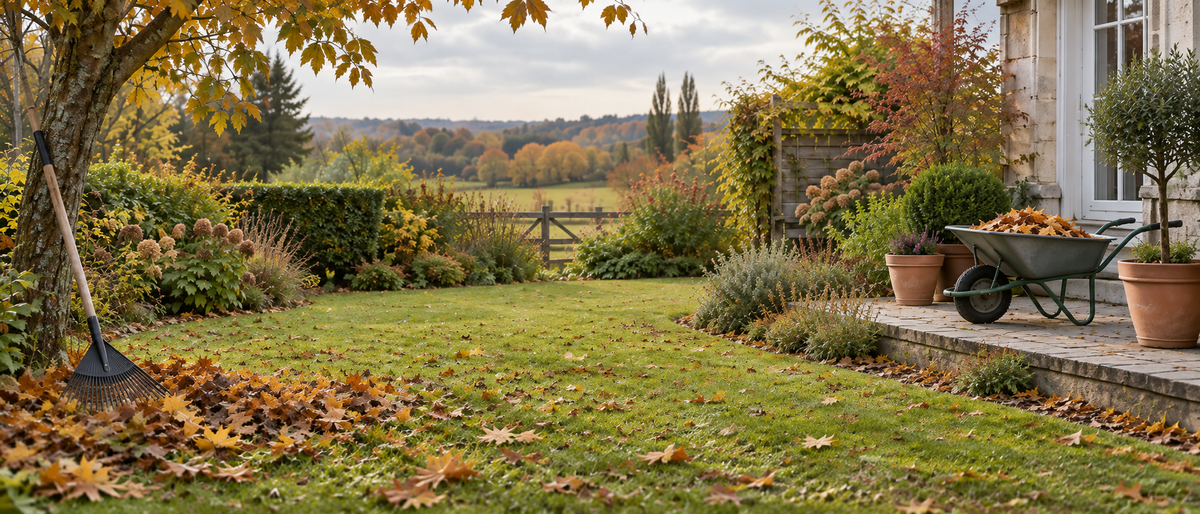
October is one of the most varied months in the gardening year. While the last vegetable crops are still being harvested, preparations for frost, wet weather and winter dormancy are already underway. This is the time to tidy up beds, plant bulbs, put in new trees and shrubs, and protect tender plants.
The lawn also deserves special attention in October. Fallen leaves, rising moisture and falling temperatures all change what it needs quite considerably. Making the most of the last mild weeks creates the right conditions for your garden and lawn to come through winter in good health and put on strong new growth in spring.
The most important garden jobs for October at a glance
Plant growth slows down noticeably in October, but it's certainly not time for winter dormancy just yet. As long as the ground isn't frozen and the weather cooperates, there's still plenty you can get done.
Three tasks take centre stage now: bringing in the last harvests, planting hardy plants for next season, and preparing more delicate parts of the garden for cold and damp.
Fallen leaves also play an increasingly important role. On borders they can act as a natural protective layer, whereas on lawns they should be removed regularly. That way, every part of the garden gets exactly the care it needs in autumn.
What can you still plant and sow in October?
October is by no means too late for planting. Quite the opposite, in fact: for many perennials, trees, shrubs and bulbs, this is a particularly good planting time.
The vegetable garden in October
Hardy crops can still play a role in the vegetable garden. Lamb's lettuce (corn salad) and spinach cope with cooler temperatures far better than most typical summer vegetables.
At the same time, many beds are being cleared after the last harvest. Rather than leaving them completely bare over winter, you can protect them with organic material or, depending on timing and crop, sow a suitable green manure.
This helps protect the soil surface and lays the groundwork for next season's garden while you're still in autumn.
Planting perennials and bulbs in October
In the ornamental garden, planting bulbs is one of the classic October gardening jobs. Tulips, daffodils, crocuses and snowdrops go into the ground now and bring the first splashes of colour next spring.
Many hardy perennials can also be planted in autumn. The soil often still holds some residual warmth, while the cooler, damper weather is generally kinder to newly planted specimens than summer heat.
Dahlias and gladioli, on the other hand, need different treatment. Once the foliage has died back and frost threatens, the frost-tender tubers should be lifted and stored somewhere dry and frost-free.
Planting trees, shrubs and roses
Autumn is also a good planting window for many trees and shrubs. Fruit trees, ornamental shrubs and hedging plants can all be put in as long as the soil is workable and not frozen.
The same applies to many roses. After planting, water the soil in well and, later on, make sure to protect the graft union from harder frosts.
The vegetable garden in October: harvesting and preparing beds
The harvest season is far from over in October. Pumpkins and squash, cabbages, leeks, beetroot and late potatoes are among the typical crops coming out of the ground now.
Many apple and pear varieties are also reaching ripeness now. Windfall fruit should be collected up regularly. Damaged fruit is often still fine for quick use, but shouldn't be left lying under the trees for long.
It's also worth taking one last walk around the herb garden. Tender herbs can be harvested a final time before harder frosts arrive, and then dried or frozen, for example.
Once the vegetable beds are empty, preparations for next spring can already begin. Remove crop debris, compost any healthy organic garden waste, and spread mature compost over the surface where it suits the bed and the crop planned for it.
Lawn care in October: mowing, scarifying and preparing for winter
In October, the lawn is going through a transitional phase. It grows more slowly than in summer but, depending on the weather, isn't yet fully dormant. It's well worth taking a close look at the lawn now.
The focus is on the last cut of the season, regularly clearing fallen leaves, and care that suits the time of year. Scarifying or aerating may still be worthwhile too, but only if the condition of the lawn and the weather are suitable.
The last lawn cut of the season in October
As long as the grass is visibly still growing, you can keep mowing in October. When the last cut should happen depends less on a fixed date and more on temperature and growth.
Going into winter, the lawn shouldn't be left extremely short or unusually long for the final cut. A moderate cutting height of around four to six centimetres is a sensible range for most lawns.
Mow on a dry day if you can, and avoid putting unnecessary strain on soft, waterlogged ground with heavy equipment.
Scarifying and aerating the lawn in October
If a noticeable layer of thatch, moss or dead plant material has built up over summer, opening up the turf can be worthwhile.
Scarifying removes dead plant matter from the turf, allowing air, water and nutrients to reach the soil surface more easily again.
In October, though, this job shouldn't be scheduled purely by the calendar. The grass should still be visibly growing, the ground should be firm underfoot and ideally not waterlogged, and there needs to be enough time left afterwards for the lawn to recover.
If the weather has already turned consistently cold and wet, or frost is imminent, it's better to leave scarifying until spring.
FUXTEC helpers for scarifying and aerating
Whether you need a compact cordless scarifier for smaller areas or a powerful petrol machine for larger lawns, the right tool lets you remove thatch effectively and aerate the turf.
Cordless scarifying and aerating
40V Cordless Scarifier SET FX-E2VE38SET
This cordless scarifier is ideal for small and medium-sized lawns, and its interchangeable rollers let it both scarify and aerate.
- 38 cm working width
- 2-in-1 function for scarifying and aerating
- Working depth adjustable in five stages from +6 to -12 mm
For larger lawns
Petrol Scarifier FX-BV240
For larger or heavily used lawns, this petrol scarifier combines scarifying, aerating and collecting in a single machine.
- 40 cm working width
- 3-in-1 function: scarifying, aerating and collecting
- Six adjustable working depths from -15 to +5 mm
FUXTEC tip: Only scarify the lawn in October if there's an actual thatch problem, the grass is still actively growing, and there's enough time left for it to recover afterwards. In cold or very wet weather, spring is the better option.
Lawn care in October: feeding, strengthening and planning for bare patches
Alongside mowing and scarifying, feeding is also part of autumn lawn care. In October, the goal isn't rapid growth any more; it's about preparing the turf as well as possible for the cold months ahead.
A dedicated autumn lawn feed is formulated for this stage, with potassium playing a particularly important role. Apply it evenly and always within the application window stated on the product packaging.
After a dry or heavily used summer, bare or thin patches often appear too. Overseeding can be worthwhile in these spots, but in October you need to pay close attention to the recommended sowing window. If the sowing window for your seed mix has already passed, it's best to wait until the next suitable time.
FUXTEC lawn care sets
For seasonal lawn care, FUXTEC sets combine autumn lawn feed with matching grass seed. In October the focus is mainly on autumn feeding, while sowing should always take place within the stated sowing window.
Lawn care as a complete set
Lawn Starter Set 250 m²
This set combines autumn lawn feed with hard-wearing play and sports lawn seed for different stages of seasonal lawn care.
- Autumn lawn feed for seasonal lawn care
- Includes hard-wearing play and sports lawn seed
- For feeding and sowing within the appropriate application window
For care and lawn repair
Lawn Care Bundle with Grass Seed and Feed
This bundle combines grass seed for overseeding and repairs with autumn lawn feed, making it suitable for seasonal care as well as fixing bare patches later on.
- Grass seed for overseeding and repairs
- 10 kg of autumn lawn feed
- Combines nutrient feeding with lawn repair
FUXTEC tip: A suitable autumn lawn feed can still be part of your lawn care routine in October. With grass seed, however, always check the stated sowing window. If it's already passed, wait until the next suitable time to oversee.
Fallen leaves in the garden: removing, using and spreading them correctly
Fallen leaves are one of the most visible garden jobs in October, but they certainly don't need to disappear from everywhere.
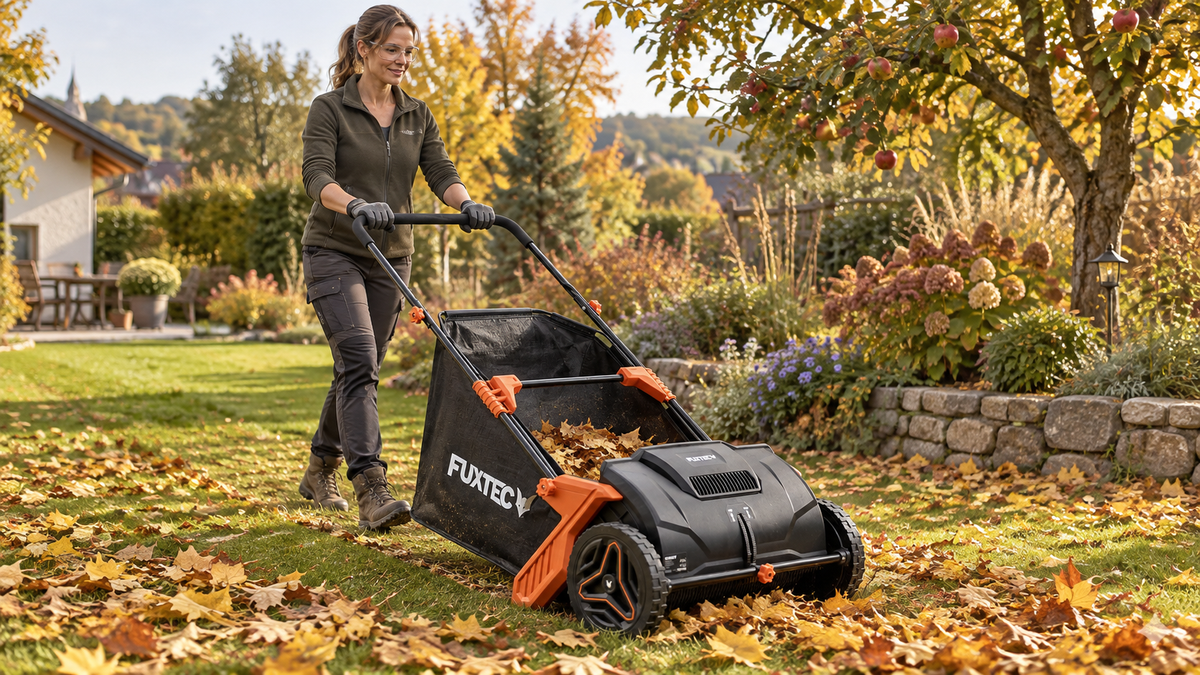
On the lawn, larger amounts should be removed regularly. A solid layer of leaves blocks light and air from the grass and traps moisture on the surface.
Wet leaves can also become a slip hazard on paths, patios and driveways. On larger areas especially, a leaf blower or leaf vacuum can make this ongoing autumn job much easier.
FUXTEC helpers for leaf clearance
When fresh leaves keep falling onto lawns, paths and patios every day in October, a combination machine makes collecting and clearing them much easier.
Clear leaves quickly
Petrol Leaf Vacuum and Leaf Blower FX-LBS126
The FX-LBS126 combines blowing, vacuuming and shredding, making light work of regular leaf clearance across different areas of the garden.
- Combined blow, vacuum and shredding function
- 26 cc petrol engine
- Maximum air speed of 71 metres per second
- 45-litre leaf collection bag
FUXTEC tip: Focus your leaf clearing on areas where leaves are smothering the lawn or making paths slippery. In suitable spots on borders or under trees and shrubs, you can happily leave some autumn leaves in place.
Using autumn leaves as natural winter protection
Leaves you clear don't automatically need to be thrown away. On borders and under trees and shrubs, a loose layer of leaves can protect tender roots from the cold while also feeding organic matter back into the soil.
A wilder corner of the garden with leaves, twigs and brushwood also offers valuable shelter for various garden wildlife.
That said, don't pile leaves up in thick, airless layers. Very wet, heavy leaves in particular can clump together and put unnecessary pressure on the plants underneath.
Pruning hedges, shrubs and trees in October
When it comes to pruning in October, less is usually more. Dead, damaged or diseased plant material can be removed, but any more extensive pruning should always be timed to suit the specific plant.
Please note: under the Wildlife and Countryside Act 1981, it's illegal to cut hedges and trees while birds are actively nesting, so check carefully before any major work, even outside the main nesting season of March to August. It's also worth checking hedges and dense shrubs for any signs that wildlife is sheltering there before cutting back.
The same goes for fruit trees: just because harvesting is finished doesn't mean it's the right time for heavy pruning. Depending on the type of tree, more substantial pruning is generally best left for a more suitable time of year.
Making roses, container plants and tender plants winter-ready
Once nights turn noticeably colder, it's time to start preparing frost-tender plants for winter.
Container plants such as oleander, citrus or hibiscus need suitable winter quarters depending on the species. This should be sorted out in good time, before an unexpected night frost causes damage.
Extra winter protection can also be worthwhile for plants that stay outdoors. Horticultural fleece, hessian or a protective mulch layer all help shield tender growth and root zones from big swings in temperature.
You can earth up around the base of roses to protect the vulnerable graft union in particular. Any diseased or infected foliage should be cleared away from the bed.
Preparing compost and soil in October
Autumn provides plenty of material for the compost heap. Crop debris, suitable grass clippings and some of the autumn leaves can all be turned into valuable organic matter.
A balanced mix is key. Large amounts of wet grass clippings or tightly packed leaves shouldn't be added as a single dense layer on the compost heap. Mix different materials together so enough air can get into the heap.
Mature compost can also be applied to beds that have already been cleared. Adjust the amount and timing to suit how the bed will be used next.
Wildlife in the garden: helping hedgehogs and other beneficial creatures
A completely tidy garden usually offers wildlife far less shelter over winter, so it's worth deliberately leaving some things in place during October.
A sheltered spot with leaves, dry twigs and brushwood can serve as a refuge, for example. Spent perennials don't all need cutting right back to ground level straight away either.
Wilder areas create the kind of structure that helps many insects and other small garden creatures get through the cold season.
Garden jobs for October: checklist for garden and lawn
- Harvest the last vegetables and any ripe fruit
- Collect windfall fruit regularly
- Plant tulips, daffodils, crocuses and other spring bulbs
- Plant hardy perennials and suitable trees and shrubs
- Lift and store frost-tender tubers in good time
- Get container plants ready for their winter quarters
- Keep mowing the lawn while it's still growing
- Remove fallen leaves from the lawn regularly
- Only scarify the lawn if the weather suits and there's genuine need
- Apply autumn lawn feed within the recommended application window
- Check the sowing window before overseeding grass
- Use leaves on borders as natural protection
- Add suitable autumn material to the compost heap
- Protect tender plants before the first hard frosts
- Leave wilder corners as shelter for wildlife
Frequently asked questions about garden jobs in October
What can you still plant in the garden in October?
In October you can plant many hardy perennials, bulbs and suitable trees and shrubs, as long as the ground isn't frozen. Some hardy vegetable crops are also worth sowing for autumn.
Can you still mow the lawn in October?
Yes. As long as the grass is still visibly growing, you can carry on mowing. The timing of the last cut depends more on the weather and temperature than on any fixed date.
Can you still scarify the lawn in October?
Yes, under the right conditions. The lawn should still be actively growing and have enough time to recover afterwards. If frost is on the way, the ground is very wet, or growth has already stopped, it's best to wait until spring.
Can you still sow grass seed in October?
It depends on the seed mix you're using. Soil temperature, weather and the sowing window given by the manufacturer are all key factors. If the recommended window has already passed, it's best to postpone overseeding until the next suitable opportunity.
Can you still feed the lawn in October?
A suitable autumn lawn feed can still be applied in October, provided conditions are right and you follow the manufacturer's instructions.
What should you do with fallen leaves in October?
Leaves should be removed regularly from the lawn. On borders or under trees and shrubs, however, a suitable amount can be left as natural winter protection. A quiet corner of the garden with leaves and twigs can also give wildlife somewhere to shelter.
What should you prune back in the garden in October?
Dead, damaged or diseased plant material can be removed. Any more extensive pruning should always be timed to suit the specific plant, and be mindful of nesting birds in hedges and trees.
When should you make the garden winter-ready?
Many preparations already start in October. Container plants, frost-tender tubers, beds and tender plants should all be sorted out at the latest by the time the first hard night frosts are approaching.
In conclusion: get your garden ready for winter with the right October jobs
In October, harvesting, ongoing care and winter preparation all overlap in the garden. While vegetables, fruit and herbs get one last harvest, planting season is already underway for many perennials, trees, shrubs and spring bulbs.
The lawn needs care suited to the season too. Clear leaves, keep mowing while growth continues, check whether scarifying is genuinely needed, and plan a suitable autumn feed — the key is always to match each job to the weather and condition of the lawn.
At the same time, it's worth not tidying the garden completely bare. Leaves on borders, sheltered corners and plant structures left standing can all serve valuable purposes through the colder months.
Making good use of those mild October days sets your garden up well for winter and gives it a strong start into next spring.