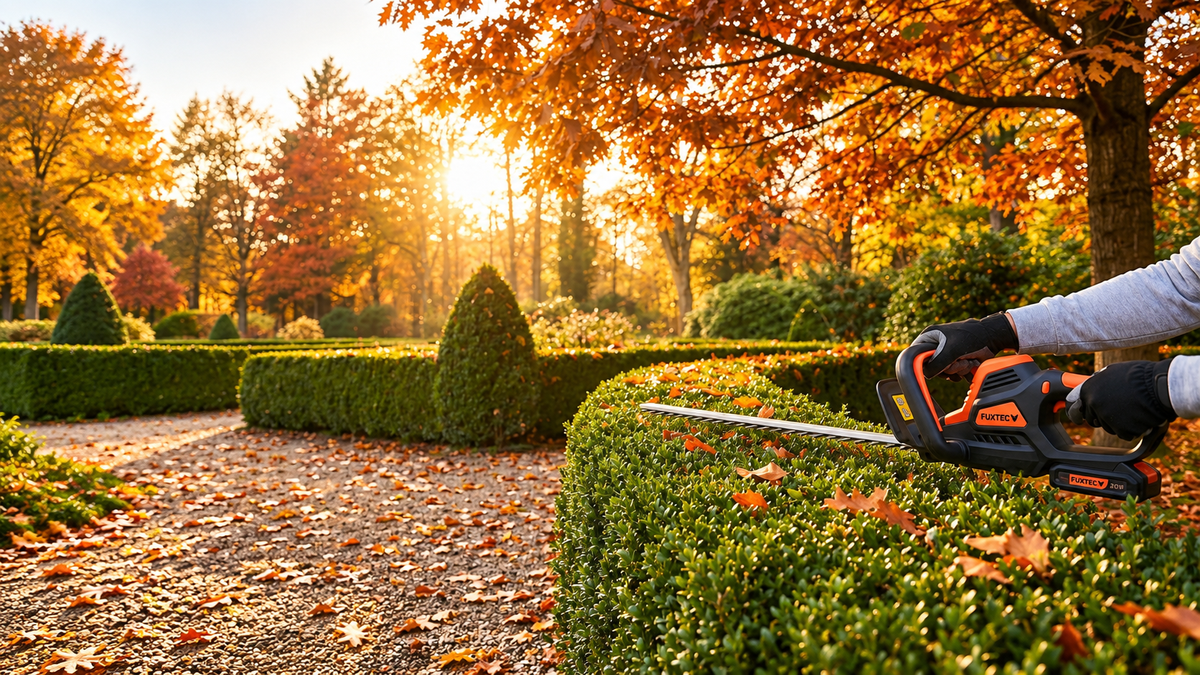
October is a good time to take a closer look at your hedge again. That's because, in the UK, cutting hedges is generally permitted throughout the year, provided you take care to avoid disturbing nesting birds. However, if you're planning to cut back, rejuvenate or reshape your hedge more heavily, you shouldn't just grab the hedge trimmer straight away: alongside legal considerations around wildlife, the type of hedge, the weather and the correct cutting technique all play an important role.
We'll show you what's allowed when trimming a hedge in October, what to watch out for, and how to cut your hedge correctly, step by step.
Can you cut a hedge in October?
Yes. Unlike some other countries, the UK does not have a single blanket law banning hedge cutting during the summer months. However, under the Wildlife and Countryside Act 1981, it is an offence to intentionally damage or destroy the nest of any wild bird while it is in use or being built, or to disturb nesting birds. In practice, this means the main bird nesting season, roughly March to August, is the period to be most cautious about heavy hedge cutting.
From September/October onwards, once the main nesting season has ended, heavier cutting work becomes much easier to carry out safely.
This doesn't mean you can cut without any care from October, though. Wild birds, their nests and other wildlife habitats remain protected all year round wherever they're actually in use. Before trimming, always check carefully whether your hedge contains active nests, animals or other inhabited structures.
Local council rules, conservation area restrictions or covenants may also impose additional requirements, so it's worth checking with your local authority if you're unsure.
What can you do from October onwards?
From October, you can generally work on your hedge more heavily than during the height of summer. This includes, for example:
- reducing the hedge significantly in height or width
- removing branches that have grown out excessively
- rejuvenating older hedges
- restoring the hedge's original shape
- cutting suitable hedges back hard, or coppicing them, where needed
Exactly how hard you should cut, however, depends on the specific plant species. Not every hedge tolerates a radical cutback.
What applies between March and August?
During the main bird nesting season, roughly 1 March to 31 August, it's best to avoid heavy cutting work and stick to gentle shaping and maintenance trims that mainly remove the current season's growth.
If you just want to tidy your hedge a little over summer, this is generally fine to do, provided you check first that no birds are nesting and you don't disturb them while working.
Trimming a hedge in October: how to do it properly
It's not just timing that determines the result. Cutting technique also affects whether the hedge goes on to grow back dense and even.
1. Check the hedge before cutting
Before you pick up the hedge trimmer, check the whole hedge thoroughly for nests, animals and possible cavities.
Also take a look at the condition of the plant: are there any dead, diseased or damaged branches? Has the hedge simply grown a bit out of shape, or does it need to be reduced significantly?
This will help you decide how hard the cutback actually needs to be.
2. Choose the right day
Cut the hedge on a dry, frost-free day wherever possible.
In frosty conditions, branches can snap more easily and fresh cuts are more prone to damage. Strong, direct sunshine isn't ideal for extensive cutting work either.
A mild, dry and preferably overcast autumn day offers good conditions.
3. Use the right hedge trimmer
For a clean cut, your tool should match the thickness of the branches and the size of the hedge.
A cordless hedge trimmer is particularly suitable for longer hedges, regular trims and jobs where you want to move around the garden freely. For large, dense hedges and more extensive work, a powerful petrol hedge trimmer can be a better choice.
However, you shouldn't force very thick or heavily woody individual branches through with the hedge trimmer. A pair of loppers or a suitable saw is the better choice here.
The right hedge trimmer for your autumn cutback
Whether it's a regular trim or a larger area of hedge: cutting length, cutting capacity and how freely you want to move around are what matter most. These two FUXTEC models suit different requirements when it comes to hedge trimming.
For large, tough hedges
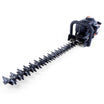
FUXTEC Pro Petrol Hedge Trimmer FX-MHP126
With its long 80 cm blade, the FX-MHP126 is particularly well suited to larger hedge areas and more extensive cutting work. The adjustable handle makes both horizontal and vertical cuts easier.
- 80 cm cutting length
- maximum cutting capacity of 28 mm
- 25.4 cc 2-stroke petrol engine
- rotating handle for different working positions
- anti-vibration feature for more comfortable working
Cordless and flexible
FUXTEC 40V Cordless Hedge Trimmer FX-E2HSSET
This cordless hedge trimmer is ideal for regular maintenance and trimming of hedges and shrubs. Working without a cable lets you move freely along the hedge, while the rotating handle makes both vertical and horizontal cuts easier.
- 40V battery system
- 61 cm cutting length
- maximum cutting capacity of 26 mm
- only 3.1 kg net weight
- rotating rear handle
- set includes batteries and charger
Tip for heavier cutbacks: Before cutting, check the thickness of individual branches. A hedge trimmer is designed for surface-level cutting work. Very thick, old or heavily woody branches should be removed specifically with loppers or a suitable saw, rather than forcing them through the trimmer's cutting blade.
What shape should a hedge be?
For many classic garden hedges, a slight trapezoid shape is recommended: a little wider at the bottom, narrower towards the top.
This allows enough light to reach the lower parts of the hedge too. If the hedge instead becomes wider at the top than at the bottom, the lower branches can become increasingly shaded and eventually die back and go bare.
How to cut the sides
Start with the sides of the hedge.
Guide the hedge trimmer with even movements, working from bottom to top. It's better to work in several light passes rather than removing a large amount of material all at once.
Step back a few paces from time to time and check the shape. This makes it much easier to spot any unevenness.
How to cut the top straight
Once the sides are done, trim the top.
For longer hedges, a taut string stretched along the desired height is a useful guide. It shows the height you're aiming for and stops the top edge from ending up uneven or wavy.
Guide the hedge trimmer as evenly and steadily as possible across the top.
How hard can you cut back a hedge?
Here, it's less about the time of year and more about the type of hedge that matters most.
For a typical autumn trim, start by removing protruding shoots and restoring the desired basic shape. A very hard rejuvenation cut only makes sense if the particular plant can actually tolerate it.
Privet and hornbeam
Privet and hornbeam are considered relatively tolerant of hard pruning. Even older plants can be cut back more severely if needed.
If a badly neglected hedge needs to be completely rejuvenated, a hard cutback can make sense. However, this kind of work should be planned carefully and tailored to the specific plant.
Thuja (arborvitae) and Leyland cypress/false cypress
With thuja and many other conifers, considerably more caution is needed.
Where possible, avoid cutting back deep into old, bare wood. Areas with no green growth often fail to produce new shoots at all — bare or brown patches can remain visible permanently.
When cutting, always take your lead from the green parts of the plant.
Yew
Yew tolerates pruning far better than most other conifers and can usually resprout from older wood too.
This makes it much better suited to harder corrective cuts and rejuvenation pruning.
Cherry laurel
Cherry laurel generally tolerates heavier cutbacks as well.
For smaller hedges or individual corrections, it can be worth using hand shears or loppers instead. This lets you remove individual stems in a targeted way, without slicing through unnecessary numbers of the large leaves.
Cutting back an old hedge hard — is October the right time?
In terms of wildlife protection, hard cutbacks are generally fine to carry out from October, once the main bird nesting season is over. From a horticultural point of view, though, that doesn't automatically mean October is the ideal time for every plant species to undergo a radical rejuvenation cut.
If your hedge has already become badly overgrown or too tall, you'll find a detailed step-by-step guide in our article on cutting back an overgrown, tall hedge.
For an old, heavily bare hedge, it's worth first identifying exactly which hedging plant you have and how well it tolerates cutting back into old wood.
Sometimes it makes more sense to simply correct the shape in October and save a very hard rejuvenation cut for later in the dormant season, towards the end of winter.
The most common hedge-cutting mistakes
Cutting too deep into old wood: Thuja and false cypress, in particular, can end up with permanently bare patches as a result.
Cutting the hedge wider at the top than at the bottom: This means the lower parts get less light and can become bare over time.
Cutting during frost: Frozen branches can snap more easily, and the cut ends come under greater stress.
Using a blunt hedge trimmer: Instead of clean cuts, you end up with crushed and ragged cut edges.
Removing too much at once: If the hedge has simply grown a little out of shape, a moderate trim is often all that's needed.
Overlooking wildlife: Even in October, always check the hedge carefully before starting work.
After cutting the hedge: what to do next
After trimming, remove as much of the cuttings as possible from within the hedge and from the ground beneath it.
Then check the shape once more and, if needed, remove any damaged or unevenly cut stems with loppers or garden shears.
Heavy feeding usually isn't necessary in October. The plant is now preparing for its dormant period and shouldn't be encouraged into too much fresh new growth.
FAQ: trimming hedges in October
Can you still cut a hedge in October?
Yes. By October, the main bird nesting season has generally ended, so heavier hedge trims are typically safe to carry out. You should still take care to protect any wildlife that may be present.
Can I cut my hedge back hard in October?
Generally, yes. Whether a hard cutback is actually good for the plant depends on the specific type of hedge, though. Thuja, for example, shouldn't be cut back deep into old, bare wood, while other shrubs tolerate hard pruning much better.
How do you trim a hedge correctly?
Start with the sides and work with even movements from bottom to top. The hedge should stay slightly wider at the bottom than at the top. Then trim the top down to the desired height.
Which hedge trimmer is best for cutting back a hedge?
A cordless hedge trimmer is well suited to regular trims and flexible use. For large, dense hedges, a petrol hedge trimmer can be a good alternative. Very thick, heavily woody individual branches are best removed with loppers or a saw instead.
Can you cut a hedge right back in October?
By October, the main bird nesting season has usually ended, so heavier cutting work is generally possible. That said, a radical cutback should still only be carried out on plants that can actually tolerate this kind of pruning.
When shouldn't you cut hedges back hard?
During the main bird nesting season, roughly March to August, it's best to avoid heavy cutting, coppicing or removal of hedges, living fences, shrubs and other woody plants. Gentle shaping and maintenance trims remain fine throughout this period.
Conclusion: make the most of October for hedge trimming
From October, the time of year begins when heavier hedge cutbacks are generally possible again. That doesn't mean every hedge should be cut back as hard as possible, though.
What matters most is the type of hedge, its condition and the result you're after. Start by checking the hedge for wildlife, choose a dry, frost-free day, and work with sharp, suitable tools. If you cut the sides from bottom to top and keep the hedge slightly wider at the bottom than at the top, it will develop an even shape, and the lower parts will get enough light too.
With the right hedge trimmer and the correct technique, trimming your hedge in October can be done efficiently — helping your hedge come through the cold season healthy, dense and well cared for.