Sanding Your Lawn: Best Time & How-To Guide (UK)

A lush green lawn doesn't start with the mower or the fertiliser, but a few centimetres further down. Even the most beautiful grass eventually runs out of steam if the soil beneath it keeps getting more compacted. Water struggles to drain away, oxygen barely reaches the roots, and after a heavy downpour certain patches stay waterlogged for ages.

This is exactly where top dressing your lawn with sand can make a real difference. Sanding improves heavy, compacted soils in particular, because coarser mineral particles create extra pore space in the top layer of soil. Water can drain away more easily and air reaches the roots more readily.

Right now, in early autumn, is a great time to take a closer look at your lawn. It's just been through dry summer weeks, garden parties, kids playing, garden furniture and plenty of use. At the same time, the intense summer heat is easing off while the soil and grass are still warm enough to recover. For many lawns, early autumn is – alongside spring – an excellent window to tackle compacted patches and prepare the lawn for the wetter months ahead.

Why sand your lawn? The benefits of sanding and how it improves lawn care

In loose garden soil, there are numerous pores between the mineral particles. Water and oxygen travel through these to reach the roots. But as the ground becomes increasingly compacted, this pore space shrinks.

Sanding improves soil structure by introducing coarser mineral particles into the top layer of soil. Sand is especially helpful where heavy soil stays damp for a long time after rain or feels sticky and compressed underfoot almost immediately.

Sand doesn't loosen the soil overnight. Rainfall, watering and soil organisms gradually work the grains down into the soil over time. Improving soil structure is therefore a long-term process. Regular sanding can build up this effect over several years.

This is particularly useful for clay-heavy soils. Clay soils contain a high proportion of very fine particles and hold on to water for a long time as a result. A lawn that's seen heavy use from play, garden furniture or frequent foot traffic can also benefit.

Where water drains away more quickly and the surface is better aerated, the risk of waterlogging also drops. This benefits the grass, while conditions become less favourable for moss.

Sanding loosens mainly the top zone of the soil. Combined with the right care, this can make your lawn more resilient to heavy use and wet spells.

When's the right time to sand your lawn? Spring after scarifying or September – which is best?

The classic time to sand a lawn is in spring, once the grass is growing strongly again. Spring, straight after scarifying, works particularly well because the surface has already been opened up, allowing the material to work its way between the grass more easily.

That doesn't mean you have to wait until next spring, though. Early autumn offers a second useful window. September in particular is a good time, because the intense summer heat has passed while the grass is still growing and able to recover from the treatment.

So the question "when's the best time?" isn't purely down to the calendar. What matters more is the condition of your lawn. The soil should be slightly moist but firm enough to walk on. Avoid working on ground that's either completely dried out or waterlogged.

If you're planning to sand your lawn, pick a dry day with mild temperatures. After treatment, a few days of typical autumn weather are ideal, allowing watering or rainfall to gradually work the grains into the surface.

Sanding your lawn in September has another advantage too: you're improving drainage just before the season when rainfall picks up again and heavy garden soil tends to stay wet for longer.

Which sand should you use? Lawn sand, sharp sand and the right grain size

Not every sand from the local builders' merchant belongs on your lawn. For soil improvement, you should use washed material that's as free as possible from clay and silt particles.

Sharp sand (also known as horticultural or quartz sand) has proven its worth. For a typical garden, a grain size of around 0.3 to 2 millimetres is suitable. The grains are small enough to work between the blades of grass and into opened-up soil pores, yet large enough to genuinely improve the structure once there.

Very fine sand can clump together or seal the surface if its composition and moisture content aren't quite right. You should therefore only use play sand if it's washed and its composition is suitable for this purpose.

Dedicated lawn sand makes the choice easier, as its purity and grain size are already designed for use on lawns. Washed sharp sand from a builders' merchant can also be suitable, provided its specification matches.

For heavy soils, using a suitable material matters more than what's written on the bag. Grain size, purity and even distribution are what count.

Getting the amount right when sanding your lawn: how much sand per m² does your lawn need?

When it comes to dosing, more isn't automatically better. A thin, evenly worked-in layer is far more sensible on an established lawn than a thick one.

As a rough guide for light maintenance, you can work with roughly three to five litres of sand per square metre. However, the right amount for your garden depends on the soil, how compacted it is, and any prior aeration work.

In more heavily compacted areas, more material can be absorbed once the soil has been opened up. A layer just one centimetre thick already equates to around ten litres per square metre. For an established lawn, that's a considerable amount and shouldn't be spread across the board without thought.

A simple rule of thumb for sand per m² is this: the blades of grass should still be clearly visible once you've spread it.

A sand layer that's too thick can significantly weaken the lawn. In extreme cases, a solid layer of sand can even smother the lawn, because light and air can no longer reach the grass properly.

Preparing your lawn before sanding: removing moss, scarifying, aerating and getting the lawn ready

Your lawn should be fairly short before sanding. Mow it down to around three to four centimetres so the material actually reaches the soil rather than sitting on top of long grass.

For smaller lawns, a FUXTEC cordless lawnmower is a good option. The current FX-E1RM20-SET offers an adjustable cutting height of 25 to 65 millimetres and is particularly well suited to smaller or awkwardly shaped lawns.

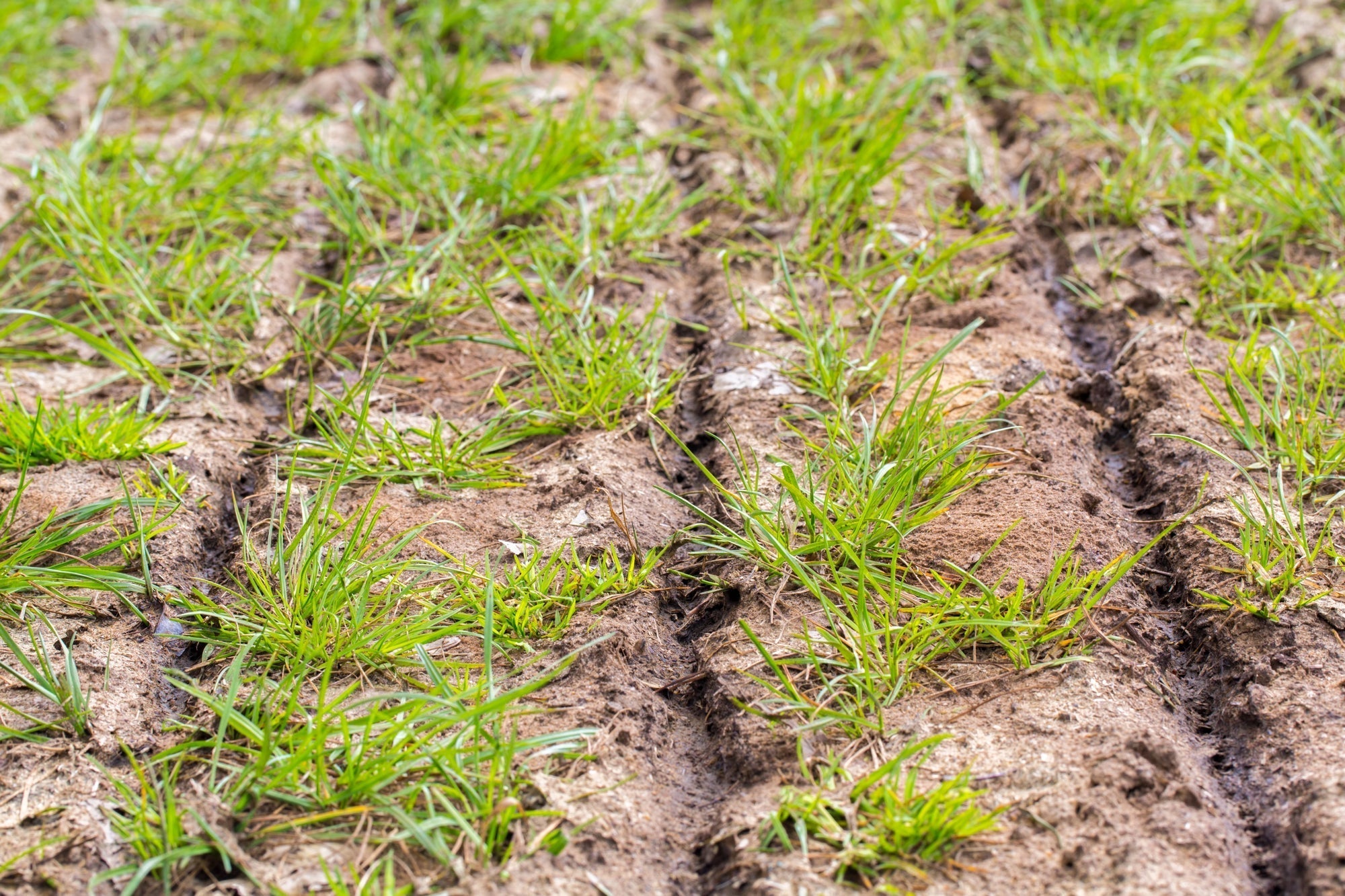
If a lot of thatch or moss has built up between the blades, you should open up the surface. Scarifying removes dead plant material, making it easier for water, air and later the mineral material to reach the soil.

We cover how to go about this, and what working depth makes sense, in detail in our FUXTEC guide to scarifying your lawn correctly.

For small to medium-sized gardens, the FUXTEC 40V Cordless Scarifier FX-E2VE38SET is a good choice. It has separate functions for scarifying and aerating and can be used cable-free anywhere on the lawn.

If you're tackling a larger or more heavily used lawn, the FUXTEC Petrol Scarifier FX-BV240 is worth considering. This model combines scarifying, aerating and collecting, and has a 40-centimetre working width.

On particularly hard patches, opening up the surface alone may not be enough. In that case, you can also aerate. This involves punching small holes into the lawn or removing soil cores. This creates channels through which water, air, and later the mineral material, can reach deeper into the soil.


FUXTEC helpers for sanding and lawn care

From mowing and scarifying to spreading top-dressing sand evenly: with the right FUXTEC tools, you can prepare your lawn step by step for sanding and the autumn care that follows.

FUXTEC 40V cordless lawnmower FX-E1RM20 SET

Preparing the lawn

40V cordless lawnmower FX-E1RM20 SET

Before sanding, the lawn should be mown short so the sand can reach the soil surface as directly as possible.

  • 33 cm cutting width
  • adjustable cutting height from 25 to 65 mm
  • includes two 20V batteries and a twin charger
FUXTEC 40V cordless scarifier set FX-E2VE38SET

Scarifying and aerating

40V cordless scarifier set FX-E2VE38SET

This cordless scarifier is ideal for preparing your lawn and, thanks to its interchangeable rollers, can both scarify and aerate.

  • 38 cm working width
  • 2-in-1 scarifying and aerating function
  • working depth adjustable across five settings, from +6 to -12 mm
FUXTEC petrol scarifier FX-BV240

For larger lawns

Petrol scarifier FX-BV240

For larger or more heavily used lawns, this petrol scarifier combines scarifying, aerating and collecting in one machine.

  • 40 cm working width
  • 3-in-1 function: scarifying, aerating and collecting
  • six adjustable working depths from -15 to +5 mm
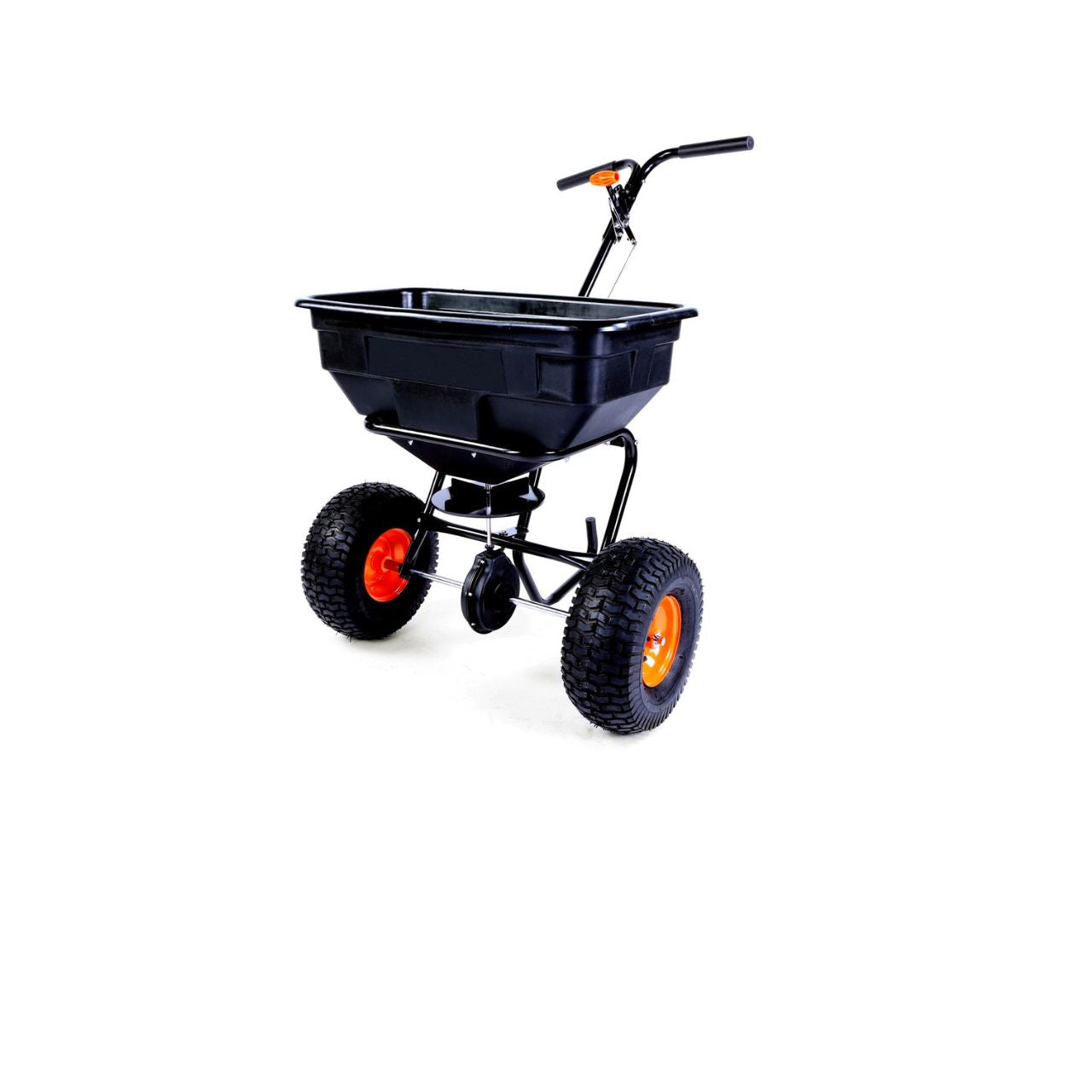
FUXTEC universal spreader FX-US270

Spreading sand evenly

Universal spreader FX-US270

This battery-powered universal spreader is particularly well suited to smaller lawns, spreading top-dressing sand in a controlled, even layer.

  • suitable for top-dressing sand, seed, fertiliser and de-icing salt
  • spread rate adjustable across five settings
  • 2.7 litre capacity
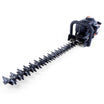
FUXTEC autumn lawn fertiliser FX-RDH5 5 kg

Autumn care after sanding

Autumn lawn fertiliser FX-RDH5

In early autumn, this potassium-rich lawn fertiliser complements aftercare following sanding and helps prepare the grass for the colder months.

  • 5 kg granules
  • for lawns up to 250 square metres
  • application period from August to October

FUXTEC tip: When sanding your lawn, getting the order right matters: mow the lawn first, scarify or aerate if needed, then spread the sand thinly and evenly. Any autumn feeding should be based on what your lawn actually needs.

How to sand your lawn correctly: spreading and working in sand evenly with a spreader

Now comes the main job. Mentally divide larger lawns into equal sections and work out the amount of sand you'll need in advance. This stops the first few square metres getting a thick layer while there's barely any material left for the last stretch.

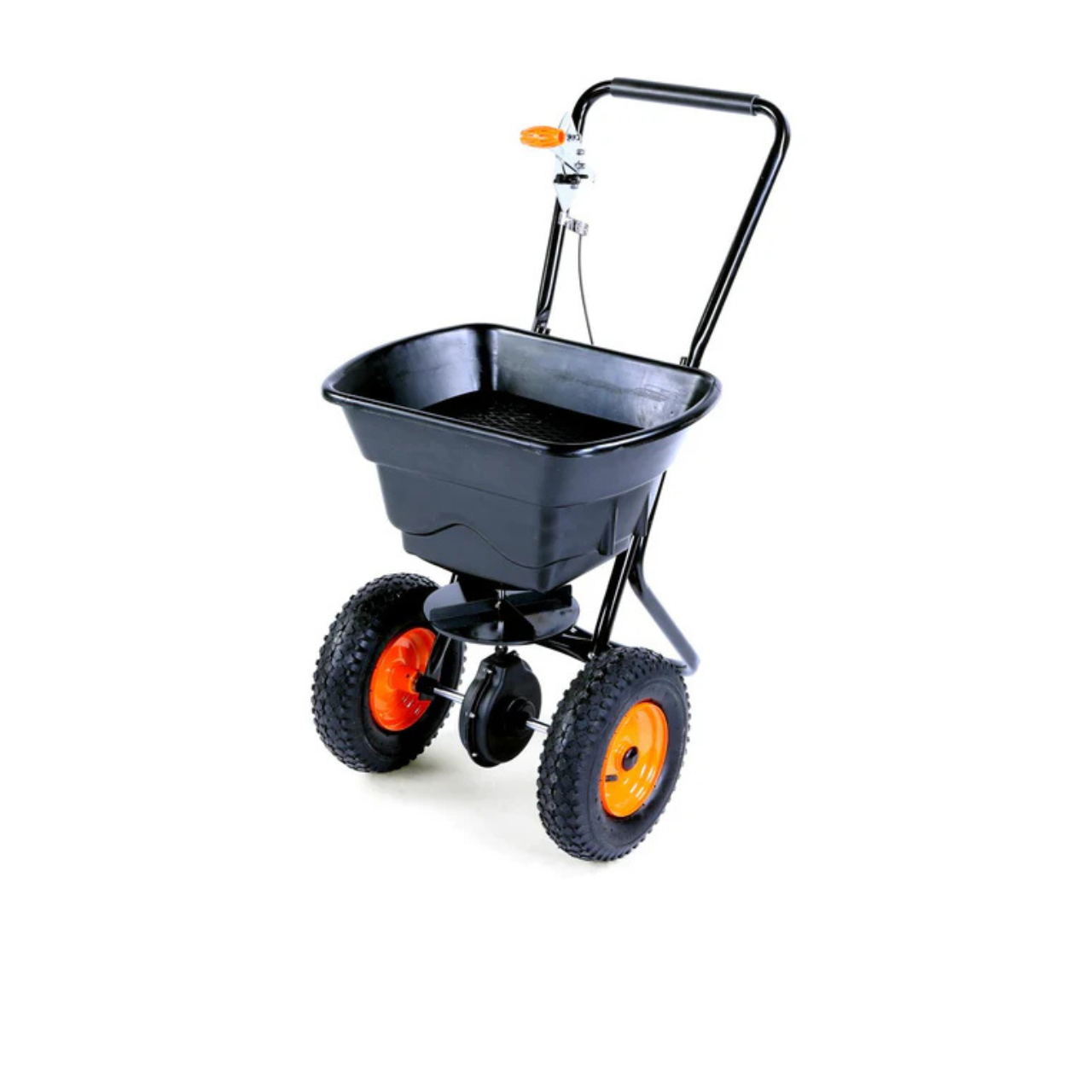
For small lawns or targeted problem patches, the FUXTEC universal spreader FX-US270 is well worth considering. Its particular advantage: you can use it to spread seed, fertiliser, de-icing salt and top-dressing sand alike. The spread rate can be adjusted across five settings.

View the FUXTEC universal spreader FX-US270

The hopper holds 2.7 litres, making it especially suitable for smaller areas or a controlled follow-up treatment. For larger quantities, a wheelbarrow and rake combination remains more practical.

Older guides often simply say "spread the sand". What matters, though, is how you go about it. The aim is to spread the sand evenly without creating a solid layer over the grass.

Once the sand is evenly spread, work it in between the blades of grass using a levelling rake, the back of a rake, or a suitable broom. This helps the sand reach the soil surface more effectively.

After that, water moderately. This washes the grains further down between the blades and into existing pores. Avoid a strong jet of water, which could wash the freshly spread material back into one spot.

Sanding your lawn: clay soil, compaction or waterlogging? How aerating helps

The soil type largely determines how much benefit you'll get from sanding your lawn. If the ground is clay-heavy, it contains a high proportion of very fine particles and can hold on to water for a long time.

With compacted soil, it's also worth asking how deep the problem goes. If the compaction sits mainly in the top layer of soil, aerating combined with the effects of sanding can bring a noticeable improvement over several maintenance cycles.

If a hard layer of soil extends much deeper, though, this method has its limits. Material worked into the surface won't fix serious compaction caused, for example, by heavy machinery during house construction.

In such cases, more intensive aerating can help, provided the problem still lies within reach in the topsoil. Deeper compaction may require more thorough soil loosening.

It's also worth looking closely at any drainage issues. If rainwater only ever pools in one particular spot, a single dip in the lawn may be the cause. But if water simply won't drain over large areas, you should check drainage, slope and soil structure.

Top dressing and levelling: correcting uneven patches in your lawn with sand

A top dressing goes beyond simple mineral soil improvement. A thin mixture is applied to the surface which, depending on the goal, can contain organic material alongside mineral components.

This allows you to correct small uneven patches in the lawn. If you want to level out such areas, always work in stages. Small dips can be levelled with a thin layer; if the height difference is several centimetres, don't try to fill it all in one go.

Top dressing is excellent for minor corrections. For larger dips, it's better to carefully lift the turf, add material underneath, and lay it back down.

That way, the grass stays on the surface and continues to get plenty of light.

Once your lawn has been sanded: feeding it correctly afterwards – fertiliser, root growth and proper aftercare

Once your lawn has been sanded, aftercare begins. Let the area settle first and try to keep foot traffic to a minimum for a few days. Watering as needed helps the mineral material disappear from the surface and work its way into the opened-up soil zone.

Treating your lawn after sanding with as many additional measures as possible straight away brings no extra benefit. When it comes to feeding in particular, check what your lawn actually needs.

The mineral material itself doesn't supply any nutrients. It improves the physical conditions in the soil but is no substitute for lawn fertiliser.

We explain in detail how to dose nutrients according to the season in our FUXTEC guide to feeding your lawn correctly.

In September, if your lawn needs it, a potassium-rich autumn fertiliser is worth considering. The FUXTEC autumn lawn fertiliser FX-RDH5 is designed by the manufacturer for use from August to October and is intended to prepare the grass for the cooler season.

View the FUXTEC autumn lawn fertiliser FX-RDH5

Good water and air supply also supports root growth at the same time. This is exactly where the various measures work together: improving soil structure, feeding as needed, and then giving the lawn time to recover.

If larger bare patches are visible once you've finished working the lawn, reseed them specifically. Our FUXTEC guide to repairing bare patches and reseeding your lawn shows you step by step how to fill in bald spots again.

You can also find out how the remaining autumn jobs around mowing, reseeding and preparing for winter fit together in our guide to autumn lawn care.

Sanding, scarifying or aerating: what does your lawn actually need?

These three tasks tend to get lumped together, but they each do a different job.

Scarifying is mainly about removing dead material from the grass and lightly scratching up the surface. Aerating, on the other hand, creates deeper openings in the soil in a targeted way.

Sanding is then meant to affect the physical structure of the top soil zone and keep existing openings permeable for longer.

For a perfect lawn, this doesn't mean automatically doing all three jobs every year. Start by observing your lawn. If water sits on the grass for a long time after rain, the ground feels hard, and the grass grows poorly despite adequate feeding and watering, that points to compaction.

If, on the other hand, it's mainly organic material sitting between the blades of grass, removing the thatch should be your first priority.

Looking after your lawn regularly therefore also means only doing the jobs that your particular lawn actually needs.

Mistakes to avoid when sanding your lawn

The most common mistake when sanding a lawn is applying too much. Putting sand on your lawn doesn't mean burying the grass underneath it. It's far better to work with a thin layer and repeat the job at a later date if needed.

The second mistake is using the wrong material. Mixtures that are too fine or unwashed can seal the surface, achieving the exact opposite of what you're trying to do.

The third mistake is working on ground that's in the wrong condition. When sanding, the soil should be firm enough to walk on. If you go over completely waterlogged ground with a wheelbarrow, spreader and tools, you risk creating new compaction.

Nor should you expect one treatment to completely fix soil that's been compacted for years. When sanding a lawn, consistency matters more than piling on as much material as possible.

Conclusion: the effect of sanding on lawns

At its core, sanding your lawn is about creating healthier soil. Heavy, poorly draining or heavily used lawns in particular can benefit as their top soil zone gradually becomes looser and more permeable to water.

Spring remains the classic time for this job. But right now, in September, there's a second good maintenance window: the effects of summer use are visible, the intense heat is easing off, and the grass still has time to recover before winter.

What matters is choosing suitable lawn sand, the right grain size, a controlled amount, and thorough preparation. Mow the lawn well, remove thatch if needed, and open up compacted areas before spreading the material.

FUXTEC tools can support the whole process: a lawnmower prepares the surface, the FX-E2VE38SET or FX-BV240 take care of opening up the surface where needed, and the FX-US270 can spread top-dressing sand in a controlled way. Combined with the right autumn care, this gives you a better foundation for a consistently thick, healthy lawn.


Discover our range of garden tools

A lush green lawn doesn't start with the mower or the fertiliser, but a few centimetres further down. Even the most beautiful grass eventually runs out of steam if the soil beneath it keeps getting more compacted. Water struggles to drain away, oxygen barely reaches the roots, and after a heavy downpour certain patches stay waterlogged for ages.

This is exactly where top dressing your lawn with sand can make a real difference. Sanding improves heavy, compacted soils in particular, because coarser mineral particles create extra pore space in the top layer of soil. Water can drain away more easily and air reaches the roots more readily.

Right now, in early autumn, is a great time to take a closer look at your lawn. It's just been through dry summer weeks, garden parties, kids playing, garden furniture and plenty of use. At the same time, the intense summer heat is easing off while the soil and grass are still warm enough to recover. For many lawns, early autumn is – alongside spring – an excellent window to tackle compacted patches and prepare the lawn for the wetter months ahead.

Why sand your lawn? The benefits of sanding and how it improves lawn care

In loose garden soil, there are numerous pores between the mineral particles. Water and oxygen travel through these to reach the roots. But as the ground becomes increasingly compacted, this pore space shrinks.

Sanding improves soil structure by introducing coarser mineral particles into the top layer of soil. Sand is especially helpful where heavy soil stays damp for a long time after rain or feels sticky and compressed underfoot almost immediately.

Sand doesn't loosen the soil overnight. Rainfall, watering and soil organisms gradually work the grains down into the soil over time. Improving soil structure is therefore a long-term process. Regular sanding can build up this effect over several years.

This is particularly useful for clay-heavy soils. Clay soils contain a high proportion of very fine particles and hold on to water for a long time as a result. A lawn that's seen heavy use from play, garden furniture or frequent foot traffic can also benefit.

Where water drains away more quickly and the surface is better aerated, the risk of waterlogging also drops. This benefits the grass, while conditions become less favourable for moss.

Sanding loosens mainly the top zone of the soil. Combined with the right care, this can make your lawn more resilient to heavy use and wet spells.

When's the right time to sand your lawn? Spring after scarifying or September – which is best?

The classic time to sand a lawn is in spring, once the grass is growing strongly again. Spring, straight after scarifying, works particularly well because the surface has already been opened up, allowing the material to work its way between the grass more easily.

That doesn't mean you have to wait until next spring, though. Early autumn offers a second useful window. September in particular is a good time, because the intense summer heat has passed while the grass is still growing and able to recover from the treatment.

So the question "when's the best time?" isn't purely down to the calendar. What matters more is the condition of your lawn. The soil should be slightly moist but firm enough to walk on. Avoid working on ground that's either completely dried out or waterlogged.

If you're planning to sand your lawn, pick a dry day with mild temperatures. After treatment, a few days of typical autumn weather are ideal, allowing watering or rainfall to gradually work the grains into the surface.

Sanding your lawn in September has another advantage too: you're improving drainage just before the season when rainfall picks up again and heavy garden soil tends to stay wet for longer.

Which sand should you use? Lawn sand, sharp sand and the right grain size

Not every sand from the local builders' merchant belongs on your lawn. For soil improvement, you should use washed material that's as free as possible from clay and silt particles.

Sharp sand (also known as horticultural or quartz sand) has proven its worth. For a typical garden, a grain size of around 0.3 to 2 millimetres is suitable. The grains are small enough to work between the blades of grass and into opened-up soil pores, yet large enough to genuinely improve the structure once there.

Very fine sand can clump together or seal the surface if its composition and moisture content aren't quite right. You should therefore only use play sand if it's washed and its composition is suitable for this purpose.

Dedicated lawn sand makes the choice easier, as its purity and grain size are already designed for use on lawns. Washed sharp sand from a builders' merchant can also be suitable, provided its specification matches.

For heavy soils, using a suitable material matters more than what's written on the bag. Grain size, purity and even distribution are what count.

Getting the amount right when sanding your lawn: how much sand per m² does your lawn need?

When it comes to dosing, more isn't automatically better. A thin, evenly worked-in layer is far more sensible on an established lawn than a thick one.

As a rough guide for light maintenance, you can work with roughly three to five litres of sand per square metre. However, the right amount for your garden depends on the soil, how compacted it is, and any prior aeration work.

In more heavily compacted areas, more material can be absorbed once the soil has been opened up. A layer just one centimetre thick already equates to around ten litres per square metre. For an established lawn, that's a considerable amount and shouldn't be spread across the board without thought.

A simple rule of thumb for sand per m² is this: the blades of grass should still be clearly visible once you've spread it.

A sand layer that's too thick can significantly weaken the lawn. In extreme cases, a solid layer of sand can even smother the lawn, because light and air can no longer reach the grass properly.

Preparing your lawn before sanding: removing moss, scarifying, aerating and getting the lawn ready

Your lawn should be fairly short before sanding. Mow it down to around three to four centimetres so the material actually reaches the soil rather than sitting on top of long grass.

For smaller lawns, a FUXTEC cordless lawnmower is a good option. The current FX-E1RM20-SET offers an adjustable cutting height of 25 to 65 millimetres and is particularly well suited to smaller or awkwardly shaped lawns.

If a lot of thatch or moss has built up between the blades, you should open up the surface. Scarifying removes dead plant material, making it easier for water, air and later the mineral material to reach the soil.

We cover how to go about this, and what working depth makes sense, in detail in our FUXTEC guide to scarifying your lawn correctly.

For small to medium-sized gardens, the FUXTEC 40V Cordless Scarifier FX-E2VE38SET is a good choice. It has separate functions for scarifying and aerating and can be used cable-free anywhere on the lawn.

If you're tackling a larger or more heavily used lawn, the FUXTEC Petrol Scarifier FX-BV240 is worth considering. This model combines scarifying, aerating and collecting, and has a 40-centimetre working width.

On particularly hard patches, opening up the surface alone may not be enough. In that case, you can also aerate. This involves punching small holes into the lawn or removing soil cores. This creates channels through which water, air, and later the mineral material, can reach deeper into the soil.


FUXTEC helpers for sanding and lawn care

From mowing and scarifying to spreading top-dressing sand evenly: with the right FUXTEC tools, you can prepare your lawn step by step for sanding and the autumn care that follows.

FUXTEC 40V cordless lawnmower FX-E1RM20 SET

Preparing the lawn

40V cordless lawnmower FX-E1RM20 SET

Before sanding, the lawn should be mown short so the sand can reach the soil surface as directly as possible.

  • 33 cm cutting width
  • adjustable cutting height from 25 to 65 mm
  • includes two 20V batteries and a twin charger
FUXTEC 40V cordless scarifier set FX-E2VE38SET

Scarifying and aerating

40V cordless scarifier set FX-E2VE38SET

This cordless scarifier is ideal for preparing your lawn and, thanks to its interchangeable rollers, can both scarify and aerate.

  • 38 cm working width
  • 2-in-1 scarifying and aerating function
  • working depth adjustable across five settings, from +6 to -12 mm
FUXTEC petrol scarifier FX-BV240

For larger lawns

Petrol scarifier FX-BV240

For larger or more heavily used lawns, this petrol scarifier combines scarifying, aerating and collecting in one machine.

  • 40 cm working width
  • 3-in-1 function: scarifying, aerating and collecting
  • six adjustable working depths from -15 to +5 mm
FUXTEC universal spreader FX-US270

Spreading sand evenly

Universal spreader FX-US270

This battery-powered universal spreader is particularly well suited to smaller lawns, spreading top-dressing sand in a controlled, even layer.

  • suitable for top-dressing sand, seed, fertiliser and de-icing salt
  • spread rate adjustable across five settings
  • 2.7 litre capacity
FUXTEC autumn lawn fertiliser FX-RDH5 5 kg

Autumn care after sanding

Autumn lawn fertiliser FX-RDH5

In early autumn, this potassium-rich lawn fertiliser complements aftercare following sanding and helps prepare the grass for the colder months.

  • 5 kg granules
  • for lawns up to 250 square metres
  • application period from August to October

FUXTEC tip: When sanding your lawn, getting the order right matters: mow the lawn first, scarify or aerate if needed, then spread the sand thinly and evenly. Any autumn feeding should be based on what your lawn actually needs.

How to sand your lawn correctly: spreading and working in sand evenly with a spreader

Now comes the main job. Mentally divide larger lawns into equal sections and work out the amount of sand you'll need in advance. This stops the first few square metres getting a thick layer while there's barely any material left for the last stretch.

For small lawns or targeted problem patches, the FUXTEC universal spreader FX-US270 is well worth considering. Its particular advantage: you can use it to spread seed, fertiliser, de-icing salt and top-dressing sand alike. The spread rate can be adjusted across five settings.

View the FUXTEC universal spreader FX-US270

The hopper holds 2.7 litres, making it especially suitable for smaller areas or a controlled follow-up treatment. For larger quantities, a wheelbarrow and rake combination remains more practical.

Older guides often simply say "spread the sand". What matters, though, is how you go about it. The aim is to spread the sand evenly without creating a solid layer over the grass.

Once the sand is evenly spread, work it in between the blades of grass using a levelling rake, the back of a rake, or a suitable broom. This helps the sand reach the soil surface more effectively.

After that, water moderately. This washes the grains further down between the blades and into existing pores. Avoid a strong jet of water, which could wash the freshly spread material back into one spot.

Sanding your lawn: clay soil, compaction or waterlogging? How aerating helps

The soil type largely determines how much benefit you'll get from sanding your lawn. If the ground is clay-heavy, it contains a high proportion of very fine particles and can hold on to water for a long time.

With compacted soil, it's also worth asking how deep the problem goes. If the compaction sits mainly in the top layer of soil, aerating combined with the effects of sanding can bring a noticeable improvement over several maintenance cycles.

If a hard layer of soil extends much deeper, though, this method has its limits. Material worked into the surface won't fix serious compaction caused, for example, by heavy machinery during house construction.

In such cases, more intensive aerating can help, provided the problem still lies within reach in the topsoil. Deeper compaction may require more thorough soil loosening.

It's also worth looking closely at any drainage issues. If rainwater only ever pools in one particular spot, a single dip in the lawn may be the cause. But if water simply won't drain over large areas, you should check drainage, slope and soil structure.

Top dressing and levelling: correcting uneven patches in your lawn with sand

A top dressing goes beyond simple mineral soil improvement. A thin mixture is applied to the surface which, depending on the goal, can contain organic material alongside mineral components.

This allows you to correct small uneven patches in the lawn. If you want to level out such areas, always work in stages. Small dips can be levelled with a thin layer; if the height difference is several centimetres, don't try to fill it all in one go.

Top dressing is excellent for minor corrections. For larger dips, it's better to carefully lift the turf, add material underneath, and lay it back down.

That way, the grass stays on the surface and continues to get plenty of light.

Once your lawn has been sanded: feeding it correctly afterwards – fertiliser, root growth and proper aftercare

Once your lawn has been sanded, aftercare begins. Let the area settle first and try to keep foot traffic to a minimum for a few days. Watering as needed helps the mineral material disappear from the surface and work its way into the opened-up soil zone.

Treating your lawn after sanding with as many additional measures as possible straight away brings no extra benefit. When it comes to feeding in particular, check what your lawn actually needs.

The mineral material itself doesn't supply any nutrients. It improves the physical conditions in the soil but is no substitute for lawn fertiliser.

We explain in detail how to dose nutrients according to the season in our FUXTEC guide to feeding your lawn correctly.

In September, if your lawn needs it, a potassium-rich autumn fertiliser is worth considering. The FUXTEC autumn lawn fertiliser FX-RDH5 is designed by the manufacturer for use from August to October and is intended to prepare the grass for the cooler season.

View the FUXTEC autumn lawn fertiliser FX-RDH5

Good water and air supply also supports root growth at the same time. This is exactly where the various measures work together: improving soil structure, feeding as needed, and then giving the lawn time to recover.

If larger bare patches are visible once you've finished working the lawn, reseed them specifically. Our FUXTEC guide to repairing bare patches and reseeding your lawn shows you step by step how to fill in bald spots again.

You can also find out how the remaining autumn jobs around mowing, reseeding and preparing for winter fit together in our guide to autumn lawn care.

Sanding, scarifying or aerating: what does your lawn actually need?

These three tasks tend to get lumped together, but they each do a different job.

Scarifying is mainly about removing dead material from the grass and lightly scratching up the surface. Aerating, on the other hand, creates deeper openings in the soil in a targeted way.

Sanding is then meant to affect the physical structure of the top soil zone and keep existing openings permeable for longer.

For a perfect lawn, this doesn't mean automatically doing all three jobs every year. Start by observing your lawn. If water sits on the grass for a long time after rain, the ground feels hard, and the grass grows poorly despite adequate feeding and watering, that points to compaction.

If, on the other hand, it's mainly organic material sitting between the blades of grass, removing the thatch should be your first priority.

Looking after your lawn regularly therefore also means only doing the jobs that your particular lawn actually needs.

Mistakes to avoid when sanding your lawn

The most common mistake when sanding a lawn is applying too much. Putting sand on your lawn doesn't mean burying the grass underneath it. It's far better to work with a thin layer and repeat the job at a later date if needed.

The second mistake is using the wrong material. Mixtures that are too fine or unwashed can seal the surface, achieving the exact opposite of what you're trying to do.

The third mistake is working on ground that's in the wrong condition. When sanding, the soil should be firm enough to walk on. If you go over completely waterlogged ground with a wheelbarrow, spreader and tools, you risk creating new compaction.

Nor should you expect one treatment to completely fix soil that's been compacted for years. When sanding a lawn, consistency matters more than piling on as much material as possible.

Conclusion: the effect of sanding on lawns

At its core, sanding your lawn is about creating healthier soil. Heavy, poorly draining or heavily used lawns in particular can benefit as their top soil zone gradually becomes looser and more permeable to water.

Spring remains the classic time for this job. But right now, in September, there's a second good maintenance window: the effects of summer use are visible, the intense heat is easing off, and the grass still has time to recover before winter.

What matters is choosing suitable lawn sand, the right grain size, a controlled amount, and thorough preparation. Mow the lawn well, remove thatch if needed, and open up compacted areas before spreading the material.

FUXTEC tools can support the whole process: a lawnmower prepares the surface, the FX-E2VE38SET or FX-BV240 take care of opening up the surface where needed, and the FX-US270 can spread top-dressing sand in a controlled way. Combined with the right autumn care, this gives you a better foundation for a consistently thick, healthy lawn.

More articles about lawn care

View all
Trockenheit im Garten: Boden lockern, richtig gießen und mit Mulch Wasser sparen

Trockenheit im Garten: Boden lockern, richtig gießen und mit Mulch Wasser sparen

Du gießt das Beet, doch das Wasser bleibt auf der harten Erdoberfläche stehen oder läuft zur Seite ab. Schon nach kurzer Zeit wirkt der Boden wieder trocken, obwohl Du gerade erst zur Gießkanne g...

Mulchen mit Pinienrinde: So nutzt du organischen Mulch, um Unkraut zu verhindern

Pine Bark Mulch: The Complete Gardening Guide

Mulching with pine bark is one of the most effective methods in modern gardening and sustainable horticulture. A layer of mulch material is applied to the soil surface to protect and improve the so...

Bodenverbesserung im Garten: So verbesserst du deinen Gartenboden im Frühjahr für gesunde Pflanzen

Spring Soil Improvement: Prepare Your Garden Soil

Inhaltsverzeichnis Warum Bodenverbesserung im Garten im Frühjahr so wichtig für einen gesunden Gartenboden ist Gartenboden nach dem Winter prüfen: Bodenstruktur, Verdichtung und Bodenart erke...