
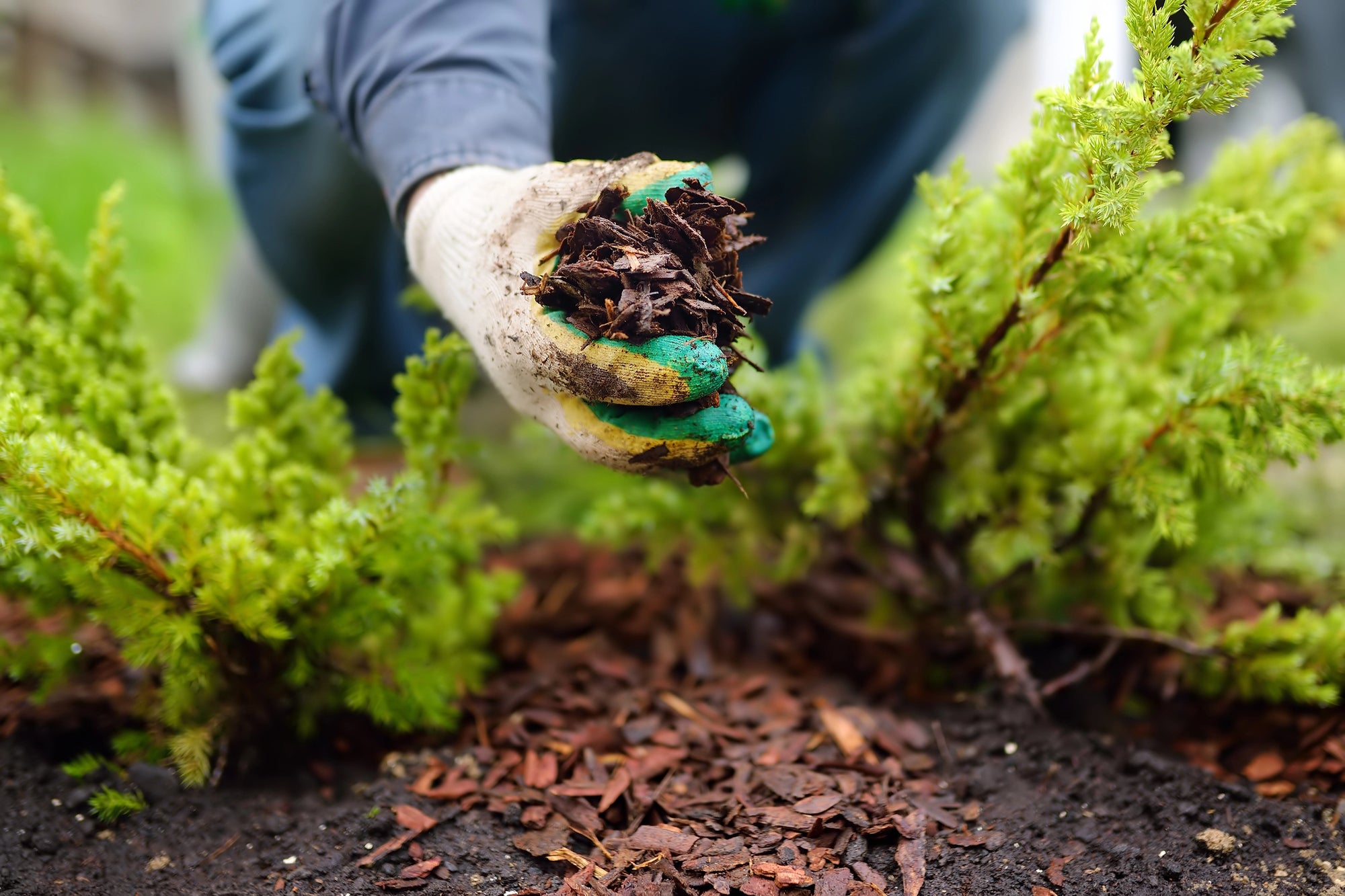
Mit eigenem Pinienrindenmulch den Garten verschönern!
Pine Bark Mulch: The Complete Gardening Guide
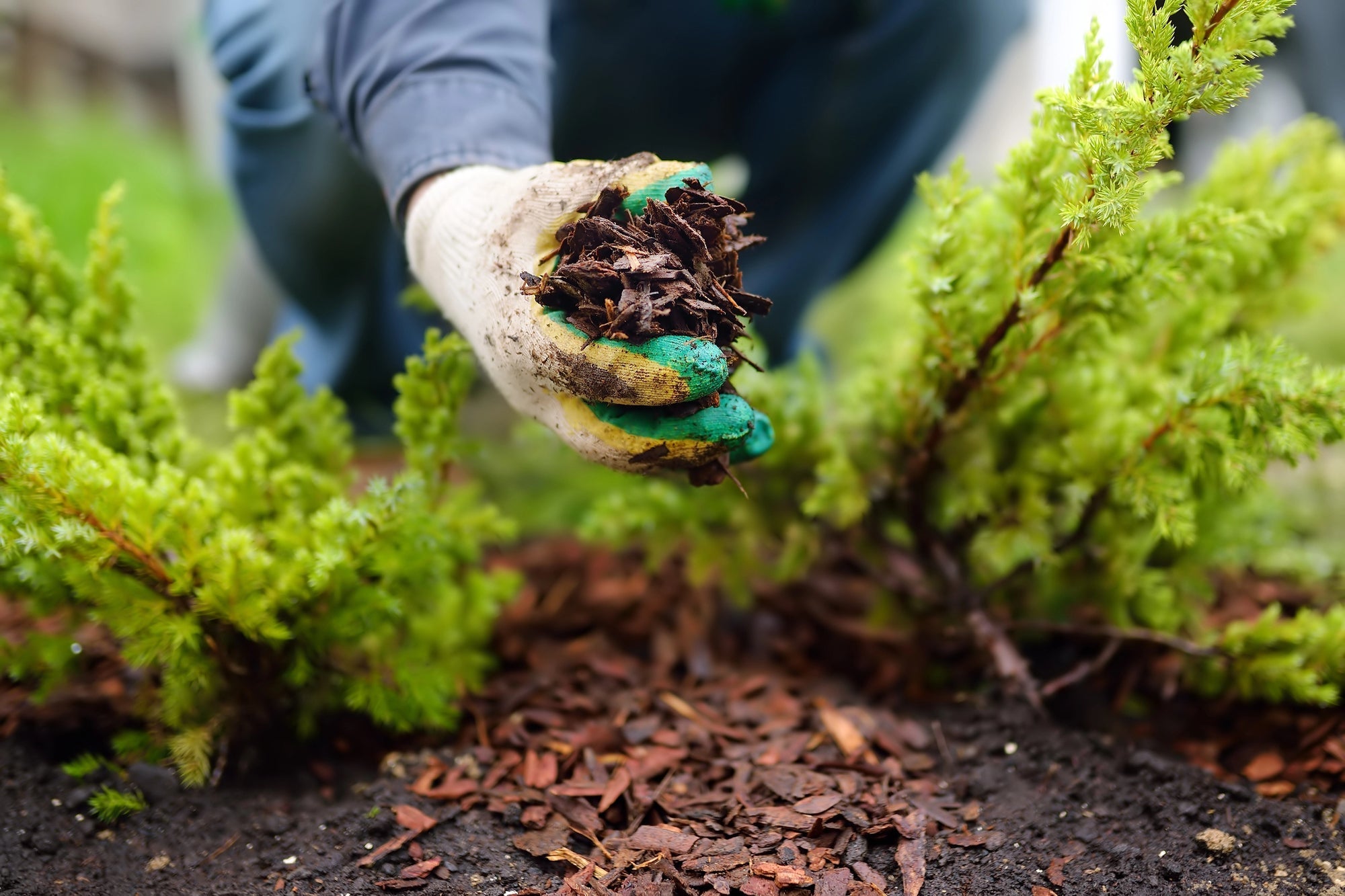
Mulching with pine bark is one of the most effective methods in modern gardening and sustainable horticulture. A layer of mulch material is applied to the soil surface to protect and improve the soil, and to suppress weed growth.
Pine bark mulch offers some decisive advantages. It is long-lasting, visually attractive, and breaks down more slowly than many other organic materials. In this FUXTEC gardening guide, we show you how to use it correctly and what to watch out for.
What is mulch and how does it work?
Mulch refers to materials applied as a protective layer on the soil surface. Pine bark is a purely organic product derived from the processing of coniferous timber.
The way it works is straightforward. The mulch layer blocks light, reduces water evaporation, and stabilises soil temperature. This significantly inhibits weed germination.
In addition, the slow decomposition of the material improves soil structure over time. Humus is formed, which increases nutrient retention and enhances soil quality in the long run.
Advantages of pine bark over other mulches
Pine bark contains natural resins that slow down the decomposition process. As a result, a layer of pine bark mulch lasts considerably longer than, for example, straw or fresh compost.
A further advantage is its mildly acidic effect on the soil. This makes it particularly well suited to plants that prefer an acidic growing environment.
Suppressing weeds effectively
Weeds tend to emerge wherever light reaches bare soil. A sufficiently thick layer of mulch prevents exactly that.
At FUXTEC, we have found that a layer of at least 8 cm is necessary to effectively suppress the growth of most weeds.
Before applying mulch, you should thoroughly remove any existing weeds, especially deep-rooted plants. For denser vegetation, a powerful brushcutter makes the job considerably easier.
How to prepare pine bark mulch for best results
Pine bark is a high-quality mulching material that you don't need to make yourself, but you can optimise how you use it. What matters is not just the bark itself, but how you apply it.
Make sure to choose an appropriate grade, or break down the bark slightly if needed. Uniform pieces are easier to spread and create a denser mulch layer that suppresses weeds more effectively.
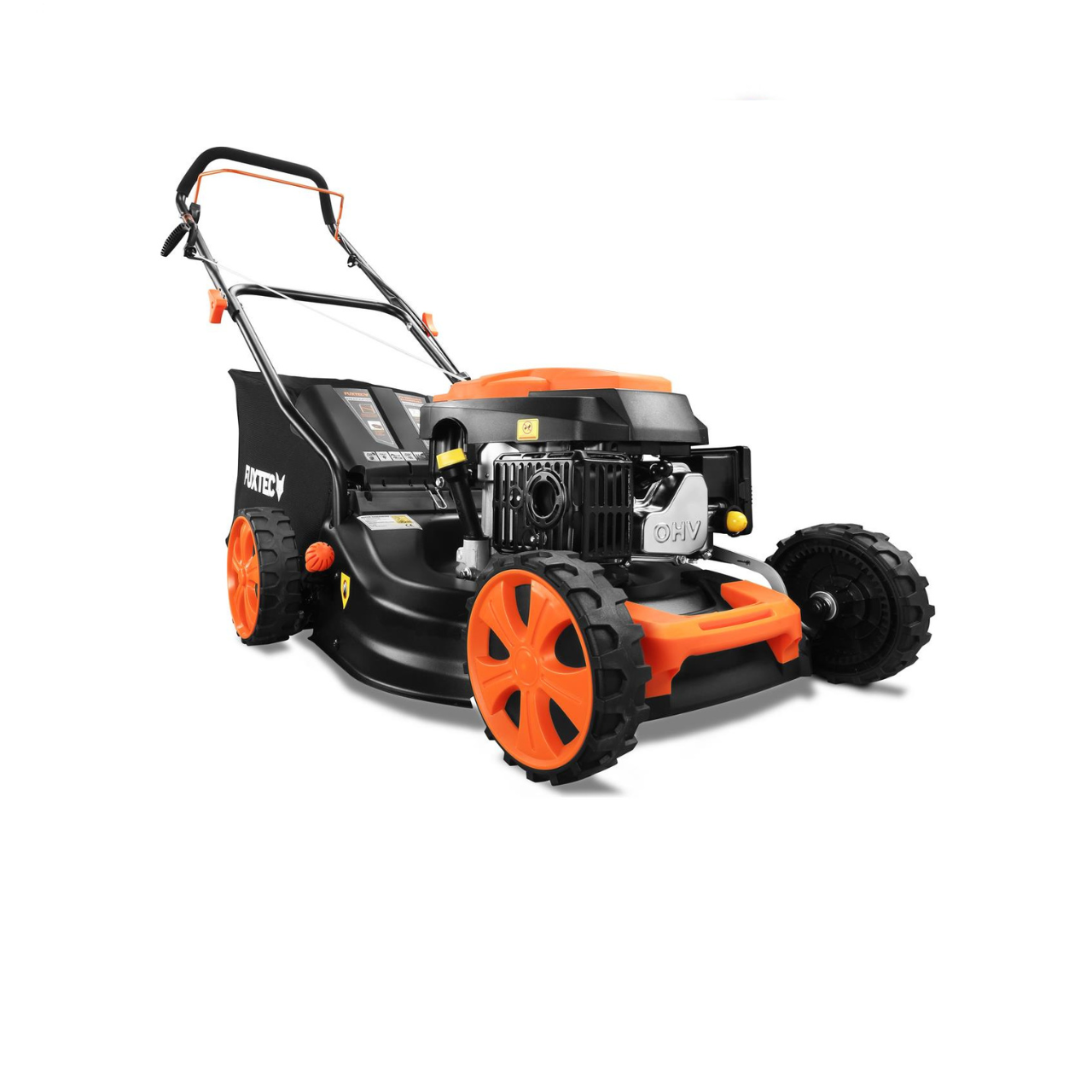
You can make the mulch even more effective by combining pine bark with fine garden material. Grass clippings work particularly well, as they fill in gaps and help retain moisture in the soil. A mulching mower helps you prepare this material optimally and makes it ready to use straight away.
Choosing the right grade and layer depth
Pine bark is available in various sizes. Finer grades are suitable for smaller beds, whilst coarser pieces are particularly long-lasting and better suited to larger areas.
Layer depth is crucial. Below 8 cm, the mulch loses much of its effectiveness. At the same time, you should ensure that plant stems are kept clear of mulch to prevent rotting.
Water and temperature regulation
Mulch reduces evaporation and helps the soil retain moisture for longer. This saves water and provides a more stable supply to your plants.
In summer, the soil stays cooler; in winter, the mulch layer protects roots from frost. This temperature regulation is especially important for tender plants.
Mulch and plant selection
Pine bark is particularly well suited to plants that prefer slightly acidic soils. These include, for example, hydrangeas, rhododendrons, and blueberries.
For plants that require neutral soils, you should consider using alternative materials.
How to apply mulch correctly
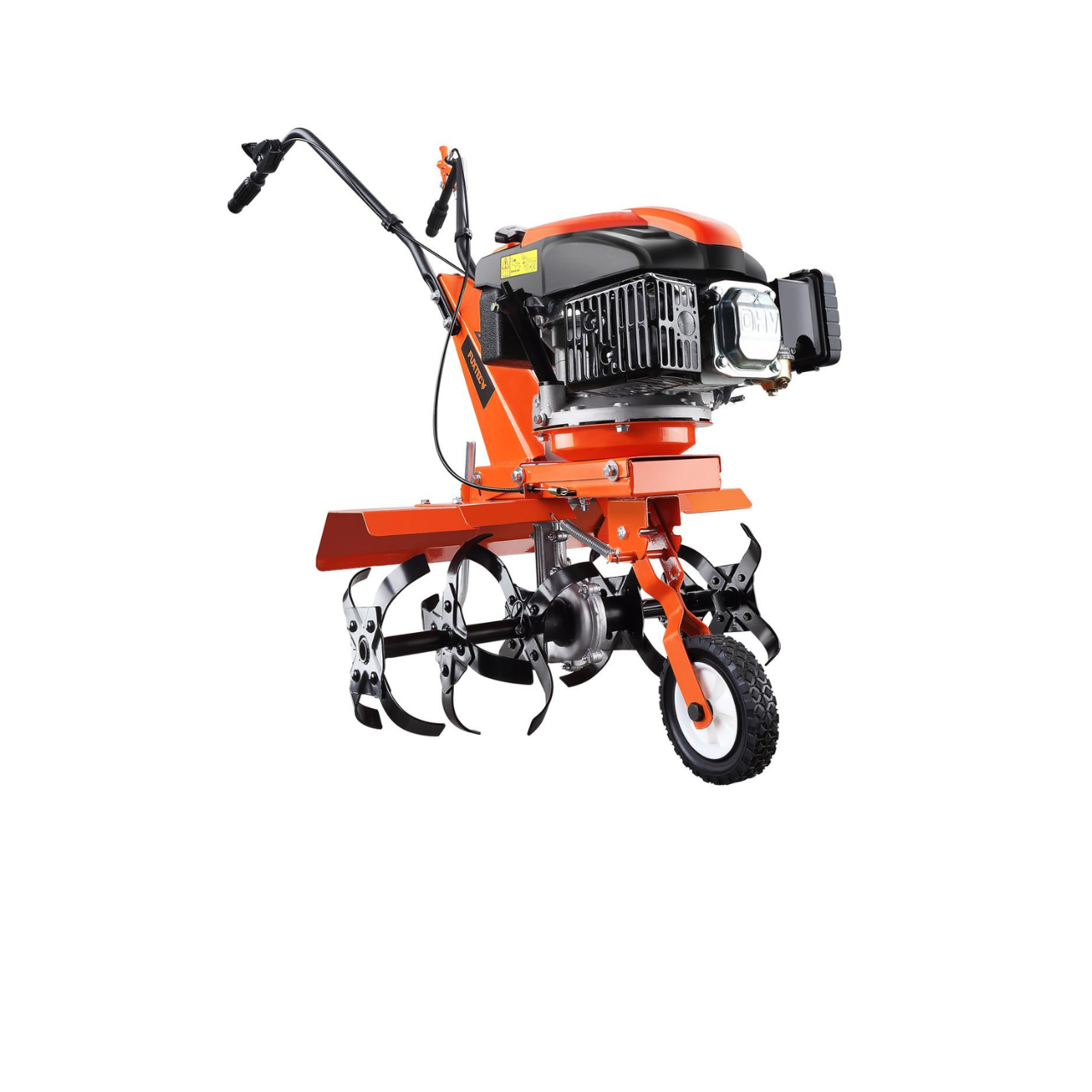
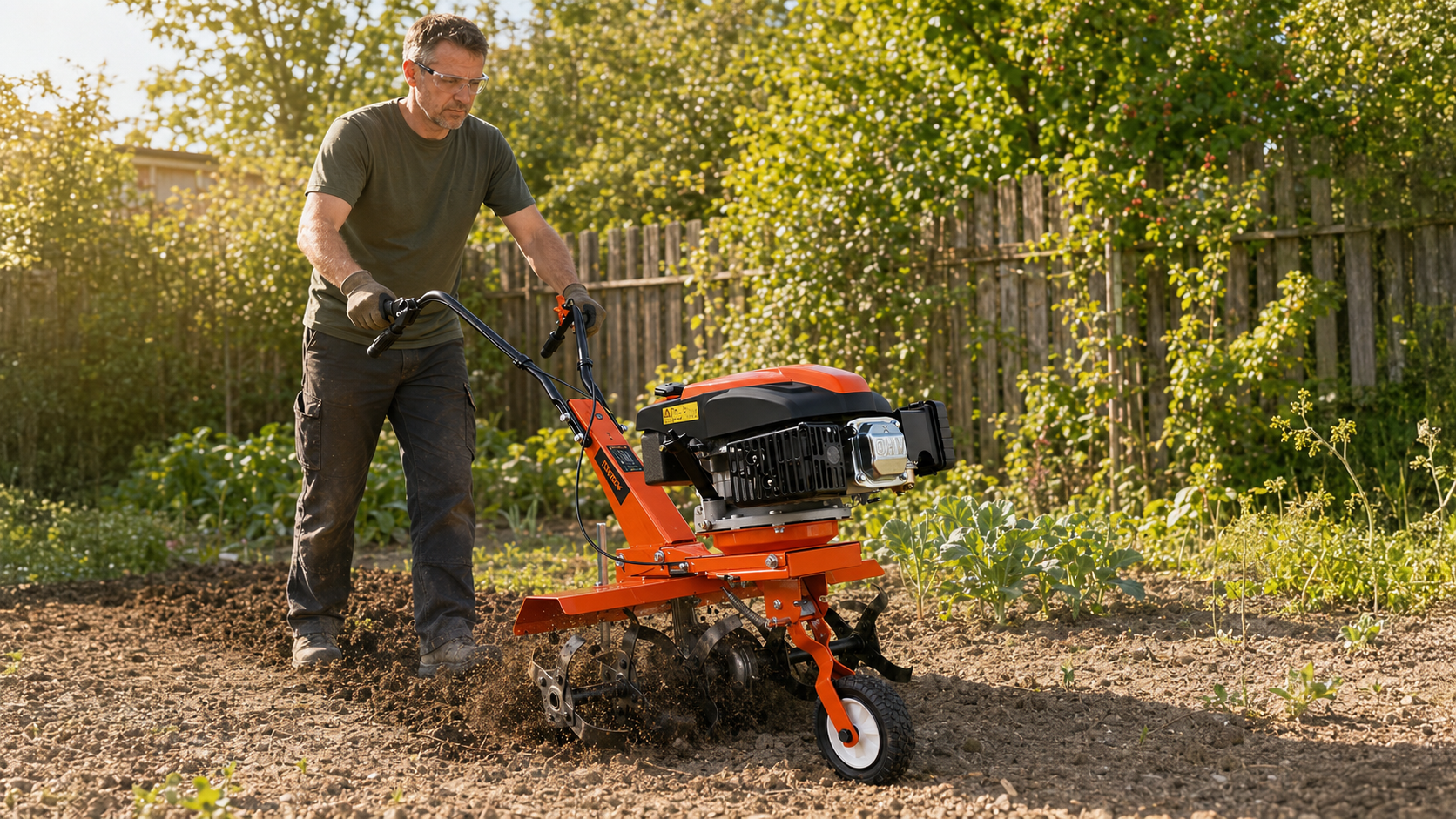
Before mulching, the soil should be prepared. Remove weeds and loosen the earth. For larger areas, using a rotavator is recommended, as it loosens the soil far more evenly and deeply than manual work. The soil should then be lightly watered.
Next, spread the mulch evenly and keep it away from plant stems. This ensures that air can circulate freely.
Effect on the soil
As the mulch decomposes, it gradually improves soil structure. At the same time, however, nitrogen becomes bound up in the soil.
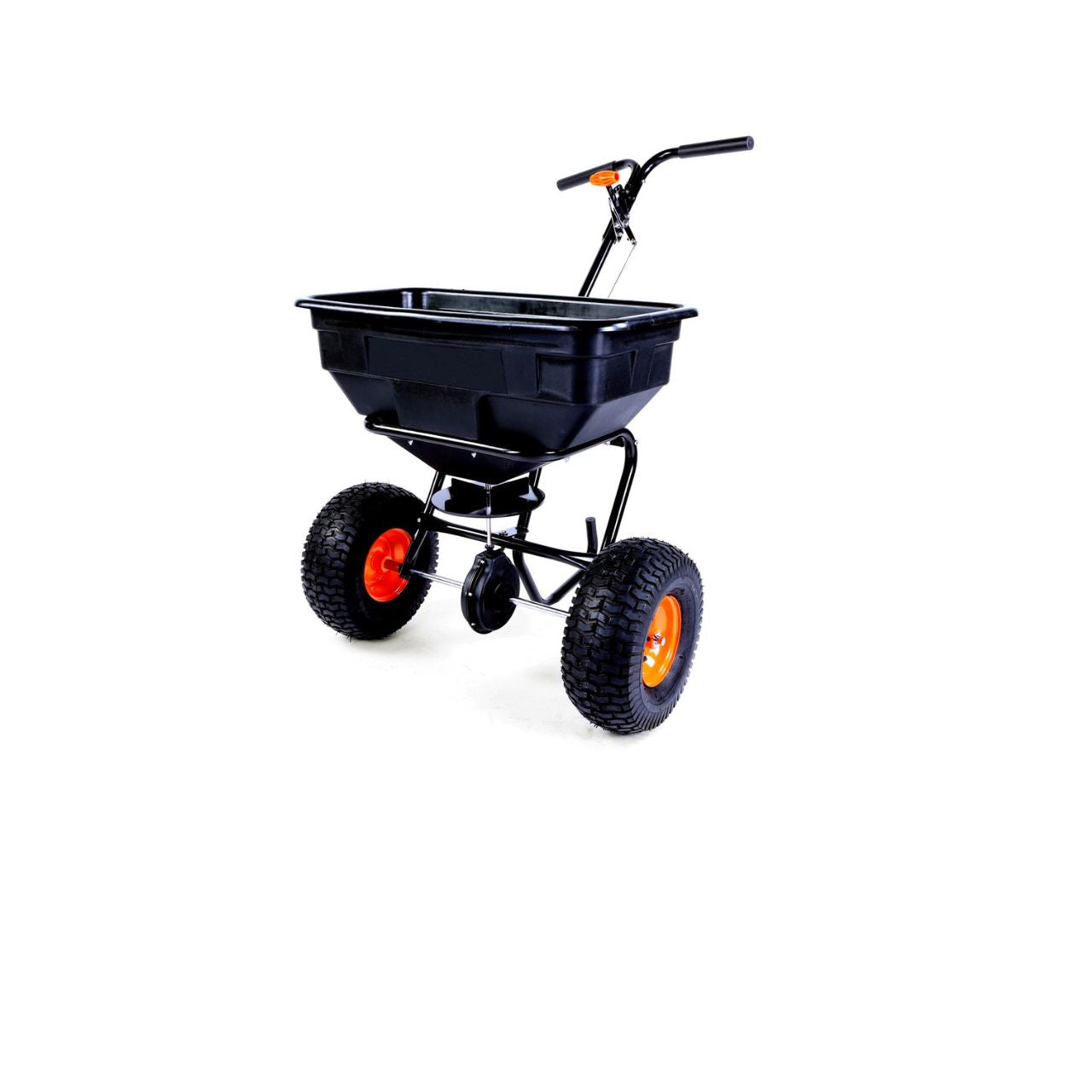
At FUXTEC, we therefore recommend also applying a nitrogen-rich fertiliser. For larger areas, a broadcast spreader ensures even and efficient distribution.
Mulching in practice
Mulch is also used strategically in professional horticulture. It reduces maintenance requirements and creates more stable growing conditions.
Particularly for young plants, it supports development and protects against competition from weeds.
Mulching with pine bark is a sustainable and effective method of keeping your garden healthier and easier to maintain in the long term. When applied correctly, it reduces the workload, improves the soil, and creates optimal conditions for your plants.
Discover our range of garden tools
More articles about garden care
Trockenheit im Garten: Boden lockern, richtig gießen und mit Mulch Wasser sparen
Du gießt das Beet, doch das Wasser bleibt auf der harten Erdoberfläche stehen oder läuft zur Seite ab. Schon nach kurzer Zeit wirkt der Boden wieder trocken, obwohl Du gerade erst zur Gießkanne g...
Pine Bark Mulch: The Complete Gardening Guide
Mulching with pine bark is one of the most effective methods in modern gardening and sustainable horticulture. A layer of mulch material is applied to the soil surface to protect and improve the so...
Spring Soil Improvement: Prepare Your Garden Soil
Inhaltsverzeichnis Warum Bodenverbesserung im Garten im Frühjahr so wichtig für einen gesunden Gartenboden ist Gartenboden nach dem Winter prüfen: Bodenstruktur, Verdichtung und Bodenart erke...


