
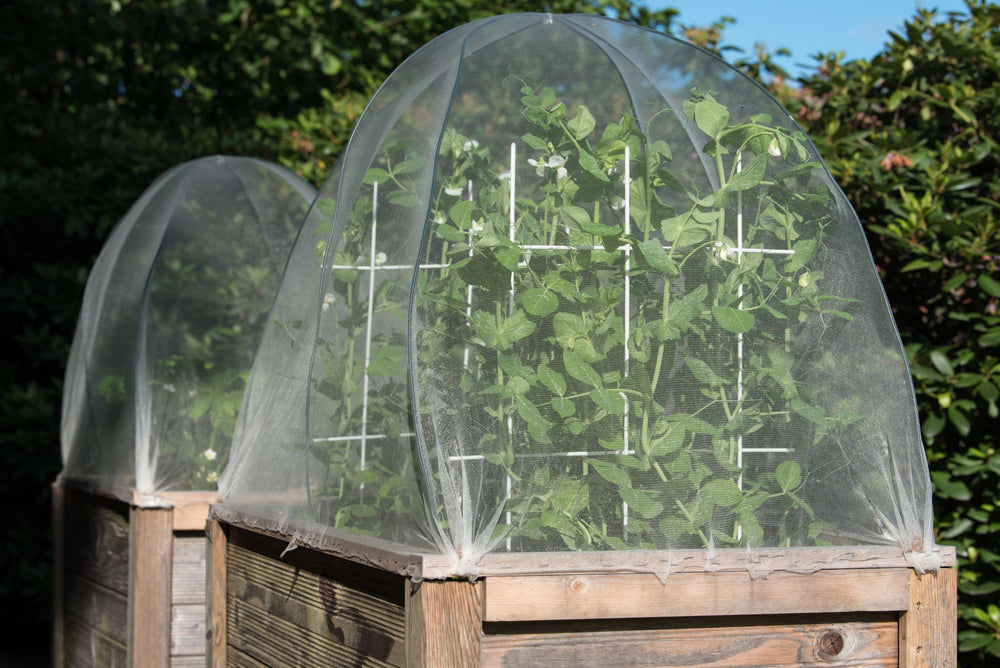
Eine Hochbeetabdeckung aus Gartenvlies.
Build a Raised Bed Cover: Step-by-Step Guide
- Warum eine Hochbeet-Abdeckung bauen?
- Welche Materialien eignen sich für die Abdeckung – Holz oder Kunststoff?
- Wie baust Du eine Hochbeet-Abdeckung aus Holz?
- Plexiglas oder Doppelstegplatten montieren – Bauanleitung im Detail
- Frühbeet-Aufsatz: So schützt Du Jungpflanzen optimal
- Lüften und Luftzirkulation – Gesund gärtnern trotz Überdachung
- Witterungsbeständigkeit und Robustheit – Tipps und Tricks
- Hochbeet aus Stein mauern und abdecken – Geht das?
- Folientunnel, Vlies & Co.: Flexible Hochbeetabdeckungen
- Hauptpunkte auf einen Blick
Would you like to protect your raised bed from frost, rain, and pests whilst extending the growing season? Building a made-to-measure raised bed cover yourself saves money, is hugely satisfying, and increases your yield. In this comprehensive guide you'll find out which materials and tools you need, how to carry out every stage of construction step by step, and which tips & tricks will turn your raised bed into a sturdy mini greenhouse.
Why build a raised bed cover?
A raised bed fitted with the right cover transforms into a small greenhouse. You extend the growing season, protect your plants from frost, and create ideal conditions for seedlings. By choosing to build your own raised bed cover, you make the most of your bed's full potential and avoid spending money on expensive ready-made solutions.
The primary purpose of a cover is to withstand extreme weather. Whether rain, wind, or hail – with the right roof your bed stays dry and protected. At the same time, the cover supports plant growth by keeping the temperature stable and allowing the soil to dry out more quickly. As a result, vegetables and herbs often ripen noticeably earlier.
Which materials are suitable for a raised bed cover: Wood or plastic?
Before you start building a raised bed cover, you need to choose the right materials. There are three main options available:
- Working with timber yourself
- Plastic: e.g. acrylic sheet (Perspex) or twin-wall polycarbonate sheets
- Aluminium profiles for the frame
| Material | Advantages | Disadvantages |
|---|---|---|
| Timber (e.g. larch) | Natural, easy to screw together, sturdy | Susceptible to weathering, regular ventilation required |
| Acrylic sheet (Perspex) | Highly light-transmissive, lightweight, long-lasting | More susceptible to scratches, more expensive |
| Twin-wall polycarbonate | Good insulating properties, weather-resistant | Slightly less rigid than glass, fitting requires care |
Use sawn structural timber battens and side panels for the wooden frame. With our cordless chainsaw FX-E2KS you can cut battens effortlessly:FX-E2KS Set. If you need something more compact, the FX-E1KS20 also delivers precise cuts: FX-E1KS20 Set.
How do you build a raised bed cover from wood?
- Prepare and screw together the frame
First, cut the battens to size. For a brick-built raised bed or a stone model, you'll need sturdy cross braces. The cordless screwdriver FX-E1BS20 lets you screw the timber together quickly and accurately: FX-E1BS20 Bit-SL. Make sure all screws sit flush so that the seals bed down properly later.

- Adding the roof pitch and hinges
To allow rain to run off, plan a gentle roof pitch of around 5°. Fit a hinge along the back edge of the frame. This allows the cover to be propped open easily for ventilation when needed. Alternatively, you can use several smaller hinges to create flap openings along the long sides.
Fitting acrylic sheet or twin-wall polycarbonate – detailed construction guide
Once your wooden frame is firmly screwed together, it's time to fit the acrylic sheet panels or twin-wall polycarbonate. Both materials are light-transmissive and allow plenty of sunlight into the bed.
- Acrylic sheet: Pre-drill holes at 30 cm intervals to prevent stress cracking. Secure the panels with specialist acrylic screws that won't cause splits.
Twin-wall polycarbonate: Cut the panels to size along the edge using a fine-toothed saw blade. Finish with aluminium end caps to keep the weather out.
Make sure the panels are sealed at the screws with rubber washers. This prevents water ingress and stops your bed from becoming waterlogged.
Cold frame topper: how to give your seedlings the best protection
A cold frame topper is the perfect addition if you want to get started growing particularly early. It raises the internal temperature by up to 8 °C. This is ideal for protecting plants from wind and weather and speeding up plant growth.

You can use a kit or build the topper yourself. For the latter, you'll need lightweight battens and thin polythene sheeting or horticultural fleece. Ensure adequate air circulation by incorporating hinged vent openings.
Ventilation and air circulation: healthy gardening even under a cover
Even though the cover acts like a small greenhouse, air circulation must not be neglected. Stagnant air encourages mould and disease.
- Open the hinges at least twice a day.
- Use side ventilation openings or a small mesh panel to allow fresh air into the bed.
- Close the flaps during heavy rain to keep the bed dry.
If you want early ripening, check the internal temperature regularly. A simple thermometer is all you need to know when it's time to ventilate.
Weather resistance and durability – tips and tricks
To ensure your raised bed cover lasts for years, a few tips and tricks are essential:
- Treat the timber: use an outdoor-grade oil or wood stain.
- Choose metal parts made from aluminium or stainless steel to prevent rust.
- Check seals regularly for cracks and replace as needed.
Apply a UV-resistant silicone sealant along the edges to prevent wind and rain from attacking the timber. This keeps your construction long-lasting and robust.
Brick-built raised beds with a cover: is it possible?
- Building a raised bed from natural stone or brick gives your garden an elegant look. But how does the cover work?
First build a solid masonry structure with an adequate drainage layer. - Use robust hinge elements that connect the masonry and the wooden frame.
- Anchor the frame to the wall with aluminium brackets to prevent movement caused by frost.
A brick-built raised bed can be covered just as easily as a wooden frame. Simply ensure you have the correct fixing points for the topper.
Polytunnel, fleece & more: flexible raised bed covers
Sometimes you need a lightweight and portable cover. This is where polytunnels made from plastic and horticultural fleece come in. They are ideal for responding quickly to changing weather conditions.
- Polytunnels: simply bend the hoops over, push them into the ground, and secure with clips.
- Fleece: easier to handle, ideal for frost protection during the growing season.
Whichever option you choose, both are cost-effective and allow you to cover your raised bed quickly when wind and weather take a turn for the worse.
Key points at a glance
You can build your own raised bed cover to keep out frost, rain, and pests.
- Choose between timber, acrylic sheet, or twin-wall polycarbonate depending on your budget and requirements.
A cold frame topper accelerates seedling growth and extends the season.
Ventilation is just as important as covering – plan in hinges and vent openings.
For portable solutions, polytunnels and fleece are a great choice.
Whether a brick-built raised bed or a timber frame – with our construction guide the build succeeds even without professional experience.
Use FUXTEC tools such as the cordless chainsaw FX-E2KS, the FX-E1KS20, or the cordless screwdriver FX-E1BS20 for precise cuts and speedy assembly.
Discover our range of garden tools

What materials do I need to build a raised bed cover?
You can choose between timber like larch, acrylic sheet (Perspex), or twin-wall polycarbonate for the covering material, combined with wooden battens or aluminium profiles for the frame. You'll also need hinges, screws, and rubber washers to seal the panels and prevent water ingress.
How much does a raised bed cover improve growing seasons?
A raised bed cover can extend your growing season significantly and raise internal temperatures by up to 8°C with a cold frame topper. This protection helps vegetables and herbs ripen noticeably earlier whilst protecting plants from frost, rain, and wind.
Do I need to ventilate a raised bed cover?
Yes, ventilation is essential even though the cover acts like a greenhouse, as stagnant air encourages mould and disease. You should open hinges at least twice daily and incorporate side ventilation openings or mesh panels to allow fresh air circulation.
What's the best angle for a raised bed cover roof?
A gentle roof pitch of around 5° is ideal, as it allows rain to run off effectively whilst remaining structurally sound. This angle helps protect your plants from waterlogging whilst maintaining adequate light transmission.
Can I fit a cover to a brick-built raised bed?
Yes, brick-built raised beds can be covered just as easily as wooden frames. You'll need robust hinge elements to connect the masonry to the wooden frame and aluminium brackets to anchor it securely and prevent frost damage.
What's a cold frame topper and is it worth building?
A cold frame topper is a lightweight additional covering made from thin polythene sheeting or horticultural fleece that can raise internal temperature by up to 8°C. It's ideal for protecting seedlings and speeding up early plant growth, and you can build one yourself with basic materials.
How do I seal panels to prevent water damage?
Use rubber washers at every screw point to seal the panels and prevent water ingress, then apply UV-resistant silicone sealant along all edges. For acrylic sheets, use specialist acrylic screws and pre-drill holes at 30 cm intervals to avoid stress cracking.
More articles about garden care

Trockenheit im Garten: Boden lockern, richtig gießen und mit Mulch Wasser sparen
Du gießt das Beet, doch das Wasser bleibt auf der harten Erdoberfläche stehen oder läuft zur Seite ab. Schon nach kurzer Zeit wirkt der Boden wieder trocken, obwohl Du gerade erst zur Gießkanne g...

Pine Bark Mulch: The Complete Gardening Guide
Mulching with pine bark is one of the most effective methods in modern gardening and sustainable horticulture. A layer of mulch material is applied to the soil surface to protect and improve the so...

Spring Soil Improvement: Prepare Your Garden Soil
Inhaltsverzeichnis Warum Bodenverbesserung im Garten im Frühjahr so wichtig für einen gesunden Gartenboden ist Gartenboden nach dem Winter prüfen: Bodenstruktur, Verdichtung und Bodenart erke...


