Courgettes are true all-rounders in the garden. They grow quickly, produce an abundance of fruit and require surprisingly little maintenance. Whether you have a garden bed, a raised bed or a balcony – growing courgettes is always worthwhile.
If you have a little space, some sunshine and a love of gardening, then Cucurbita pepo is just the thing for you. Particularly handy: courgettes are one of those plants that can be grown in a surprisingly compact way – for example in a large pot or container.
In this guide, we'll show you step by step how to successfully grow your own courgettes!

Courgettes at a glance: what you need to know about the plant

The courgette belongs to the cucurbit family and is closely related to cucumbers, squashes and melons. Botanically it goes by the name Cucurbita pepo and is a firm favourite in many British gardens.
It's easy to see why – the plant grows quickly, yields plenty of fruit and is relatively low maintenance. The courgette is monoecious, meaning it produces both male and female flowers on the same plant – an important factor for pollination and therefore for your harvest.
You can choose from a wide range of courgette varieties: from classic green courgettes to yellow varieties and round types, there's something for everyone. Yellow courgettes are particularly popular thanks to their mild flavour and striking colour.
Do bear in mind, however, that courgettes are annual plants. This means they need to be sown or started from seed afresh every year.
Courgettes contain many valuable nutrients such as potassium, magnesium and vitamin C. They consist of around 90% water and are low in calories – ideal for light summer cooking.
However, under certain conditions courgettes can become toxic: This is due to compounds called cucurbitacins – bitter-tasting substances that can develop when plants are put under stress or cross-pollinate with ornamental gourds.
The rule is simple: never eat bitter courgettes – they can genuinely be harmful to your health!
Location and soil: where your courgettes will thrive best
Courgettes need one thing above all else: plenty of sunshine! A sunny position is essential if you want a good harvest. Ideal spots are sheltered corners in the garden or on the balcony where the plants receive lots of light but won't dry out too quickly.
You can also grow courgettes on a balcony – just make sure the pot or container is large enough. Our recommendation: at least 30 litres of volume per plant.
The soil should be loose, nutrient-rich and free-draining. Courgettes really don't like heavy, compacted soil.
If you're working with a raised bed, use a mix of compost, garden soil and a little horticultural grit. Make sure you feed regularly, as courgettes are so-called heavy feeders – they need plenty of nutrients to produce strong leaves and fruit.
Top-dressing with compost or an organic fertiliser throughout the growing season works very well. You'll find more tips on this in our article on feeding your plants correctly.
If you're growing courgettes in open ground, you should also pay attention to crop rotation. Don't grow courgettes in the same spot two years running.
Ideally, leave at least three years between growing courgettes in the same patch of ground.
Growing courgettes in a garden, pot or raised bed

You can grow courgettes in a number of ways – depending on how much space you have and whether you prefer gardening outdoors or on a balcony. Broadly speaking, you have three options: sow directly into a bed, start seeds indoors, or buy young plants from a garden centre.
1. Sow courgettes directly into the ground
This works from mid-May onwards, once there is no longer any risk of frost. Sow seeds approximately 2–3 cm deep. Make sure you leave at least 1 m between plants – courgettes need plenty of space.
2. Start courgettes off indoors
If you'd like to get started earlier, you can sow courgettes indoors from April on a windowsill or in a cold frame. Young plants can be moved outside once nights are frost-free.
3. Growing courgettes in a pot or raised bed
When growing courgettes in a pot, container or raised bed, the rule is: the larger the planting vessel, the better. Use the biggest pots you can – at least 30 cm in diameter and depth. A good quality, nutrient-rich compost is ideal – we recommend a mix of compost, garden soil and perlite or horticultural grit for good drainage.
Another advantage: Container-grown plants are easier to manage – especially when it comes to watering and feeding.
And: On a balcony you can even save space by using a trellis or opting for compact, round courgette varieties.
Care, Feeding & Watering – Keeping Your Plant Healthy
Courgettes are fairly easy to care for, but they do need regular attention in order to grow healthily and produce plenty of fruit.
One important aspect is feeding. Courgettes need lots of nutrients to produce tasty green and yellow fruits.
If you don't give your plants enough nutrition, yields will be noticeably lower. Ideally, use a combination of slow-release organic fertiliser and compost.
When planting, you can add bonemeal or compost directly into the planting hole – this gives the young plant a great boost right from the start.
After that, it's worth topping up with a liquid feed roughly every two weeks – especially during fruiting.
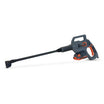
Want to water your courgettes smartly as well as feed them? Then we recommend our FX-VRG1 garden watering lance, which lets you water your plants precisely and efficiently.
Courgettes need plenty of water, but not waterlogged conditions. Water regularly – ideally in the morning or evening when temperatures are cooler. In the height of summer you may need to water daily, especially for plants in pots or raised beds, as the growing medium dries out more quickly there.
A common problem with courgettes is powdery mildew, which appears as a white coating on the leaves. Regular watering without wetting the foliage, along with a well-ventilated position, will help to prevent it.
Also make sure to practise crop rotation to prevent fungal diseases. Remove affected leaves immediately using a sharp pair of secateurs – for example our FX-HGW4 garden shears work perfectly for this.
Harvesting, storing & using courgettes

You can harvest the first young fruits just six to eight weeks after planting – usually from mid-June onwards. You should harvest courgettes regularly once they are around 15 to 20 cm long.
The more frequently you harvest, the more new fruit the plant will produce. Cut them off by the time they reach 25 cm at the latest – this is when they're at their most tender. Larger specimens often develop tough skins and larger seeds.
Use a sharp knife or one of our FUXTEC garden shears to harvest, so as not to damage the plant. It's best to cut the fruit cleanly at the base. Courgettes can be stored in the fridge for about a week – for longer storage, freezing or pickling is the way to go.
The flowers of the courgette plant are also edible – particularly the male flowers, which don't develop into fruit. They are excellent for frying or stuffing. Just be careful not to remove too many flowers, as they are needed for pollination.
A word of warning: you should on no account eat bitter courgettes! These contain toxic cucurbitacins, which can develop through back-mutations or plant stress. If a courgette tastes bitter, it goes straight on the compost heap!
How to achieve a successful courgette harvest
Follow a few simple principles and there's nothing stopping you from enjoying a bumper harvest. Here are the key tips at a glance:
- A sunny position and loose, nutrient-rich soil are essential.
- Grow courgettes in a pot, raised bed or open ground – depending on the space available.
- Water and feed regularly, especially during fruiting.
- Harvest frequently so the plant keeps producing new fruit.
Discard any bitter fruit and never eat courgettes that taste unusual.
| Advantage |
Courgettes in the garden |
Courgettes in a pot/raised bed |
| Space required |
High |
Low (space-saving) |
| Control over soil quality |
Medium |
High |
| Mobility |
None |
High (especially on a balcony) |
| Watering needs |
Moderate |
High |
| Pest risk |
Higher |
Lower with a good position |
As you can see: Courgettes are not only easy to grow, but can also be perfectly adapted to your gardening situation. Whether you have plenty of space in the garden or want to grow courgettes in a space-saving way on the balcony – with the right preparation and care, you're bound to succeed.
Fancy even more gardening inspiration? Then take a look at our articles on growing tomatoes or discover how to plant up a raised bed – with a year-round planting plan.