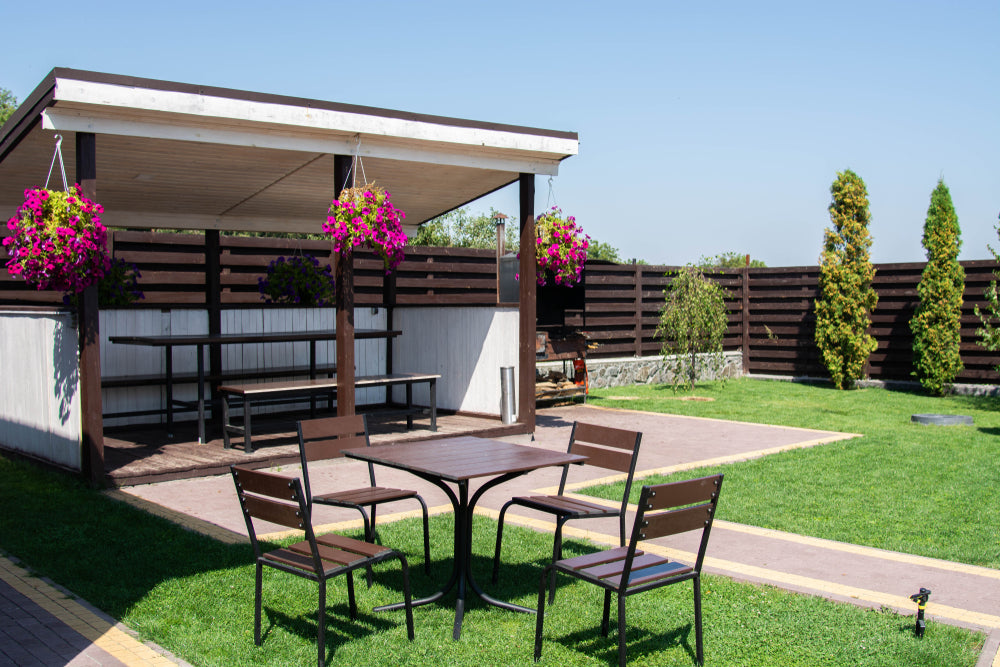
If you want to build a comfortable BBQ area in your garden yourself, you've come to the right place. This step-by-step guide shows you how to build your own BBQ shelter and stay covered without sacrificing comfort. Find out how a solid BBQ shelter protects you and creates an inviting BBQ corner.
How do I plan my BBQ area with a roof covering?
Planning a covered BBQ area begins with choosing the right location: allow plenty of space, ensure good ventilation, and find a stable, level surface. A well-thought-out plan prevents costly changes later and saves time. With the FX-E1IS20 Set cordless hammer drill, you can mount posts and brackets safely and precisely. Avoid spots where strong winds and rain hit the barbecue directly, so you can grill comfortably whatever the weather.
When sizing your shelter, decide whether a small BBQ hut is enough or whether you'd prefer a generous BBQ gazebo. Note down all measurements carefully, including distances from walls or fences. Bear in mind that the gas barbecue needs adequate clearance from combustible materials. Only then will you have a safe and comfortable covered BBQ area that suits your garden.
Materials and Weather Resistance
Choosing from a range of different materials determines how long-lasting your BBQ shelter will be. Solid Douglas fir or pressure-treated timber offer a natural look, whilst steel sections provide high structural strength. Make sure the timber is weather-resistant and requires minimal upkeep through rain and sunshine. A UV-resistant wood stain or weatherproof oil finish provides additional protection from rain and extends the lifespan of your structure.

An open BBQ shelter protects the barbecue from wind and weather, whilst a fully enclosed cladding keeps things safe even in storms and snow. The ideal roof shape channels water away quickly – for example, a pitched roof with a gentle slope. This keeps your BBQ area dry even in strong winds and provides reliable cover.
Step-by-Step Build Guide
A clear step-by-step guide ensures the build goes smoothly. Start by measuring and marking out your plan on the ground to avoid having to make adjustments later. Use our straightforward guide as a checklist and don't miss any detail: foundations, posts, frame, rafters through to the roof structure.
Once the foundations are in place, lay out the posts, fit the cross beams, and assemble the load-bearing frame. Guides and tips recommend checking each stage as you go and fitting components with both hands before tightening all screws fully. This ensures your DIY BBQ shelter project is sturdy and built to last.
How do I create a solid foundation and posts?
A stable foundation is the basis for every DIY timber BBQ shelter. Use paving slabs or concreted point foundations to anchor the posts securely in the ground. Ensure frost-resistant installation at a depth of at least 50 cm so the shelter stays robust for years to come.
The choice between DIY foundations and ready-made post anchors comes down to personal preference. A custom BBQ shelter with point foundations offers maximum stability, whilst paving slabs look attractive and create a level surface. Plan the build costs realistically to avoid any nasty surprises.
How do I assemble the timber frame for my BBQ shelter?
Using a step-by-step guide, fix the main beams precisely onto the posts. Start with two lengthwise beams, secured to the posts with heavy-duty angle brackets. This creates the load-bearing core of the timber frame.
Next, cut the rafters to length at 60 cm spacings – the FX-E1CS20 Set cordless circular saw makes this straightforward. Then fit the roof battens ready for the final covering. Pay close attention to alignment and use a tape measure to maintain the desired height exactly. With this precise and easy guide, the build comes together quickly and safely.
Which roofing materials are suitable for the covering, and how do I stay weatherproof?
The roof covering protects your barbecue and your guests. Lay roofing felt as a cost-effective base, or use polycarbonate corrugated sheets for a lighter, weather-resistant option. Both solutions keep out rain, while also being optimised for heat resistance in rain and sunshine.
For extra protection against wind and rain, fit guttering and drip flashing. Make sure the roof covering channels water away in a controlled manner. Only then will your BBQ area stay dry and safe even in stormy weather, giving you reliable shelter.
How do I build side walls and a back wall as windbreaks?
Sturdy side walls made from decking boards or expanded metal protect against draughts and wind and weather. Secure the boards to the frame using stainless steel screws. The height depends on your needs – either half-height for privacy screening or full height as a back wall.
A full-height back wall turns your shelter into a weatherproof BBQ hut. Use thick planks or OSB boards for maximum rigidity. Clever ventilation slots prevent heat build-up and keep the atmosphere pleasant whilst you grill.
How do I incorporate a fire pit or outdoor kitchen in a DIY build?
A garden fire pit combines rustic charm with practicality. Position it centrally or to one side, firmly seated in a fire bowl. Follow fire safety regulations and maintain clearance from combustible building materials.

For a fully equipped outdoor kitchen, incorporate worktops, a sink, and storage. Pair the gas barbecue with timber or stainless steel work surfaces. Building a small DIY bar from pallets or solid wood adds extra comfort for your guests.
How do I set up comfortable seating and build a bar myself?
With comfortable seating and candle lanterns, you create a cosy atmosphere. A bench made from pallets can be quickly finished with cushions and weatherproof fabrics. Round tables made from metal tubing provide space for salads and drinks.
Also plan a DIY bar from reclaimed wood or stone. A high-top counter with bar stools invites guests to linger. This way, your barbecue evenings have a relaxed atmosphere even on cooler nights.
Ideas and Inspiration for Your BBQ Corner
If you want to make your BBQ area even more personal, here are some brilliant ideas and inspiration for your BBQ corner. Whether you want to build your own BBQ shelter or just add individual elements as a DIY project – these ideas will turn your BBQ area into a real highlight.
1. Multi-functional Pallet Furniture
Use old pallets to make your own benches, bar counters, or shelving. With a simple guide, you can build a rustic seat that perfectly complements your timber structure. The result is a cosy DIY piece you can always extend when you need more room for guests.
2. Mobile Herb Garden and Outdoor Kitchen
A small outdoor kitchen combined with a herb garden brings fresh ingredients right to the BBQ area. Place wooden planters on castors within your BBQ shelter structure so you can adapt flexibly to rain or sunshine. This step-by-step guide shows you how to build the herb table yourself whilst making the most of the roof covering.
3. Wind and Rain Protection with Side Walls
Extend your BBQ hut with fixed side walls for protection from rain and wind and rain. A solid build guide helps you fit the walls correctly. With ventilation slots you'll stay well-ventilated and can shelter comfortably under your BBQ shelter.
4. Lighting and Atmosphere
Use subtle fairy lights or lanterns to set a magical scene in your DIY BBQ corner. Handy guides and tips explain how to fit weatherproof LED strip lights under the roof covering, so your guests can enjoy the evening long into the night.
With these design inspirations, your BBQ shelter will be not only functional but also a stylish gathering spot – built entirely by yourself and tailored exactly to your wishes!
Do I need planning permission to build a BBQ shelter?
Whether planning permission is required depends on the size and type of construction. Smaller, open BBQ gazebos generally fall within permitted development rights, whilst fully enclosed BBQ huts may require consent. Check with your local planning authority before starting the project.
If you're unsure, use a simple sketch and your plan to inform your local planning authority and neighbours. This helps you avoid enforcement notices later and means you can start using your shelter without delay.
What build costs should I budget for, and how do I calculate them?
The build costs vary depending on materials and specification. Budget approximately £900–£2,200:
-
Douglas fir or pressure-treated timber: £450–£1,050
-
Paving slabs and foundations: £175–£350
-
Roofing felt or sheets: £90–£265
-
Screws, brackets, and fixings: £90–£175
Draw up a list of required materials to avoid unnecessary expenditure. With savvy shopping and a DIY project approach, you can bring the costs down considerably.
Key Points at a Glance
-
Choose your location carefully and draw up a plan
-
Match your materials to weatherproofing requirements
-
Build the foundation below frost depth and anchor posts securely
-
Follow a step-by-step guide for a smooth assembly
-
Protect the roof covering with roofing felt or sheets against rain and sunshine
-
Fit side walls for additional wind and rain protection
-
DIY project options such as pallets for creative design
-
Outdoor kitchen extension and DIY bar for extra comfort
-
Calculate build costs accurately and have your tools ready
-
Seek out design inspiration to make your BBQ area truly unique
With these ideas and inspirations, you'll create a BBQ shelter that is both practical and visually impressive – built entirely yourself with no compromises on quality or craftsmanship!