The first wasp on the cake plate is usually still just a visitor. Three minutes later, it can sometimes feel as if it's gone off and posted a five-star review for the whole colony. Especially in late summer, several wasp species actively seek out sugary and protein-rich food sources. Open drinks, ripe fruit, barbecue leftovers and fallen fruit make patios and gardens very appealing to them.
The best approach isn't to "fight" wasps, but to reduce food sources, stay calm and gently keep individual insects at a distance. This protects you, your guests and these ecologically useful insects. After all, wasps prey on flies, midges and other insects, playing an important role in the garden.
The short answer: Cover food and drinks, clear away leftovers straight away, collect fallen fruit regularly and don't swat at the insects. Individual wasps can be gently discouraged with a fine mist of plain water. A nest should never be sealed, sprayed or removed yourself – this is a job for professionals or your local council's pest control service. Why are there so many wasps in late summer?
A wasp colony grows throughout the summer. By late summer, there are particularly high numbers of worker wasps, while feeding the brood becomes less of a priority. The insects then focus more on finding quick sources of energy. Sweet drinks, ripe fruit and cake become attractive; meat and sausages provide protein.
Around the garden table, it's mainly the common wasp and the German wasp that turn up. Many other wasp species show little interest in our food. A large number of wasps at the table doesn't automatically mean there's a nest right under the patio. Often the food source is simply easy to see and easy to reach.
In August, it's worth doing a short daily check around the garden and any fruit trees. Our FUXTEC guide to garden jobs in August shows you which harvesting and tidying tasks are due around this time anyway.

Keeping wasps away from the garden table: the most effective measures
1. Cover food and drinks
Serve food as close to eating time as possible and use well-fitting covers. Seal juice, squash and beer straight after pouring. Avoid drinking straight from an opaque can or bottle outdoors, as you won't see a wasp that's crawled inside. A glass with a lid and a straw is much safer.
2. Clear leftovers away immediately
Don't leave empty plates, barbecue meat, fruit peelings or sticky napkins on the table until the end of the meal. Put them straight into closed containers and wipe away any juice, jam or drink spills with water. After eating, wipe children's hands and mouths too.
3. Stay calm
Don't swat at wasps or wave your hands around. Sudden movements are read as a threat. Don't blow on a wasp either: the carbon dioxide in your breath can make it more defensive. Slow movements and a bit of distance work far better.
4. Keep bins and pet food covered
Rubbish bins need a tight-fitting lid. Rinse out sweet packaging before it goes into an open recycling box, and don't leave pet food sitting outside for long periods. On the compost heap, avoid leaving cooked food scraps, meat or fish out in the open.
Using a fine water mist against individual wasps correctly
A fine spray of plain water can encourage individual wasps to move on from the table. The insects interpret the fine droplets as the start of rain and often fly back towards their nest. The Royal Society for the Protection of Birds (RSPB) and Buglife mention this as a gentle option worth trying.
Use a clean, small spray bottle that has never contained cleaning products, pesticides or fertiliser. Set the nozzle to a fine mist and give a few light sprays towards the individual wasp from a bit of a distance. The aim isn't to soak the wasp or hit it with a hard jet of water.
Important: Never spray into an entrance hole or onto a nest. There, a water mist won't trigger a harmless "rain response" – instead, it can put many wasps into defence mode at once. For this reason, a FUXTEC pressure sprayer is deliberately not featured in this article as a wasp tool.
Clearing fallen fruit and garden waste that attract wasps
Ripe plums, pears or apples on the ground release sugar and ferment quickly in warm weather. During the main season, collect fallen fruit daily, or at least every other day. Pay particular attention to seating areas, play areas and well-used garden paths. Take care not to walk barefoot under fruit trees without checking the ground first.
Healthy fruit with just minor bruising can usually be used straight away. Badly rotten, mouldy or damaged fruit should be disposed of via your food waste/garden waste bin or local recycling centre, in line with your council's guidance. Our article on fallen fruit in the garden can help you decide between using it, composting it or throwing it away.
Open bags of garden waste, overripe fruit left on the compost heap and sticky collection containers also attract wasps. Keep problem material sealed and clean containers regularly. For guidance on what belongs in your garden waste bin, compost heap or local recycling centre, see our FUXTEC guide to disposing of grass cuttings and garden waste.
Home remedies against wasps: helpful, overrated or risky?
| Method |
Assessment |
What to bear in mind |
| Covering food |
very effective |
prevents access to the food source |
| Fine water mist |
suitable for individual wasps |
use plain water only, never at the nest |
| Basil, lemon or essential oil scents |
mixed results |
never apply directly to insects; scents can irritate people too |
| Copper coins on the table |
not reliably proven |
no substitute for covering food and cleaning up |
| Burning coffee grounds or smoke |
unnecessary fire and irritation risk |
better avoided, especially on dry patios |
| Bottle traps and electric traps |
not recommended |
kill insects and often catch other species too |
| Fake wasp nest decoys |
unreliable |
no substitute for sealing genuine entry points before the season starts |
So-called "decoy feeding" isn't always ideal either. It may lure wasps away from the table, but at the same time it makes your garden more attractive as a feeding spot overall. If several wasps are already patrolling the table, it's better to focus on covering food, clearing leftovers away and using a water mist on individual persistent visitors.
A wasp nest in the garden or on the house: what are you allowed to do?
If you spot a nest, keep your distance first and observe the flight path. Temporarily block off the area, redirect foot traffic and avoid vibrations, mowing or noisy machinery close to the nest. Never seal an entrance hole. The wasps will simply look for another way out – potentially into your home – and become defensive.
As a general rule, wild animals should not be deliberately disturbed, and must not be caught, injured or killed without good reason. Hornets and several other species have additional legal protection under the Wildlife and Countryside Act 1981. Getting a proper identification from someone experienced is therefore important.
Contact your local council's pest control service, a local pest control company, or a specialist wasp and hornet removal service. Relocating or removing a nest should only be considered where there's good reason to do so, and should be left to trained professionals. UK pest control and wildlife bodies consistently advise getting advice and confirming the species first, before taking any action.
Most social wasp colonies die off in autumn; only young queens survive the winter, usually somewhere else entirely. The old nest is normally not reused. If the area can be avoided for a while, simply waiting it out is often the easiest solution.
Wasp, hornet or bee: not every black-and-yellow insect is the same
- Wasps: slender body, bold black-and-yellow markings, little hair. Common wasps and German wasps are the ones most often found around food.
- Hornets: noticeably larger, with reddish-brown and yellow markings. They're a protected species and should be assessed by someone experienced.
- Honeybees: more compact and hairier, with a brownish-golden colour. A swarm of bees should be dealt with by a local beekeeper.
- Hoverflies: mimic the warning colours but only have one pair of wings and no sting. They often hover quite still in the air.
Try not to identify a species from very close up using your phone. A photo taken from a safe distance, along with a description of the nest shape, location and flight path, is far more useful to an adviser than a risky close-up.
What to do after a wasp sting
First, calmly move away from the area to avoid further stings. Cool a normal, localised swelling with a cold pack wrapped in cloth, and keep an eye on how it develops. Don't scratch the area. Wasps don't usually leave their sting behind; if you do find a sting left in the skin, it was more likely a bee.
If someone is stung in the mouth or throat, or has difficulty breathing, trouble swallowing, facial swelling, severe dizziness, circulation problems, nausea, or symptoms affecting the whole body, call 999 for emergency help immediately. Anyone with a known insect venom allergy should use their prescribed emergency kit as they've been trained to do.
FUXTEC garden tools: removing food sources instead of fighting wasps
None of the tools below are wasp control products. Instead, they tackle the problem earlier on: harvesting overripe fruit in good time, keeping fallen fruit visible, and moving larger quantities out of the garden in closed containers.
Three tools for a tidier fruit and seating area
Fewer open food sources mean fewer reasons for wasps to come and check out your garden table and the paths around it.
Remove overripe fruit in good time
FUXTEC Premium Garden Scissors 3-Piece Set FX-SPS3
Use the pruning snips to remove damaged fruit within reach, along with its short stalk, before it splits open and becomes a food source on the ground. Only cut fruit you can reach safely from the ground.
- controlled cuts on fruit stalks and thin branches
- secateurs for further care work in the fruit garden
- ergonomically shaped handles
View product: FUXTEC Premium Garden Scissors 3-Piece Set FX-SPS3
Spot fallen fruit more easily
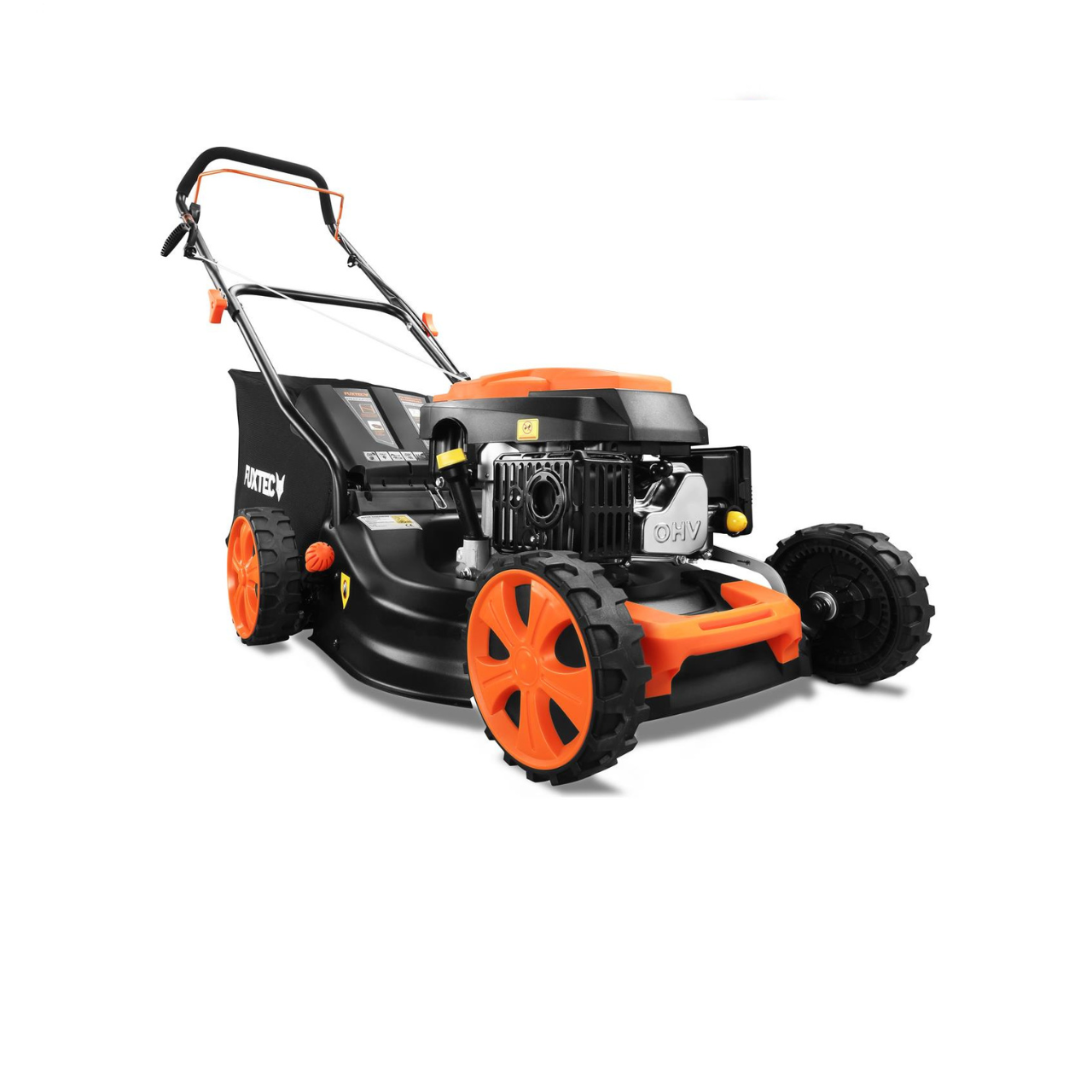
FUXTEC 40V Cordless Lawnmower FX-E1RM20-SET
A well-maintained orchard lawn makes fallen fruit easier to spot straight away. Collect all fallen fruit before each mow and check the area for wasps – the mower itself won't pick fruit up for you.
- 33 cm cutting width
- cutting height from 25 to 65 mm
- includes two batteries and a twin charger
View product: FUXTEC 40V Cordless Lawnmower FX-E1RM20-SET
Transporting larger quantities
FUXTEC Tipper Cart FX-KW2175
The tipper cart carries full, closed buckets or containers of fallen fruit and garden waste to your food waste bin or a collection point. That way, fruit isn't left sitting openly in the tray.
- plastic tray on a sturdy steel frame
- steerable front axle and wide pneumatic tyres
- built-in tipping function
View product: FUXTEC Tipper Cart FX-KW2175
Don't use machinery near a nest: lawnmowers, trimmers, leaf blowers and other machines create vibration and air movement. Keep them well away from the nest area and have any unclear situation assessed by an expert first.
Conclusion: to have fewer wasps, make your garden less appealing first
The most reliable way to keep wasps at a distance is to make sure there's nothing for them to find at your seating area. Covered food, sealed drinks, clean table surfaces and regularly cleared fallen fruit may seem unremarkable – but that's exactly why they work so well. You can calmly move on individual visitors with a fine water mist.
Traps, poison, frantic swatting and experimenting near a nest all increase the risk to people and wasps alike. If lots of wasps keep appearing from the same direction, observe from a distance and get expert advice. Discouraging rather than fighting wasps isn't the "softer" option here – it's usually simply the most practical one.