Remove Weeds from Paving Joints | Methods & Tips

Removing weeds from paving joints is one of those garden tasks that can quickly become a real chore. Whether it's the driveway, a footpath, or between patio slabs — once dandelions and other unwanted plants start spreading through the cracks, the whole area looks neglected in no time. However, when it comes to weed control on hard surfaces, you do need to be careful. Not every method is permitted: substances such as salt or vinegar can be problematic if they wash off into watercourses or groundwater untreated. It's therefore important to know which approaches are legally acceptable and how to tackle weeds effectively without harming the environment.

In this FUXTEC garden guide, we'll show you how to remove weeds from paving joints, which methods actually work, when a joint scraper, boiling water, or a brush cutter is the right choice, and how to prevent new weeds from establishing themselves between your paving stones for good.

Removing Weeds from Joints: What's Not Allowed When It Comes to Weed Control?

On hard surfaces such as driveways, patios, or paths, you are not permitted to simply kill weeds using chemical products. This includes conventional herbicides as well as many weed killers that are not specifically approved for use on hard surfaces. The reason: on paving joints and slabs, residues cannot be adequately broken down in the soil. Instead, they can run off with rainwater and enter watercourses or groundwater. Even popular home remedies such as salt or table vinegar are problematic. While they may appear to work against weeds in the joints at first glance, they can damage soil, plants, and micro-organisms. Salt harms soil biology, while table vinegar can alter the pH level and weaken surrounding plants.

DIY Weed Killers: Why Home Remedies Are Not a Good Idea

You should avoid making your own weed killers from household ingredients. Even home-mixed solutions using salt, vinegar, washing soda, or similar substances fall into a legally problematic area when used for weed control. In the UK, pesticides and herbicides must be approved for the intended use under the Control of Pesticides Regulations — homemade mixtures do not meet this requirement.

Exception: Treating Weeds in Joints with Diluted Vinegar

Applying very diluted vinegar directly and sparingly onto individual plants in paving joints may be considered where no approved alternatives are practical. It is important that you do not apply it broadly across the surface, but target only each individual plant.

Bear the following in mind:

  • Mixing ratio: no more than 3 parts vinegar to 2 parts water
  • Acidity: the vinegar should contain no more than 10% acetic acid
  • Application: spot-treat individual plants only
  • No broad application: do not pour over paving joints, patios, or driveways generally

Methods That Actually Work for Effective Weed Control

When it comes to tackling weeds, you don't necessarily need chemicals. Particularly on hard surfaces, mechanical and thermal methods are often the better choice.

Simple and quick ways to remove weeds:

  • Remove weeds with boiling water: Boiling water is a quick and simple method to weaken weeds fast. Pour it directly onto the plant. The heat damages the plant cells, causing the weed to die off after around 72 hours, making it much easier to clear away.
  • Clean joints mechanically: Effective, environmentally friendly, and particularly thorough — removing weeds with a FUXTEC joint weeder gets the job done. You can work the weed out of the joint complete with its root. It's a little more effort, but it does a much better job of preventing dandelions and the like from growing straight back.
  • Brush away moss and light growth: Moss in patio joints or light surface growth on paved areas can often be removed effectively with a stiff brush. This method is particularly well suited to smaller areas and regular maintenance.
  • Use a pressure washer strategically: A FUXTEC pressure washer can help to clean paving joints and dislodge loose weeds. Do take care not to wash out the joint fill entirely, as this can actually make it easier for new weeds to take hold.
  • Flame weeder (use with caution): A flame weeder can be effective at killing weeds, but should only be used in suitable weather conditions. Avoid using it during dry spells, on windy days, or near dry leaves, timber, or border plants.
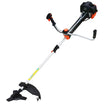
  • Brush cutter: For large areas in particular — though useful more generally too — a FUXTEC brush cutter is the easiest option when you want to clear weeds quickly and with minimal effort. It's especially effective at cutting back taller growth along edges, walls, borders, and larger areas before you then target the joints directly.

Read more here about how to effectively remove persistent weeds from your garden and lawn.

Removing Weeds from Joints and Paving: With the FUXTEC Brush Cutter

FUXTEC brush cutter for removing weeds from paving joints

If you want your driveway or patio to be completely weed-free, a FUXTEC brush cutter is the simplest and most effective choice — especially in areas where hand-weeding with a joint scraper, knife, or brush quickly becomes laborious. With the right wild weed brush attachment, you can remove weeds, nettles, and other growth from paving joints and slabs, garden paths, kerb edges, and steps far more easily. The attachment is particularly well suited to cleaning paved surfaces. For border areas, lawn edges, garden fences, or hard-to-reach spots, the mowing function can be used instead. This means you can tackle areas that would otherwise be difficult to reach with conventional tools.

Preventing Weeds Between Paving Stones

It's far better not to wait until weeds have already taken a firm hold. With regular maintenance, you can stop weeds from establishing themselves in the first place, saving yourself the hard work of clearing them later. On patios, paths, driveways, and other hard surfaces, regular sweeping makes a real difference. This removes seeds, soil, and organic matter before they can give rise to new plants. Moss and small seedlings can also be dislodged early this way.

  • Clean paving regularly: Remove soil, leaves, and small plant debris from the gaps — this makes it much harder for weeds to germinate.
  • Weed early: The smaller the weed, the easier it is to remove root and all. In particular, don't let dandelions and other deep-rooted weeds grow too large before tackling them.
  • Remove flower heads before they seed: If you don't have time to weed everything straight away, at least remove the flower heads. This prevents seeds from spreading further.
  • Top up joints: If paving joints have been washed out or are loose, weeds can take hold more easily. Top up any open areas as needed.
  • Edge your borders: If beds sit directly alongside paved areas, lawn edging, border bricks, or timber edging can help keep unwanted growth in check.

Finally: Don't Always See Weeds as the Enemy

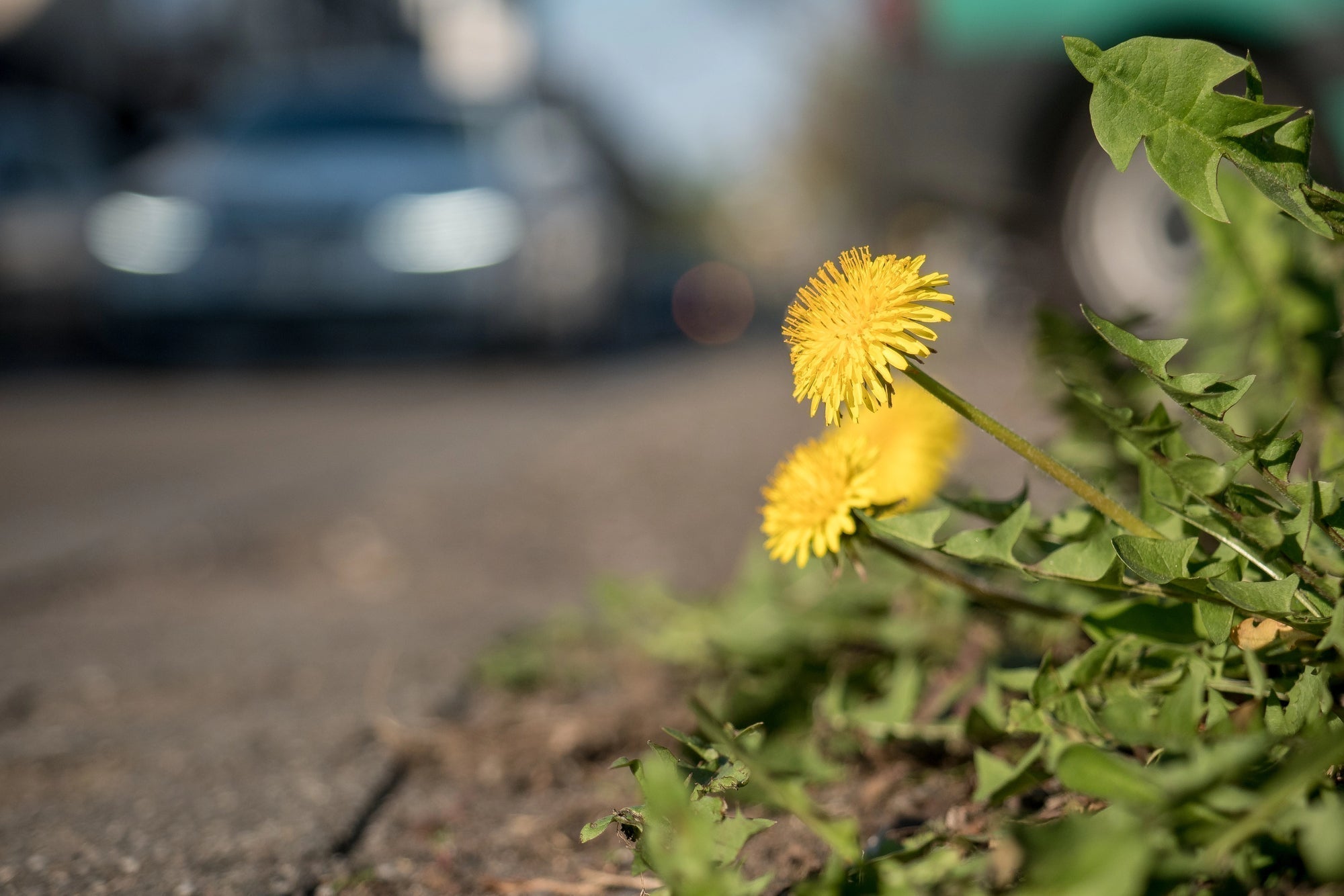
Wildflowers and weeds in a garden — not always the enemy

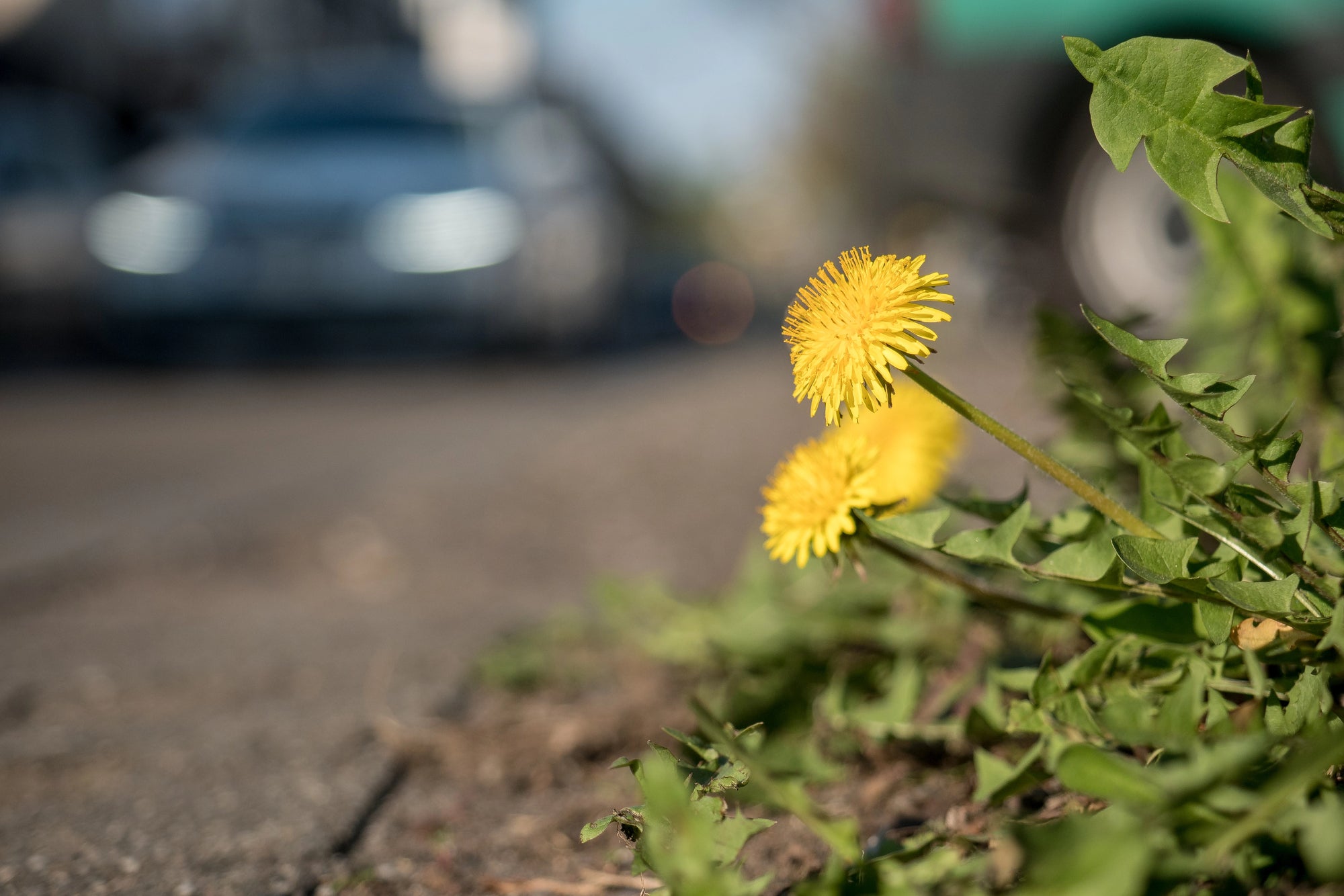
It's also worth taking a step back and looking at the bigger picture: does every weed really need to go immediately? The word may have negative connotations, but many so-called weeds are in fact wild plants and wildflowers with genuine ecological value. Daisies, dandelions, clover, and ground elder can all provide valuable food for insects, and some are even known as medicinal or culinary herbs. Particularly in borders or wilder corners of the garden, it can be worth leaving some of them to grow. You may well want to keep your paths and paving joints weed-free — but in the rest of the garden, a little more nature is no bad thing.

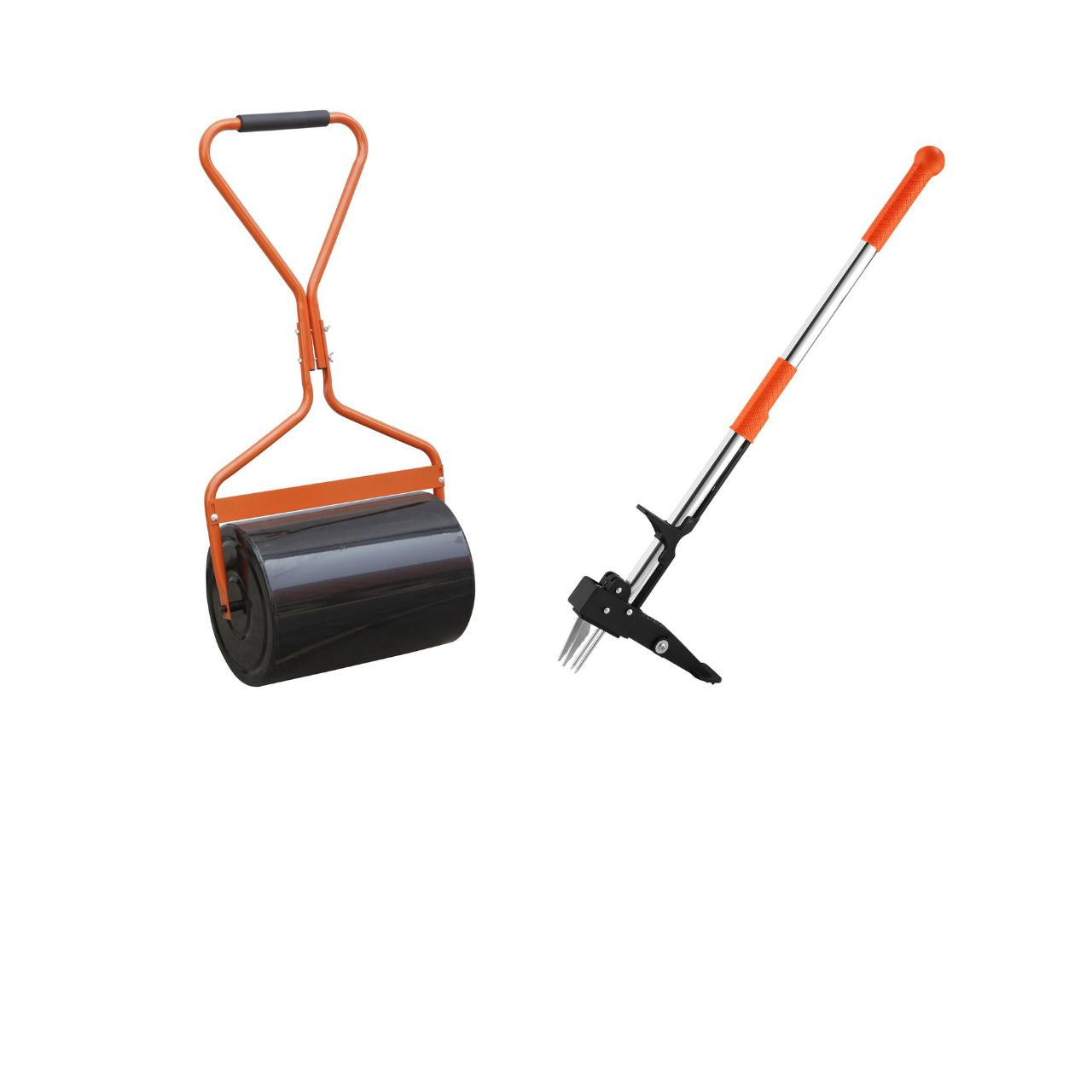
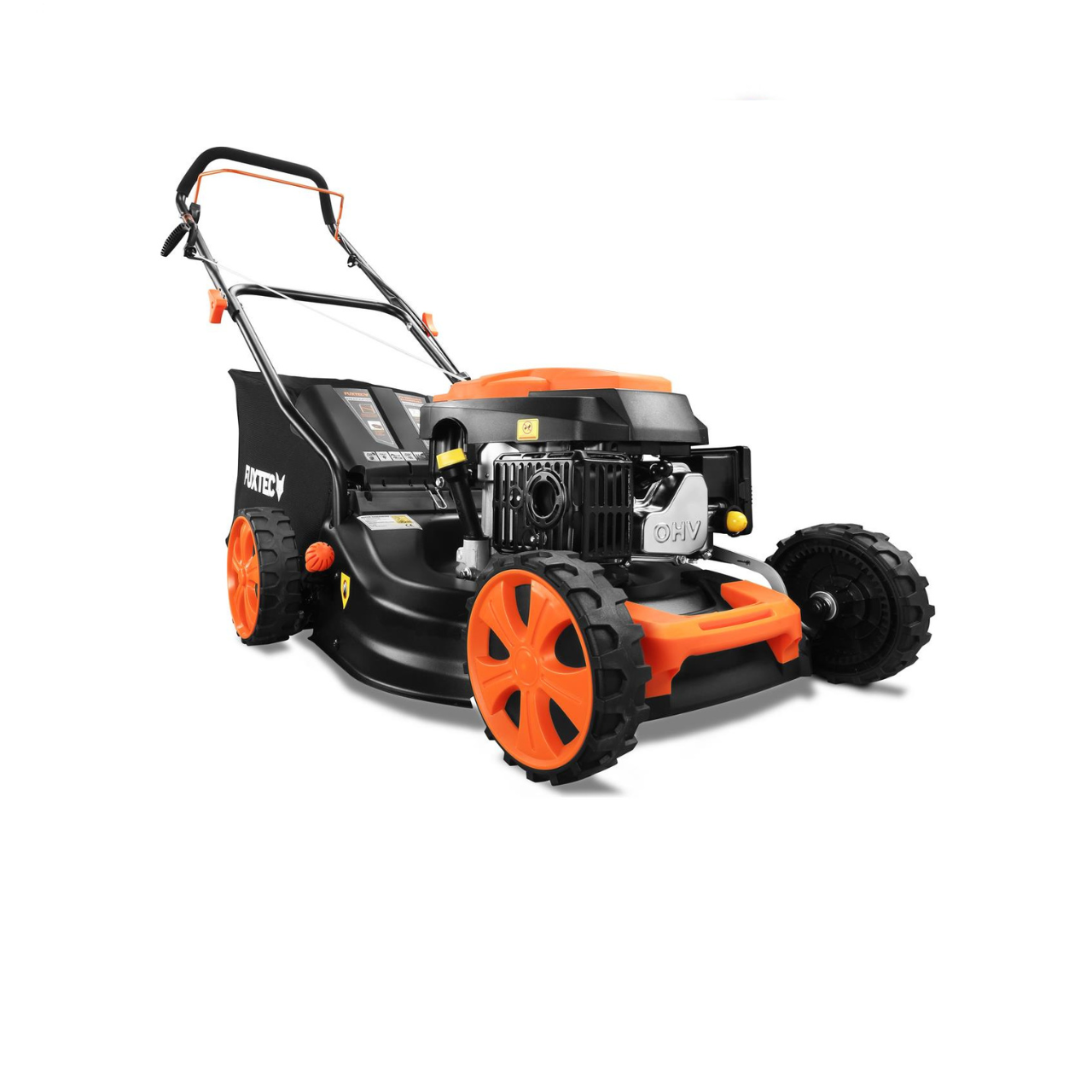
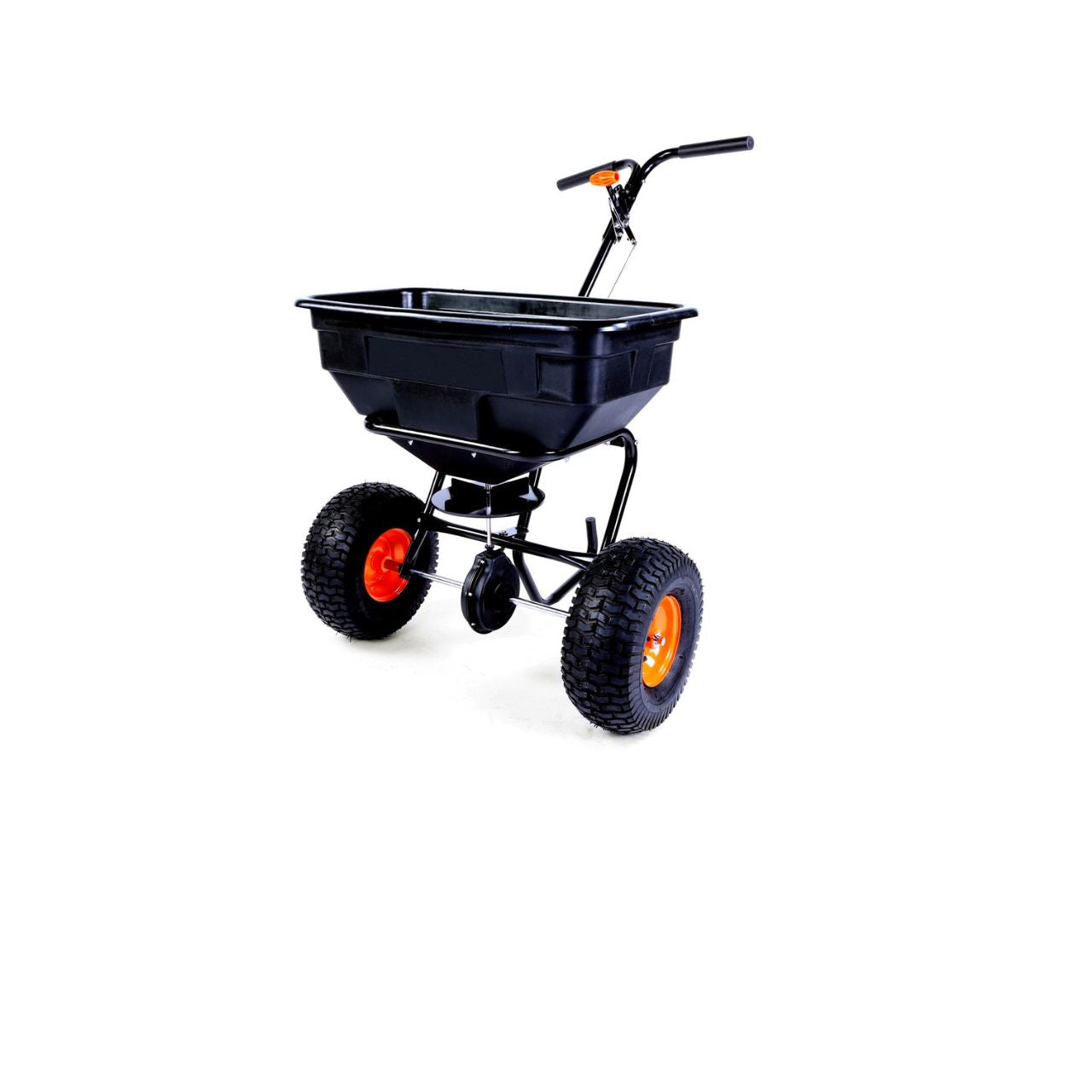
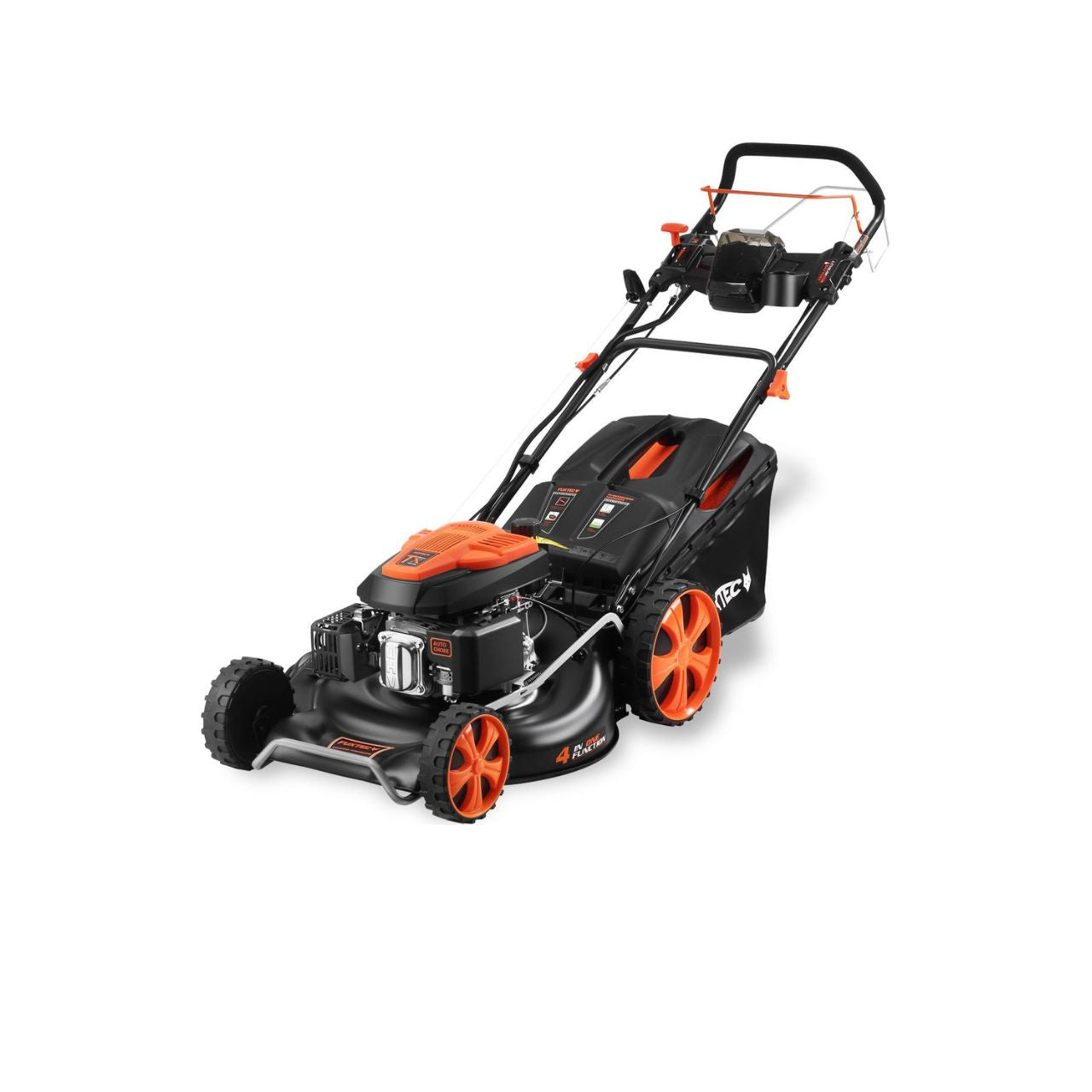
Useful tools for garden care and weed removal

Why can't I use salt or vinegar to kill weeds on my patio?

Salt and table vinegar can damage soil biology and harm surrounding plants by altering pH levels. More importantly, in the UK they fall outside approved pesticide use and their residues can run off into watercourses and groundwater, making them legally problematic for hard surfaces.

What's the best way to remove weeds from paving joints without chemicals?

Mechanical methods work best: use a FUXTEC joint weeder to remove weeds complete with roots, pour boiling water directly onto weeds to kill them within 72 hours, or use a stiff brush for moss and light growth. For larger areas, a brush cutter with the right attachment is quick and effective.

Is it legal to make my own homemade weed killer?

No, homemade weed killers are not permitted in the UK. Pesticides and herbicides must be approved for their intended use under the Control of Pesticides Regulations, and homemade mixtures do not meet this requirement.

Can I use diluted vinegar to treat individual weeds?

Very diluted vinegar may be used as a spot treatment on individual plants only, at a ratio of no more than 3 parts vinegar to 2 parts water with maximum 10% acetic acid. It must never be applied broadly across paving or joints.

How can I prevent weeds from growing in paving joints?

Regular maintenance is key: sweep your patio or driveway frequently to remove soil and seeds before they germinate, remove weeds when small, and top up any loose or washed-out joints. Removing flower heads before they seed also prevents new growth.

Is a pressure washer safe to use on paving joints?

A pressure washer can help dislodge loose weeds, but use it carefully to avoid washing out the joint fill entirely, as this actually makes it easier for new weeds to establish themselves.

Are dandelions and clover really just weeds I should remove?

While you'll want paths and paving joints weed-free, many so-called weeds like dandelions, daisies, and clover provide valuable food for insects and can even have medicinal or culinary uses. In borders and wilder garden corners, leaving some can benefit local wildlife.

More articles about removing weeds

View all
Unkraut aus Fugen entfernen: Die besten Tipps & Tricks

Remove Weeds from Paving Joints | Methods & Tips

Removing weeds from paving joints is one of those garden tasks that can quickly become a real chore. Whether it's the driveway, a footpath, or between patio slabs — once dandelions and oth...
Blattläuse bekämpfen Titelbild

How to Get Rid of Aphids – Tips & Home Remedies

Inhaltsverzeichnis Blattläuse erkennen: So findest Du den Schädling an Deinen Pflanzen Hausmittel gegen Blattläuse: Von Spülmittel bis Kaffeesatz Blattläuse biologisch bekämpfen: Mit Rapsöl, Nüt...
Grünschnitt und Gartenabfälle richtig entsorgen Titelbild

How to Dispose of Garden Waste Properly – UK Guide

Inhaltsverzeichnis Welche Arten von Gartenabfällen gibt es überhaupt? Wohin mit dem Grünschnitt? Diese Entsorgungsmethoden gibt es Gartenabfälle kompostieren: So funktioniert die ökologische Ver...