


How to Remove Clover from Your Lawn
Removing Clover – Effectively and Permanently
Clover is probably the most common lawn weed of all. While its nectar-rich flowers are a delight for bees and bumblebees, it causes long-term harm to the surrounding grasses. Once it begins to spread, its broad leaves rob the light-hungry lawn of the conditions it needs to thrive.
Clover – welcome in farming, less so in the garden
Clover belongs to the legume family and is easy to identify by its characteristic trifoliate leaves. Four-leafed specimens are considered symbols of good luck and are rarely found in wild plants. Clover plays an important role in agriculture as a fodder plant and green manure, enriching the soil with nitrogen. It does this by forming a symbiosis with certain bacteria in its root nodules, which fix nitrogen from the air and make it available to the plant. Clover therefore thrives even in low-nitrate soils, independently of regular fertilising.
White Clover
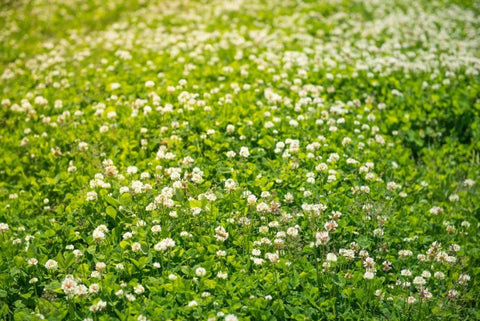
White clover, sometimes also called creeping clover, often forms expanding patches on the lawn. Although it has an underground rootstock, this does not produce extensive runners, so its spread tends to remain localised as long as it does not disperse widely by seed. These low-growing plants are highly resilient and robust — they are quite unperturbed by heavy foot traffic on the lawn. There are numerous varieties of white clover with decorative, colourful leaves that are popular as ornamental plants. In agriculture it is a high-yielding fodder crop. On ornamental lawns, however, white clover is generally unwanted, as it shades out the surrounding grasses and gradually displaces them. The exception is certain cultivars with very small leaves and a low growth habit that are deliberately used as a lawn alternative.
Understanding and permanently removing white clover
White clover is difficult to hand-weed because of its many individual leaves and stems. Rather than simply being frustrated by it, gardeners can also take its presence as a useful hint: clover establishing itself is a clear sign that the lawn is not being looked after optimally. When growing conditions for grasses are ideal, clover stands no chance. It only gains the upper hand when the grass is weakened by nutrient deficiency and conditions favour white clover. The most important steps when dealing with clover therefore focus on weakening the clover, strengthening the lawn, and improving the soil. When you do this, the clover tends to disappear almost on its own. Using herbicides on white clover is rarely worthwhile: they remove the weeds, but if the underlying soil conditions are not addressed, the effect will not last.
Weakening white clover
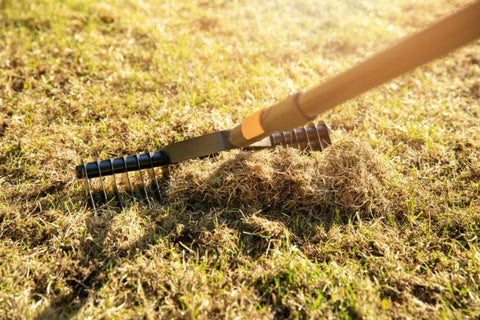
Scarifying is an excellent method against white clover. On the one hand it improves the soil structure; on the other it removes a large proportion of the existing clover. The underground root network is at least partially torn out, which weakens the plant significantly. If the lawn is then given optimal nutrients after scarifying, it will recover faster than the weed and easily regain the upper hand. For smaller clover patches, a hand scarifier is the best choice, as it allows more precise work so you target only the clover. Unlike standard lawn scarifying, when tackling clover you can set the machine so that the tines dig deeply into the soil and cause as much damage to the roots as possible. Work over the area once lengthways and once across, then rake up and remove the torn-out plant material. Bear in mind that any larger bare patches should be reseeded as quickly as possible to re-establish a dense grass sward before the clover has a chance to recover.
Removing white clover completely
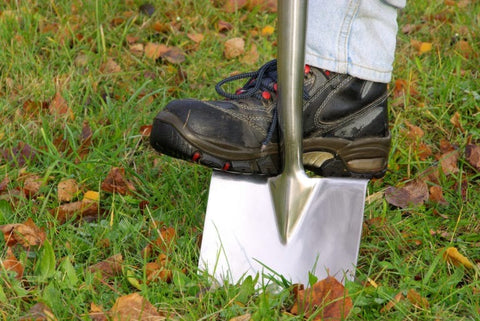
There is no guarantee that a single lawn clearance will get rid of white clover entirely, but digging it out gives you a very good chance. Cut around the entire clover patch with a spade and lift it out shallowly, roots and all. Then fill the hole with topsoil and reseed. The best time for digging out clover is autumn. It should still be warm enough for newly sown grass seed to germinate and establish, yet as temperatures cool and days shorten noticeably, clover also slows its growth. This gives the lawn enough time during late autumn and the following spring to get ahead before any clover remnants left in the soil can become a problem again the next year.
If digging out feels too laborious but you have some patience, you can also cover white clover on your lawn with black mulch sheeting. After around two months, the weed will die off due to lack of light, and you can sow new grass on the now-clear area. The best time for this approach is of course winter, when you are spending little time in the garden anyway and the lawn may even be covered by a layer of frost or snow. The new grass can then get off to a strong start in spring with the first feed of the season.
Feeding your lawn properly
Lawns on nitrogen-poor soil are especially susceptible to clover spreading. Because clover produces its own nitrogen through symbiosis with nodule bacteria, a lack of nitrogen does not hinder its growth at all. Grass, on the other hand, depends on an adequate supply of this vital nutrient in the soil. If clover is spreading widely across your lawn, it may be worth reflecting on whether the area has been fertilised regularly in recent years. Is the soil perhaps exhausted and the grass undernourished, leaving it unable to compete with weeds? A soil test will give you clarity. These typically cost between £10 and £30 and usually include a personalised fertiliser recommendation. You can find out more about correct and targeted fertilising elsewhere on our site.
Horn meal (horn and hoof) has proven particularly effective as a fertiliser against clover. Due to its fine texture, this organic fertiliser is broken down quickly by microorganisms and taken up by plants. It provides the lawn with the nitrogen it needs while containing very little phosphate, which would also benefit the clover. Clover is also far more drought-tolerant than grass, so make sure you water correctly — especially in summer and during dry spells — to prevent the weed from gaining an advantage in the first place.
Improving soil pH
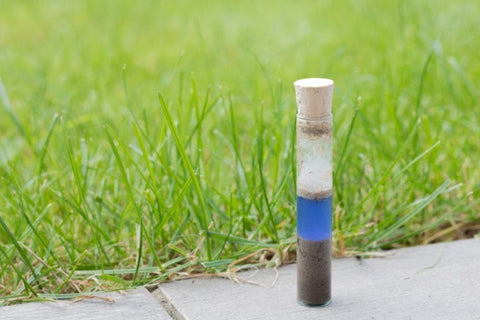
Soil pH depends on the composition of the soil and the minerals and trace elements it contains. In turn, it also influences how well individual nutrients in the soil can be absorbed by plants. For lawns, a pH of around 6 — slightly acidic — is ideal. Clover, on the other hand, prefers a slightly more alkaline environment with a higher pH. It therefore often takes hold when the soil pH has risen too high due to over-liming or similar measures. To lower the soil pH, you can for example apply a layer of mulch or compost. Both help to make the soil more acidic again, allowing the lawn to absorb nutrients more effectively, while making conditions less favourable for clover.
Quality grass seed mixes help prevent clover
Your lawn's susceptibility to clover (and other weeds) also depends on the grass varieties used. Budget seed mixes — for example those sold in discount stores — often consist largely of cheap agricultural grasses bred for rapid biomass growth. They do not tiller as densely and therefore remain vulnerable to weeds such as clover, dandelion, and many others throughout their life. They also exhaust the soil more quickly than premium grass seed mixes and produce more clippings. When buying lawn seed, always look for dedicated ornamental or fine lawn mixes. The grass varieties bred for this purpose ideally form such a dense sward that weeds have virtually no chance after just one year. Follow the key tips and tricks when laying a lawn, and you will be rewarded with a robust, healthy, and beautiful grass area.
Red Clover

While white clover is probably the most common lawn weed in UK gardens, it is not always this variety that gives gardeners a headache. Although the different clover species share many characteristics, each also has its own peculiarities that can either help or hinder your efforts to control it.
Red clover, also known as meadow clover, grows considerably taller than its smaller relative. Conversely, its roots can reach up to two metres deep, making it much harder to eradicate once established. New plants can also appear seemingly from nowhere as it reproduces via its roots. In the wild, you will encounter meadow clover on nutrient-rich grassland, at field margins, and in open woodland. In the garden it therefore often appears after such areas are brought into use, or where the garden borders existing wild ground. In agriculture, red clover is used both as a protein-rich fodder plant and as biomass for anaerobic digestion. It is also frequently included in green manure seed mixes.
Weakening and removing red clover
Like white clover, its red-flowered relative thrives in conditions with a high soil pH and a nitrogen-poor environment. While the lawn is significantly weakened in these conditions, the robust red clover simply grows over it. Unlike white clover, however, it is considerably harder to remove due to its deep taproot. Its wide-spreading offshoots are also capable of repeatedly resprouting, making the battle against this weed a true test of patience. Getting rid of it over time generally requires a combination of multiple approaches. Alongside weakening the clover through mowing and scarifying, you will usually also need to dig out individual plants. Removing all the roots would require digging up the entire garden and starting from scratch — not a realistic option. As with bindweed, you therefore weaken the plant by repeatedly cutting back its above-ground growth until the roots eventually die off too. At the same time, improve the soil conditions for the lawn using compost and nitrogen-rich fertiliser, so that the grass can quickly recolonise any bare patches and the clover has no chance in future.
In the battle against persistent red clover, you can also draw on selective weedkillers as a supporting measure. Products that act specifically against broad-leaved plants will not harm the lawn or insects, and can help bring a heavily weed-infested lawn back under control without excessive effort. As these products are absorbed through the leaves, they should only be applied on dry, rain-free days. Remove dead plant material after treatment, then reseed the area and fertilise as required. Make sure the product states clearly that it is effective against red clover, all clover species, or broad-leaved lawn weeds. Products designed for oxalis (wood sorrel) are often formulated differently and may be ineffective against red clover.
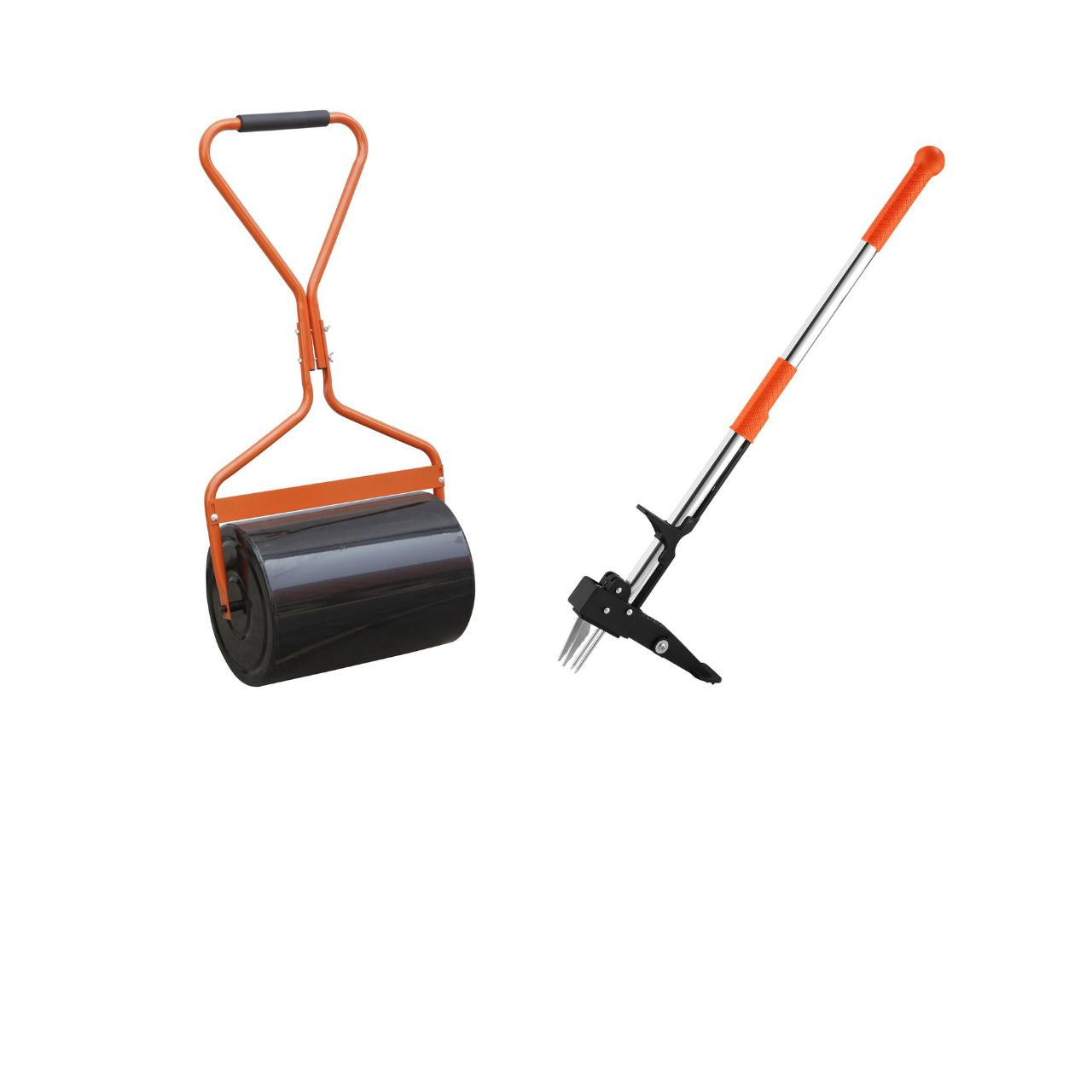
Useful tools for garden care and weed removal



More articles about removing weeds

Remove Weeds from Paving Joints | Methods & Tips
Removing weeds from paving joints is one of those garden tasks that can quickly become a real chore. Whether it's the driveway, a footpath, or between patio slabs — once dandelions and oth...
How to Get Rid of Aphids – Tips & Home Remedies
Inhaltsverzeichnis Blattläuse erkennen: So findest Du den Schädling an Deinen Pflanzen Hausmittel gegen Blattläuse: Von Spülmittel bis Kaffeesatz Blattläuse biologisch bekämpfen: Mit Rapsöl, Nüt...
How to Dispose of Garden Waste Properly – UK Guide
Inhaltsverzeichnis Welche Arten von Gartenabfällen gibt es überhaupt? Wohin mit dem Grünschnitt? Diese Entsorgungsmethoden gibt es Gartenabfälle kompostieren: So funktioniert die ökologische Ver...


