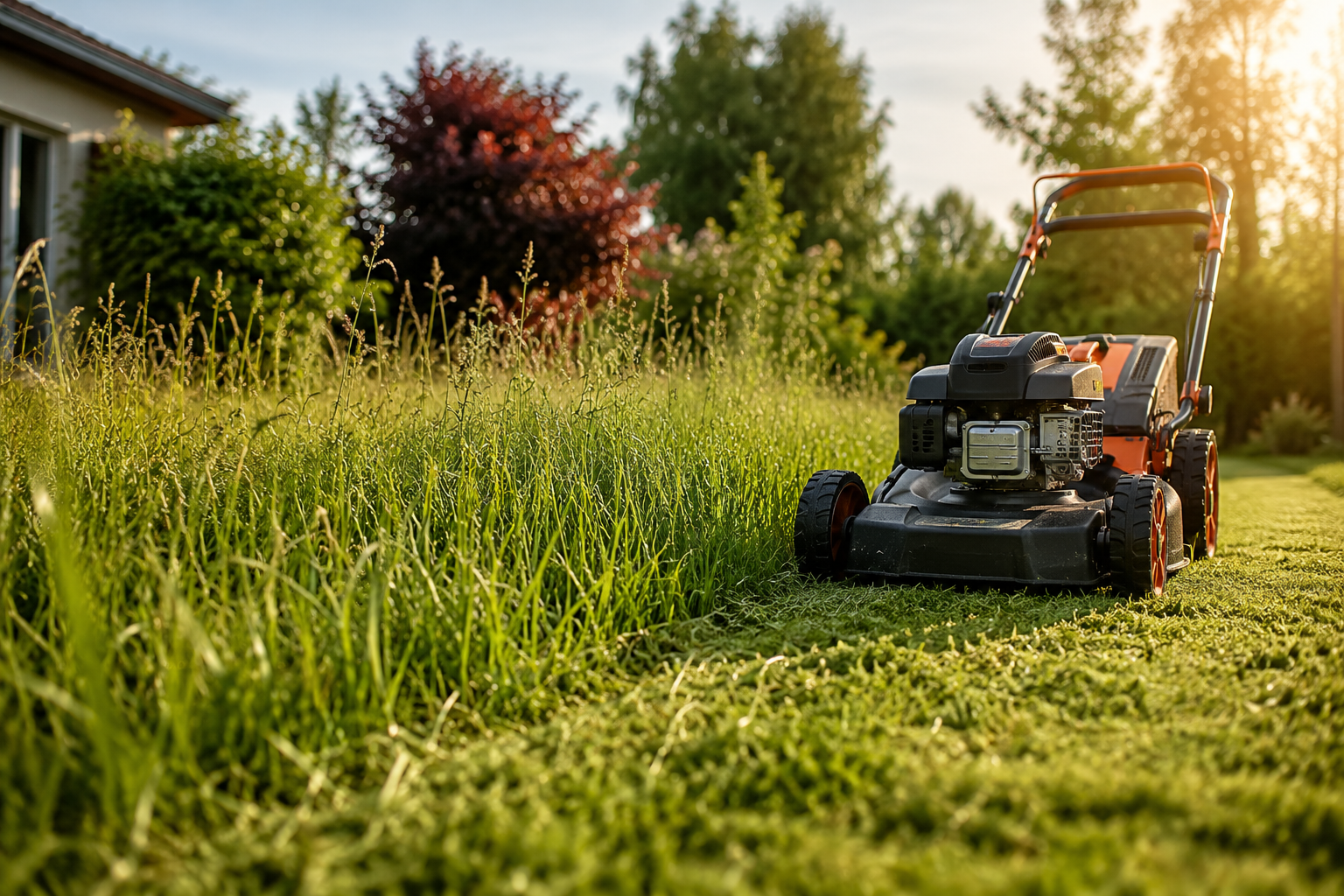
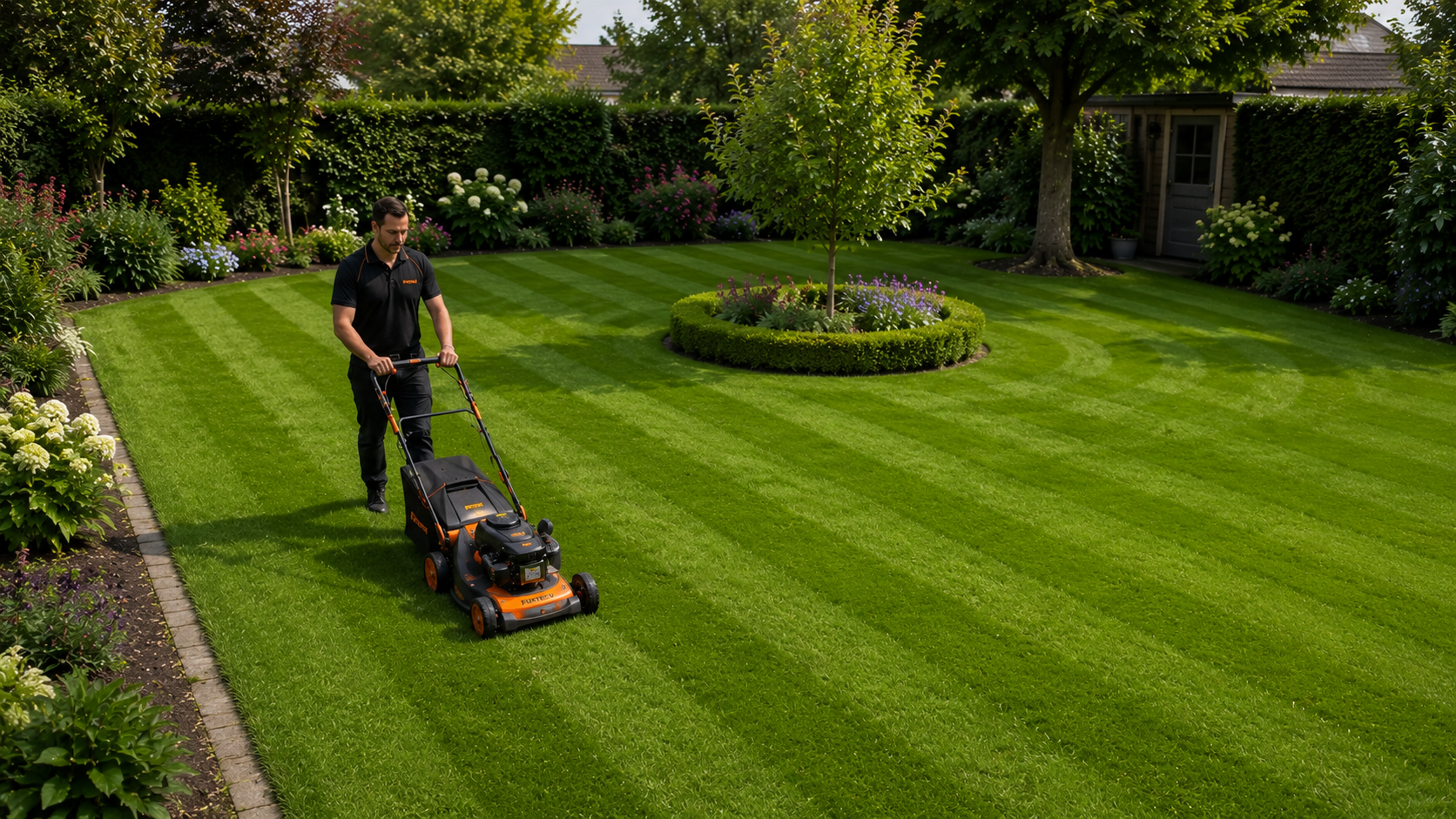
If your lawn has grown very long after a holiday, a spell of wet weather or a longer break from mowing, don't cut it straight down to the lowest setting. Reduce long grass gradually, choose the right tool for the height and density, and give the lawn time to recover between passes.

Why overgrown lawns shouldn't be cut short straight away
Grass blades need enough leaf area for light absorption and recovery. If a long lawn is cut drastically in one go, you're often left with pale or yellow patches, and the soil is suddenly exposed to much more sun.
The golden rule: never remove more than a third of the current growth height in one pass. If the lawn is significantly overgrown, spread the cut over several sessions.
How to mow correctly: ideal cutting height and the one-third rule
For a family or utility lawn, around 35 to 50 millimetres works well; in shady spots, aim for 50 to 60 millimetres. Ornamental lawns can be kept shorter with consistent care. In hot, dry weather, leave the grass about five to ten millimetres higher than usual.
If your lawn is, say, 20 centimetres tall, start with the highest cutting height available on your mower and only lower it gradually on subsequent passes.
Which mower, strimmer or scythe suits heavy growth?
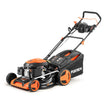
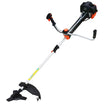
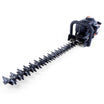
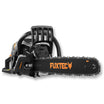
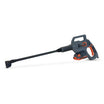
The right tool depends on the height, density and condition of the growth. Soft grass up to around 20 centimetres can often be handled by a powerful lawn mower set to its highest setting. For growth between 20 and 40 centimetres, or uneven patches, a grass trimmer or brushcutter is useful for the initial pass. Very long, flattened meadow grass can be tackled with a scythe or a sickle-bar mower, depending on the area involved.
Mowing long grass on small, medium and large lawns
The larger and more open the area, the more a wider cutting width pays off. In small, tightly laid-out gardens, however, lighter and more manoeuvrable machines have the advantage.
Small lawns up to around 200 square metres
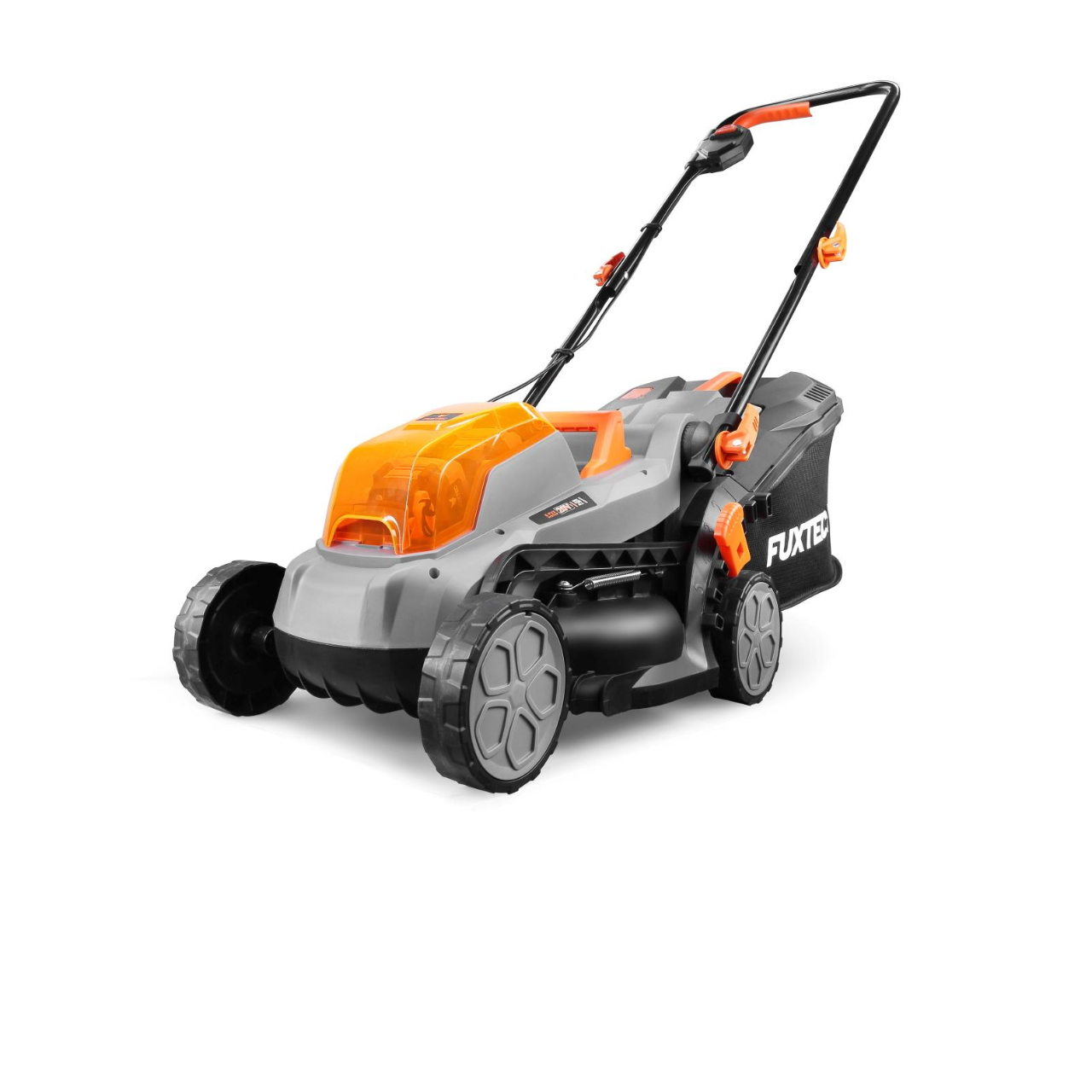
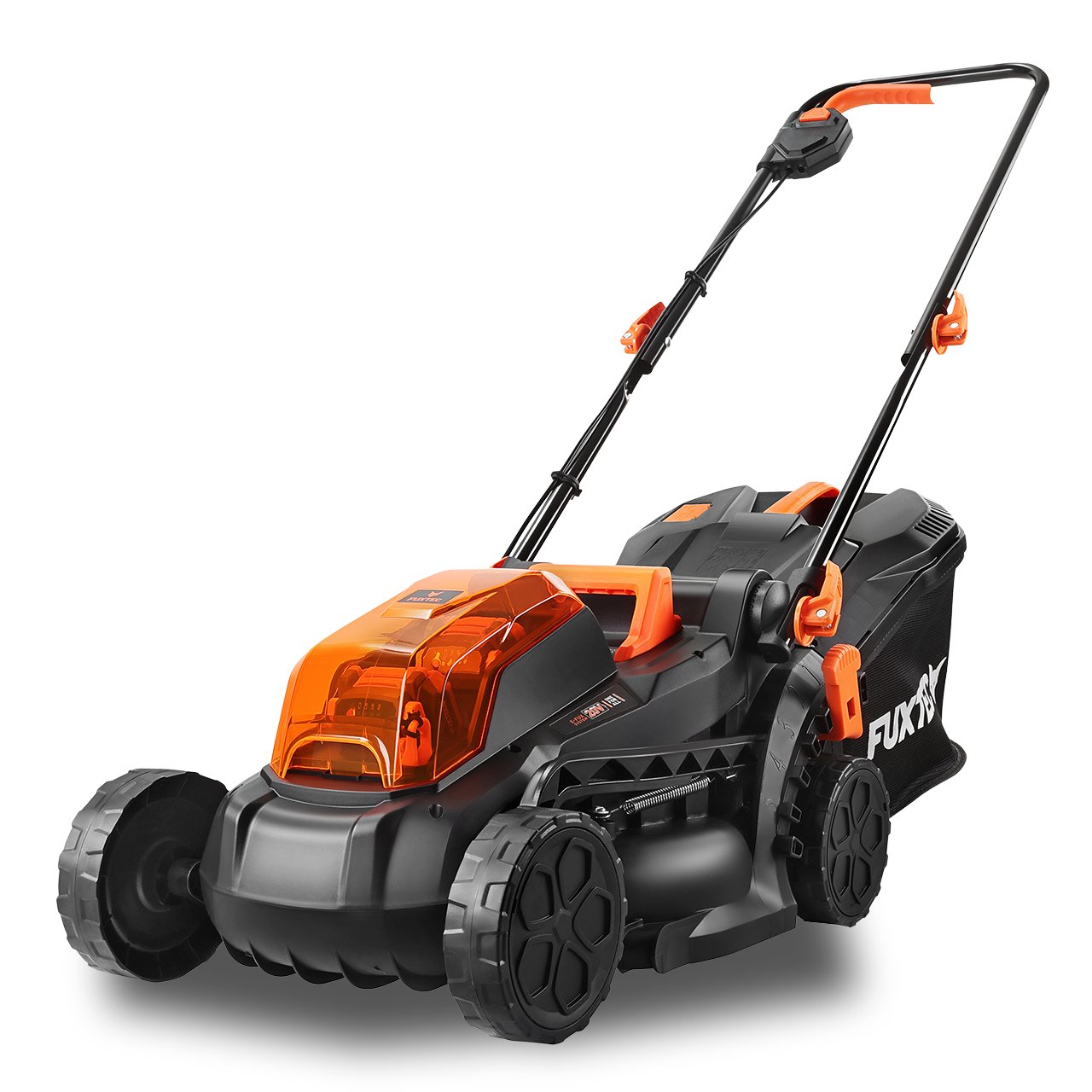
Up to about 200 m², a compact cordless mower is a good fit. The FX-E1RM20 offers a 33 cm cutting width and a cutting height of 25 to 65 mm. If growth is very long, work over the area with a trimmer beforehand.
Our recommendation

Ideal up to 200 m²
FUXTEC FX-E1RM20 SET
The compact entry-level choice for small gardens, tight corners and narrow paths.
33 cmCutting width
25–65 mmCutting height
- Light and especially manoeuvrable
- 30-litre grass collection box
- Includes 2 × 20 V / 2 Ah batteries
- Dual charger included
View FX-E1RM20
More range

Recommended up to 500 m²
FUXTEC FX-E2RM37SET
Greater cutting width and larger batteries for small to medium-sized lawns.
37 cmCutting width
25–75 mmCutting height
- Brushless, low-maintenance motor
- 40-litre grass collection box
- Includes 2 × 20 V / 4 Ah batteries
- Foldable, height-adjustable handle
View FX-E2RM37
Maximum comfort

For open areas from 401 m²
FUXTEC FX-E2RM46SET
The comfortable choice if you prefer wide swathes, wheel drive and flexible mowing functions.
46 cmCutting width
25–75 mmCutting height
- Wheel drive for comfortable operation
- 50-litre grass collection box
- Mowing, collecting, mulching and side discharge
- Includes 2 × 20 V / 4 Ah batteries
View FX-E2RM46
💡
Medium-sized lawns from around 200 to 1,000 square metres
For areas of roughly 200 to 1,000 m², depending on power access and garden layout, the electric models FX-RME33, FX-RME38 and FX-RME43, or the flexible petrol mower FX-RM4180, are all good options. With long grass, always start on the highest cutting setting and reduce your working speed.
Especially lightweight

Compact electric lawn mower
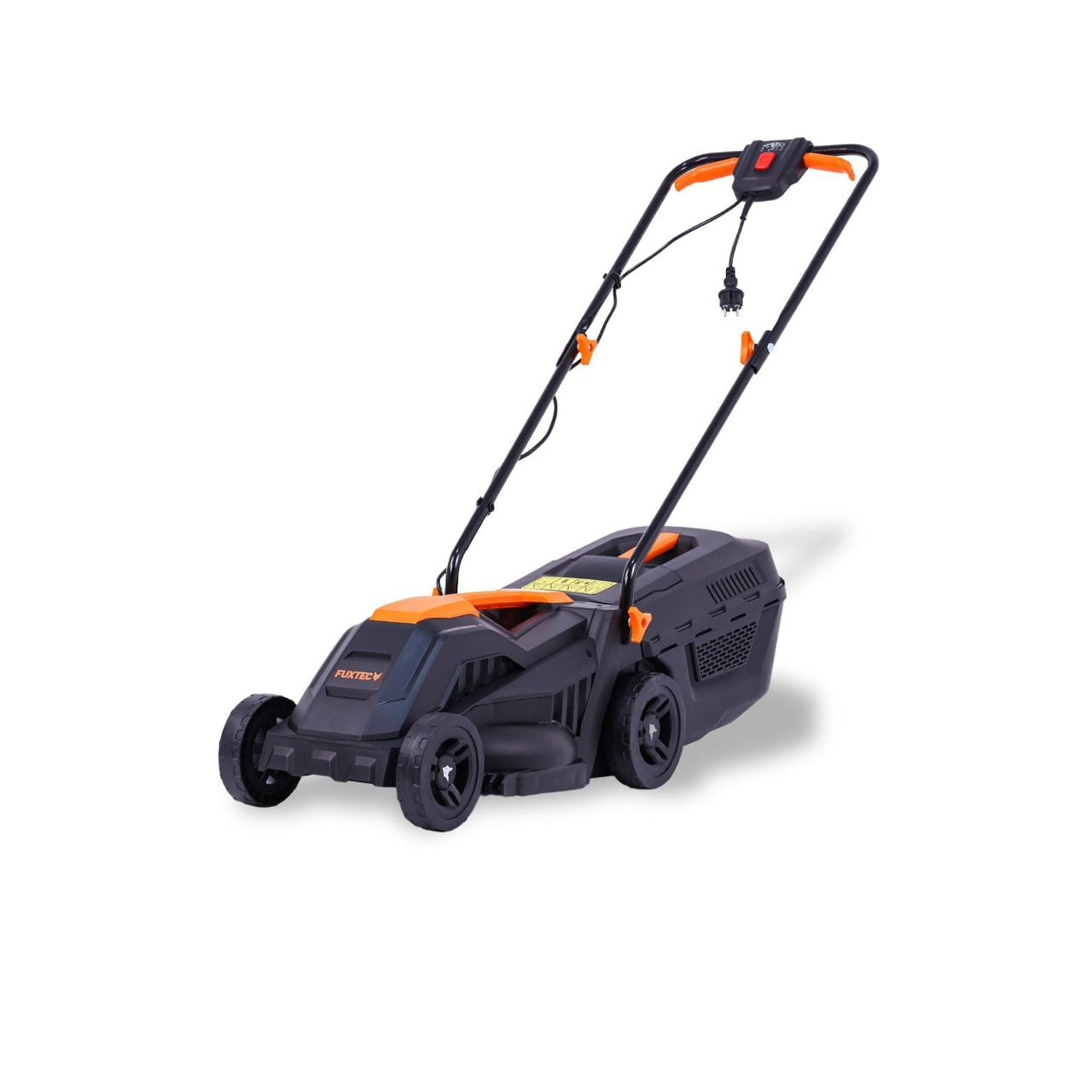
FUXTEC FX-RME33
The light, manoeuvrable model for smaller patches, narrow paths and gardens with lots of direction changes.
1,200 WElectric motor
33 cmCutting width
20–60 mmCutting height
9 kgNet weight
- 30-litre grass collection box
- Easy to manoeuvre and transport
- Constant power supply, no charging breaks
View FX-RME33
Power tip

More power for medium-sized lawns
FUXTEC FX-RME38
The well-balanced choice if you want more motor power and a larger collection box, while still preferring a handy machine.
1,600 WElectric motor
38 cmCutting width
40 litresGrass collection box
12 kgNet weight
- Variable cutting height adjustment
- More power reserve than the more compact corded models
- Good balance of manoeuvrability and working width
Rated 1.4 ("very good") in an independent DIY magazine test.
View FX-RME38
Widest electric option

For wide, open mowing lines
FUXTEC FX-RME43
With a 43-centimetre cutting width and a large collection box, this model reduces the number of passes and interruptions needed.
1,200 WElectric motor
43 cmCutting width
25–75 mmCutting height
45 litresGrass collection box
- Large rear wheels for easy manoeuvring
- Collection box with handy fill-level indicator
- Still easy to handle at 12 kg
View FX-RME43
No power cable needed

Compact petrol lawn mower
FUXTEC FX-RM4180
The compact alternative for parts of the garden without easy access to a power socket, and for frequent changes of direction.
79.8 cm³Petrol engine
40.6 cmCutting width
25–55 mmCutting height
45 litresGrass collection box
- Independent of sockets and extension leads
- Comparatively light and manoeuvrable at 18 kg
- Officially recommended for lawns up to 200 m²
View FX-RM4180
Model
RME33
RME38
RME43
RM4180
Drive
Electric
Electric
Electric
Petrol
Cutting width
33 cm
38 cm
43 cm
40.6 cm
Collection box
30 l
40 l
45 l
45 l
Best suited for
Tight, awkward areas
Extra power reserve
Wide mowing lines
Working without a cable
Large lawns from around 1,000 square metres
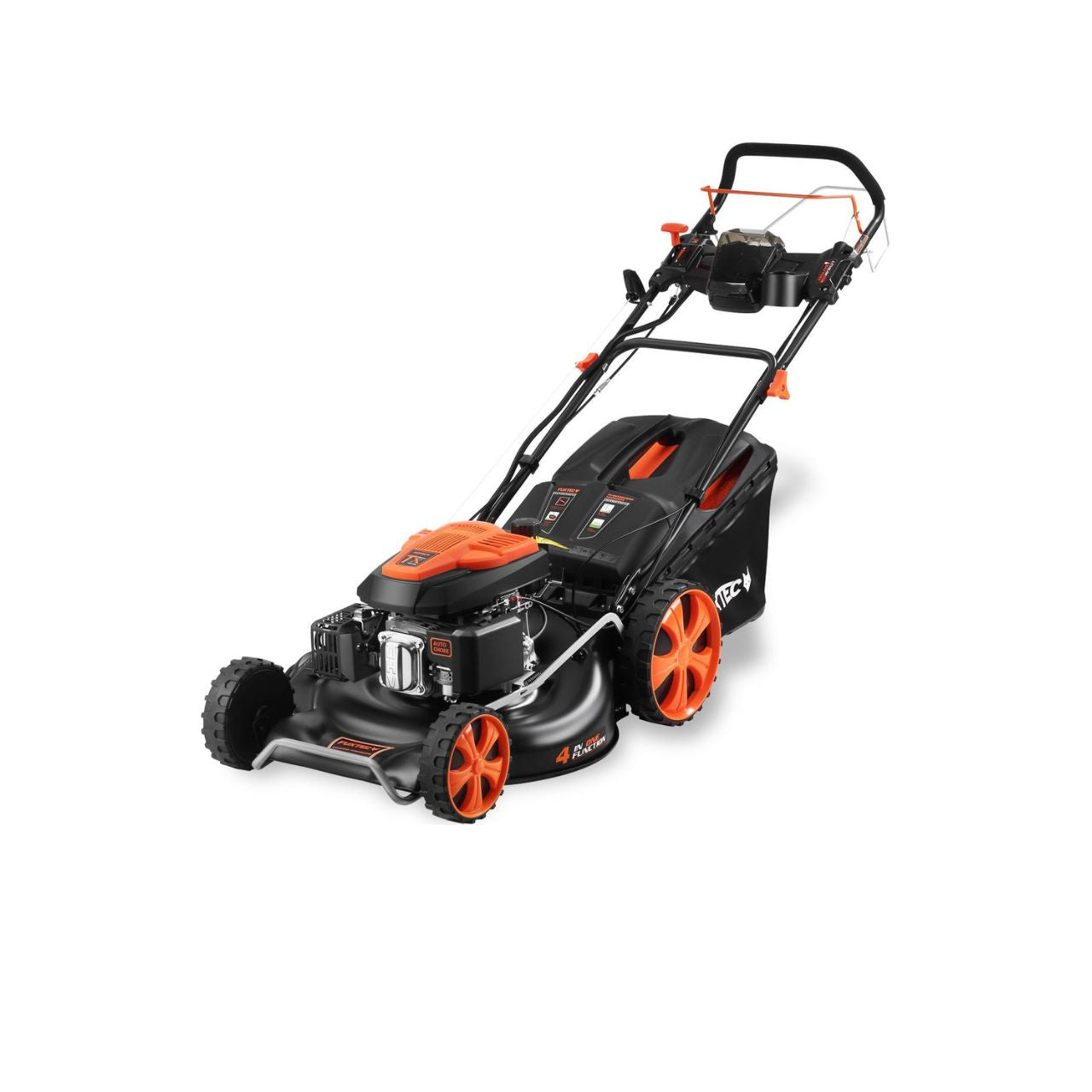
From about 1,000 m² upwards, wide, self-propelled petrol mowers save time and effort. The FX-RM5196PRO and FX-RM5196eS-PRO suit open areas, while the manoeuvrable FX-RM5170agile has the edge where there are lots of obstacles. Very long grass should be reduced with a brushcutter beforehand.
F
FlexSpeed for open areas An adjustable drive speed makes long mowing runs easier and can be tailored to terrain, grass length and your own working pace.
Z
Zero-turn for lots of obstacles Freely pivoting front wheels make tight turning manoeuvres around trees, beds, play equipment and other obstacles much easier.
Powerful all-rounder

Recommended up to 1,400 m²
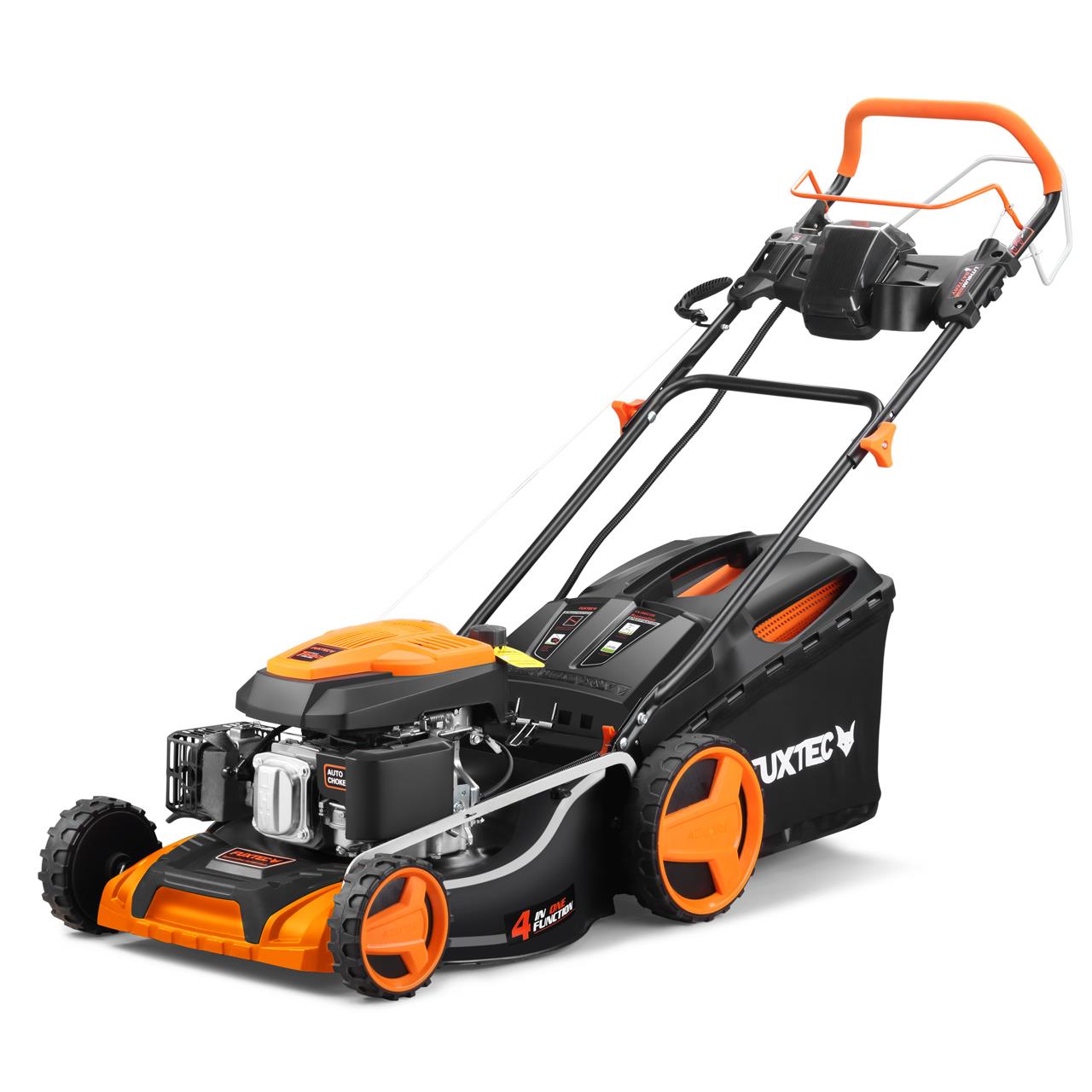
FUXTEC FX-RM5196PRO
The powerful all-rounder with adjustable rear-wheel drive, a large collection box and flexible 4-in-1 functionality.
4.4 kWMaximum engine power
196 cm³Displacement
2,800 rpmRated speed
50.1 cmCutting width
25–75 mmCutting height
60 litresGrass collection box
- FlexSpeed rear-wheel drive with GT gearbox
- Seven centrally adjustable cutting heights
- Mowing, collecting, mulching and side discharge
- Robust steel housing with EasyClean system
View FX-RM5196PRO
Maximum manoeuvrability

Recommended up to 1,500 m²
FUXTEC FX-RM5170agile
The especially manoeuvrable petrol lawn mower for large, structured gardens with trees, beds and tight turning points.
2.9 kWMaximum engine power
170 cm³Displacement
2,800 ± 200Rated speed in rpm
50.8 cmCutting width
25–75 mmCutting height
70 litresGrass collection box
- Freely pivoting and lockable front wheels
- Rear-wheel drive for less physical effort
- Mulching function plus rear and side discharge
- Large collection box for longer mowing intervals
View FX-RM5170agile
Comfort recommendation

Recommended up to 1,400 m²
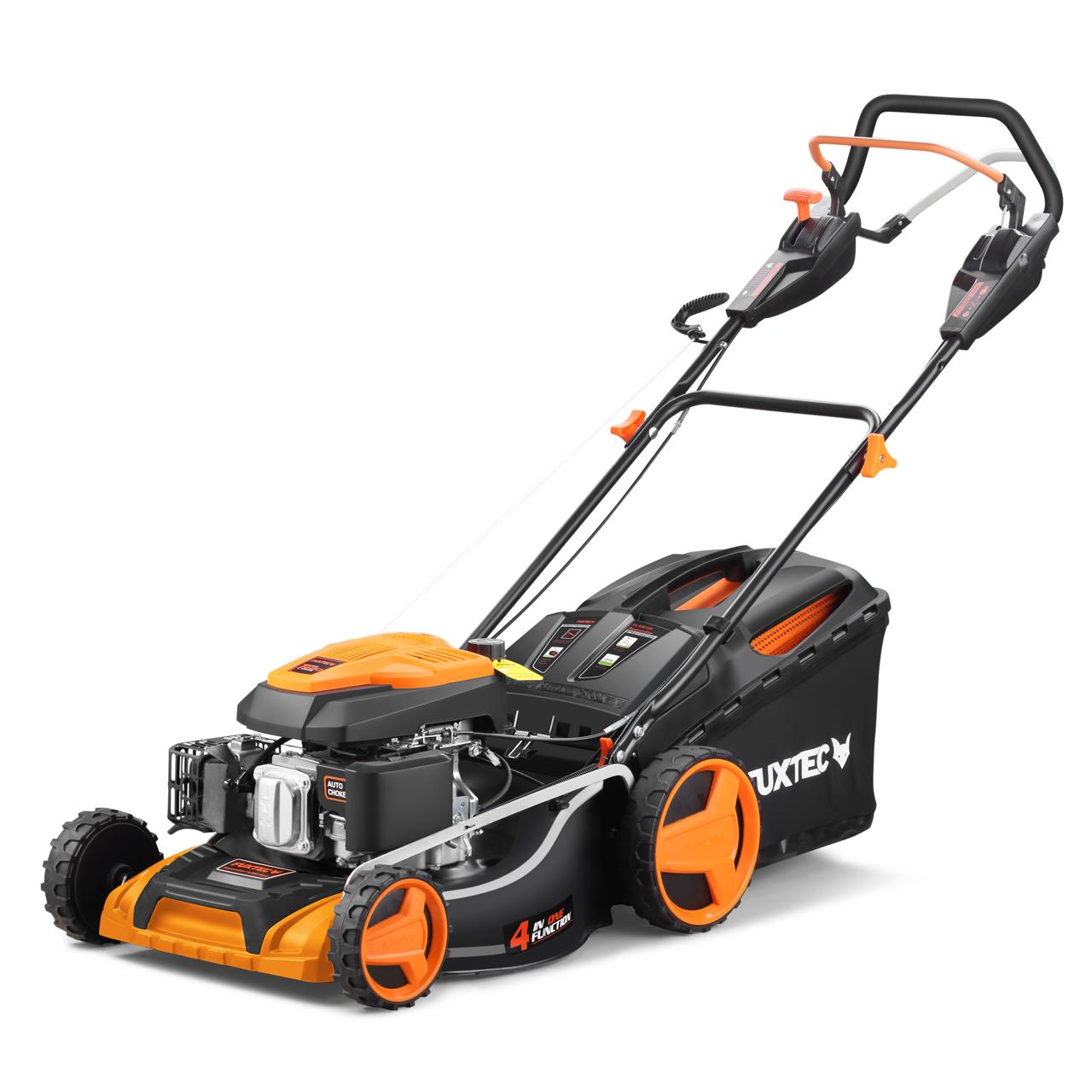
FUXTEC FX-RM5196eS-PRO
The most comfortable model in the range combines a powerful 196 cm³ engine with electric start, FlexSpeed drive and comprehensive 4-in-1 features.
4.4 kWMaximum engine power
196 cm³Displacement
2,800 rpmRated speed
50.1 cmCutting width
25–75 mmCutting height
60 litresGrass collection box
- Lithium-ion electric start plus backup recoil starter
- Adjustable FlexSpeed rear-wheel drive
- Ball-bearing big-wheel wheels for good grip
- Mulching, rear discharge and side discharge
The most comfortable choice if you want to start your mower at the push of a button and adjust the drive speed to suit growth and terrain.
View FX-RM5196eS-PRO
Model
5196PRO
5170agile
5196eS-PRO
Max. engine power
4.4 kW
2.9 kW
4.4 kW
Displacement
196 cm³
170 cm³
196 cm³
Cutting width
50.1 cm
50.8 cm
50.1 cm
Collection box
60 litres
70 litres
60 litres
Recommended area
up to 1,400 m²
up to 1,500 m²
up to 1,400 m²
Special feature
FlexSpeed drive
Zero-turn front wheels
Electric start
Best suited for
Large open areas
Lots of obstacles
Maximum comfort
Very large lawns from 2,000 square metres and up
For very large gardens from around 2,000 m² upwards, a ride-on mower or lawn tractor becomes far more comfortable. Models such as the FX-RMR66, FX-RMT84M and FX-RMT92A combine a wider cutting deck with considerably less walking.
A
Compact ride-on mower More manoeuvrable and narrower for passageways, beds and frequent changes of direction.
R
Powerful lawn tractor More power, wider cutting decks and large collection boxes for open gardens.
Compact & manoeuvrable

Compact petrol ride-on mower
FUXTEC FX-RMR66
The manoeuvrable ride-on solution for large gardens, narrow passageways and properties with several obstacles.
4.5 kWEngine power
224 cm³Displacement
2,800 rpmEngine speed
66 cmCutting width
30–75 mmCutting height
150 litresGrass collection box
- Convenient electric start
- Mulching function and side discharge
- Large wheels for uneven ground
- EasyClean connection for washing down
View FX-RMR66
Best value for money

Recommended up to 6,000 m²
FUXTEC FX-RMT84M
A powerful lawn tractor with a wide cutting deck, large collection box and manually selectable gears.
8.8 kWEngine power
432 cm³Displacement
2,800 ± 200Engine speed in rpm
83 cmCutting width
30–90 mmCutting height
280 litresGrass collection box
- Five forward gears and one reverse gear
- Mowing in reverse via RMO function
- Mulch plug included
- Anti-scalp wheels on the cutting deck
View FX-RMT84M
Maximum working capacity

Recommended up to 6,500 m²
FUXTEC FX-RMT92A
The most powerful model combines a wide twin-blade cutting system with hydrostatic drive.
9.2 kWEngine power
452 cm³Displacement
2,800 ± 200Engine speed in rpm
92.5 cmCutting width
30–90 mmCutting height
280 litresGrass collection box
- Stepless hydrostatic drive
- Two synchronised cutting blades
- Mowing in reverse with safety cut-out
- Mulching function with mulch plug
The most comfortable choice for expansive, mostly open gardens with as few mowing passes as possible.
View FX-RMT92A
| Model |
RMR66 |
RMT84M |
RMT92A |
| Engine power |
4.5 kW |
8.8 kW |
9.2 kW |
| Displacement |
224 cm³ |
432 cm³ |
452 cm³ |
| Cutting width |
66 cm |
83 cm |
92.5 cm |
| Collection box |
150 litres |
280 litres |
280 litres |
| Transmission |
Ride-on mower |
Manual |
Hydrostatic |
| Recommended area |
Large gardens |
up to 6,000 m² |
up to 6,500 m² |
| Suited for |
Narrow passageways |
Value for money |
Maximum comfort |
Check an overgrown lawn before you start mowing
Walk the whole area before mowing. Remove stones, branches, wire, toys and other debris, mark any fixed obstacles, and check the blade, trimmer head or cutting mechanism for damage. In dense growth, work especially carefully, as hidden objects often only become visible at the last moment.
Mowing overgrown lawns correctly in several stages
With long grass, controlled progress matters more than speed:
-
Make sure the area is safe and clear all debris.
-
For very long or uneven growth, start with a trimmer, brushcutter or a suitable specialist mower.
-
Set the machine to its highest possible cutting height.
-
Mow slowly in narrow, slightly overlapping passes. If you hear the engine speed drop, immediately reduce your pace or the width of grass you're cutting at once.
-
Empty the collection box frequently and remove long clippings from the lawn.
-
Let the grass stand upright and put out new growth for a few days.
-
Lower the cutting height gradually on the next pass, until the desired height is reached.
With an initial height of 20 to 30 centimetres, several passes may be needed. Occasionally change your mowing direction so that flattened blades are caught more effectively.
Mowing wet grass? Why it pays to wait for dry conditions
Mow the grass as dry as possible. Wet blades stick together, put extra strain on the cutting deck and collection box, and often lead to an uneven finish. After rain, wait until the surface has dried off; in very hot weather, it's better to mow in the late afternoon rather than in the midday sun.
Collect the clippings or mulch the long grass?
Remove long clippings from the lawn after the first cut-back, so they don't form a thick, smothering layer. Mulching becomes a good option again once you're mowing regularly and only cutting off short tips. On meadows cut only a few times a year, the long material is usually also removed.
Feeding, watering and repairing bare patches after mowing
After a heavy cut-back, only feed the lawn if it genuinely needs it. If the soil is sufficiently moist, a suitable lawn feed can support recovery. On dry, stressed lawns, it's better to wait for more favourable conditions.
10 kg value pack

FUXTEC lawn care
Give your lawn a new lease of life
Long-lasting feed for thick, even growth in spring and summer.
10 kgPack size
500 m²Coverage
March–AugustApplication period
Made in GermanyManufacturing
- Supports a thick, healthy lawn
- Fine granules for even spreading
- Suitable for hand spreading and spreaders
£18.90£1.89/kg · incl. VAT
Get lawn feed now
Loosen bare patches lightly, remove dead material and oversow as needed. Keep the seed evenly moist until it germinates. If growth stays weak despite proper care, also check for soil compaction and site conditions.
How to stop your lawn getting overgrown again
Once the lawn is back to its normal height, a regular mowing rhythm prevents it becoming overgrown again. Adjust your intervals to growth and weather, keep the blade sharp, and clear away autumn leaves promptly. A robot mower is only suitable for the subsequent regular cutting routine, not for the initial job of tackling an overgrown lawn.
Tips and tricks for a clean finish when mowing grass
If the engine speed drops noticeably or clippings start to clump and clog, reduce your speed and the width you're cutting. Work on slopes and around obstacles according to the instruction manual, and choose your machine based on the area and growth involved — not simply on maximum power.
Conclusion: cut long grass down gradually, not all at once
If your grass has grown too long, cut it back under control in several stages rather than drastically in one go. Check the area, choose the right tool, work on dry grass wherever possible, and remove long clippings. After that, watering as needed, oversowing and, where necessary, feeding will all help you rebuild a thick, resilient lawn.