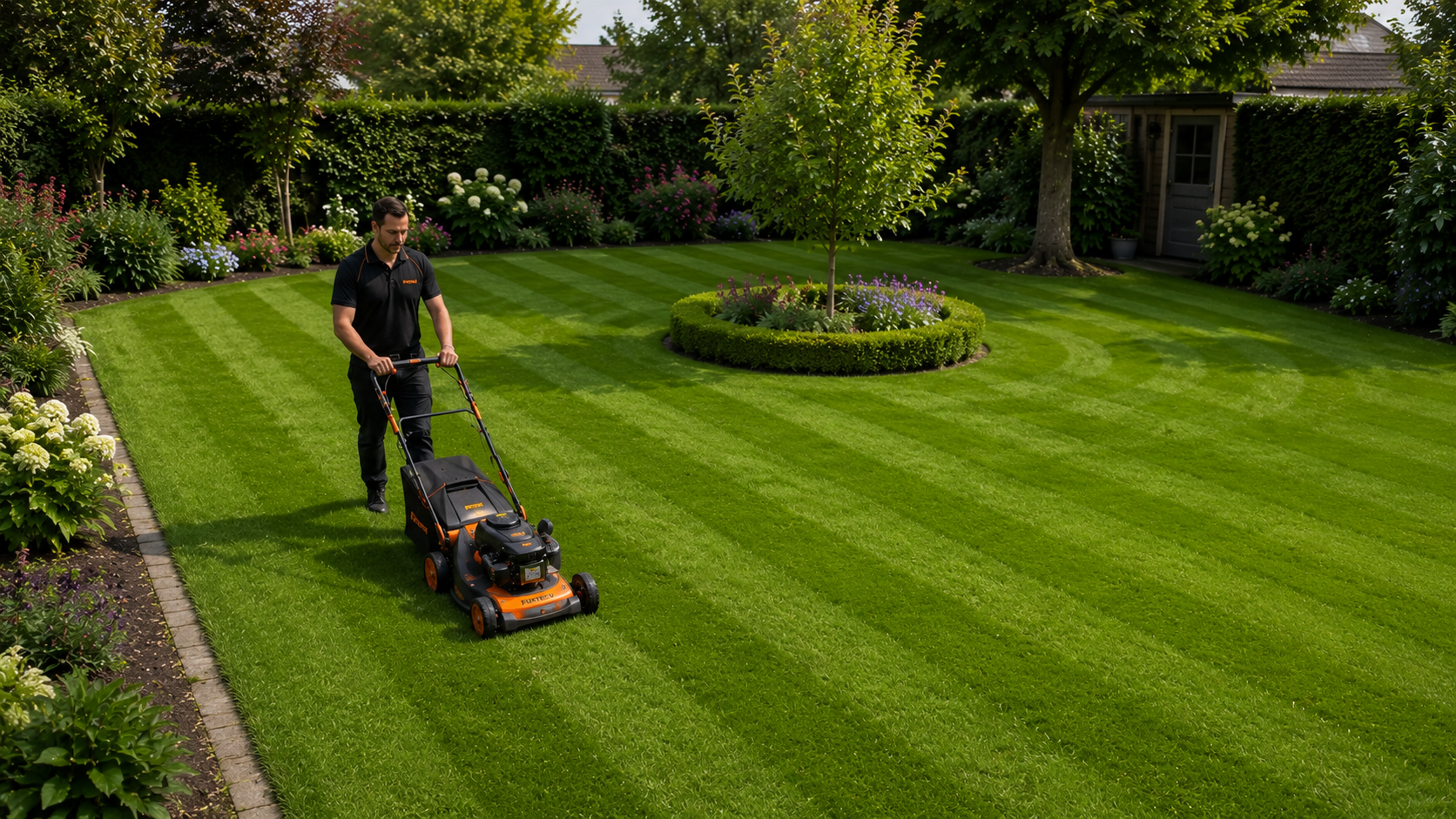
An evenly mown lawn always looks well kept. But with a deliberately planned mowing pattern, you can take the effect to a whole new level. Straight stripes, diagonal bands or a checkerboard pattern make the lawn look more structured and bring a touch of football-stadium flair to your own garden.
You don't need a professional greenkeeper's mower to create patterns like these. Far more important are a healthy lawn, the right cutting height, sharp blades and a steady driving technique. Even an ordinary lawnmower can produce visible stripes in the grass. Adding a rear roller, however, makes the contrast stronger still.
In this FUXTEC guide, we'll show you how the stripe pattern is created, how to mow your lawn correctly, and which mowing patterns suit different lawn shapes and sizes.
Find FUXTEC more often in your Google search results.
Add FUXTEC on Google
Why a striped lawn looks lighter and darker in different places
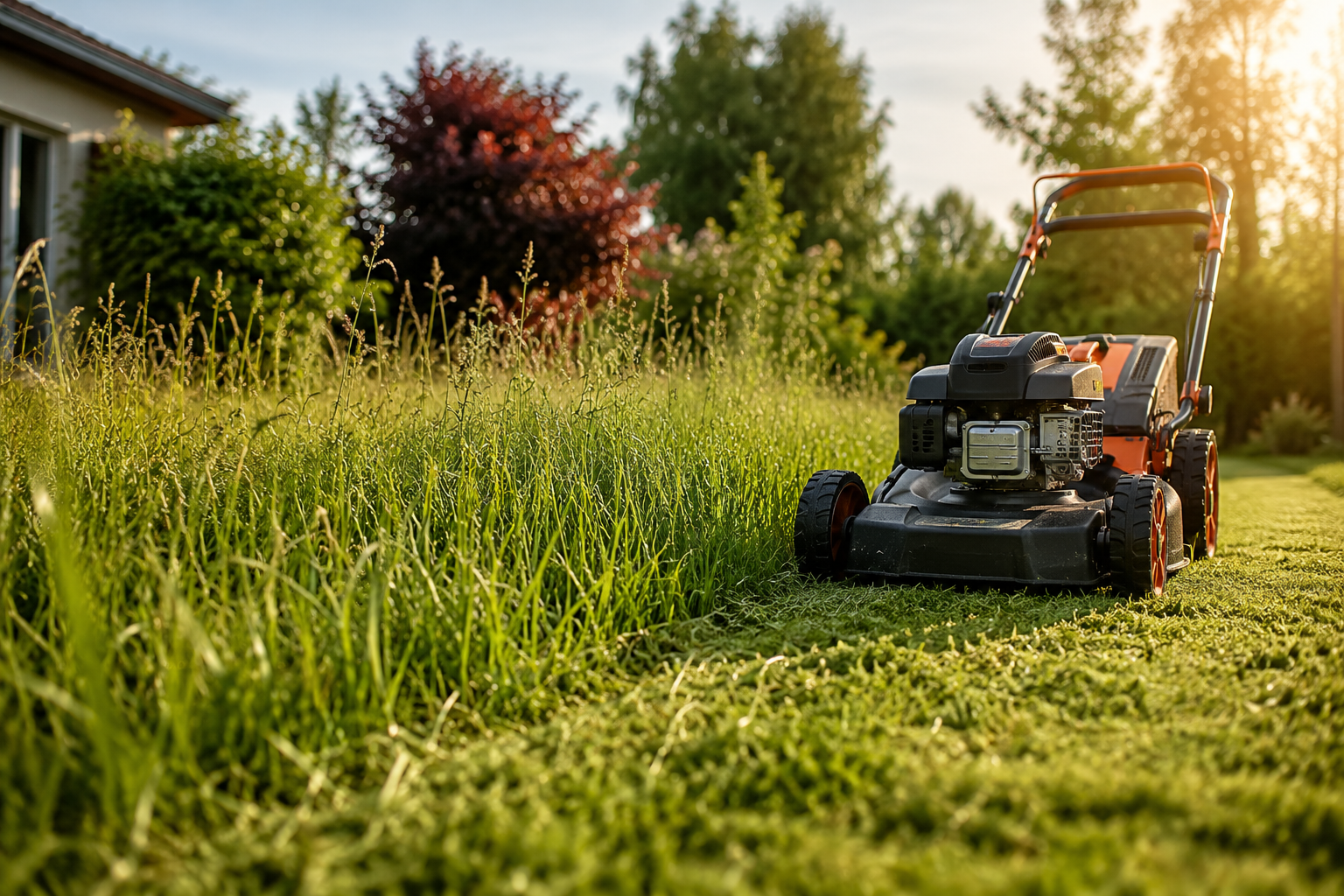
The stripes don't appear because the grass is cut to different heights. What actually matters is the direction the blades of grass are bent in after mowing.
When the blades are pressed away from the viewer, they reflect more light and appear lighter. In the neighbouring strip, mowing happens in the opposite direction, so the blades lean towards the viewer and look darker. It's this alternation that creates the classic stripe pattern.
How pronounced the stripes look therefore also depends on where you're standing and the position of the sun. A striped lawn can look very high-contrast from the patio and much fainter from a different angle.
FUXTEC tip: Plan your pattern from the viewpoint that matters most. If the lawn should look its best from the patio, aim to run the stripes towards and away from the patio rather than across it. This usually produces a stronger light-dark contrast than stripes running the other way.
FUXTEC lawnmowers for precise mowing patterns
For a clean mowing pattern, what matters most is a suitable cutting width, an adjustable cutting height, sharp blades and controllable steering of the mower. Depending on whether you want straight stripes, diagonal bands, diamonds or circular patterns, manoeuvrability and driving stability also play an important role.
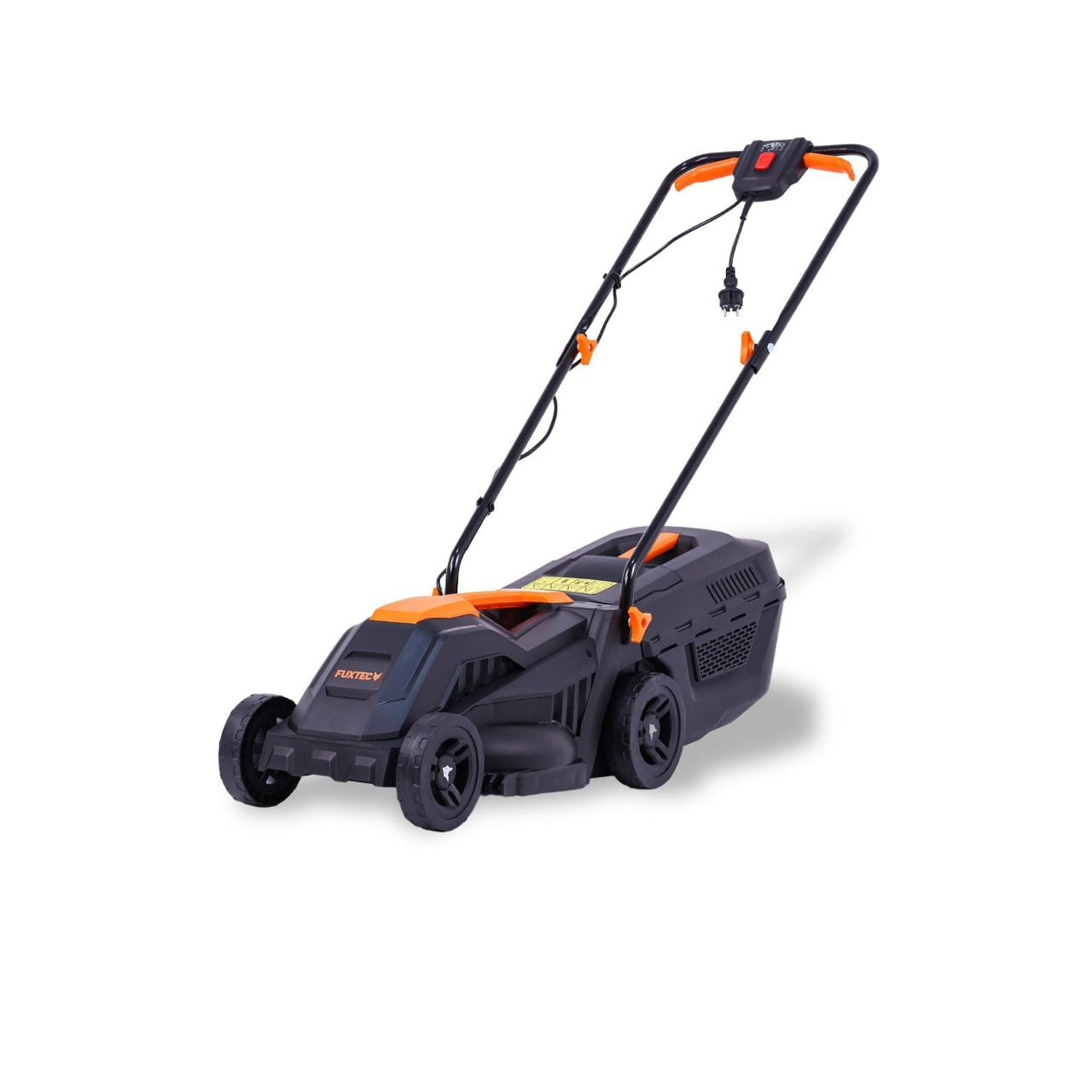
For smaller, simpler lawns, the FUXTEC electric lawnmower FX-RME38 is a great choice. With its compact build and a 38 cm cutting width, it's easy to steer. That makes it particularly well suited to narrow stripes, simple diagonal bands and smaller rectangular lawns. Its light weight also makes for neat, controlled turns at the edges.
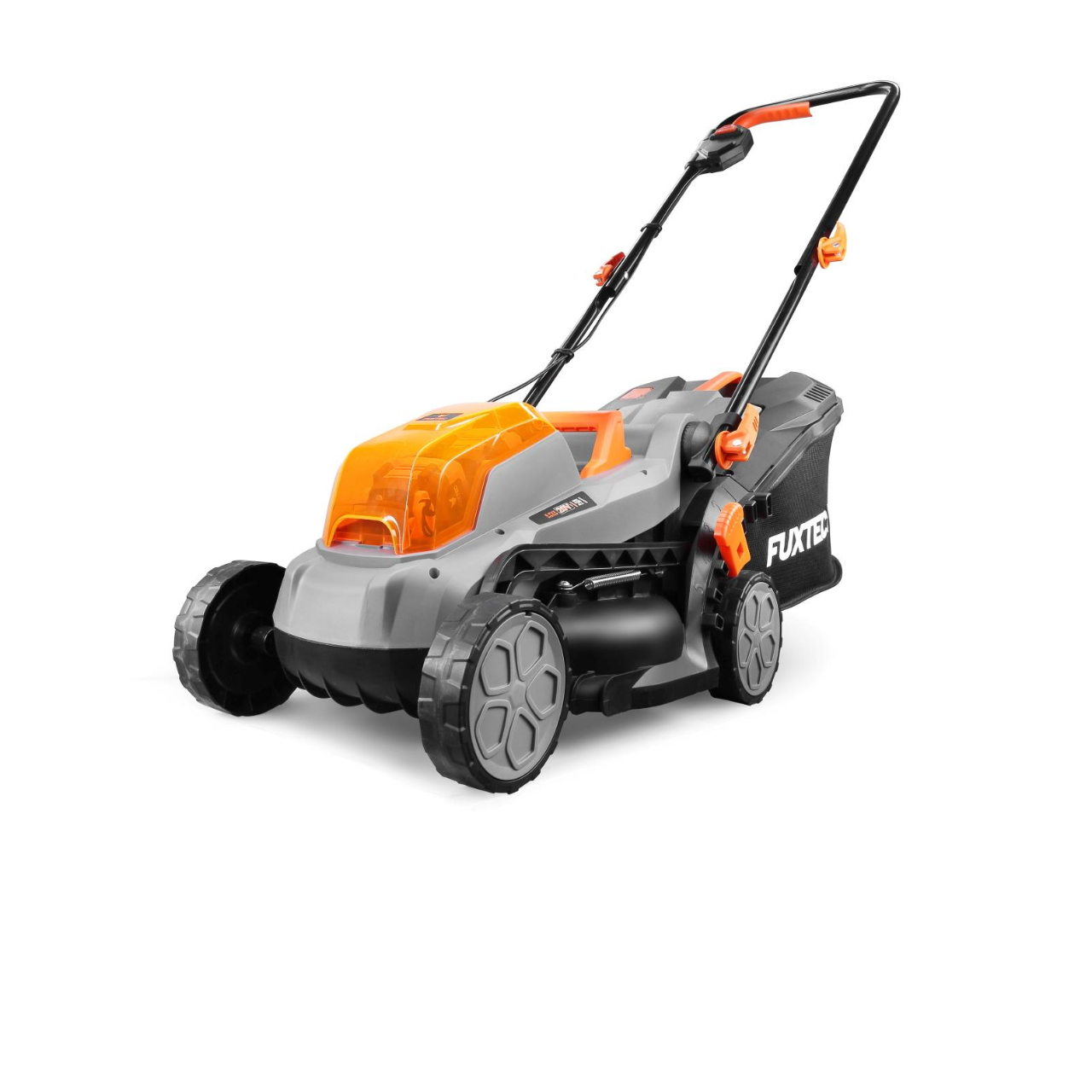
For more freedom of movement, the FUXTEC cordless lawnmower FX-E2RM46PRO with flexible drive is a great option. Being cordless means you can move freely across the lawn without worrying about a power cable. Its 46 cm cutting width works well for even stripes and diagonal patterns on medium-sized lawns, and the flexible drive helps you keep a steady pace, which is essential for a crisp, even cut.
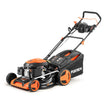
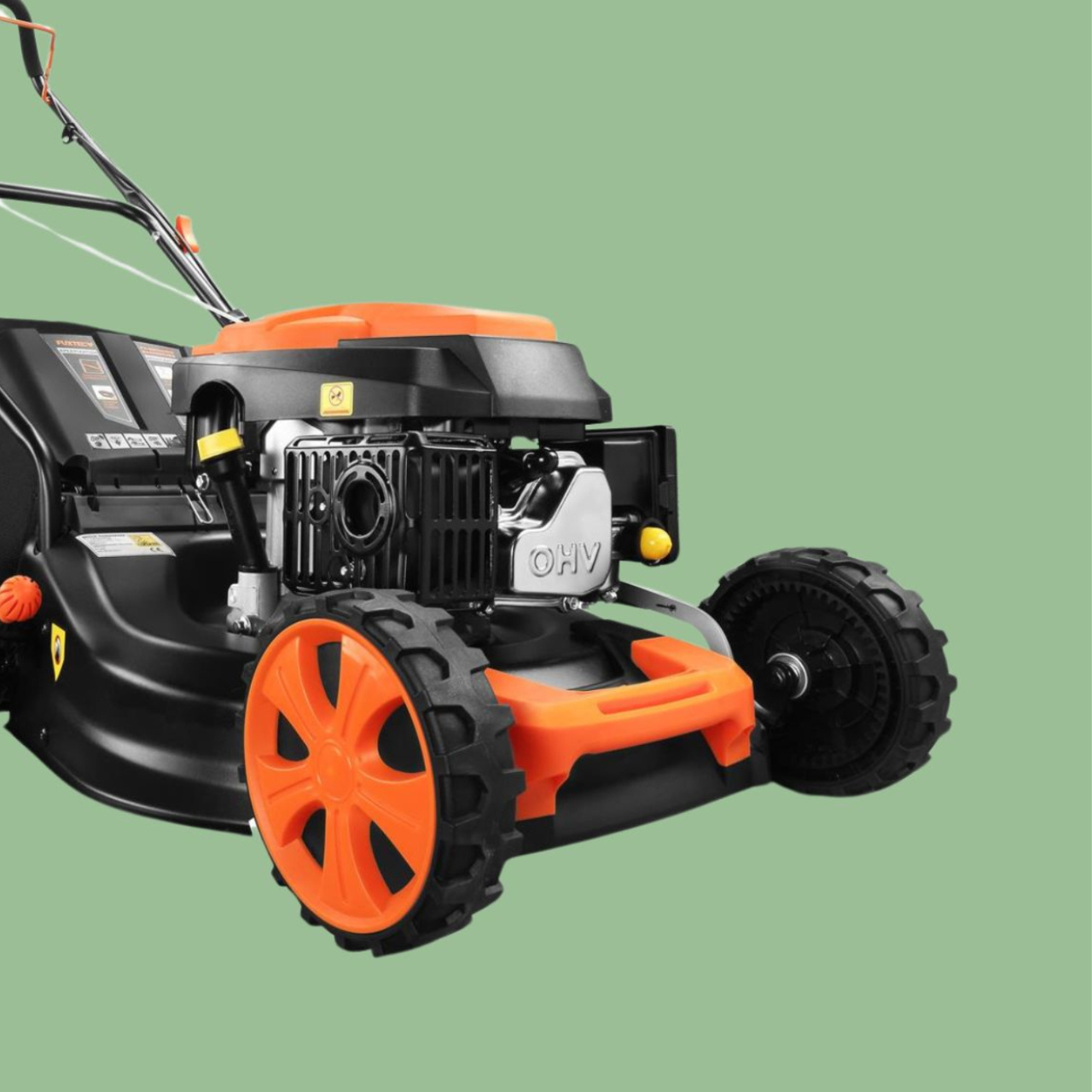
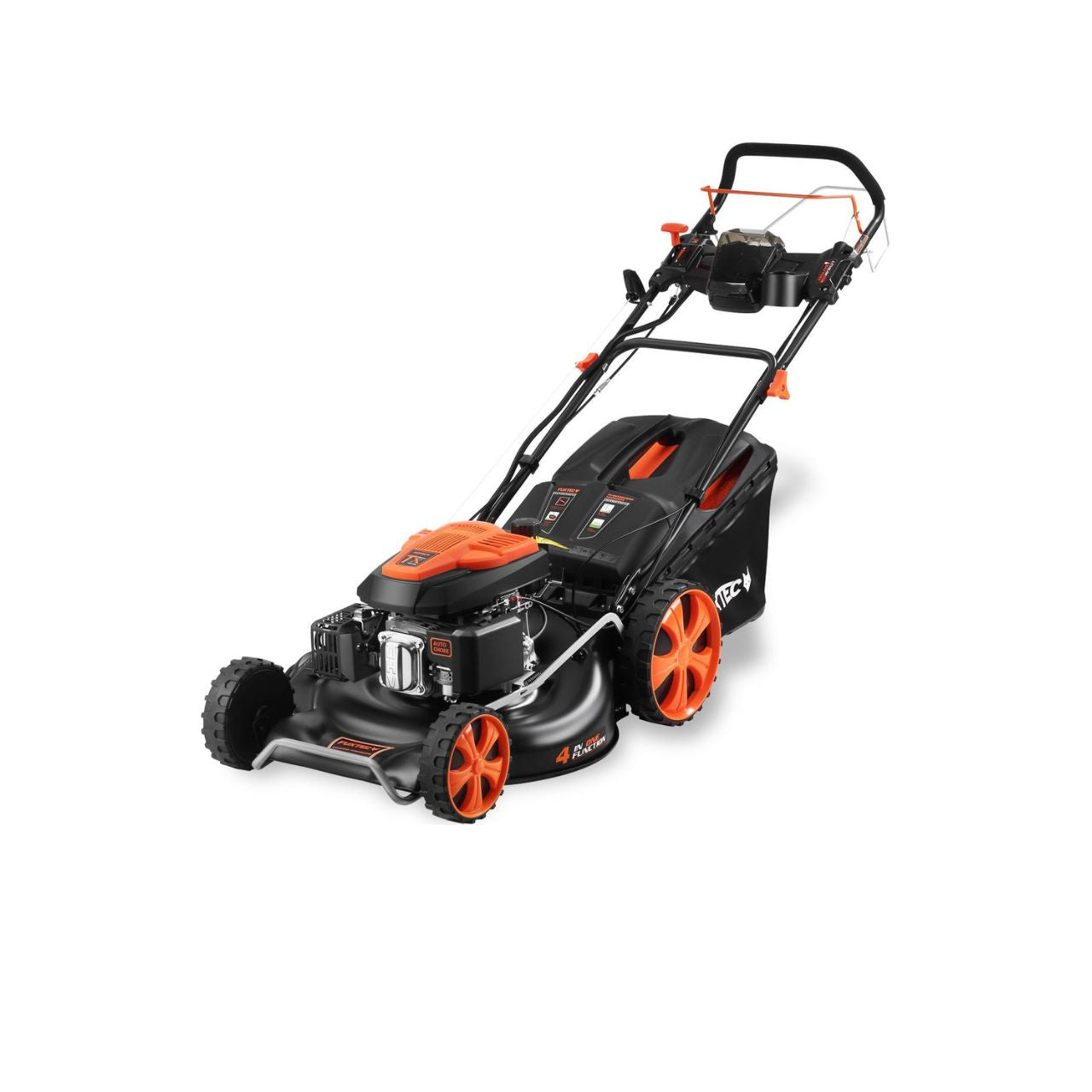
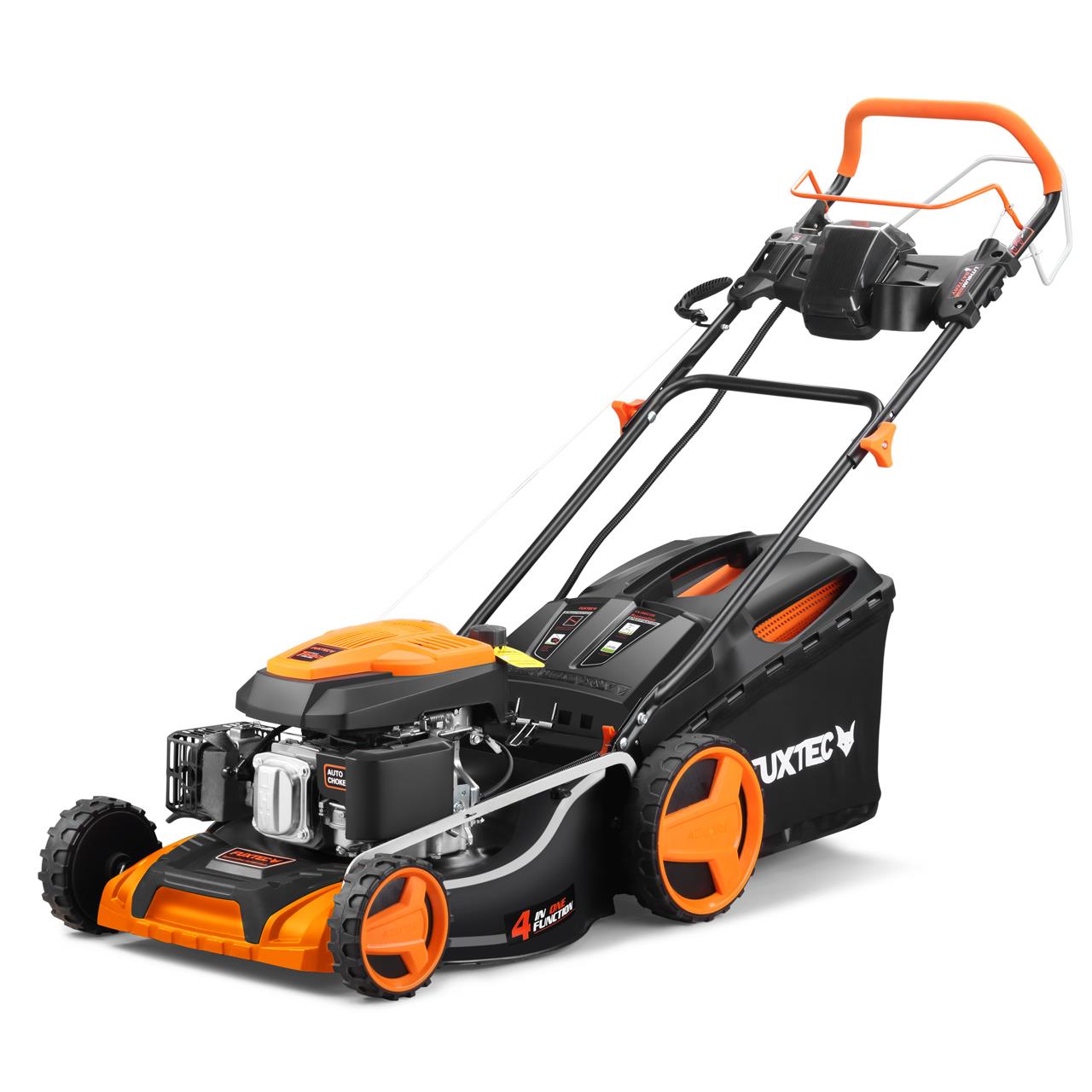
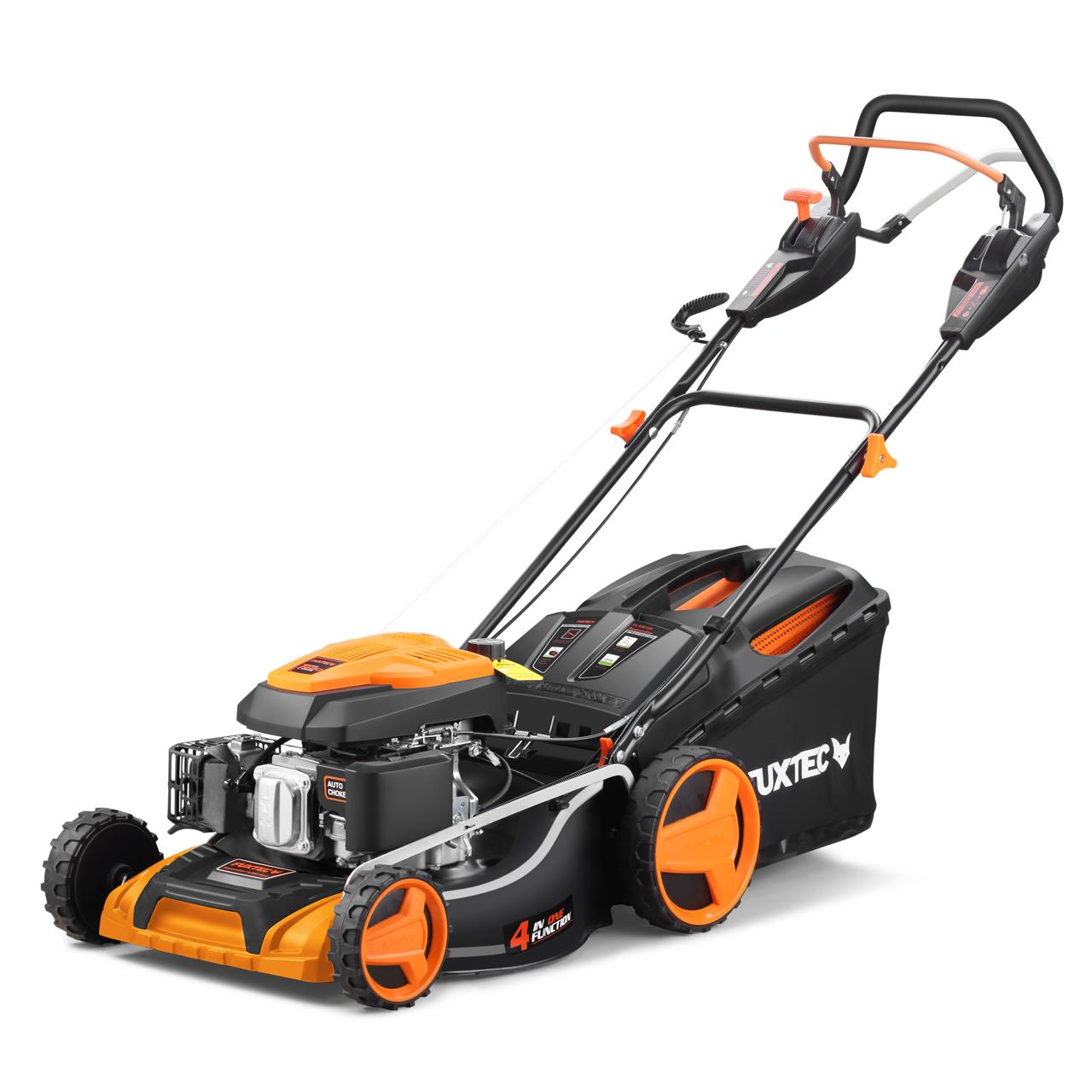
The most versatile choice for different lawn patterns is the FUXTEC petrol lawnmower FX-RM5170agile. Its freely castoring front wheels make it exceptionally manoeuvrable and make tight curves, circles and spirals much easier. For straight stripes or a checkerboard pattern, the front wheels can be locked so the mower tracks a stable, straight line. With a cutting width of around 51 cm, rear-wheel drive and several adjustable cutting heights, this zero-turn mower suits both wide stripes and more demanding patterns around trees, borders and other obstacles.
You'll find an overview of further models in the FUXTEC lawnmower category.
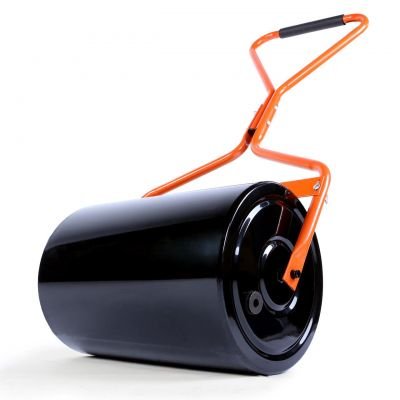
Do bear in mind, though: an even cut alone won't create really pronounced stadium stripes. The most striking contrasts appear when the blades of grass are additionally laid down in the direction of travel using a full-width roller or a suitable striping attachment. Always check before fitting any accessory that it's specifically compatible with your lawnmower.
Wide or narrow cutting width?
A wide cutting width creates broad stripes and reduces the number of passes needed. That's handy on large, rectangular lawns.
A narrower mower, on the other hand, makes it easier to work tight corners, awkward shapes and finer patterns. The stripes will look narrower, but you'll need to turn more often.
What matters isn't having the biggest possible mower. The mower should suit the size of your lawn and be easy to steer in a straight line at a constant speed.
Preparing your lawn properly before mowing
A pattern can only ever look as even as the lawn beneath it. Thin, dry or badly damaged grass is harder to lay flat in one direction, and bare patches will break up the lines.
Before mowing, clear away branches, stones, toys and other debris. Also check that the grass is dry. Try to avoid mowing wet grass wherever possible: with wet grass, clippings clump together more easily, the wheels can leave marks, and individual blades tend to get flattened rather than cut cleanly.
The following points also affect the result:
The mower blades must be sharp and undamaged.
The cutting height should be set the same across the whole area.
The grass box should be emptied in good time.
Bumps and molehills should be levelled out before mowing.
The turf should be reasonably dense and evenly covered.
If your lawn has a lot of moss, weeds or bare patches, it's worth tackling basic lawn care first. Depending on the condition of the lawn, this might include scarifying, overseeding and feeding. After more intensive care work, though, give the lawn time to recover before expecting a clean pattern to show.
What cutting height works best for visible stripes?
Very short grass is hard to lay visibly in different directions. You'll typically get the clearest effect when the blades are long enough to bend under the weight of the mower or a roller.
For a typical garden lawn, a cutting height of around 4–6 cm is a good starting point. If you want particularly pronounced stripes, start towards the upper end of that range.
The ideal cutting height still depends on the type of grass, the time of year and the condition of the lawn. During hot, dry spells, avoid cutting the grass unnecessarily short — slightly longer grass shades the soil better and copes better with drought stress.
Conversely, don't cut long grass right down in a single pass. Mow overgrown grass in stages first, and only start your actual pattern once the lawn is back to an even height.
Mowing stripes into your lawn: a step-by-step guide
Straight stripes are the best pattern to start with. They're easy to plan and also form the basis for a checkerboard pattern later on.
1. Decide on your mowing direction
Before you start, think about where the lawn will mainly be viewed from. Then choose a straight lawn edge, path or fence as a guide.
On long, narrow lawns, it often makes sense to mow lengthways, as this means fewer turns. On wider lawns, you can choose the direction more freely, based purely on the look you want.
2. Mow a border strip first
Start by mowing one or two passes right around the lawn. This border will act as your turning zone.
That way, you won't need to make tight turns in the middle of the pattern at the end of each stripe. Wheel marks and untidy turning manoeuvres stay confined to the border, which can be neatly re-mown once the pattern is finished.
3. Take extra care with the first pass
The first pass sets the direction for every stripe that follows. Pick a fixed point at the far end of the lawn and drive straight towards it.
Don't keep looking straight down at the front wheels of the mower. Doing so often leads to small steering corrections that build up into a visible wobble across the whole stripe. Instead, keep your eyes fixed several metres ahead.
4. Mow back in the opposite direction
Turn in the border zone you mowed earlier and mow back right alongside the first pass. The blades will now lie in the opposite direction.
Overlap the previous pass slightly — for example, by lining up with the track of one front wheel. This stops narrow, unmown strips being left between passes.
5. Keep speed and spacing constant
Continue the pattern pass by pass, driving as steadily as possible and avoiding sudden changes of direction.
A self-propelled mower can help you keep a constant speed on larger lawns. That doesn't mean you should mow especially fast, though — a calm, steady pace makes precise lines easier and gives the cutting deck enough time for a clean cut.
6. Finish off by re-mowing the border
Once the whole lawn has been striped, go around the outer border one more time. This covers up turning marks and gives the pattern a neat frame.
Any stray blades left standing along lawn edges, borders or around trees can then be tidied up with a grass trimmer.
Mowing a checkerboard pattern into your lawn
A checkerboard pattern is created from two overlapping sets of stripes. First, mow the whole lawn in straight passes as usual.
Then turn the mowing direction by 90 degrees and go over the area a second time, so the new passes run at right angles to the first set. The overlap creates alternating light and dark squares.
This kind of pattern works best on a fairly rectangular lawn. On small or irregularly shaped lawns, the second pass can require a lot of extra turning.
Since the lawn is effectively mown, or driven over, twice for a checkerboard pattern, the grass should be dry and resilient. Avoid a second pass if the lawn is already under stress from heat, drought or waterlogging.
FUXTEC tip: For a calm, uniform look, the stripes from both passes should be roughly the same width. Don't change the cutting height or the overlap during the second pass.
FUXTEC lawnmowers for mowing patterns
Which mower will lay your pattern down perfectly?
Straight stripes call for a steady line, while curves and spirals demand maximum manoeuvrability. These three FUXTEC lawnmowers cover different lawn sizes and needs – with one clear favourite for creative lawn patterns.
For small lawns
Light and compact
Electric lawnmower FX-RME38
The handy choice for small to medium gardens. Its low weight makes the mower easy to steer with precision – ideal for simple stripes and narrow passes.
Best for: Straight stripes, diagonal bands and smaller rectangular lawns.
38 cm cutting width for precise, narrow passes
Just 12 kg, making it easy to manoeuvre
Variable cutting height for clearly visible stripes
1,600W electric motor with consistent power
Cordless flexibility
Comfort without a cable
Cordless lawnmower FX-E2RM46PRO
Cordless freedom of movement meets a well-balanced cutting width. The flexible drive helps you keep your passes even, making this mower a comfortable choice for medium-sized lawns.
Best for: Stripe patterns, diagonal bands and larger patterns without a cable getting in the way.
46 cm cutting width for wide, even passes
Flexible drive for a controlled working pace
Cordless freedom of movement across the whole lawn
Set includes matching batteries so you can start straight away
Best choice for all patterns
Our pattern specialist
Zero Turn FX-RM5170agile
Precise in a straight line, exceptionally agile in the curves: the freely castoring front wheels make the FX-RM5170agile the strongest option for both simple and demanding lawn patterns.
Best for: Stripes, checkerboard, diamonds, circles, spirals, waves and mowing around trees or borders.
360° castoring front wheels for tight curves and clean turns
Front wheels can be locked for stable, straight passes
50.8 cm cutting width for bold, wide patterns
Rear-wheel drive for a steady, even pace
Seven cutting heights from 25 to 75 mm
4-in-1: mowing, collecting, mulching and side discharge
✓
Why the Zero Turn comes out on top for pattern mowing
For straight lines, the front wheels can be locked in place. For circles, spirals or tight changes of direction, they're released again. That means the mower adapts to the pattern – rather than the pattern having to adapt to the mower.
See the winner
Diagonal stripes, diamonds and other mowing patterns
Once you've got the hang of reliable straight lines, you can try out some other lawn mowing patterns.
Diagonal stripes
For diagonal stripes, start at roughly a 45-degree angle to the edge of the lawn. Again, pick a distant point to aim for.
Diagonal passes often make a short or wide lawn look longer. At the same time, small mistakes tend to stand out more quickly than with lines running parallel to a path.
Diamond pattern
A diamond pattern works in a similar way to the checkerboard. First, the lawn is mown diagonally in one direction. The second pass then crosses the first set of stripes at the opposite angle.
The lawn is therefore worked over twice, so be careful not to mow too short and to avoid unnecessary turning manoeuvres.
Circles and spirals
Round or irregularly shaped lawns lend themselves well to circular patterns. You can start in the middle and spiral outwards, or start at the edge and work your way in with ever-smaller circles.
Keeping the spacing even is trickier here than with straight stripes. Use an existing round border, tree or other garden feature as your centre point.
Zigzag and wave patterns
Patterns like these are possible, but considerably more demanding. Even small variations in steering can make the result look messy, and visible wheel marks tend to appear at each change of direction.
For most back gardens, straight stripes, diagonals or a checkerboard pattern tend to look neater and better kept.
How do you work obstacles into a stripe pattern?
Trees, borders and play equipment don't have to break up a continuous pattern. What matters is returning to your original line once you're past the obstacle.
Drive the planned pass right up to just before the obstacle. Then mow around it in as tight a curve as possible and pick the line back up on the other side. On the return pass, you'll pick up the area next to the obstacle that hasn't been mown yet.
Any small missed patches can be tidied up separately afterwards. Avoid circling repeatedly around a tree during every single pass, as this creates dark rings and irregular marks that break up the actual stripe pattern.
Mulching or collecting the clippings?
When mulching, the clippings are very finely chopped and spread back over the lawn as a nutrient source. With regular mowing, this can help feed the soil.
For a really crisp pattern, though, using the grass box is often the simpler option. Longer or damp clippings can sit on top of the mown lawn and mask the light-dark contrast.
If you do want to mulch, the grass should be dry and only lightly trimmed. The finely chopped material needs to fall evenly between the blades of grass, and any visible clumps should be removed.
Why you should regularly change your mowing direction
Even if you're particularly fond of one pattern, you shouldn't mow the lawn in exactly the same direction for months on end.
Changing direction regularly stops the grass permanently leaning to one side, and it also spreads wheel tracks and soil compaction more evenly across the lawn.
For example, you could alternate between the following directions:
lengthways and across,
diagonally from left to right,
diagonally from right to left.
This gives you a fresh-looking cut each time while also supporting even, healthy growth.
The most common mistakes when mowing patterns
The first stripe isn't straight
Every following pass takes its cue from the one before, so a small error at the start becomes more obvious with each stripe. Take your time over the first line and aim for a fixed point at the far end of the lawn.
The grass is cut too short
A short lawn may look tidy, but it leaves too little blade length for the stripe effect to show. Cutting too low can also lead to bare patches.
Mowing wet grass
Wet grass lies unevenly, clumps together and can clog the cutting deck. It also tends to leave a messier finish. Wait until the grass and soil have dried out sufficiently before mowing.
Blunt blades
Blunt blades tear the tips off the grass instead of cutting them cleanly. Ragged, frayed tips can discolour and leave the lawn looking untidy after mowing. Check your mower blades regularly and have them sharpened professionally when needed.
Steering too erratically
Lots of small steering corrections lead to wobbly passes. Keep your eyes on where you're heading and let the mower run at a steady pace.
Turning in the middle of the pattern
Tight turns can put stress on the grass, turf and soil. Set up a sufficiently wide border strip beforehand and turn outside the actual pattern area.
Cutting long grass straight down to its final height
If long grass is cut hard in a single pass, the finish is often patchy. Work in stages instead, and only start the actual pattern once the whole lawn is at a uniform height.
Keeping your lawn healthy after mowing
A perfect lawn isn't down to the pattern alone. Regular mowing encourages dense growth, provided the lawn isn't cut too short or put under strain in unfavourable conditions.
After mowing, clear away any visible clippings and check the result from the angle that matters most to you. You don't need to correct small imperfections with another pass straight away – mowing over the lawn repeatedly puts more strain on it and can compact the soil.
Water the lawn according to what it actually needs, not just to keep the pattern visible for longer. The stripes will naturally fade as the blades stand back up and keep growing.
Next time you mow, you can simply choose a different direction. That way, you get an ever-changing finish alongside genuinely sustainable lawn care.
Conclusion: a beautiful lawn needs planning, not complicated equipment
To mow a pattern into your lawn, you don't need professional football-pitch equipment. A healthy lawn, sharp blades, the right cutting height and straight passes are the essential foundations.
Start with simple stripes. Take extra care over the first pass, work in alternating directions and use a border strip for turning. Once you've mastered this technique, you can try a checkerboard pattern, diagonal lines or diamonds.
A suitable FUXTEC lawnmower lets you work the lawn in a controlled, even way. An additional roller enhances the effect further, but even without one, the right mowing technique will give you a visibly structured, well-kept lawn.
Time for a fresh cut?
Discover the powerful FUXTEC lawn mowers for optimal lawn care.
The stripe effect is created by the direction grass blades are bent, not different cutting heights. When blades lean away from the viewer, they reflect more light and appear lighter, whilst blades leaning towards the viewer look darker. This alternating pattern creates the classic striped effect.
What's the best cutting height for visible lawn stripes?
A cutting height of around 4–6 cm works best for visible stripes, as the blades are long enough to bend visibly under the mower or roller. Very short grass is harder to lay in different directions, so you'll get clearer effects at the upper end of that range.
Can I create lawn patterns on a wet lawn?
No, you should avoid mowing wet grass. Wet blades lie unevenly, clippings clump together, wheels can leave marks, and the cutting tends to be messier. Always wait until the grass and soil have dried sufficiently before mowing patterns.
How do I mow a checkerboard pattern into my lawn?
Mow the entire lawn in straight passes as usual, then turn your mowing direction by 90 degrees and mow the area a second time. The overlapping passes create alternating light and dark squares. This works best on rectangular lawns and requires the grass to be dry and resilient, as it's mown twice.
What should I do before mowing patterns into my lawn?
Clear away branches, stones and debris, ensure the grass is dry, and check that mower blades are sharp and undamaged. The cutting height should be set uniformly, the turf should be fairly dense and evenly covered, and any bumps or molehills should be levelled beforehand.
Why does my first stripe matter more than the others?
The first pass sets the direction for every stripe that follows, so even small errors in the first line become more obvious with each subsequent pass. Take extra care and aim for a fixed point at the far end of the lawn to keep the line straight.
Do I need a professional mower to create lawn stripes?
No, you don't need professional equipment. A healthy lawn, sharp blades, the correct cutting height and steady driving technique are the essential foundations. Adding a rear roller enhances the contrast, but is not strictly necessary for visible stripes.
Everything you need for a well-kept, healthy lawn – from a single source
Der richtige Rasenmäher ist nicht automatisch das stärkste oder breiteste Modell. Er muss zu Deiner Rasenfläche, zum Aufbau des Gartens, zur Häufigkeit des Mähens und zu Deinem persönlichen Komfo...
If your lawn has grown very long after a holiday, a spell of wet weather or a longer break from mowing, don't cut it straight down to the lowest setting. Reduce long grass gradually, choose the rig...
An evenly mown lawn always looks well kept. But with a deliberately planned mowing pattern, you can take the effect to a whole new level. Straight stripes, diagonal bands or a checkerboard pattern ...