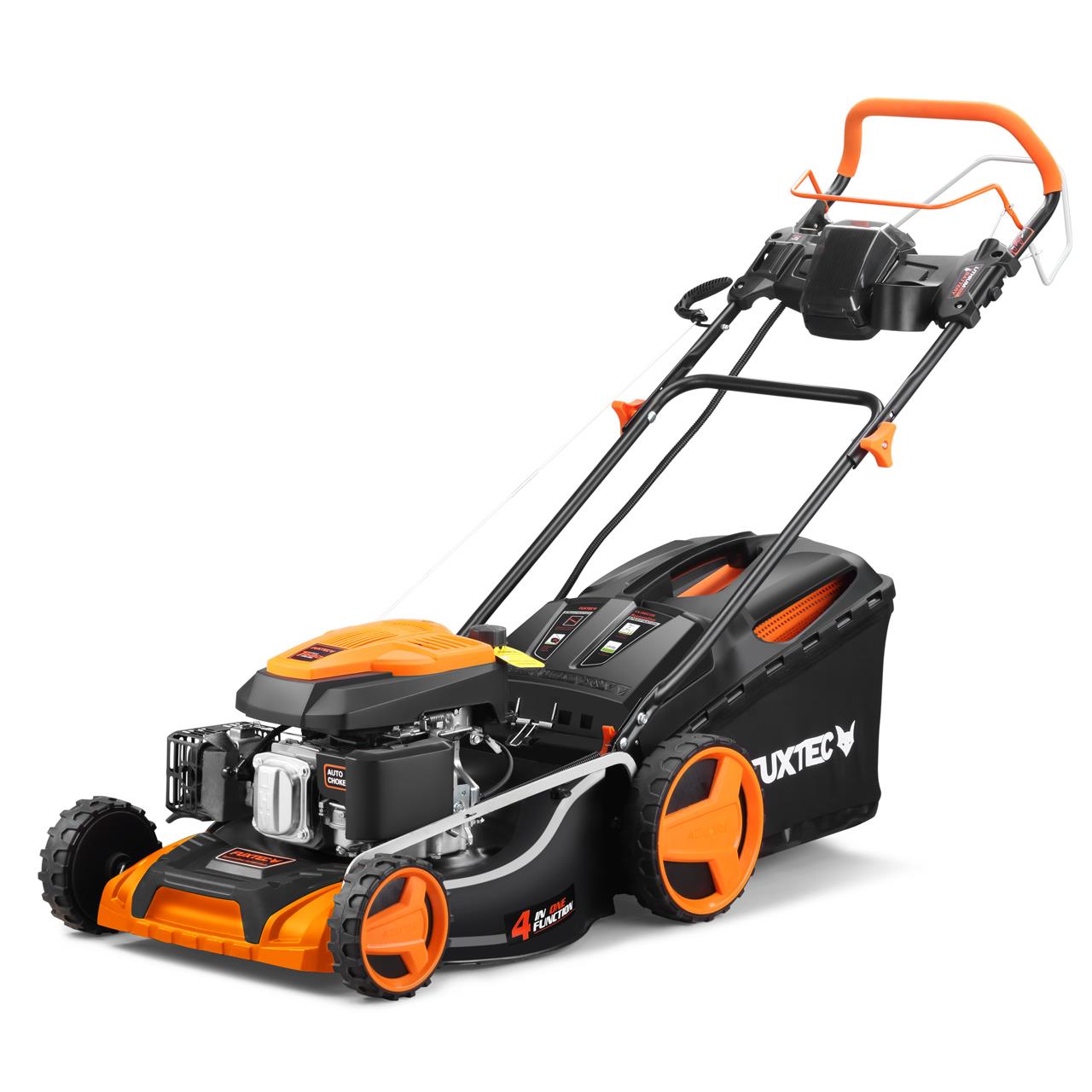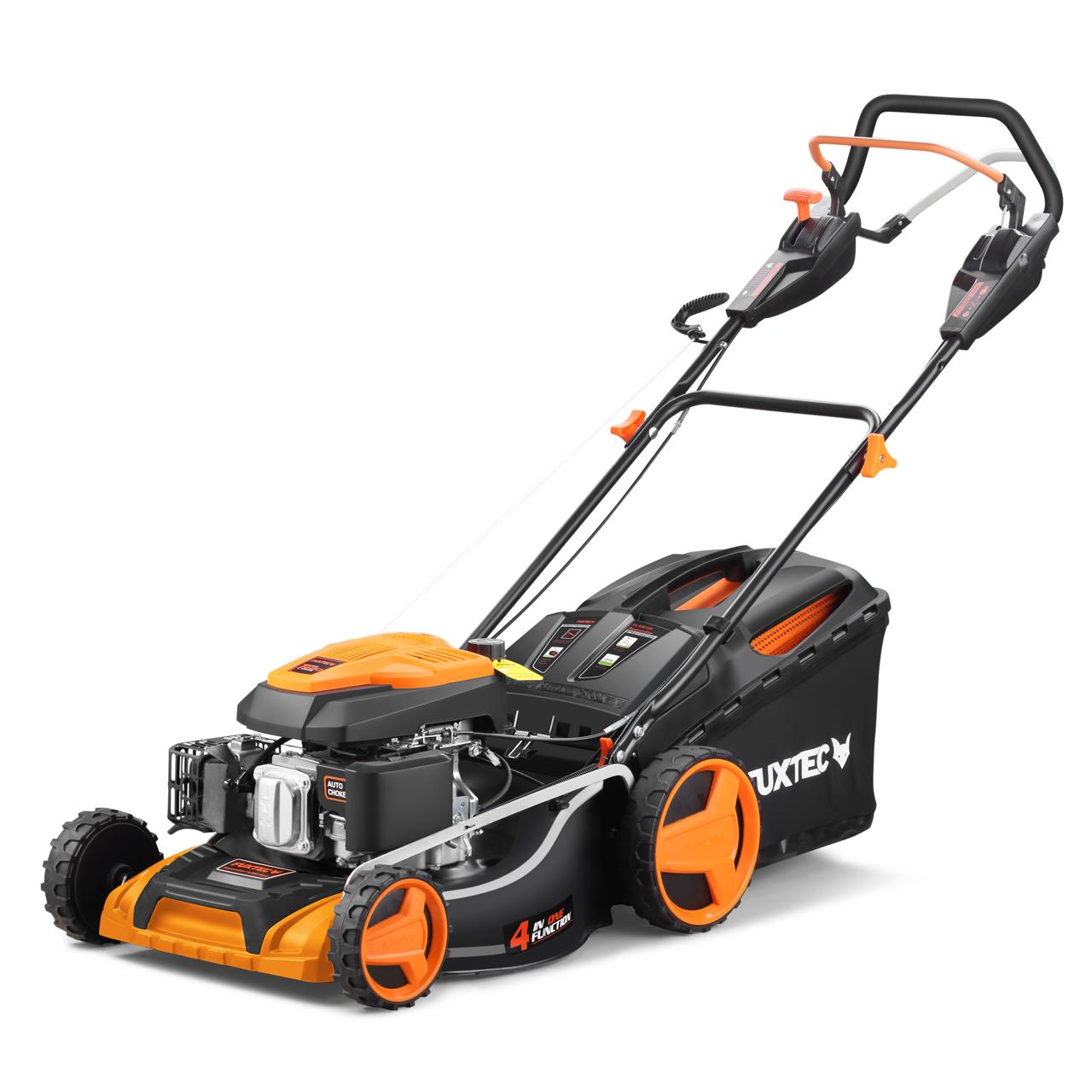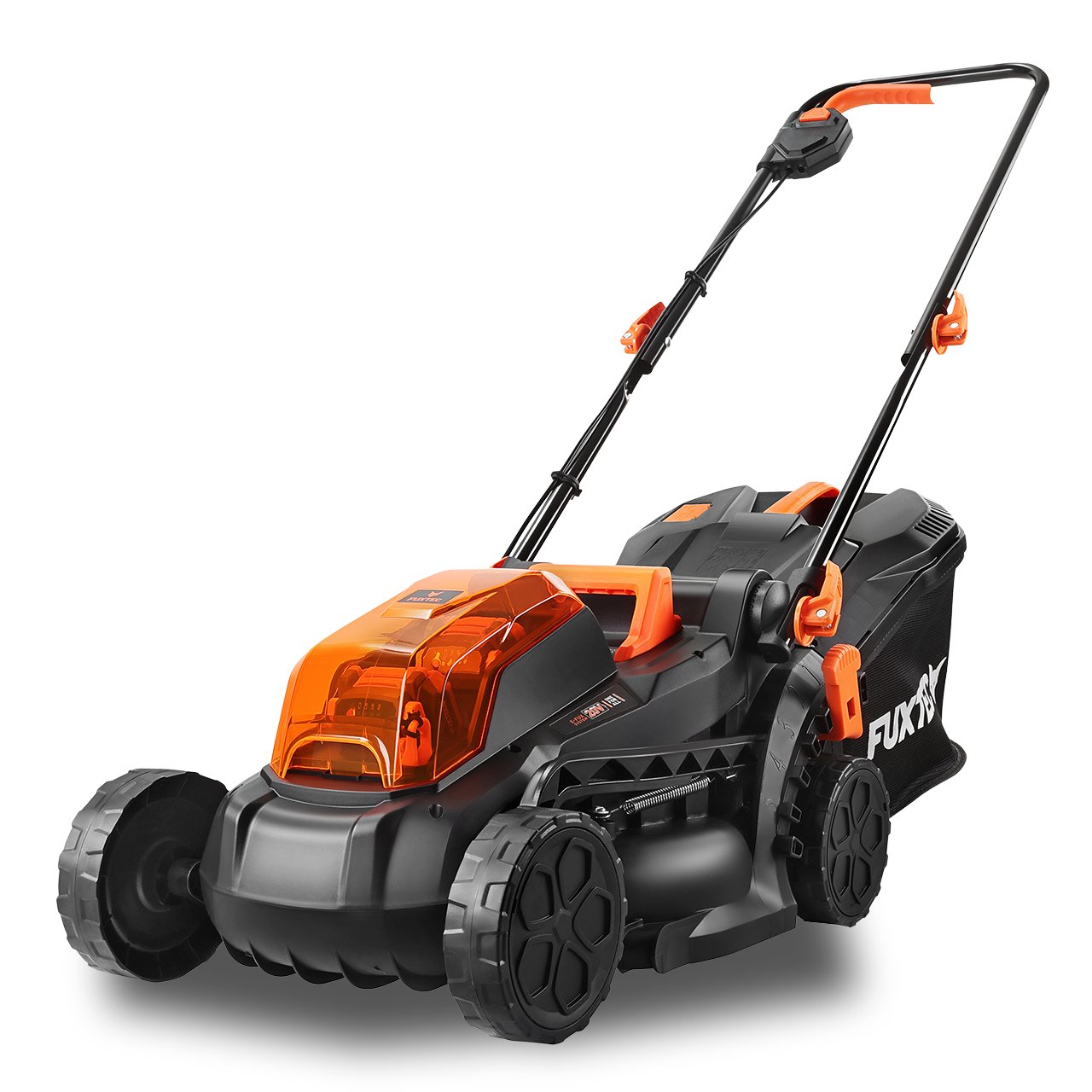
Part number RM2050E1001
Drive belt RM Series 20 & 5196/eS
O711Li drive belt for various RM20 series lawnmowers as well as selected RM5196 models.
Fits, among others: FX-RM2050, RM2055, RM2060, RM5196 and RM5196eS
View drive belt →
Rasenmäher Radantrieb streikt? So wartest du deinen Rasenmäher Radantrieb.
A lawnmower with wheel drive takes a lot of the pushing effort off your hands on larger areas, uneven ground and gentle slopes. That's exactly why it's so noticeable when the mower suddenly stops pulling properly, only moves in jerky bursts, or won't move at all even with the drive lever engaged.
A faulty gearbox isn't always to blame. Grass build-up in the drive, a drive cable that's too loose, a worn drive belt or worn gears on the drive wheels are often the culprits. With a systematic check, you can usually narrow down the fault without randomly swapping out parts.
In this FUXTEC garden guide, we'll show you how a lawnmower's wheel drive works, which symptoms point to which component, and what to keep in mind when troubleshooting.
If your lawnmower's wheel drive isn't working, start by checking the drive cable, the drive belt and the area behind the driven wheels. A drive that's completely dead usually points to a cable that's come loose or snapped, a drive belt that's jumped off or torn, or a gearbox problem.
If the mower only pulls weakly or jerks under load, a loose drive cable, a slipping drive belt or dirty wheel gearing are likely candidates. If, on the other hand, the wheel drive stays engaged after you release the lever, the drive cable may be adjusted too tight, kinked or sticking.
The exact design varies from model to model. Always check your lawnmower's manual first before removing covers, tilting the mower or changing any drive settings.
The wheel drive isn't a single component but several parts working together. On many petrol lawnmowers, the engine's rotary motion is transferred to a drive gearbox via a drive belt. The gearbox then passes the power on to the rear wheels via an axle or separate drive elements.
The drive lever on the handlebar controls whether the mower moves forward on its own. The lever is connected to the drive mechanism by a cable. Depending on the design, the cable operates a clutch, a tensioning mechanism or a lever on the gearbox. The exact way it works depends on the model and shouldn't be assumed purely from the visible layout.
Current FUXTEC petrol lawnmowers use both fixed and adjustable rear-wheel drives. On the FX-RM5196PRO, for example, the speed of the FlexSpeed drive can be adjusted and the rear-wheel drive can be switched off for manoeuvring. According to the instruction manual, the speed adjustment must only be made while the engine is running, otherwise the gearbox could be damaged.
The type of fault often already gives you a clue as to which component to check first.
| Symptom | Common possible causes |
|---|---|
| Wheel drive doesn't work at all | Drive cable disconnected or snapped, drive belt jumped off or torn, gearbox fault |
| Mower only pulls weakly | Drive cable too loose, drive belt worn or dirty, drive overloaded |
| Wheel drive jerks | Drive belt slipping, wheel gearing dirty or damaged, cable working unevenly |
| Only one wheel is driven | Gear, gear ring, driver pin or axle connection damaged on one side |
| Wheels turn stiffly | Grass and dirt in the wheel drive, bent axle, stiff bearing or gearbox |
| Wheel drive stays engaged after releasing the lever | Drive cable too tight, kinked or jammed, stiff return mechanism |
| Grinding or clicking noises | Damaged gearing, loose parts, worn drive belt or gearbox damage |
This table is a starting point for troubleshooting. A single symptom can have several causes, so you should check the components in a fixed order rather than jumping straight from a noise to the conclusion that the gearbox is damaged.
Park the lawnmower on a level, firm surface and let the engine cool down completely. Release all control levers and, on a petrol lawnmower, disconnect the spark plug lead. This reduces the risk of the engine starting unexpectedly. On a battery-powered lawnmower, the battery and, where fitted, the safety key must be removed.
Wait until the blade and all moving parts have come to a complete stop. Wear work gloves and never reach under the mower deck unless you're sure the mower is reliably secured against starting. The FUXTEC instruction manual also states that worn or damaged safety-relevant parts must be replaced and that sturdy gloves are required for any work on the blade.
Don't simply tip the lawnmower onto any side. Engine oil or fuel can get into the air filter, carburettor or other areas. Which position is permitted for your model and the relevant maintenance task is stated in the instruction manual. If the blade needs to be removed, the current instructions for the FUXTEC FX-RM series require the fuel tank to be emptied first.
Start with the simplest possible cause: dirt. Damp grass clippings, soil and compacted cuttings can build up behind the drive wheels, on the gear rings and around the drive belt. This increases resistance and can make power transfer uneven.
Remove loose deposits with a brush. Use compressed air carefully, and only in a way that doesn't push dirt further into bearings or the gearbox. Avoid getting oil, grease or cleaning products on the drive belt or pulleys, as a slippery belt transfers less power.
FUXTEC's instruction manual for the FX-RM series recommends checking the drive belt once or twice a year and clearing it of clippings. The drive wheels should be removed once a year so the gear and gear ring can be cleaned with a brush or compressed air.
The drive cable transfers your movement at the drive lever to the drive mechanism. If the cable has come loose, snapped or is noticeably too slack, the wheel drive won't engage fully.
Start by checking the cable's route from the handle to the drive. The outer sheath must not be kinked, chafed or slipped out of its mounting. Also check that both ends of the cable are correctly hooked in. With the mower switched off and secured, pulling the drive lever should make the corresponding lever at the drive move visibly and smoothly.
A drive cable that's too loose often means the drive only engages very late, only weakly, or not at all. A cable that's adjusted too tight or is sticking, on the other hand, can cause the mower to keep moving after you release the lever.
If your model has an adjusting screw, you can correct the cable's play as described in the instruction manual. Don't tension the drive cable so much that the drive engages even without the lever being pulled. If the cable is frayed, corroded or stiff, it should be replaced with a spare part that matches your model exactly. FUXTEC uses different drive cables across the various FX-RM series, so matching the correct model is essential before ordering.
The drive belt is one of the key wear parts of the wheel drive. It can stretch, harden, fray, tear or jump off a pulley.
Only remove the belt cover if the instruction manual says to do so. Then check that the belt sits correctly on the pulleys. Look out for cracks, frayed edges, shiny polished sides, significant deformation and contamination from oil or grease.
If the drive belt has come off, don't just put it back on. Check why it left its track in the first place. A loose mounting, a damaged pulley, incorrect tension or foreign objects can all cause the fault to reappear immediately.
A visibly damaged or heavily worn drive belt must be replaced. Use a belt whose length and profile are specifically intended for your lawnmower model. FUXTEC also offers different drive belts depending on the FX-RM series. The current instruction manual recommends checking it once or twice a year.
If the drive belt is running and the gearbox is working, but one or both wheels aren't transferring power, the cause is often located directly in the wheel area.
On many lawnmowers, a small drive gear meshes with a gear ring on the inside of the wheel. Grass, soil and general wear can block the gearing. With increasing use, teeth, drive pins, locating pins or other connecting parts can also wear out.
Only remove the drive wheels as described in the instruction manual. Clean the gearing and check whether any teeth are missing, heavily rounded or broken. Check both sides separately. If only one wheel is no longer driven, a local problem with the gear, gear ring or drive pin is more likely than a total gearbox failure.
Damaged gears shouldn't be patched up as a makeshift fix. Altered gearing can skip and damage further components.
Release the drive lever and turn the wheels by hand with the mower switched off and secured. Both wheels should move without unusual grinding noises. A certain difference between forward and backward movement can be down to the design.
Watch out for noticeable side-to-side play, grinding, binding or unusually high resistance. A bent axle may show up as a wobbling wheel or a visibly uneven gap to the housing. Damaged bearings can show up as rough running, clicking, or increasing play.
A stiff axle puts extra strain on the drive belt and gearbox. This can make the wheel drive seem weaker even though power transfer is basically still working.
Only once the drive cable, drive belt, wheels and gearing all check out should you turn your attention to the gearbox as a possible cause.
Check from the outside whether the gearbox and its mountings are secure. Look for cracks, loose screws, bent mountings and leaking lubricant. Only tighten fastenings to the torque specified for your model.
On some designs, springs or moveable tensioning levers form part of the drive mechanism. However, a spring must never be repositioned or tensioned further on a hunch. Its position and function must be clearly shown in the exploded diagram or instruction manual.
If the gearbox input turns but no power reaches the wheels, or if you hear grinding or clicking noises, the gearbox may be damaged internally. Don't open sealed gearbox units without the appropriate service documentation.
If the lawnmower pulls fine on level ground but stalls in long grass or on a slope, the gearbox isn't necessarily faulty. Often, a worn drive belt only starts slipping under higher load. A drive cable that's too loose can also mean the drive only partially engages.
Also check that the wheels move freely and the drive is clean. Long or damp grass increases both the load on the blade and the resistance when moving forward. FUXTEC recommends raising the cutting height, slowing down and, if necessary, mowing the area in two passes when the grass is long.
On models with variable speed, also check that the speed control is set correctly. On the FUXTEC FlexSpeed drive, a setting towards the engine means slower forward speed, while a setting towards the operator increases it. This adjustment must only be made while the engine is running.
Releasing the drive lever should stop forward movement. If the lawnmower keeps moving anyway, or if the driven wheels can barely be moved freely by hand, switch off the engine immediately and stop using the machine.
Check whether the drive lever returns fully to its resting position. Then check the drive cable, its outer sheath, mountings and return mechanism. A drive cable that's adjusted too tight, kinked or corroded can prevent the drive mechanism from fully disengaging.
Don't just loosen the cable without finding the actual cause. If the drive stays engaged even with a freely moving cable, a clutch, spring or mechanism on the gearbox may be jammed. In this state, the mower is difficult to control and shouldn't be started again until it has been repaired.
Refit all covers, wheels and guards completely. Check that tools and loose parts have been removed from the work area.
Start the lawnmower on an open, level area with the drive lever released. On the FUXTEC FX-RM series, the wheel drive lever should not be engaged at the same time as starting the engine. Only once the engine is running and forward drive is needed should the lower drive lever be pulled.
Engage the drive briefly at first and check that both wheels grip evenly. Then release the lever. The lawnmower must stop moving forward immediately.
Next, test how it behaves under light load. The drive should run without jerking, grinding or unusual noises. If the mower pulls to one side, engages with a delay, or keeps moving after you release the lever, continue troubleshooting.
Clean the area behind the drive wheels regularly. Damp clippings in particular can get compacted and, once dry, form a hard layer. At the same time, check that both wheels move freely and that there are no unusual noises.
Check the drive cable for kinks, chafing and secure mounting. Check the drive belt at least at the start and end of the mowing season, or as specified in the instruction manual. The current FUXTEC manual recommends checking the drive belt once or twice a year and cleaning the inner drive wheels annually.
Don't cut very long grass straight away on the lowest cutting height. A higher setting, a slower working pace and two mowing passes take strain off the engine, blade and drive. Also avoid pushing the lawnmower against solid obstacles while the wheel drive is engaged.
When cleaning and lubricating, make sure no oil gets onto the drive belt, pulleys or friction surfaces. Only use spare parts compatible with your model, and compare the model designation, part number and, where relevant, year of manufacture.
A faulty drive cable, a worn drive belt or a damaged wheel gear can often be replaced with manageable effort. If the engine is reliable, the mower deck is sound, and the blade mount and safety devices are intact, a repair is usually worthwhile.
The picture is different if the gearbox, axle, wheel mount and other components are all heavily worn at the same time. In that case, factor in not just the price of individual spare parts but also the fitting effort and the overall condition of the lawnmower.
A repair should no longer be carried out purely for cost reasons if safety-relevant parts are damaged or suitable spare parts aren't available. The FUXTEC instruction manual states that worn and damaged parts must be replaced, recommends genuine spare parts, and points out that repairs carried out by insufficiently qualified people can create safety risks and affect the warranty.
Repair instead of replace
Whether it's a worn drive belt, a faulty drive cable or a detached tension spring: choose the spare part that matches your FUXTEC lawnmower's exact model designation.
711 mm

Part number RM2050E1001
O711Li drive belt for various RM20 series lawnmowers as well as selected RM5196 models.
Fits, among others: FX-RM2050, RM2055, RM2060, RM5196 and RM5196eS
View drive belt →RM46 series

Part number RM4639E1004
Model-specific replacement belt for transferring power to the wheel drive on selected RM46 lawnmowers.
Fits: FX-RM4639, FX-RM4646 and FX-RM4839P
View drive belt →PRO series

Part number RM2060E1024
Replacement drive belt for the corresponding PRO models with driven rear wheels.
Fits: FX-5196PRO and 51SA96
View PRO drive belt →From model year 2023

Part number RM5196E1017
Special drive belt for newer versions of the RM5196 range.
Fits: FX-RM5196 and FX-RM5196eS from model year 2023
View 710 mm drive belt →Wide model coverage

Part number RM1850E1024
The drive cable transfers the movement of the drive lever to the wheel drive mechanism.
Fits: FX-RM series except RM4839P and RM5396P, marked P-03
View FX-RM drive cable →For PRO models

Part number RM2060E1000
Model-specific drive cable for operating the wheel drive on selected FUXTEC PRO lawnmowers.
Fits: FX-RM2060PRO and FX-RM5196PRO
View PRO drive cable →Small cause, big effect

Part number RM2060E1031
The suspension spring is part of the tensioning/actuating mechanism of the wheel drive. If it comes loose, becomes overstretched or breaks, the drive belt can no longer grip reliably.
Fits: Wheel drives on the RM20, RM48, RM51 and RM53 series
View suspension spring →Stop the repair if the drive stays engaged after releasing the lever, if the gearbox is unusually noisy, or if you notice cracks or significant deformation on the axle, housing or mountings.
A gearbox that's leaking lubricant shouldn't simply be kept in use, either. The same applies if you need specialist tools or precise torque figures to remove safety-relevant components.
FUXTEC offers model-specific drive belts, drive cables, wheels and other spare parts for numerous lawnmower series. By checking the exact model designation, you can work out which spare part fits your machine.
A technically sound wheel drive still might not be the perfect match for your lawn. A mower with a fixed speed, for example, is handy on large, open areas but is less flexible to manoeuvre between trees, borders and tight corners.
An adjustable rear-wheel drive lets you match the working pace more closely to the terrain and growth. The current FUXTEC FX-RM5196PRO, for instance, has an adjustable FlexSpeed rear-wheel drive that can be switched off for manoeuvring. Large rear wheels also help with handling on uneven ground.
A new lawnmower can make sense if the existing machine doesn't just have a faulty wheel drive, but also shows clear signs of wear on the engine, mower deck, blade or safety devices. What matters isn't just whether the mower still runs, but whether it continues to work safely, reliably, and in a way that suits your lawn.
If your lawnmower's wheel drive has stopped working, don't rush to replace the gearbox. Start by cleaning it, then check the drive cable, drive belt, wheel gearing and axles, and only turn to the gearbox after that.
A drive that's stopped working can often be traced back to a single worn or incorrectly adjusted component. Drive cables, drive belts and gear rings in particular are typical spots where use, dirt and material wear become visible.
Always work according to your model's instruction manual when troubleshooting. Secure the lawnmower against accidental starting, use the correct spare parts, and test the drive on an open, level area after every repair. In many cases, this is all it takes to get the forward drive running reliably again, without swapping out parts unnecessarily just on a hunch.
Discover the powerful FUXTEC lawn mowers for optimal lawn care.
The most common causes are a loose or snapped drive cable, a worn or slipping drive belt, grass and dirt buildup in the drive mechanism, and damaged gears on the drive wheels. A faulty gearbox is less common and should only be suspected after checking these other components first.
Weak drive often results from a loose drive cable that doesn't fully engage the mechanism, a worn or slipping drive belt, or compacted grass and dirt around the wheels. Check that both wheels move freely and ensure the drive area is clean, especially when mowing long or damp grass.
Disconnect the spark plug lead and inspect the drive belt for cracks, fraying, shiny or polished surfaces, and signs of wear. Check that the belt sits properly on its pulleys and isn't contaminated with oil or grease. A visibly damaged belt should be replaced with one that matches your specific mower model exactly.
Stop using the mower immediately. Check that the drive lever returns fully to its resting position, then inspect the drive cable for kinks, fraying or tight adjustment that prevents disengagement. A cable that's too tight, kinked or corroded often causes this problem and may need adjustment or replacement.
Many issues can be resolved by cleaning the drive area, adjusting or replacing the drive cable, or replacing a worn drive belt. Always disconnect the spark plug lead before working on the mower, follow your model's instruction manual, and use genuine spare parts that match your specific mower model to avoid safety risks.
Clean the area behind the drive wheels regularly to remove compacted grass clippings, check the drive cable for damage and secure mounting once or twice a year, and inspect the drive belt at least twice yearly. The drive wheels themselves should be removed and cleaned annually so the gears can be checked for wear.
A jerky or stuttering drive usually indicates a slipping belt, dirty wheel gearing, or a cable working unevenly, whereas a drive that doesn't work at all suggests the cable is disconnected or snapped, the belt has jumped off or torn, or there's a gearbox fault. The type of failure helps identify which component to check first.
Everything you need for a well-kept, healthy lawn – from a single source

So findest Du den richtigen Rasenmäher für Deinen Garten
Der richtige Rasenmäher ist nicht automatisch das stärkste oder breiteste Modell. Er muss zu Deiner Rasenfläche, zum Aufbau des Gartens, zur Häufigkeit des Mähens und zu Deinem persönlichen Komfo...
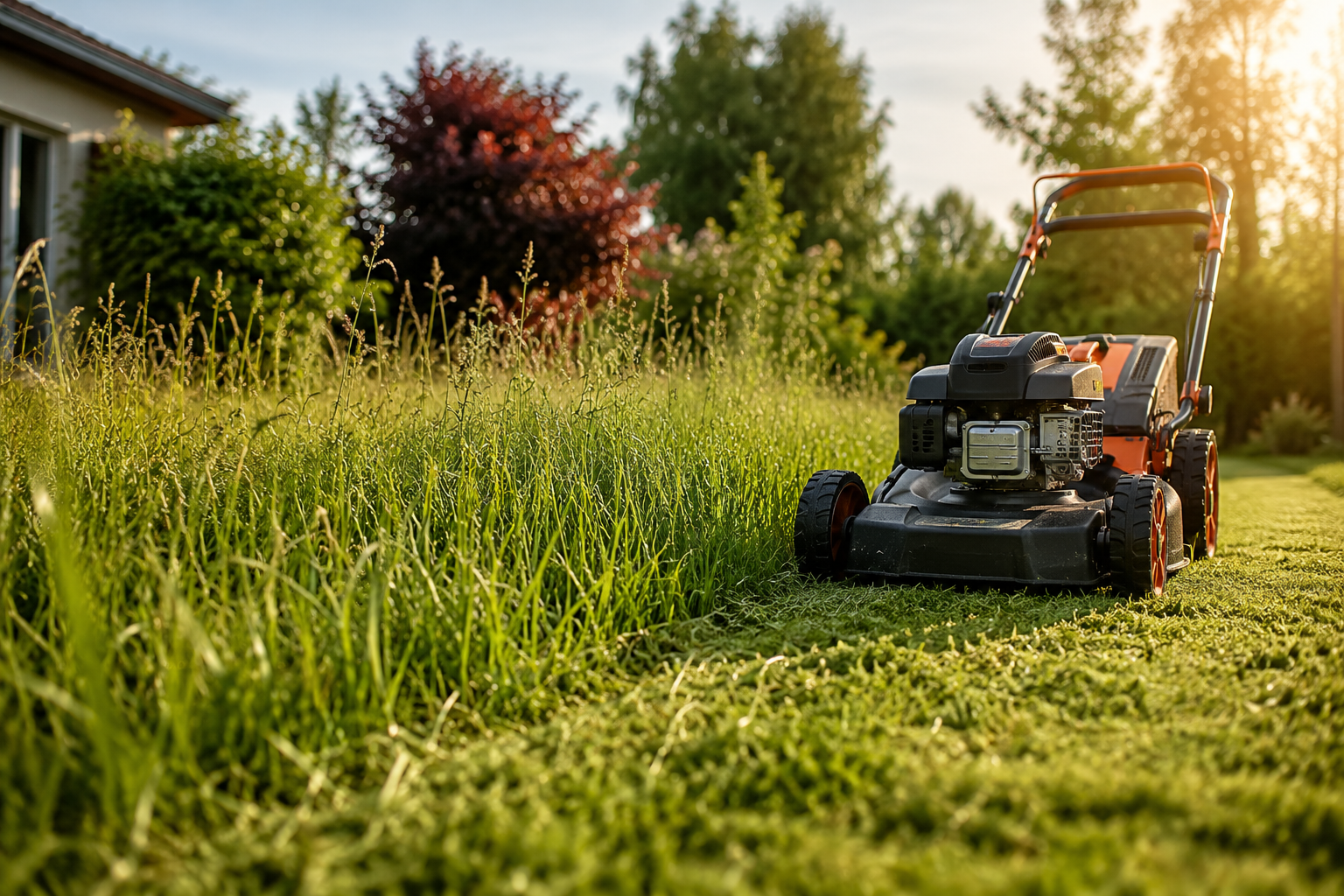
Mowing Overgrown Grass: A Step-by-Step Guide
If your lawn has grown very long after a holiday, a spell of wet weather or a longer break from mowing, don't cut it straight down to the lowest setting. Reduce long grass gradually, choose the rig...

Lawn Mowing Patterns: Stripes & Checkerboard Guide
An evenly mown lawn always looks well kept. But with a deliberately planned mowing pattern, you can take the effect to a whole new level. Straight stripes, diagonal bands or a checkerboard pattern ...