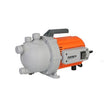
Would you like to water your garden using well or rainwater harvesting tank water, and are wondering whether a home water pump system (pressure pump set) or an automatic water pump is the right choice? In this detailed article, we explain the differences between home water pump systems, garden pumps, and submersible pumps. We show you how pressure pump systems with pressure vessels, pressure switches, and dry-run protection work, and what to look out for when buying a home water pump system. We also introduce you to high-quality FUXTEC products that reliably supply both your home and garden with water.

How They Work: Pressure Pump Systems vs. Automatic Water Pumps
Automatic water pumps use a built-in pressure switch that automatically starts the pump whenever pressure drops and stops it once maximum pressure is reached. As there is no buffer tank, the pump starts up with every single draw-off, which leads to increased wear. The self-priming pump ensures that water is drawn up reliably.
A home water pump system such as the FUXTEC FX-HWW2200 additionally features a separate pressure vessel with a membrane. Water is stored in this vessel as a buffer, so the pump only switches on when pressure in the vessel falls below a critical level. For smaller volumes of water drawn off, the pump no longer starts up with every withdrawal. This ensures consistent pressure and extends the service life of the system.
Pressure Vessel, Pressure Switch & Dry-Run Protection
The key feature of a home water pump system is the pressure vessel, which buffers the water supply. A high-quality non-return valve prevents backflow, and the integrated pressure switch continuously monitors water pressure. As soon as you open a tap, water is delivered from the vessel, and the pump automatically switches back on as needed before switching off again once the tap is closed. Reliable dry-run protection ensures the pump does not continue running when water pressure in the well or rainwater tank is too low.
| Feature |
Pressure Pump System |
Automatic Water Pump |
| Pressure Vessel |
Yes (5–20 litres) |
No |
| Pressure Switch |
Yes |
Yes |
| Dry-Run Protection |
Integrated |
Optional |
| Pump Cycles |
Fewer |
More |
| Service Life |
Long |
Shorter |
Flow Rate, Head Height & Suction Lift
When making your selection, the key factors are flow rate, head height, and suction lift. The litre figure shows how much water is moved per hour. Home water pump systems deliver up to 4,000 l/h at a maximum head height of 50 m, while garden pumps typically achieve 3,000 l/h and suction lifts of up to 7 m. Make sure the pump provides sufficient capacity for your intended use, especially when water needs to be drawn from a well or deep rainwater harvesting tank.
Garden Pumps, Submersible Pumps & Borehole Pumps
Garden pumps are suitable for drawing water above ground from water butts or rainwater harvesting tanks. Submersible pumps must be positioned in the water and are ideal for clean or lightly contaminated liquids. Borehole pumps (typically stainless steel deep-well pumps) reliably draw water from deep sources. Whilst simple garden pumps can be connected quickly via a hose, a home water pump system supplies even remote tap points with consistent flow performance.
Use with Wells, Rainwater Tanks & Harvested Rainwater
An automatic water pump can draw water from a well or rainwater harvesting tank, but the pump starts up with every pressure drop. A home water pump system stores water in the pressure vessel, making it available even when water levels are low until the next pump cycle. Rainwater collected from gutters and downpipes can be fed into the pump system via a self-priming pump — perfect for sustainable garden irrigation.
What to Look for When Buying a Home Water Pump System
When buying a home water pump system, look out for:
-
Pressure vessel volume: More buffer capacity = fewer pump cycles
-
Flow rate & head height: Matched to your water requirements
-
Suction lift: Depth of the well or rainwater harvesting tank
-
Dry-run protection & non-return valve: Protection against damage
-
Materials: Stainless steel components for long-lasting use
-
Power consumption & noise level: Efficiency during continuous operation

When purchasing, the use of non-potable water for toilet flushing or a washing machine is also a consideration — weigh up whether a home water pump system or an automatic water pump best meets your requirements.
Installation & Commissioning of a Home Water Pump System
Installation of the pump system is plug-and-play: you connect it to the well or rainwater tank hose and connect the pressure vessel to the household water supply. The pressure switch ensures that the system reliably switches on and off automatically — with no manual adjustment needed. Garden pumps are connected via a hose fitting; a non-return valve prevents unwanted backflow.
Home Water Pump Systems: Maintenance, Service Life & Power Consumption
Thanks to integrated dry-run protection and the pressure buffer, home water pump systems stand out for their long service life. The pre-charge pressure in the vessel (approx. 1.5 bar) should be checked once a year. Power consumption is typically 500–800 W, while standalone garden pumps usually run at around 600 W but cycle on more frequently.
FUXTEC Solutions for Home Water Pump Systems and Automatic Water Pumps
FUXTEC delivers high-quality technology for home and garden. The FX-HWW2200 home water pump system combines a water pump, pressure vessel, and pressure switch in stainless steel, ensuring you always have water available when drawing from a well or rainwater harvesting tank. With its robust construction, the system provides a 20-litre reserve that guarantees consistent pressure and significantly reduces water consumption. The self-priming pump only starts when water is actually being drawn, so it no longer kicks in for small amounts. The integrated non-return valve retains water securely, while the pressure switch ensures the system starts and stops automatically.


More demanding users will appreciate that our home water pump system is built to a high standard and delivers full performance even under load. For more demanding conditions, a deep-well pump from our pump range is also available, which can be seamlessly integrated as an additional module. Using standard hose connectors and flexible fittings, every component can be incorporated harmoniously into your garden irrigation setup. Thanks to its modular design, home water pump systems and automatic water pumps can be expanded at any time with additional garden pumps or automation solutions.
Choosing Between a Home Water Pump System and a Garden Pump
When deciding between a home water pump system and an automatic water pump, it all comes down to your actual water requirements. If you only need to water occasionally, a compact automatic water pump or garden pump drawing from a well will often suffice. As soon as you open a tap, the pump switches on automatically to deliver water and stops when you close the tap again.
If, on the other hand, you want to supply your entire home and garden continuously with non-potable water, investing in a home water pump system is the better choice. A pressure pump system maintains consistent pressure even when water is drawn multiple times in succession, and manages head height so that barely any loss of performance occurs. As a result, the pump runs less frequently, reducing wear and protecting your investment in the long term. You will always have an ample supply of water at hand, and can enjoy maximum convenience when watering borders, running a washing machine, or flushing toilets.
Home Water Pump Systems for Allotments: Efficient Irrigation in Small Spaces
On an allotment, space is often limited, yet reliable irrigation is essential. This is where the choice between a home water pump system and an automatic water pump becomes clear: unlike automatic pumps that start up with every draw from the well, a home water pump system uses its integrated pressure vessel to have up to 20 litres of water ready under pressure straight away. The self-priming pump in its stainless steel housing only starts when pressure drops below a critical level, and switches off automatically as soon as no more water is being drawn. This system maintains consistent pressure, minimises water consumption, and ensures the pump no longer needs to cycle unnecessarily for small amounts of water. A non-return valve keeps the non-potable water safely in the pressure vessel and prevents the system from running dry after switching off. So whether you are watering raised beds or irrigating your garden, you always have water to hand without the pump cutting in as it would with a simple garden pump.
For allotment holders who want to buy a home water pump system and supply their plot and home with rainwater or well water, using a deep-well pump as a pre-stage is ideal: it draws water from deeper layers into the pressure pump system, which then delivers full pressure on demand. Thanks to standard-compatible hose fittings, you can integrate the system seamlessly into your existing irrigation setup. So choose consciously between a home water pump system and an automatic water pump to get exactly the level of convenience you need: for occasional watering, a compact automatic pump will suffice, but anyone wanting to use non-potable water continuously throughout their garden will be far better served by a high-quality home water pump system with pressure switch.
Conclusion: The Right Choice for Your Water Supply
Whether you opt for a compact automatic water pump or a full home water pump system depends on your requirements. A pressure pump system with pressure vessel, pressure switch, and dry-run protection offers sustainable efficiency. An automatic water pump wins on simplicity and lower upfront cost. With FUXTEC home water pump systems and pumps, you will find exactly the solution that makes the most of your well, rainwater harvesting tank, or collected rainwater, and guarantees long-lasting technology for your garden irrigation.