
Cordless drill driver
The all-rounder for privacy screens, garden benches, outdoor bars and garden lounges. Ideal for pre-drilling and driving screws into boards, pallets and timber posts.
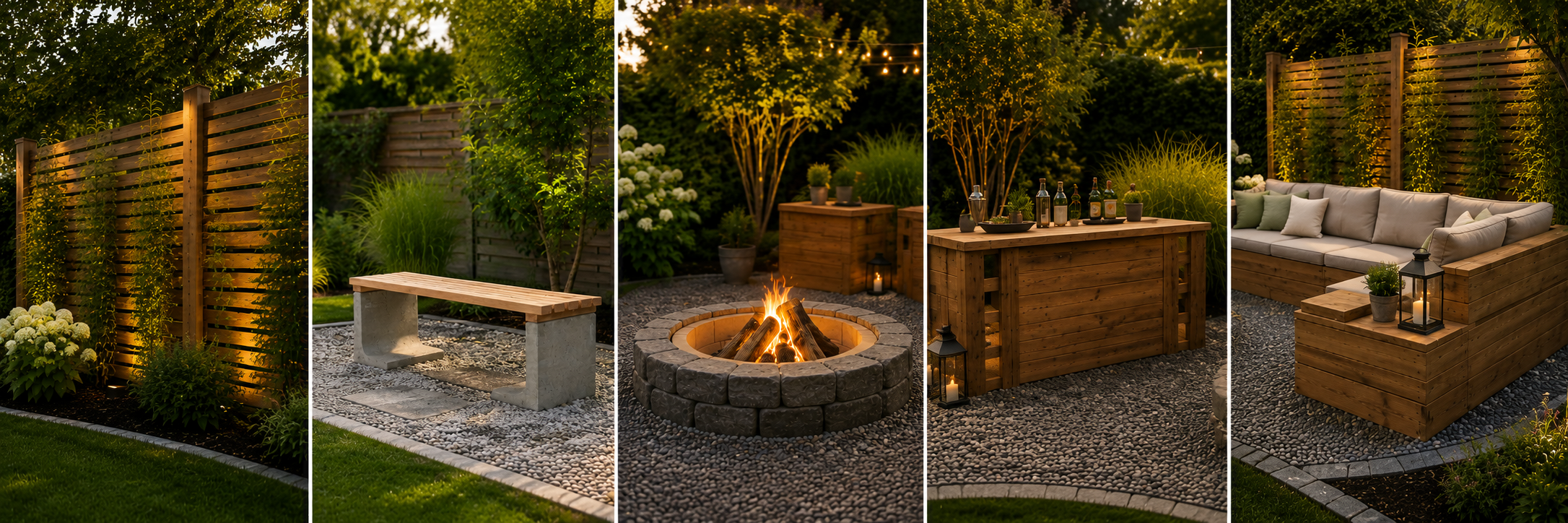
A beautiful garden doesn't come together through a single project. It's only when seating areas, paths, planting and practical zones work together that an outdoor space feels like one cohesive place. That's exactly what our five FUXTEC projects are about: rather than building isolated features, you develop, step by step, an area where you can sit, celebrate, cook and relax.
It starts with a wooden privacy screen. Next comes a simple garden bench, a built-in fire pit, a compact outdoor bar and a spacious garden lounge. Each garden project works perfectly well on its own. Taken together, they add up to a complete garden retreat for making the most of summer outdoors.
You don't need to be a landscaping professional, nor do you need to renovate your whole garden. Each project can be tackled on its own, adapted to different plot sizes, and later linked together. With the right FUXTEC garden tools and cordless power tools, you can handle cutting, fixing, sanding and preparing the ground exactly where the new features will go.
Before you cut any timber or lay a single stone, take a step back and look at the whole space you have available. The key question isn't where a single piece of furniture should go — it's how you want to use your garden in the long run.
Together, our five projects form one open seating area. The privacy screen gives the space a "back wall" and a sense of calm. The lounge sits in front of it. The fire pit forms the centrepiece, while the garden bench adds extra seating. To the side, the bar rounds off the space without blocking paths or sightlines.
This layout works particularly well on an open lawn, an existing patio, or a newly laid gravel area. Even a previously unused corner of the garden can be upgraded this way. Just make sure you leave enough clearance between the fire, seating, planting and any nearby buildings or fences.
Whether it's a privacy screen, garden bench, fire pit, outdoor bar or garden lounge: with the right FUXTEC cordless tools, you can handle cutting, drilling, fixing and wood protection right there in the garden.
The all-rounder for privacy screens, garden benches, outdoor bars and garden lounges. Ideal for pre-drilling and driving screws into boards, pallets and timber posts.
View product: FUXTEC Cordless Combi Drill FX-E1SBS20-SET

Handy for drilling into concrete, stone and masonry — for example when anchoring the garden bench, setting post supports, or working on a solid patio.
View product: FUXTEC Cordless Rotary Hammer Drill FX-E1RH20 with chisel

For cut-outs, detail work and adjustments to boards, pallets and panels. Especially handy when building the bar, lounge and privacy screen.
View product: FUXTEC Cordless Jigsaw FX-E1JS20-SET

For long, straight cuts through decking boards, planks, battens and timber posts. Perfect for preparing larger components quickly and cleanly.
View product: FUXTEC Cordless Circular Saw FX-E1CS20-SET

Smooths cut edges, surfaces and joints on garden furniture and timber structures. This preps the material nicely for stain, oil or varnish.
View product: FUXTEC Cordless Multi-Tool FX-E1MT20-SET2-SL

For an even coat of wood protection on your privacy screen, garden bench, outdoor bar and lounge. Even gaps and hard-to-reach areas are easy to treat.
View product: FUXTEC Cordless Handheld Sprayer FX-E1CSP20-SET

A privacy screen is more than just a boundary against next door. In our overall concept, it forms the visual "back wall" of the seating area. This makes the space feel sheltered and clearly defined, without closing it off completely.
Timber is a great choice because it's easy to work with and can be cut to whatever length you need. Depending on the look you're after, you can fit the boards vertically, horizontally, or with small gaps between them. Open gaps let light and air through, while boards fitted close together give you more privacy.
Before you start building, plan the exact line of the screen. Mark out where the posts will go and check for any underground cables, pipes or tree roots in the way. The posts need a solid, stable footing, since wind can put a lot of force on a solid panel. Depending on your soil, ground spikes, post supports or a concrete footing may be the right option.
An adjoining hedge can complement the wooden screen and soften the transition. Just make sure to leave enough space so both remain accessible. Climbing plants or slender grasses in front of the structure will later help tie it in naturally with the rest of the space.
In our detailed FUXTEC guide, we show you how to plan a wooden privacy screen, align the posts and fix the boards evenly.

The garden bench is the simplest project in our series, which makes it a great starting point if you're new to DIY. It's made from two sturdy concrete L-blocks and a seat made from several timber slats. The result is minimal, hard-wearing and works equally well next to a rustic fire pit or a sleek, modern lounge.
The concrete blocks form the legs of the bench. Cut-to-size slats of Douglas fir or larch are then fixed on top. These types of timber hold up well outdoors and will develop a lovely natural patina over time. If you'd rather keep the original colour, treat the surface regularly with a suitable outdoor oil.
To assemble it, first mark the drilling points on the L-blocks. Then drill the holes and insert suitable wall plugs. The timber slats should be pre-drilled, sanded, then fixed with even gaps between them. This allows rainwater to drain away and lets the wood dry out more quickly.
Place the finished bench facing the fire pit. It adds simple, extra seating alongside the large lounge while keeping a clear view of the centrepiece. If you need more seating, you can build additional benches or adjust the length to suit your available space.
Our detailed FUXTEC build guide for the wooden garden bench walks you through every step, from cutting the timber to a weatherproof finish.

A permanent, purpose-built fire pit gives the whole area a clear focal point. It brings warmth, light and a relaxed atmosphere, while also anchoring the other features around it: the lounge, the bench and the bar are all arranged in relation to it.
For the version shown here, start by preparing a round area. Remove the turf and dig out the ground far enough to fit a stable sub-base of hardcore and grit. On top of this, build the ring using heat-resistant stones. An inner lining of fire bricks, or a suitable steel fire ring, gives the outer structure extra protection.
When choosing a location, allow enough distance from trees, fences, buildings and delicate plants. Sparks and the prevailing wind direction matter too. The fire pit should be easy to reach, but shouldn't sit directly on a well-used path. Do check your local council's rules on open fires and any smoke control area restrictions before lighting up, as these can vary by location.
The surrounding area can be finished with gravel. This lets rainwater drain away naturally and creates a calm transition between the different projects. Edging stones stop the gravel and lawn from mixing together.
The fire pit isn't just for long evenings by the flames — it also gives structure to the space during the day, turning an open area into a clearly defined place to sit and gather. Read our FUXTEC build guide to find out how to create your own cosy fire pit in the garden.

An outdoor bar adds storage, worktop space and a fixed spot for drinks to your seating area. Our version measures around 160 cm wide, 60 cm deep and 108 cm tall — compact enough for a patio, but far more useful than a simple standing table.
The build consists of a sturdy timber frame, a closed front panel, a worktop, and a removable cooler tray. Ice, cooling packs and drinks can all be kept in the tray. An open shelf beneath the worktop holds glasses, crockery or barbecue accessories.
Position the bar to one side of the seating area. That way, it stays easy to reach without blocking the view of the fire. Add hooks, a bottle opener, some lighting and a few potted herbs to give it a personal touch.
Upcycling is an option too. Individual pallet boards can be used as cladding, as long as they're clean, dry and suitable for the job. For the frame and worktop, though, it's best to use straight, reliable timber.
In our FUXTEC build guide, we show you how to build the frame, inner base, counter and cooler cut-out, and how to finish the bar with wood protection.

The garden lounge rounds off the series and ties together everything you've already built. It's constructed as an L-shaped seating unit from pallets, boards and a slightly angled backrest. Thanks to its closed front panels, it looks considerably neater and more polished than a classic pallet sofa.
The base is made from several pallets stacked on top of each other. From these, you build one long seating side and one shorter side, joined together at a right angle. Next, you fit the backrest, wide armrests and cladding made from smooth-edged boards.
Large cushions and seat pads add comfort. A wide armrest can double up as a side table, so you don't necessarily need extra tables — though you can always add a small side table later if you like.
The lounge works best placed in front of the wooden screen, facing towards the fire pit. This creates a sheltered spot to sit with a clear view over the rest of the space. Lanterns, solar lights and some understated planting make the area feel inviting once evening falls.
This project shows especially clearly how individual builds can come together into one complete outdoor living area. Our FUXTEC guide covers every step, from preparing the ground to the final wood treatment.
It's the planting that really turns a building site into a lively place to spend time. Around the seating area, go for hardy varieties that can cope with heat, occasional dry spells and the proximity of paved surfaces.
In sunny beds, lavender, sage, catmint and various ornamental grasses all work well. These perennials need relatively little care and provide colour and structure over a long season. Taller grasses can also help soften the transitions between the timber screen, the bar and the lounge.
Don't plant too close together. New plants need room to grow, and you'll want to still be able to reach them in a few years' time. In pots, you can plant herbs, small ornamental shrubs or seasonal flowers. Movable containers are easy to reposition and help fill any gaps in the layout.
Well-prepared soil makes all the difference when planting. Loosen any compacted areas, work in some well-rotted compost, and make sure drainage is adequate. Hungry feeders will need regular fertilising. Check leaves and shoots regularly too, so you can spot any pests early.
Regular pruning keeps the planting compact and stops it encroaching on paths or seating areas.
A finished seating area needs less upkeep than a traditional vegetable patch, but it isn't entirely maintenance-free. Check timber surfaces regularly and retreat them when needed. Gravel areas can be raked smooth and cleared of leaves or weeds.
If you'd still like to grow your own vegetables or set up a small area for home-grown produce, you can combine the seating area with raised beds. A compact vegetable patch near the bar can supply herbs, salad and veg for evenings together — just be sure to keep this working area clearly separate from the fire pit.
A wildlife-friendly area can be worked in too. Native flowering plants, a small log pile and a mini water feature create habitat without making the seating area look untidy. The key is a clear distinction between designed spaces and more natural zones.
That way, you can make the most of the whole growing season and really enjoy your garden throughout the summer.
Measure all areas carefully before buying materials. Sketch out the positions of the privacy screen, fire pit, bench, bar and lounge to scale. This helps you spot early on whether paths will be too narrow or features are placed too close together.
Start with the fixed structures. Begin with the ground preparation, privacy screen and fire pit. Then move on to the bench, bar and lounge. Planting comes last. This order stops freshly planted greenery getting damaged while building work is still going on.
Even with a big project like this, you don't need to get it all done in one weekend. Break the work up into stages. This makes it easier to plan materials and finish each element properly.
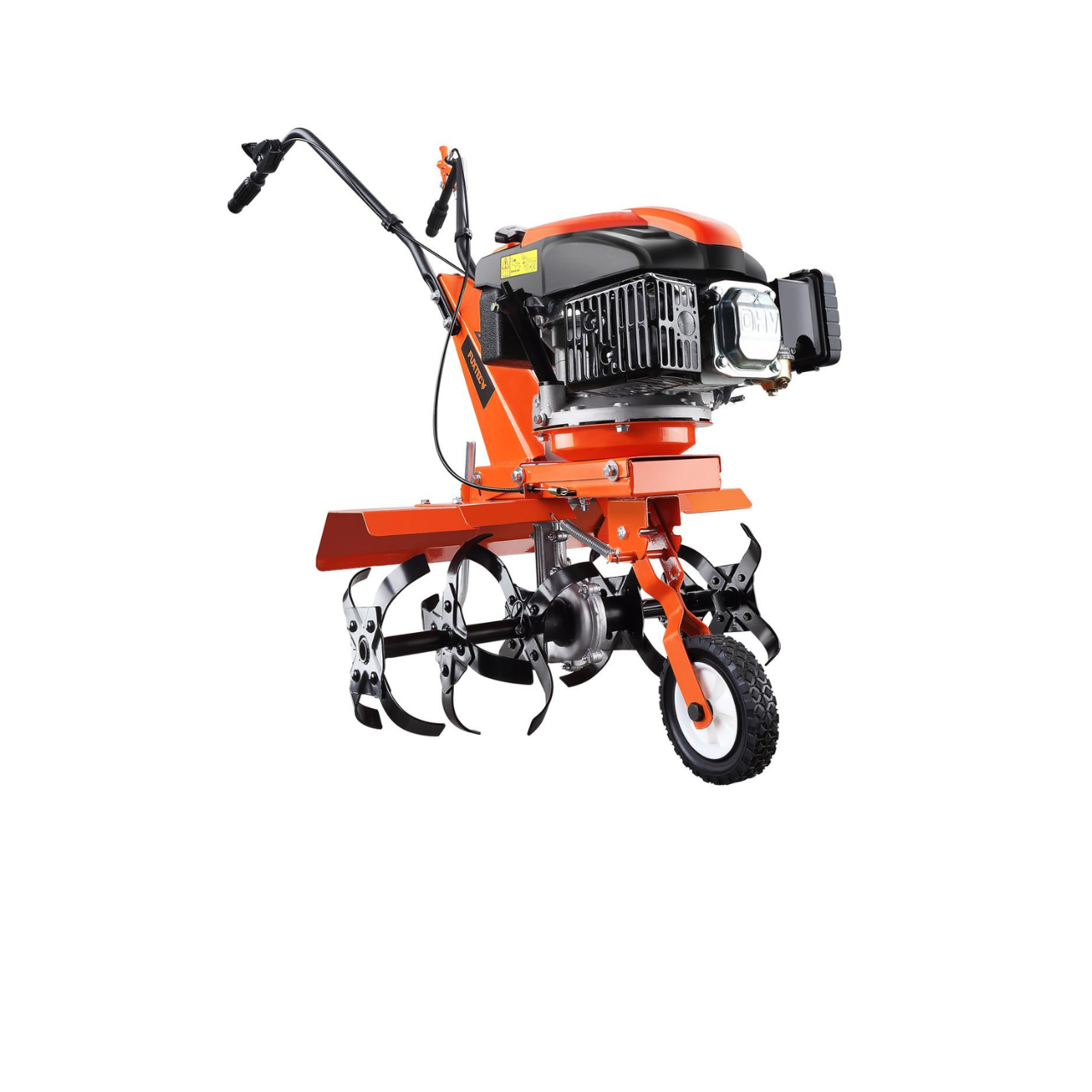
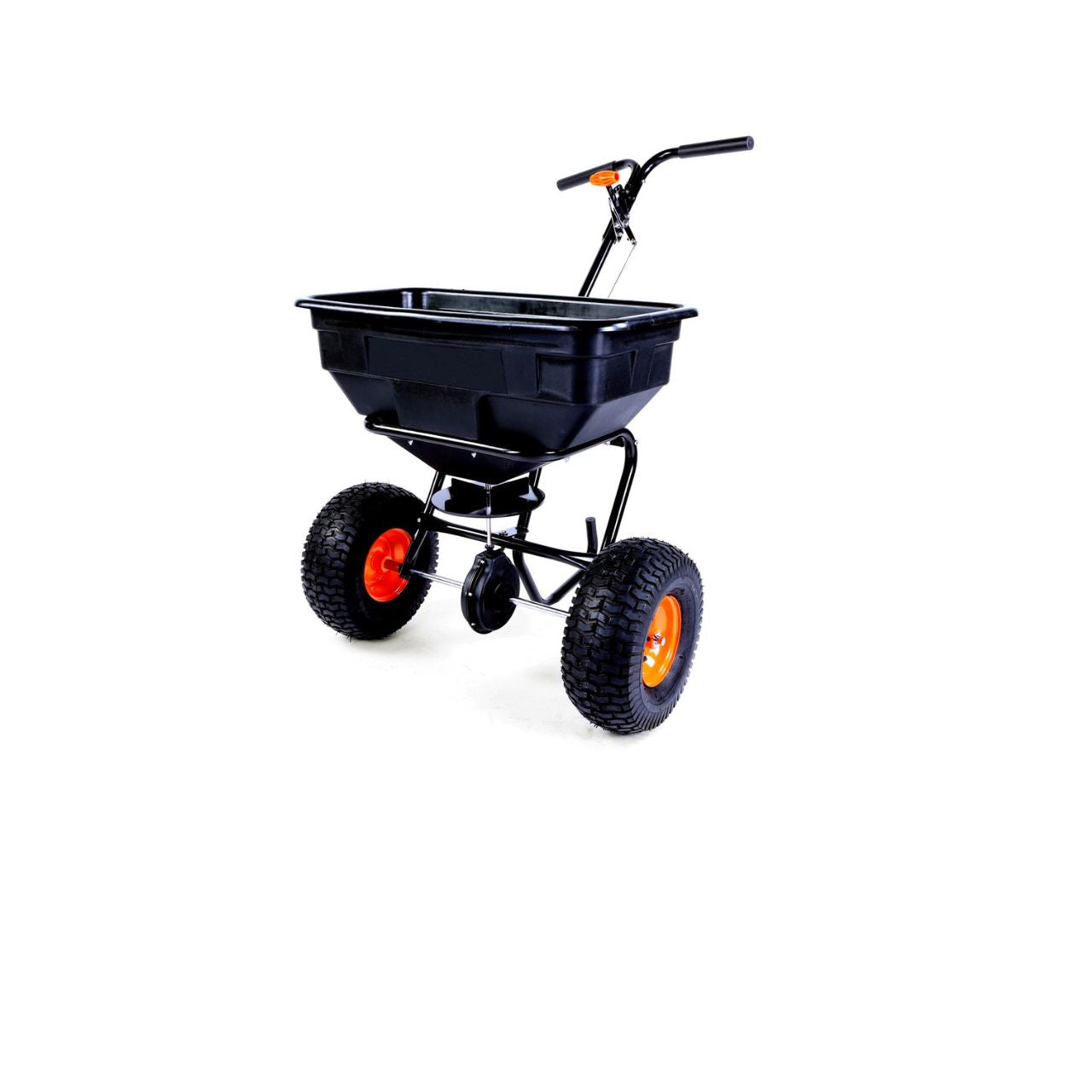
FUXTEC supports you along the way with tools for every task: cordless power tools for cutting and assembly, garden tillers for preparing the ground, hedge trimmers for the surrounding greenery, and other garden tools to help with maintenance and general upkeep.
With a privacy screen, garden bench, fire pit, outdoor bar and lounge, an unused patch of garden becomes a complete outdoor living space. Each element has a clear purpose and helps make the area more functional and inviting.
You can start with one small project and expand the space step by step. Maybe you build the bench first, add the fire pit later, then follow up with the bar and lounge. What matters most is that materials, spacing and sightlines all work together.
That's how a handful of separate projects become one well-thought-out design: a place for friends, family, quiet evenings and long days spent outdoors. With the right FUXTEC tools, it becomes a project that not only looks great, but fits into your everyday life for years to come.
The five projects are a wooden privacy screen, a garden bench, a built-in fire pit, an outdoor bar, and a garden lounge. Together, they create a complete outdoor seating and entertaining area that can be built step by step.
No, you don't need to be a landscaping professional. Each project can be tackled on its own and adapted to suit your space. With the right cordless power tools, you can handle cutting, drilling and finishing yourself.
You can absolutely build just one or two projects on their own. Each element works perfectly well independently, but when combined, they create a cohesive outdoor retreat. You can expand at your own pace.
A garden bench typically requires concrete L-blocks for the legs and timber slats made from durable wood like Douglas fir or larch for the seat. You'll also need screws, wall plugs and wood treatment for weatherproofing.
You must allow enough distance from trees, fences, buildings and delicate plants to prevent fire damage. Check your local council's rules on open fires and smoke control area restrictions, as these vary by location.
Place the privacy screen as the back wall, the lounge in front of it, the fire pit as the centrepiece, the bench to the side for extra seating, and the bar positioned to one side without blocking views. Measure carefully and sketch out positions to scale before starting.
Hardy perennials like lavender, sage, catmint and ornamental grasses thrive in sunny beds near seating areas. These plants need little care and provide colour over a long season. Herbs and seasonal flowers work well in pots for flexibility.

Trockenheit im Garten: Boden lockern, richtig gießen und mit Mulch Wasser sparen
Du gießt das Beet, doch das Wasser bleibt auf der harten Erdoberfläche stehen oder läuft zur Seite ab. Schon nach kurzer Zeit wirkt der Boden wieder trocken, obwohl Du gerade erst zur Gießkanne g...

Pine Bark Mulch: The Complete Gardening Guide
Mulching with pine bark is one of the most effective methods in modern gardening and sustainable horticulture. A layer of mulch material is applied to the soil surface to protect and improve the so...

Spring Soil Improvement: Prepare Your Garden Soil
Inhaltsverzeichnis Warum Bodenverbesserung im Garten im Frühjahr so wichtig für einen gesunden Gartenboden ist Gartenboden nach dem Winter prüfen: Bodenstruktur, Verdichtung und Bodenart erke...