
Gemüse-Aussaat im Januar: So gelingt die Anzucht vom Gemüse!
Sowing in January: What to Grow & How to Start
-
Warum sich die Aussaat im Januar lohnt
-
Voraussetzungen für erfolgreiche Aussaat im Januar
-
Diese Pflanzen kannst du im Januar im Haus vorziehen
-
Aussaat im Januar für Frühbeet und Gewächshaus
-
Januaraussaat im Hochbeet
- Aussaat-Kalendar Januar
-
Typische Fehler bei der Aussaat im Januar
-
Beete vorbereiten: Was im Januar sinnvoll ist
-
Fazit: Januar als ruhiger, aber wichtiger Startpunkt
When winter still has a grip on the outdoors and the garden lies dormant, many gardeners are already itching to get started. For even though beds and soil in January are often left untouched, the new gardening year doesn't begin in spring — it begins now: with planning, preparation, and the first carefully timed sowings indoors. That's exactly where this FUXTEC Garden Guide comes in.
At FUXTEC, we've found that a calm, considered start as early as January not only builds excitement but brings real practical benefits. Knowing what can be sown in January and which crops are better left to wait means you can enter the growing season with far less stress. In this article, we'll show you in practical terms which vegetable varieties you can start off now, what matters when it comes to light, temperature, and compost, and how to avoid common mistakes — from windowsill propagation to sowing in a protected raised bed.
Why January sowing is worth the effort
Getting ahead of the season
The key advantage is time. Plants sown in January make use of weeks that simply cannot be recovered later on. Crops with a long development period benefit most, as they won't be under time pressure come summer.
The benefits of growing on indoors
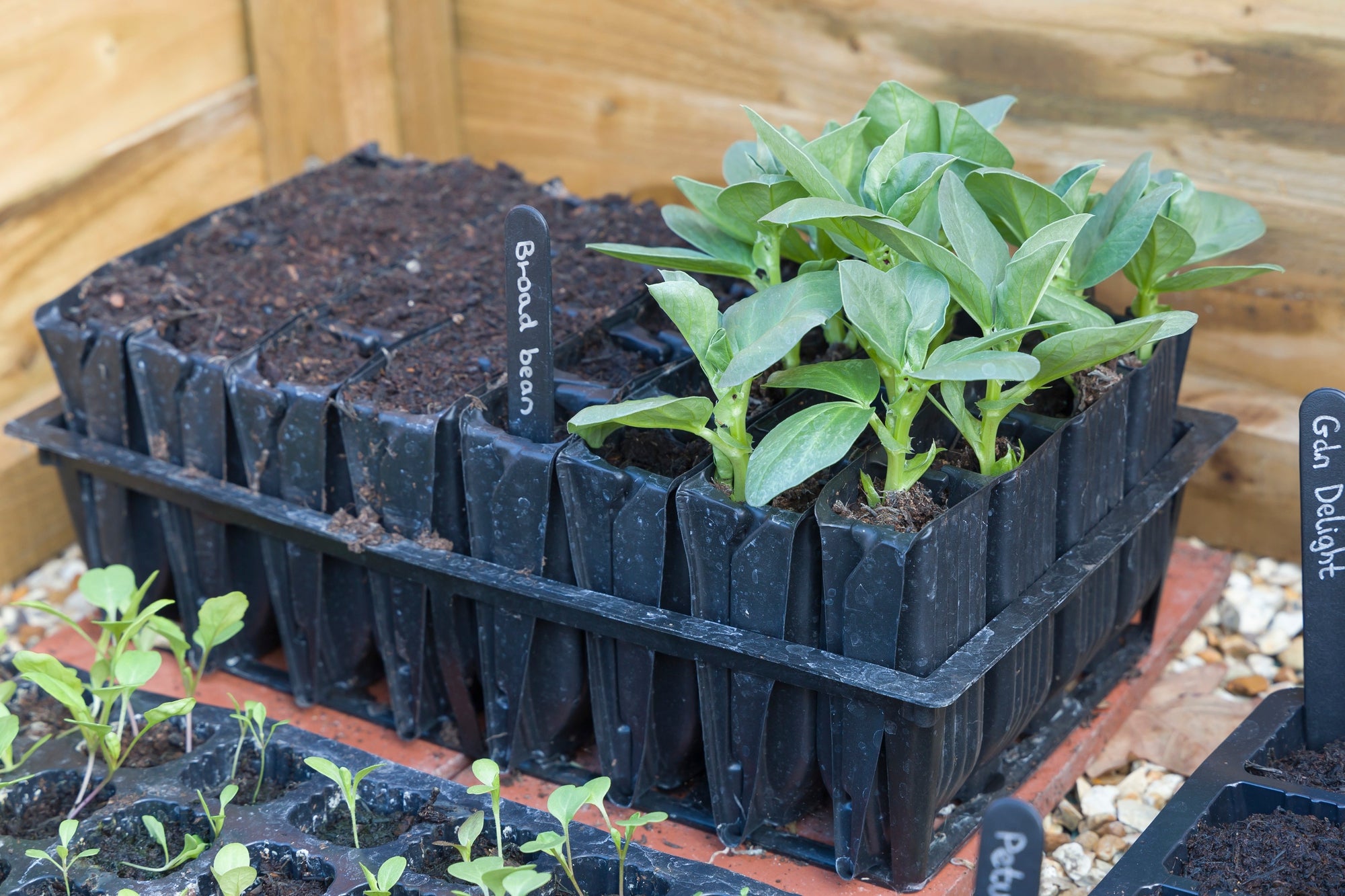
Propagation indoors allows controlled growing conditions regardless of frost and weather. While outdoor conditions don't yet allow stable growth, you can carefully manage temperature, moisture, and light. The result is stronger plants and more even development.

Who really benefits from January sowing
Propagating in January is ideal for gardeners who are prepared to check in regularly and step in when needed. If you only water occasionally or have limited space, it's best to focus on just a few crops. Our sowing calendar will help you find the right varieties for your garden.
What you need for successful January sowing
A suitable spot indoors
A standard windowsill is only partly adequate. The ideal spot is a bright windowsill away from direct heat sources. The location must offer consistently warm and light conditions — otherwise seedlings will become leggy. Windowsill sowing only works if there's enough light available.
Light, temperature, and growing medium
In January, light is the limiting factor. Even south-facing windows often don't provide enough intensity. Grow lights are well worth considering to ensure even development. If you're propagating in a greenhouse, a heater is strongly recommended.
The germination temperature for most crops falls between 22°C and 25°C. Use only fine seed compost as your growing medium, as it promotes even germination.
Clean working practices
Trays, pots, and tools must be clean. Even minor contamination can cause seeds to germinate but then die off shortly afterwards. A clean seed tray is not a minor detail — it's a prerequisite.
Plants you can start off in a greenhouse in January
Not all vegetable varieties are suited to January. What matters is how long each crop takes to develop.
Chilli plants and peppers need a lot of time. Their germination period can span several weeks, which is why they should be sown by the end of January at the latest. The same applies to aubergines, which only grow reliably at consistently high temperatures.
Physalis develops slowly and can be sown from mid-January onwards. Basil germinates quickly but is sensitive to low light levels. Summer leeks and white cabbage can also be prepared well at this stage.
Important: young plants should not be pricked out too early. Only once a stable seedling has formed does it make sense to prick out. The aim is compact young plants, not tall, unstable shoots.
January sowing for cold frames and greenhouses
Under protected growing conditions, the options expand considerably. Lettuce, spring onions, and onions can be sown from January onwards, as long as no prolonged cold snaps are expected. Kohlrabi, cauliflower, and early savoy cabbage also develop far more evenly under glass, benefiting from the more stable, milder temperatures.
Mangetout peas are not grown in winter for pod harvests — instead, they are sown early so that the young pea shoots, which grow quickly, can be harvested after a short time. Cress is also an excellent choice for growing under protected conditions.
January sowing in raised beds
A new raised bed generates warmth through decomposition. A settled raised bed, however, behaves much like a standard bed. A raised bed cover is essential in this case — without it, seeds will freeze even on milder days. If you still need to build one, our article "How to build a raised bed cover: the ultimate step-by-step guide" explains how to do it yourself.
Suitable crops for raised beds in January

Lamb's lettuce, winter purslane, and early spinach are considered hardy. Asian salad leaves work well under cover. Spring onions can be planted from mid-month onwards, provided the soil remains frost-free.
Special case in January: sowing cold-germinators correctly
Cold-germinators require a temperature change. The seed is first stored in warmth and then exposed to cold. Only this process breaks dormancy. Hellebore and Iceland poppy are typical examples. Patience is key here — trying to rush it almost always leads to failure.
January Sowing Calendar
| Vegetable / Plant | Sowing location | Timing in January | Temperature (approx.) | Practical notes |
|---|---|---|---|---|
| Chilli / Pepper | Indoors, windowsill | from mid-January | 22–25 °C | Long germination period — early sowing gives a clear head start |
| Aubergine | Indoors, windowsill | mid to end of January | 22–25 °C | Very heat-loving; consistent temperature is essential |
| Physalis | Indoors, windowsill | from mid-January | approx. 22 °C | Slow to develop — start early |
| Basil | Indoors, windowsill | end of January | approx. 20–22 °C | Needs plenty of light, otherwise becomes leggy |
| Summer leek | Indoors, seed tray | from mid-January | approx. 18–20 °C | Patient germination — prick out later |
| White cabbage | Indoors or greenhouse | end of January | approx. 18 °C | Don't keep too warm or plants become unstable |
| Lettuce | Cold frame / greenhouse | from January | from 5–10 °C soil temp. | Frost protection is essential |
| Spring onions | Greenhouse / raised bed (covered) | from January | from 8 °C | Soil must not be frozen |
| Kohlrabi | Greenhouse | end of January | approx. 12–15 °C | Avoid excessively high temperatures |
| Cauliflower | Greenhouse | end of January | approx. 12–15 °C | Even development is important |
| Mangetout peas (shoots) | Greenhouse | from January | from 5 °C | Harvest young shoots, not pods |
| Lamb's lettuce | Raised bed (covered) | from January | from 5 °C | Very hardy, slow-growing |
| Winter purslane | Raised bed (covered) | from January | from 5 °C | Ideal for winter and early spring use |
| Spinach (early varieties) | Raised bed / cold frame | end of January | from 5–8 °C | Only with adequate cover |
| Cress | Indoors | any time in January | approx. 18–22 °C | Quick, easy, ideal for beginners |
Common mistakes when sowing in January
Many problems during propagation arise not from poor seed but from well-intentioned over-attention. In winter particularly, growth is easily confused with success. When there isn't enough light, young plants stretch towards the brightest point rather than building solid, sturdy growth. A consistently over-warm environment compounds this effect, causing plants to gain height quickly but develop very little structural strength.
Overwatering is also a common pitfall. Wet compost may look reassuring, but it deprives roots of the oxygen they need for healthy development. When watering young seedlings, it's worth using a fine mist sprayer, as this is far gentler on delicate plants. And finally, patience plays a central role: introducing seedlings to outdoor conditions too soon puts them under a stress they simply cannot manage at this stage. A successful propagation season depends less on speed and more on observation and restraint.
Preparing beds: what's worth doing in January
Active work in the beds is largely limited in January. All the more reason to use this time for an honest assessment of your soil. Compaction, waterlogging, or a poor crumb structure can all be spotted now, even if no digging takes place. Planning beds and working out crop rotations also gives you a chance to consider where targeted soil improvement will be worthwhile come spring. You'll find more on this in our FUXTEC guide to improving soil in spring.
Summary: January as a quiet but important starting point
The key takeaway: January starts not in the bed, but with planning. Those who make a start in January can give certain crops a meaningful head start. Heat-loving plants such as chillies in particular benefit from early propagation, as do special cases like the sweet potato, which is grown from a tuber.
At FUXTEC, we recommend making the most of January as a period of deliberate preparation: in our FUXTEC Garden Guides you'll find a wide range of articles to help you get ready for the growing season ahead.
Discover our range of garden tools
Which vegetables are best to sow in January indoors?
Chillies, peppers, aubergines, physalis, and basil are ideal for indoor January sowing as they need a long development period and consistent warmth. Summer leeks and white cabbage can also be started now with good results.
What temperature do seeds need to germinate in January?
Most crops require a germination temperature between 22°C and 25°C, though some like white cabbage and kohlrabi prefer slightly cooler conditions around 18°C. A consistent temperature is more important than getting it exactly right.
Do I need grow lights for January sowing on a windowsill?
Grow lights are strongly recommended because January light levels are naturally low and even south-facing windows often don't provide enough intensity. Without adequate light, seedlings become leggy and weak rather than developing strong, compact growth.
Can I sow vegetables in a raised bed in January?
Yes, hardy varieties like lamb's lettuce, winter purslane, early spinach, and spring onions work well in a covered raised bed from January onwards. A raised bed cover is essential to protect seeds from freezing, even on milder days.
What are the most common mistakes when sowing in January?
Overwatering, overheating, insufficient light, and moving seedlings outdoors too early are the main problems. Many gardeners over-attend to their seedlings when patience, observation, and restraint are actually what bring success.
What should I use as a growing medium for January sowing?
Fine seed compost is essential as it promotes even germination better than regular compost. It's also crucial to use clean trays, pots, and tools, as contamination can cause seeds to germinate but then die off shortly afterwards.
Everything your lawn needs
More articles about lawn care
Trockenheit im Garten: Boden lockern, richtig gießen und mit Mulch Wasser sparen
Du gießt das Beet, doch das Wasser bleibt auf der harten Erdoberfläche stehen oder läuft zur Seite ab. Schon nach kurzer Zeit wirkt der Boden wieder trocken, obwohl Du gerade erst zur Gießkanne g...
Pine Bark Mulch: The Complete Gardening Guide
Mulching with pine bark is one of the most effective methods in modern gardening and sustainable horticulture. A layer of mulch material is applied to the soil surface to protect and improve the so...
Spring Soil Improvement: Prepare Your Garden Soil
Inhaltsverzeichnis Warum Bodenverbesserung im Garten im Frühjahr so wichtig für einen gesunden Gartenboden ist Gartenboden nach dem Winter prüfen: Bodenstruktur, Verdichtung und Bodenart erke...


