






How to Grow Pumpkins: A Complete Guide
How to Grow Pumpkins: Everything You Need to Know About Planting Pumpkins!
Pumpkins are one of the most rewarding and unfussy stars of the vegetable patch. Give them a bit of space, sunshine and time, and you'll be rewarded with magnificent fruits. Here at FUXTEC, we'll walk you through how to grow pumpkins step by step, so your plants thrive, stay healthy and deliver a brilliant harvest when the time comes.
With the right preparation, the best varieties and reliable care, pumpkins will quickly feel right at home in your garden. The good news: most of it is straightforward to put into practice. We focus on clear, tried-and-tested tips – straight from everyday gardening experience.
The key in a nutshell: Plenty of sun, loose nutrient-rich soil and consistent watering are the secrets to successfully growing pumpkins.
Location and Soil: The Foundation for Strong Plants
A good start is worth its weight in gold with pumpkins. Sunny spots with at least 6–8 hours of sunlight per day provide the energy for vigorous vines and large fruits. The soil should be deep, loose and humus-rich. Pumpkins love warmth. On heavy, compacted soil, growth suffers and roots struggle. Thorough soil preparation pays dividends twice over.
We recommend working in a generous amount of well-rotted compost or aged manure. This improves soil fertility and helps retain moisture. If you want to optimise your compost, our tips on composting in your own garden will help. You can achieve a loose structure with a garden fork or – for larger areas – with a rotavator. Afterwards, level the surface lightly; pumpkins spread their roots wide and like room to roam. A mulch ring of straw or grass clippings keeps the soil moist and warm. This gives you the perfect start when growing pumpkins.
The Right Timing and Choosing the Right Variety
Pumpkins are frost-sensitive. In the UK, it's best to wait until after the last frost before planting out – typically from late May onwards, once nights are reliably mild. You can start seeds off indoors from mid-April, sowing into small pots on a warm windowsill. From late May, hardened-off young plants can go outside. Direct sowing is also possible, but requires a few extra weeks of patience.
When choosing a variety, consider space, flavour and your intended use. Crown Prince is reliable and easy-going, Butternut is smooth and deliciously sweet, Musquée de Provence is decorative and versatile. For autumnal displays, ornamental varieties work a treat; for competitions, look to the giant-growing types.
| Variety | Days to Maturity | Flavour / Use | Space Required | Notes |
|---|---|---|---|---|
| Crown Prince | 90–110 | Nutty, dense flesh | Medium | Very robust, dependable |
| Butternut | 100–120 | Sweet, buttery, ideal for creamy soups | Medium | Loves warmth |
| Musquée de Provence | 110–130 | Aromatic, highly versatile | Large | Long ripening period, very productive |
| Giant (Atlantic Giant) | 120–150 | Mild, mainly for competitions | Very large | Enormous fruits with intensive care |
Our practical tip: Don't plant too many. Two to three well-tended plants will produce more than an overcrowded bed. This leaves enough air and light for healthy growth.
Starting Indoors, Planting Out and Spacing: Getting Off to a Great Start
To start seeds off indoors, 3–4 weeks before planting out, place one seed per pot (9–10 cm) in low-nutrient seed compost. Position the seed on its side rather than pointed end down. At 20–24 °C, pumpkins germinate reliably. Once they've sprouted, move them to a bright spot so the seedlings stay compact. Before moving them outside, gradually acclimatise them to outdoor conditions. This process – known as hardening off – prevents transplant shock.
When planting out, generous spacing is essential. Allow 1.0–1.5 m in all directions per plant. Plant the rootball at the same depth as it was in the pot. Then water thoroughly, ideally using a rose attachment so the soil isn't disturbed. A warming mulch of straw or black polythene sheeting helps the plant establish quickly and keeps weeds at bay.
Step-by-step guide:
1. Dig a planting hole twice the size of the pot and loosen the soil.
2. Mix in some well-rotted compost – not too much directly around the roots.
3. Place the plant in, fill in with soil and firm down gently.
4. Water in well and apply a mulch.
5. In the first few days, protect from cold nights with horticultural fleece.
Care: Watering, Feeding and Mulching – the Growth Drivers
Pumpkins have a high water requirement. The key is to keep the soil consistently moist but not waterlogged. During flowering and fruiting, the plant needs the most water. Water at the base of the plant in the morning to reduce evaporation and keep the foliage dry. Drip irrigation is ideal for this. Collecting rainwater is an even more sustainable approach – it saves money and conserves resources.
When it comes to feeding: little and often, rather than too much at once. Excess nitrogen promotes leafy growth but hampers fruit production. Rely on compost applications and, if needed, an organic top-dressing every 3–4 weeks. Diluted liquid nettle feed makes a brilliant natural booster. You can find out more about using nettles as a fertiliser here: Using nettles as a fertiliser.
Tried-and-tested care routine:
- Check soil moisture weekly and water as needed.
- Keep the soil covered with mulch to suppress weeds.
- Remove yellowing or diseased leaves to improve airflow and light penetration.
- Guide young shoots to keep fruits off wet ground.
Training Vines, Making the Most of Space and Pollination
Pumpkins sprawl and like to find their own way. This can be turned to your advantage in smaller gardens. Climbing frames, sturdy fences or robust trellis can train the vines upwards. This saves ground space and improves air circulation. Heavy fruits will then need support – a net or a piece of timber spread the weight. On the ground, wooden boards or straw keep fruits dry and clean.
For particularly vigorous varieties, it's worth pinching out and removing selected side shoots. This focuses the plant's energy on fewer fruits, which ripen more evenly and to a larger size. For XXL results, leave just 1–2 fruits per plant. Pollination is key to good fruit set. If bees are scarce, hand-pollinating in the morning can help: gently transfer pollen from a male flower to a female one. This makes the harvest more reliable.
Preventing Pests and Diseases
Healthy, vigorous plants are naturally more resilient. Good spacing, clean soil and mulch all reduce disease pressure. For fungal leaf problems such as powdery mildew, water in the morning and avoid wetting the foliage. Remove affected leaves promptly. Companion planting with marigolds or nasturtiums can deter pests and attract beneficial insects.
Against slugs, physical barriers such as copper tape or dry mulch strips are effective. Young plants especially need protection in the first few weeks. Aphids can be kept in check with a gentle insecticidal soap spray or a firm jet of water. In the FUXTEC garden, we rely on prevention, good hygiene and regular monitoring. This keeps interventions minimal and plants in top condition.
Harvesting, Ripeness and Storage: Getting the Most Out of Your Crop
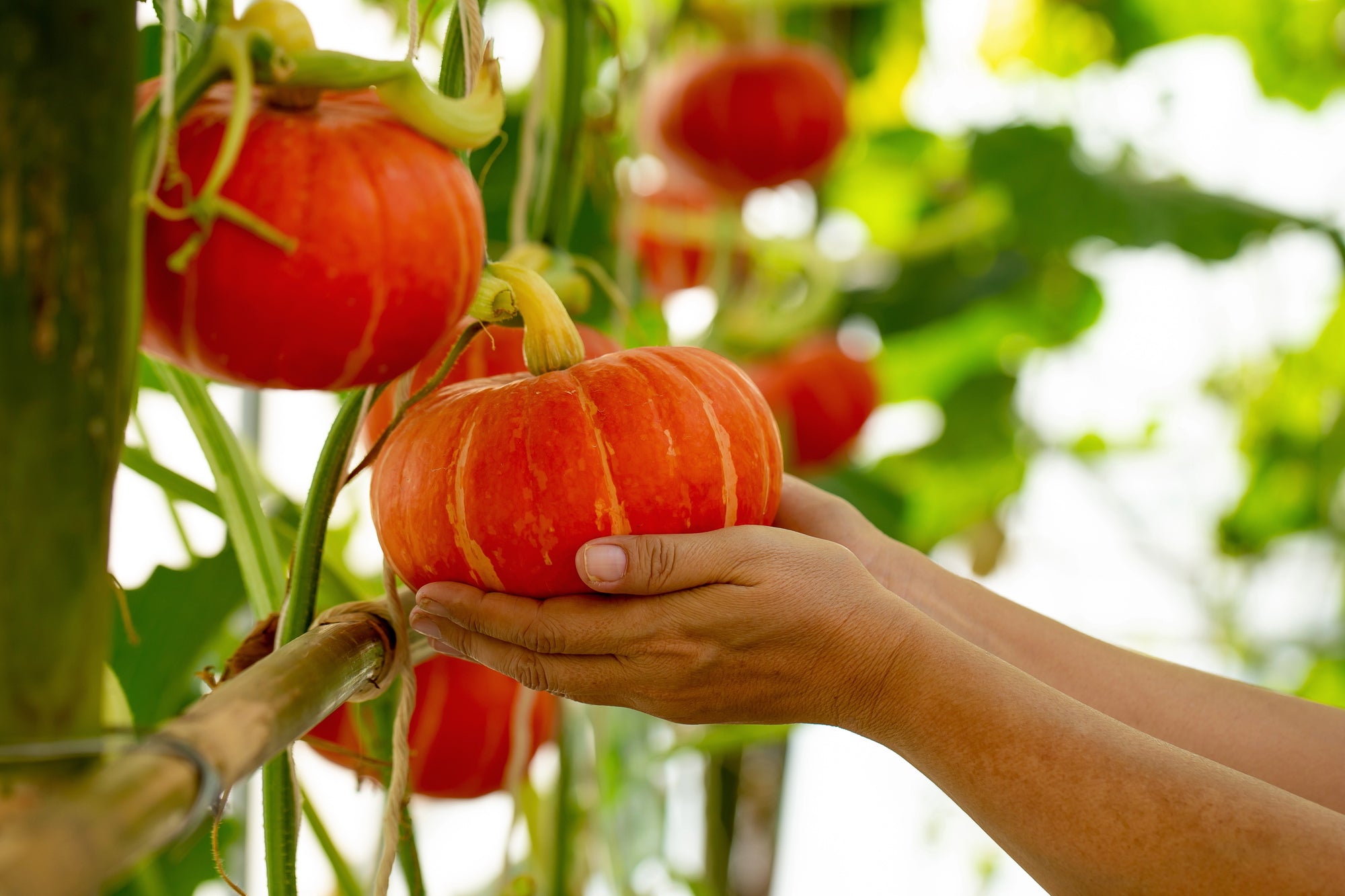
Pumpkins are ready to harvest when the skin has hardened and the stalk has turned corky. Tap the fruit – it should sound hollow. Cut the pumpkin with a stalk several centimetres long. This significantly extends storage life. Handle fruits carefully and avoid knocking them. A few sunny days outdoors under a sheltered roof will further harden the skin.
For storage, choose cool, dry and dark spaces with good air circulation. 10–14 °C is ideal. Crown Prince keeps for several months; Musquée de Provence keeps even longer. Use any damaged fruits first. Butternut develops its full flavour after a short period of curing, whilst some giant varieties can go straight into the kitchen.
Best practice for your store:
- Only store undamaged, dry fruits.
- Don't stack them; lay them individually on wooden slats or cardboard.
- Check regularly and use any fruits showing signs of deterioration straight away.
Common Mistakes When Growing Pumpkins – and How to Avoid Them
The most common pitfall is lack of water during hot spells. This causes pumpkins to drop their flowers and young fruits. A consistent water supply is therefore essential. Another classic mistake is planting too close together. This encourages disease and restricts growth. It's better to plan generously and train your vines.
It's also easy to overfeed with nitrogen. This results in plenty of leafy growth but few fruits. Stick to compost and organic fertilisers, applied in moderation. Finally, planting out too early before the last frost has passed is a real risk. Cold nights can seriously damage young plants. A layer of horticultural fleece or a cloche will keep things warm. Follow these guidelines and your pumpkin growing is sure to succeed.
Our Verdict: A Systematic Approach to Growing Giant Pumpkins
With a sunny spot, well-prepared soil, a reliable watering routine and measured feeding, you'll get the very best from your pumpkins. Good variety selection, sensible spacing and a watchful eye keep plants healthy and ensure generous harvests. A little vine training, a handful of mulch, patience and calm – and everything falls into place.
Here at FUXTEC, we're all about solutions that make everyday gardening easier. Good planning, simple routines and robust tools bring consistency to your growing season. That way, growing pumpkins isn't just successful – it's a pleasure from the first shoot right through to the last bowl of soup in autumn. Good luck on the plot – and here's to a harvest worth showing off!
Everything for your garden

More articles about garden care
Trockenheit im Garten: Boden lockern, richtig gießen und mit Mulch Wasser sparen
Du gießt das Beet, doch das Wasser bleibt auf der harten Erdoberfläche stehen oder läuft zur Seite ab. Schon nach kurzer Zeit wirkt der Boden wieder trocken, obwohl Du gerade erst zur Gießkanne g...
Pine Bark Mulch: The Complete Gardening Guide
Mulching with pine bark is one of the most effective methods in modern gardening and sustainable horticulture. A layer of mulch material is applied to the soil surface to protect and improve the so...
Spring Soil Improvement: Prepare Your Garden Soil
Inhaltsverzeichnis Warum Bodenverbesserung im Garten im Frühjahr so wichtig für einen gesunden Gartenboden ist Gartenboden nach dem Winter prüfen: Bodenstruktur, Verdichtung und Bodenart erke...


