
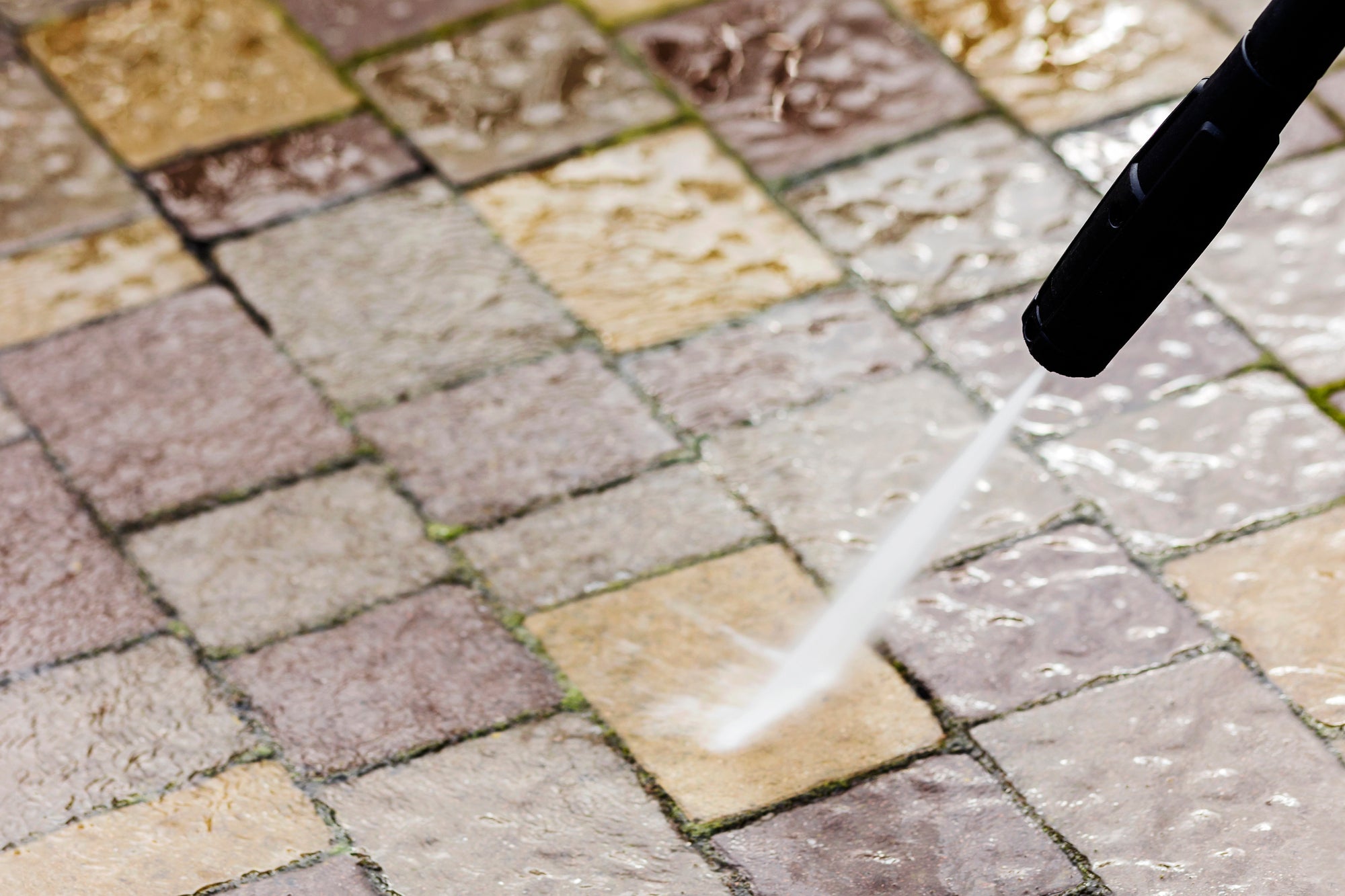
Pflastersteine reinigen Titelbild
How to Clean Block Paving: The Complete Guide
- Warum Pflastersteine regelmäßig gereinigt werden sollten
- Welche Reinigungsmethoden für Pflastersteine gibt es?
- Hochdruckreiniger: Die effektivste Lösung für große Flächen
- Hausmittel vs. Reinigungsmittel: Was wirkt wirklich gegen Schmutz?
- So entfernst Du Unkraut und Moos richtig aus den Fugen
- Spezielle Tipps für verschiedene Pflasterarten
- Nach der Reinigung: Versiegeln oder nicht?
- So bleibt Dein Pflaster langfristig sauber und gepflegt
- Fazit: Pflaster reinigen – mit System zum sauberen Ergebnis
- FAQ
A well-maintained outdoor space starts with clean block paving. Whether it's a patio, driveway, or path around the house – with the right approach, you can bring your paving back to its best.
But cleaning block paving is often more than just a quick once-over. Stubborn dirt, moss, or algae growth can really put your time and equipment to the test.
In this guide, we'll show you how to clean block paving effectively and what you need to keep in mind so your paving isn't just clean, but protected for the long term!
Why You Should Clean Block Paving Regularly

Block paving is exposed to the elements every day – rain, sunshine, and frost. Over time, dirt, leaves, oil, moss, and lichen all build up. This doesn't just look unsightly; it also makes the surface slippery and can cause lasting damage over time.
Regular cleaning extends the life of your paved areas and prevents moisture from getting into the joints.
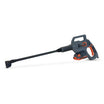
Particularly in autumn and spring, you should aim to give your paving at least one thorough clean – either with a patio cleaner, a cordless pressure washer such as the FX-E1HDR20 Set, or traditional methods like a stiff brush and hot water.
A particularly effective approach: Combining mechanical cleaning with preventative maintenance. This not only reduces effort but also minimises the risk of moss and weeds taking hold.
What Cleaning Methods Are There for Block Paving?
If you want to clean your block paving, the question quickly arises: which product and tool will do the best job? There are several methods – depending on the level of soiling and the type of paving.
- Manual cleaning: Using a brush, weeding tool, or scrubber. For small areas or light soiling, this is often sufficient.
- Mechanical cleaning: This involves pressure washers, sweeping machines, or specialist patio cleaners. Perfect for larger areas.
- Chemical cleaning: Using cleaning products – for example, soda- or vinegar-based solutions – to tackle stubborn build-up like lichen, grease, or algae.
- Household remedies: Cost-effective and often very effective – soda crystals, vinegar, hot water, or simple soapy water.
Important: The right cleaning method depends on the material your paving is made from. For natural stone or delicate patio slabs, you should avoid harsh acidic or surfactant-heavy cleaners. A gentle approach is called for – ideally using biodegradable products or low water pressure.
Pressure Washers: The Most Effective Solution for Large Areas

Want to clean your paved areas quickly, thoroughly, and effectively? Then a pressure washer is the tool for you. Particularly for large areas such as driveways or patios, it saves a huge amount of time – and effort.
Our FUXTEC pressure washers, such as the FX-HDR1800, deliver impressive water pressure while being kind to the surface when you choose the right attachment.
A patio cleaner attachment distributes the pressure evenly – ideal for more delicate block paving or natural stone such as granite or basalt.
Here's a quick overview:
| Model | Power | Max. Pressure | Ideal for |
|---|---|---|---|
| FX-HDR1800 | 1800 W | 135 bar | Driveways & Patios |
| FX-E1HDR20 (Cordless) | 20 V | 22 bar | Smaller areas, portable use |
| FX-HDRP2500 (Pro) | 2500 W | 180 bar | Heavily soiled areas |
Make sure you maintain a consistent distance and avoid damaging delicate joints. Sealing after cleaning can also be a good idea to prevent dirt from getting in again.
Household Remedies vs. Cleaning Products: What Really Works?
Would you rather avoid harsh chemicals and are looking for simple solutions to remove dirt? Good news: many household remedies are not only environmentally friendly but also extremely effective against lichen and algae growth.
- Soda crystals: Dissolve 100 grams of soda crystals in hot water, apply to the surface, leave to work for five to six hours – then rinse thoroughly with clean water. Great for greasy residue and light moss.
- Vinegar: Apply diluted – but only on robust paving, as the acid can damage more sensitive materials.
- Soapy water or soft soap: For a gentle general clean – ideal for light soiling or as a pre-treatment before using a pressure washer.
Always test household remedies on an inconspicuous area first: Not every surface reacts the same way. You should also clean the joints carefully – ideally by hand or with a weeding tool. For open joints, we recommend mechanical pre-treatment before using a water jet.
How to Properly Remove Weeds and Moss from Joints

Moss and weeds – two persistent nuisances that love to settle into the joints of your block paving. Especially after damp winters or wet spring months, you'll suddenly notice green patches and little plants sprouting up everywhere. It doesn't just look untidy; over time, it can damage the paving itself.
There are several ways to remove them:
- Manually with a weeding tool – suitable for smaller areas or spot maintenance.
- Thermally with boiling water or a weed burner – gentler than chemical products.
- Mechanically with a joint brush or sweeping machine – efficient for larger areas.
- Chemically with specialist cleaning products – always follow the manufacturer's instructions carefully.
Once you've thoroughly removed the weeds, it's worth refilling the joints with specialist jointing sand or a weed-suppressing jointing compound. This not only keeps things looking tidy but also makes it harder for weeds to re-establish themselves.
A tip: Even after using a pressure washer like the FUXTEC FX-HDRP2500, you should top up the joints afterwards, as the strong water pressure can easily wash out the sand.
Specific Tips for Different Types of Paving
Not all paving is the same – and so not every surface needs the same cleaning method. Depending on the material, you should follow different approaches to avoid damaging the surface.
Concrete paving
Concrete block paving is hardwearing, but sensitive to acidic cleaning products.
It's better to use a patio cleaner attachment and clean water. Pressure washers with adjustable pressure work particularly well here.
Concrete tends to absorb dirt deeply. Applying a sealant afterwards helps to keep the surface cleaner for longer.
Natural stone (e.g. granite or basalt)
Caution is needed here. Natural stone is often sensitive to mechanical wear.
Avoid aggressive cleaning attachments or abrasive products. A soft brush, warm water, and a pH-neutral cleaner where needed are the best choice here.
Pressure washers should only be used with a patio cleaner attachment and at a generous distance from the surface.
Porcelain patio slabs
Porcelain is low-maintenance, but can be slippery. Grease stains or algae growth are particularly problematic on patios.
A mild soap-based cleaner and a thorough scrub with a brush or medium-pressure water jet works well here.
For more stubborn dirt, a cordless pressure washer like the FX-E1HDR20 is ideal – compact, portable, and ready to use instantly without needing a power socket.
After Cleaning: To Seal or Not to Seal?
Once the paving is clean, the question often arises: Should I seal it: yes or no?
The answer depends on how much use the surface gets and what material has been laid.
A good sealant protects against re-soiling, makes future cleaning easier, and prevents water, oil, or frost from penetrating the joints.
This step is particularly worthwhile for concrete paving or open-pored natural stone. Bear in mind:
- Only use sealant products that are suitable for your type of stone.
- The surface must be completely dry before you apply the product.
- Apply it evenly using a roller, sprayer, or brush.
- Allow the product to cure for at least 24 hours before walking on the surface.
A word of caution: Not every sealant lasts indefinitely. Depending on usage and weather conditions, you should reapply the protection every 2–3 years. Sealing is especially advisable for surfaces frequently exposed to leaves, water, or oil.
How to Keep Your Paving Clean and Well-Maintained Long-Term
You've cleaned your block paving, topped up the joints, and perhaps even applied a sealant – well done, the hard work is done.
To make sure your efforts aren't wasted, you should now take steps to keep the paving clean in the long run. After all: regular upkeep saves you from time-consuming deep cleans further down the line.
What you can do:
- Sweep away leaves, dust, and dirt from the surface regularly.
- Remove weeds early – before they have a chance to take root.
- Use a light patio cleaner as needed for routine maintenance between deep cleans.
- Check the joints after heavy rain or frost.
- Avoid harsh acidic or surfactant-heavy cleaners to protect the surface.
For particularly stubborn cases or large areas, regular use of a pressure washer is recommended.
Our professional pressure washer, the FX-HDRP2500, is the perfect partner for the job – with powerful water pressure, a large patio cleaner attachment, and reliable performance.
Our guide on restoring an overgrown garden also has plenty of practical tips for keeping your outdoor spaces in great shape.
Summary: Clean Your Paving – A Systematic Approach for Great Results

Cleaning block paving isn't rocket science – but it does require a bit of know-how, the right equipment, and a little patience.
Whether manually, with a cordless pressure washer, or using cleaning products: what matters most is choosing the right method for your paving.
Sensitive materials like natural stone need extra care, while concrete paving benefits from sealing and joint maintenance.
And remember: regular upkeep is the key to stopping moss and weeds from taking hold in the first place.
Want to learn more about garden maintenance? Take a look at our articles on trimming hedges or designing your allotment.
Discover our range of garden tools
Can I use a pressure washer on all types of block paving?
No, not all paving types handle high pressure equally well. Natural stone like granite or basalt requires a patio cleaner attachment and generous distance to avoid damage, whilst concrete paving is more durable. Always use an adjustable pressure setting and test on an inconspicuous area first to protect your surface.
What household products work best for removing moss and algae from paving?
Soda crystals dissolved in hot water are highly effective for moss and algae – dissolve 100 grams in hot water, leave for 5–6 hours, then rinse thoroughly. Vinegar works too but only on robust paving as the acid can damage sensitive materials. Always test on a hidden area before applying to the whole surface.
How often should I clean my block paving?
Aim for at least one thorough clean per season, particularly in autumn and spring when moss and lichen growth is most likely. Regular sweeping and prompt removal of weeds between deep cleans will also help prevent heavy build-up and keep your paving looking its best.
Is it necessary to seal block paving after cleaning?
Sealing is especially worthwhile for concrete paving or open-pored natural stone as it protects against re-soiling, prevents water and oil penetration, and makes future cleaning easier. However, the surface must be completely dry first, and you'll need to reapply protection every 2–3 years depending on usage and weather.
What should I do about weeds in the joints of my paving?
Remove weeds manually with a weeding tool for smaller areas, or use a joint brush and sweeping machine for larger spaces. After removal, refill joints with specialist jointing sand or weed-suppressing jointing compound to prevent regrowth and keep the surface looking neat.
Can I use acidic cleaners on concrete block paving?
No, concrete block paving is sensitive to acidic cleaning products and can be damaged by them. Use a patio cleaner attachment with clean water and an adjustable pressure washer instead. Applying a sealant afterwards helps keep the surface cleaner for longer since concrete tends to absorb dirt deeply.
What's the best way to clean porcelain patio slabs?
Porcelain is low-maintenance but can be slippery when wet. Use a mild soap-based cleaner with a brush or medium-pressure water jet for light soiling. For tougher stains, a cordless pressure washer like the FX-E1HDR20 works well and is compact enough for easy manoeuvrability around your garden.
More articles about garden care
Trockenheit im Garten: Boden lockern, richtig gießen und mit Mulch Wasser sparen
Du gießt das Beet, doch das Wasser bleibt auf der harten Erdoberfläche stehen oder läuft zur Seite ab. Schon nach kurzer Zeit wirkt der Boden wieder trocken, obwohl Du gerade erst zur Gießkanne g...
Pine Bark Mulch: The Complete Gardening Guide
Mulching with pine bark is one of the most effective methods in modern gardening and sustainable horticulture. A layer of mulch material is applied to the soil surface to protect and improve the so...
Spring Soil Improvement: Prepare Your Garden Soil
Inhaltsverzeichnis Warum Bodenverbesserung im Garten im Frühjahr so wichtig für einen gesunden Gartenboden ist Gartenboden nach dem Winter prüfen: Bodenstruktur, Verdichtung und Bodenart erke...


