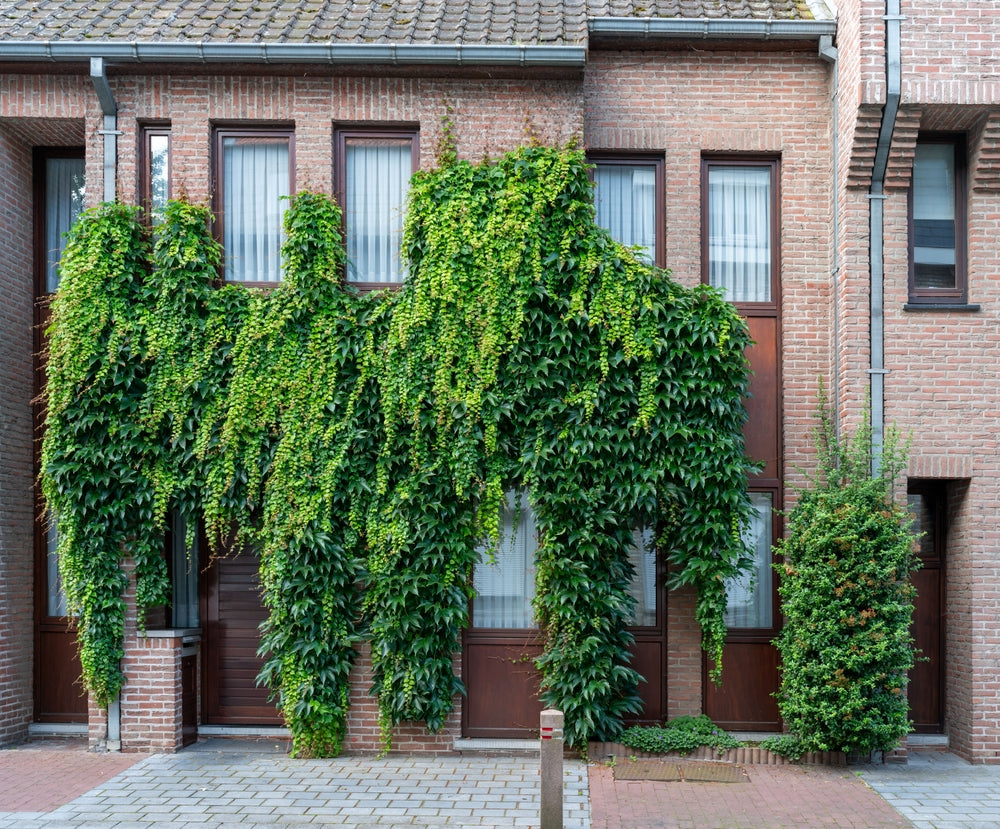
Green facade planting gives your home not only a vibrant, natural appearance, but also creates valuable habitats for insects and birds. Whether you opt for ground-based or wall-mounted planting, the choice depends on your home's architecture and your personal expectations regarding maintenance and aesthetics. Wall-mounted systems in particular offer the advantage of being fixed directly to the exterior wall without altering the ground structure.
If you're planning to green your facade, a well-considered choice between self-clinging plants such as ivy and twining climbers such as clematis or wisteria will serve you well. For lighter walls, spreading climbers or trellis climbers guided securely with a climbing support are ideal. This way you combine maximum biodiversity with reliable wall protection, while natural transpiration improves the microclimate around your home. With wall-mounted planting, you can transform any bare wall into a verdant retreat.
1. Why Green Your Facade?
A planted facade offers far more than purely decorative value: it contributes significantly to thermal insulation and reducing energy consumption by acting as a natural insulating layer. A green facade also improves the urban microclimate, filters pollutants and fine particulate matter, and creates habitats for birds, bees, and other beneficial insects. In addition, transpiration through leaf surfaces has a positive effect on ambient temperature and supports biodiversity.
2. Types of Facade Planting: Ground-Based & Wall-Mounted Systems
Ground-Based Facade Planting
With ground-based planting, roots are anchored directly in the soil and climbing plants grow up the facade under their own steam. Virginia creeper, hops, and trained fruit trees are commonly used. This method supports the natural circulation of water and nutrients in the growing medium and encourages healthy plant growth.
Wall-Mounted Facade Planting

As an alternative, wall-mounted facade planting systems allow the use of trellis panels or cable nets fixed directly to the exterior wall. Self-clinging species such as ivy and wisteria, which adhere without a ground connection, work particularly well here. Wall-dependent systems offer more flexible applications, especially where overhanging structures such as balconies or canopies make ground-based planting impractical.
3. Choosing Your Plants: Climbers, Perennials & Ivy
The right choice of plant species determines both maintenance requirements and visual appeal. Ivy is a popular self-clinger that quickly forms dense, evergreen coverage. For colour lovers, clematis, wisteria, and climbing hydrangeas are attractive trellis climbers with eye-catching blooms. For a varied planting scheme, mix robust perennials with climbers such as hops and trained fruit trees. Be sure to select plants suited to your site's conditions, including wind exposure, sunlight levels, and dry spells.
By choosing a range of different plants, you can achieve year-round colour changes while simultaneously providing insects and birds with valuable food sources and shelter. In the ground-based section, roots are planted deep in the soil, while the cable framework is weatherproofed and fixed to the facade itself. This gives you a combined planting approach that is straightforward to replicate and can be completed quickly with FUXTEC tools.
4. Planning & Structural Requirements: Buildings, Roof Planting & Fire Safety
Before you begin, you should carry out a structural assessment and plan your facade planting carefully. Establish how much load your facade can bear, and consider whether complementary roof planting would be worthwhile. Building regulations and fire safety rules typically require a minimum clearance between combustible vegetation and windows and doors — always check with your local planning authority. Also consider water and nutrient supply: a well-thought-out system prevents damage to the exterior wall and minimises ongoing maintenance demands.
5. Climbing Supports & Trellis Systems

Climbing supports are available as simple wire rope systems or as modular trellis panels. With the FUXTEC cordless hammer drill, you can fit trellis panels and spreading climbers with ease. A climbing aid made from galvanised steel allows twining plants such as wisteria and hops to grow in a controlled manner. For vertical gardens, combine planting containers and climbing systems that offer plants optimal anchor points.
6. Irrigation Systems for Your Green Facade
Efficient irrigation is essential, as vertical gardens can dry out quickly. Use the FUXTEC water butt pump to deliver collected rainwater directly to the roots via a drip system. Drip lines minimise evaporation and distribute water evenly across large surfaces. Sensors can automate the supply of water and nutrients, ensuring your facade remains optimally hydrated at all times.
7. Care & Maintenance: Keeping Upkeep to a Minimum
To keep climbing plants healthy, an annual formative prune is necessary. Cut back faded shoots and apply a light feed of compost tea in spring. Evergreen species such as ivy require very little pruning, whilst climbing hydrangeas and clematis should be pruned back after flowering. Regular inspection prevents aphid infestations and keeps maintenance requirements low.
8. Costs, Grants & Legal Considerations
Installation costs vary depending on the system: ground-based facade planting typically costs between £50 and £120 per m², whilst wall-mounted systems start at around £100 per m². Some local councils and organisations such as the RHS offer grants or incentive schemes for facade and roof greening projects. Check with your local authority and look into permitted development rights and planning regulations to ensure your project is legally compliant and cost-effective.
9. Real-World Examples & Success Stories
If you'd like to create your own climbing support, FUXTEC offers suitable equipment for both wall-mounted and ground-based planting systems. With the FUXTEC cordless hammer drill, you can effortlessly drill fixing points into your exterior wall to attach robust stainless steel cables or wire espaliers. You can then plant a range of climbers such as ivy, clematis, or wisteria to bring greenery to your home. Additionally, fix a wire mesh to the ground anchors so that plants can self-cling or grow along climbing supports.
10. Common Mistakes & Troubleshooting
Typical pitfalls include insufficient watering, poor plant selection, and neglecting a structural assessment. Avoid planting a single species across the entire facade and instead plan a mixture of climbers and perennials. Ensure adequate sunlight reaches the wall, and on large surfaces consider using Virginia creeper alongside ivy to promote greater biodiversity.
11. Summary: Realising Your Green Facade
With the right planning, suitable plants, and well-designed climbing supports, you can green any facade and reduce your energy bills. Make use of long-lasting systems and FUXTEC products for installation and irrigation, and enjoy a permanently lush, green facade that demands little upkeep whilst creating a home for plants and wildlife alike.