


Privet Hedge Guide: Planting, Pruning & Care
Everything About Privet: Planting, Feeding, Pruning & Pest Control
Privet earns its popularity as a hedging plant thanks to several key characteristics: robust, low-maintenance, and hardy, it rarely presents gardeners with major challenges. As a bonus, many varieties are evergreen, keeping their leaves throughout winter and providing attractive, dense screening all year round.
Privet – Hedging Plant Profile
Privet is not just a single plant but an entire genus encompassing many different species. It belongs to the olive family (Oleaceae), which also includes forsythia, lilac, and jasmine. Most of the approximately 40–50 privet species originate from China and East Asia. In Europe, only Ligustrum vulgare, the common privet, is native. Alongside the wild species, numerous cultivated varieties have since been developed.
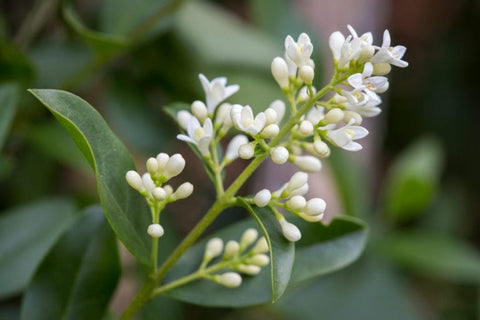
Privet typically produces its first flowers in early summer, usually in June. The tubular, white to creamy-white panicle flowers are popular with native insects and provide an excellent source of nectar. When successfully pollinated, the plant produces pea-sized, black berries which — like all parts of the privet — are toxic to humans. However, native songbirds greatly appreciate this additional food source through the winter months.
Privet Varieties at a Glance
Several different privet species and varieties are suitable for use as hedging plants.
Ligustrum vulgare 'Atrovirens'
The variety 'Atrovirens' was bred from the common privet native to Europe. It is often referred to as dark-green privet and is prized above all for its semi-evergreen foliage. It only drops its leaves during particularly cold and harsh winters as protection against frost. In milder years, the leaves remain on the shrub until the following spring when new growth emerges. Otherwise, it is easy to care for and responds well to pruning. It can be planted in full sun, shade, or partial shade. 'Atrovirens' does not grow quite as tall as common privet but is an exceptionally vigorous grower.
Ligustrum ovalifolium
Oval-leaved privet originates from Japan and South Korea. As it was widely grown in the United States for many years, it is also known as 'California privet' or 'garden privet'. Its leaves are also semi-evergreen, slightly larger than those of common privet, and do not tolerate shady positions quite as well. Oval-leaved privet is particularly popular for its especially impressive floral display.
Ligustrum ovalifolium 'Aureum'
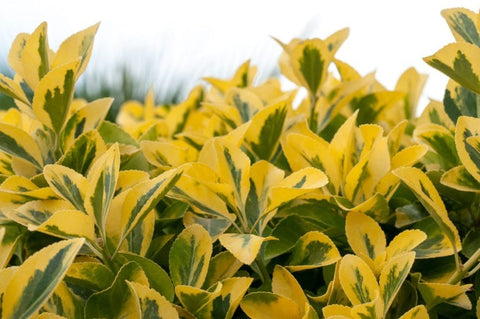
A particularly striking cultivar of oval-leaved privet is the variety 'Aureum'. The so-called golden privet is visually distinctive thanks to its green leaves with a bright yellow margin. As the pale areas of the leaf are unable to photosynthesise, this variety is best suited to sunny positions only.
Ligustrum japonicum 'Variegatum'
The variegated Japanese privet also features two-tone leaves with light green centres and a creamy to slightly yellowish margin. It is fully hardy, with its semi-evergreen leaves dropping at the end of winter or at the start of spring. Flowering occurs from July to September. As this variety involves a complex breeding process, plants are usually considerably more expensive than common privet.
Planting Privet
As with all hedging plants, the same principle applies to privet: a good start is half the battle. If you get the planning and planting of your privet hedge right from the outset, you create the ideal conditions for it to establish quickly and provide excellent screening before long.
Choosing the Right Position
Privet prefers a sunny to partially shaded position. The more light it receives, the better and denser it generally grows. In partial shade, it may therefore take somewhat longer for your privet hedge to become fully opaque. Some privet varieties also cope well in shade, whilst others become sparse and bare if they do not receive sufficient light.
Privet handles summer heat fairly well and tolerates brief dry spells or periods of wet weather. That said, you should water regularly during summer and avoid waterlogging where possible. Damage to the plant caused by too much or too little water is often only noticed at a late stage, by which point it can already be considerable. What the generally hardy privet does not tolerate well is cold, drying wind in winter. Its semi-evergreen leaves cause it to lose a comparatively large amount of moisture, meaning it can dry out quickly. It is therefore best to plant privet in a sheltered spot, such as against a wall or among other plants that offer some protection.
When it comes to soil, privet is also very adaptable. The plants do well in clay or loamy soils that are not overly wet. Sandy soils are generally not a problem either, provided the nutrient and water supply is adequate. A high lime content and correspondingly high pH value is usually not an issue.
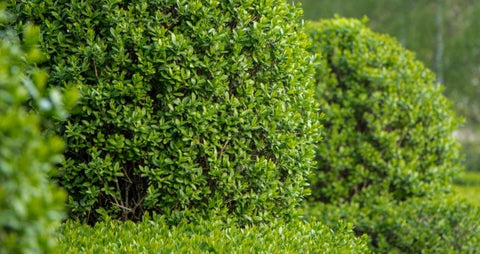
How to Plant Privet Correctly
When it comes to the planting itself, there is not much to worry about with privet. Both spring and autumn are excellent times to establish a new hedge. Varieties that hold their leaves well into winter in particular benefit from an autumn planting, giving them time to develop roots and take up sufficient moisture before winter sets in. Planting in the height of summer or in frosty winter conditions is best avoided, as you will need to water considerably more to help the plants establish.
For smaller hedges, container-grown plants work very well, but for larger projects the cost can quickly add up. In that case, bare-root plants are the better option — these are often available in bundles at considerably lower prices. The second key factor affecting the cost of your privet hedge is the size of the plants you buy. The smaller and younger they are, the more affordable they will naturally be. On average, privet grows around half a metre per year in height, so you can easily work out how long each plant size will take to reach your desired hedge height.
Bear in mind, however, that privet — like most hedging plants — should be cut back immediately after planting to encourage the first flush of growth. When young plants expend less energy maintaining existing shoots, they can establish roots more quickly and take up water more efficiently, which promotes long-term growth. A layer of bark mulch around the base of the new hedge will help suppress weeds.
Caring for Privet
Like all hedges, privet needs to be watered regularly, fed, and kept in shape with pruning. Compared with other hedging plants, however, it is relatively low-maintenance.
Pruning Privet

Privet's rapid growth does have its downsides — it absolutely must be pruned regularly. It is important to wear long clothing and gloves when doing so, as the sap released during cutting can cause unpleasant skin irritation on contact, a condition sometimes referred to as privet dermatitis.
The timing of pruning should follow the plant's growth cycle. Ideally, cut it back before the first flush of growth and again after the last. Late winter to early spring — from late February to mid-March — is well suited to a hard renovation cut on a long-neglected privet hedge. You can cut existing branches back by up to half. This may seem drastic at first, but with the following flush of new growth your hedge will soon look vigorous and full once more.
The second cut is simply a lighter trim to maintain shape and is best carried out in autumn. Ideally, try to remove as few berries as possible, as these provide an important food source for native songbirds well into winter.
Younger privet hedges can be trimmed more than twice a year. This encourages growth and ensures that the plants branch out laterally as well as growing upwards. Do bear in mind that under the Wildlife and Countryside Act 1981, you must not cut back hedges in ways that disturb active nests during the bird nesting season, which broadly runs from March to August. Always check carefully for nesting birds before pruning, and restrict yourself to light trims during this period.
Feeding Privet
Privet does not require a particularly high level of nutrients to thrive. Once the hedge is fully established, it is generally sufficient to top-dress the base with a little garden compost or the leaves that fall in autumn. Microorganisms will break these down and release the nutrients they contain. If your privet hedge is still developing, you can support it with an organic fertiliser, for example one based on horn meal or horn shavings. In any case, mineral fertilisers should only be used on privet if you are certain that a specific nutrient deficiency is present.
Solving Common Privet Hedge Problems
Even though privet is quite low-maintenance, there are a number of problems that gardeners commonly encounter with this plant. Here we answer the most frequently asked questions.
Privet Losing Its Leaves
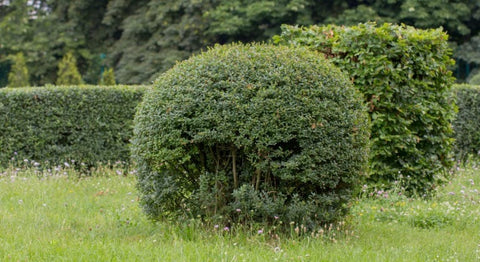
Whether you need to worry about your privet dropping its leaves depends on the time of year. If the plants shed their foliage in autumn or winter, this is generally not a cause for concern. Many varieties are bred to hold their leaves for as long as possible, but under unfavourable conditions they may drop them earlier than expected. However, if significant leaf loss occurs in spring or summer, this points to conditions that are particularly stressful for the plants:
- Soil is too wet (waterlogging) or has been too dry for too long
- Too much (mineral) fertiliser
- Insufficient nutrients in the soil
- Pest infestation
- Fungal disease
Privet Not Growing
Privet is normally considered one of the most vigorous hedging plants. If growth is nonetheless absent, the problem is most likely the position. First check whether your hedge is receiving the right amount of water — both too much and too little can be problematic. Insufficient light can also be a reason for stunted growth. Whilst some varieties thrive in shade, others do not.
If the hedging plants show no other signs of disease beyond the lack of growth, a nutrient deficiency could be the cause. Privet is extremely undemanding in this regard, so deficiency is actually quite rare. Far more common is the problem of too many nutrients in the soil, which can draw moisture away from the roots or interfere with nutrient uptake. If you are unsure whether the lack of growth is related to soil nutrition, you can have a soil analysis carried out.
Which Pests Affect Privet?
Serious pest infestations are relatively uncommon in privet. Privet aphid, vine weevil, and privet sawfly can make life difficult for weakened plants in particular. The use of insecticides is generally not necessary.
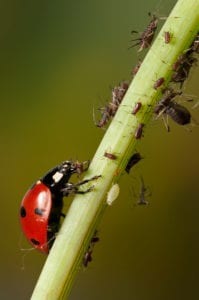
Privet aphid can usually be identified by leaves that curl inwards, dry out, and drop from the plant. An infestation may also become apparent through an increased presence of ants. Remove the affected leaves and dispose of them. Further action is only required in the case of a heavy infestation. In such cases, encouraging natural predators such as ladybirds and lacewings can help, or yellow sticky traps may be used.
The vine weevil itself does not directly attack privet. However, its larvae may feed on the roots of your hedge, which can cause it to die back in severe cases. If you suspect this is happening, you should always have it confirmed by a specialist first, who can also advise on appropriate treatment.
If you notice that your privet has suddenly developed holes in its leaves, the larvae of the privet sawfly are the most likely culprit. Cut off the affected shoots as quickly as possible and dispose of them. From July onwards, the larvae burrow into the soil to lay the next generation of eggs on your privet the following year.
What Is Leaf Spot Disease?
If brown to black spots appear on privet leaves, this is most likely what is known as leaf spot disease. This is typically caused by various fungal species and is encouraged by warm, humid summer weather. The robust privet generally manages a mild case of leaf spot on its own without too much difficulty. However, if the discoloured leaves are a concern or you do not feel the condition of your hedge is improving by itself, it is worth taking action.
The only effective remedy against leaf spot disease is the hedge trimmer: remove affected shoots and leaves generously and dispose of them in your general household waste rather than the compost bin. Composting could allow the fungi to multiply and spread to other areas of the garden. As the spores can also survive in fallen leaves on the ground, these should likewise be collected and disposed of.
To prevent reinfection the following year, it is advisable to carefully remove the top 5 cm of soil beneath the affected plants in autumn. This helps to eliminate the fungus for the time being. To further guard against reinfection, make sure to water privet at the base only. If the leaves are kept dry, pathogens find it considerably harder to take hold.
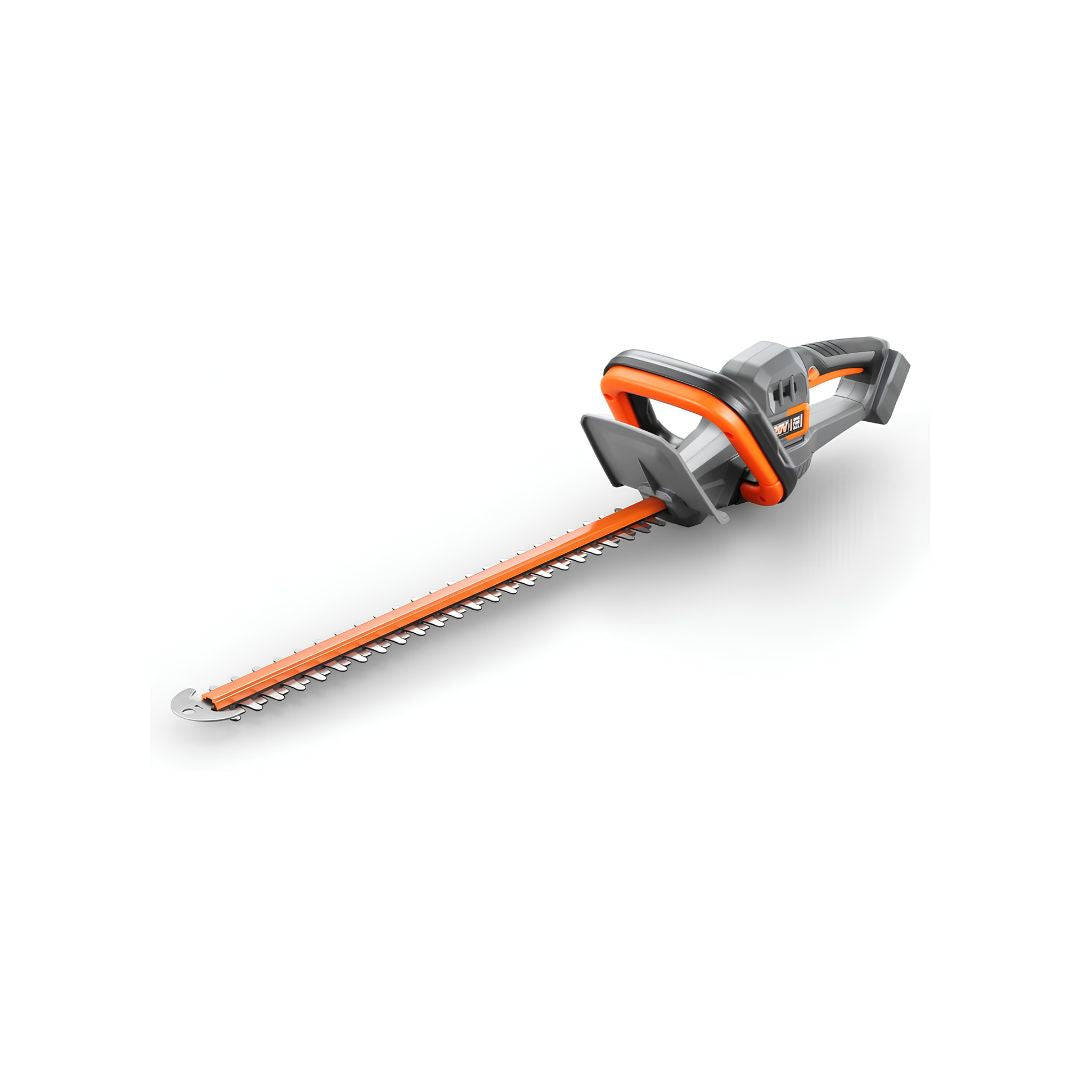
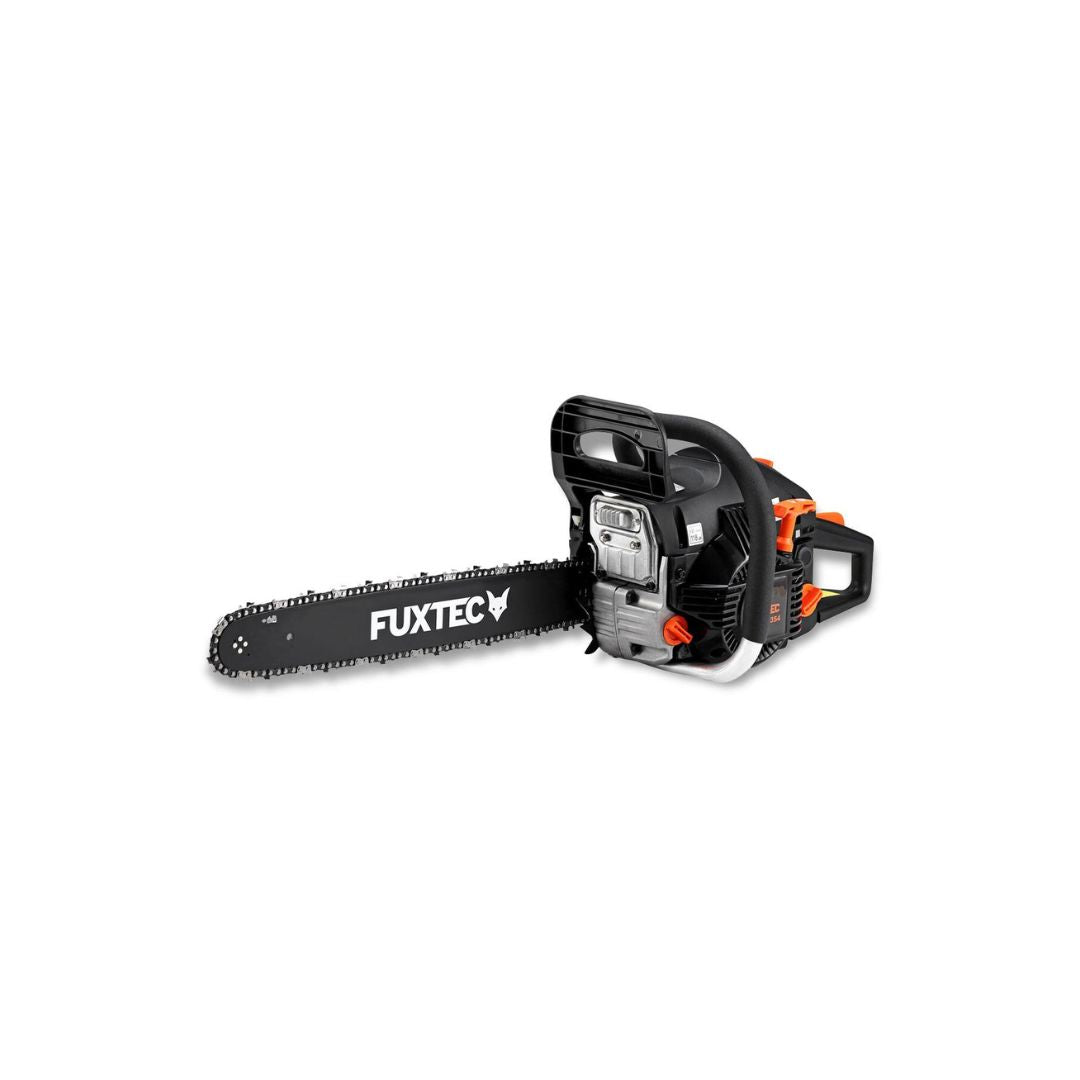
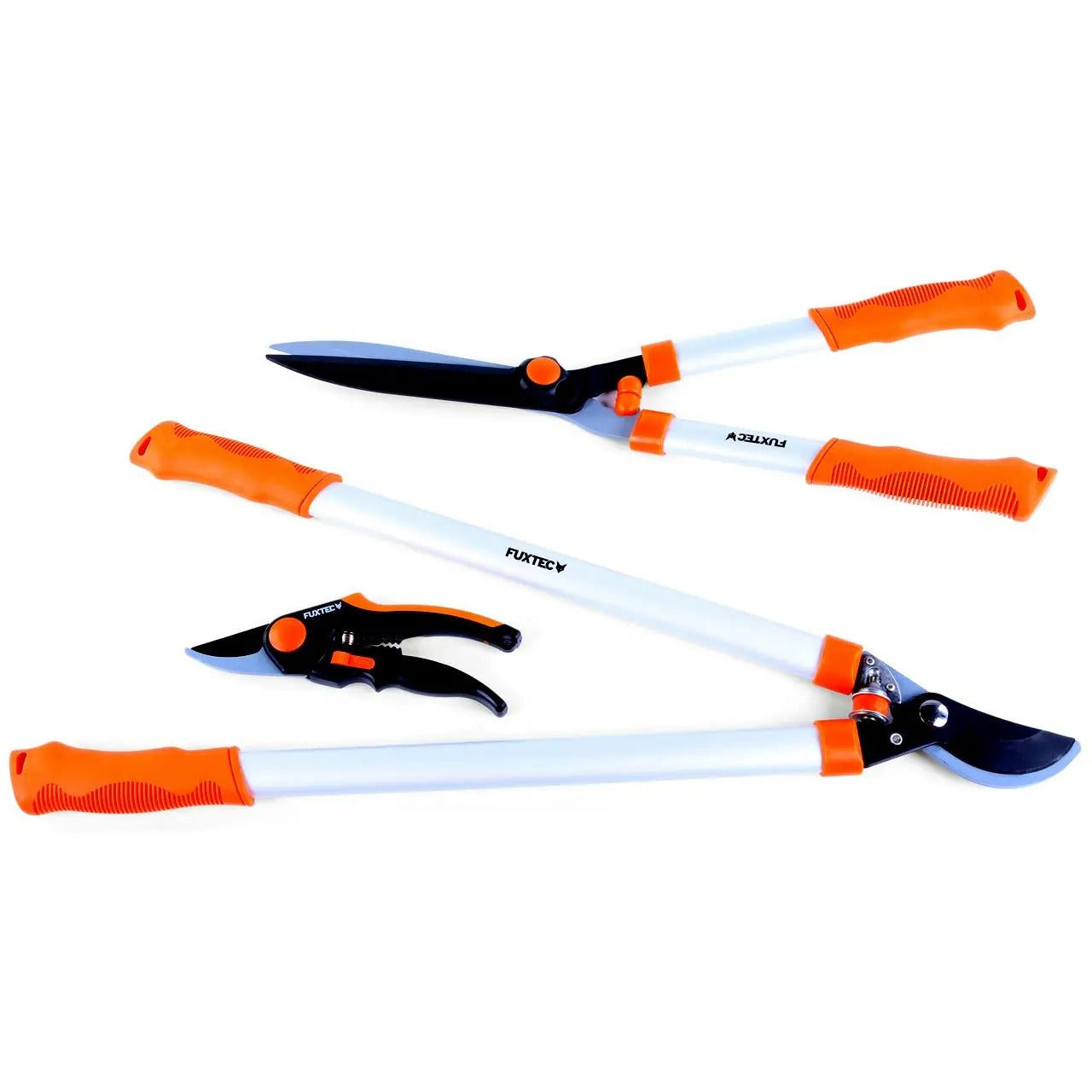
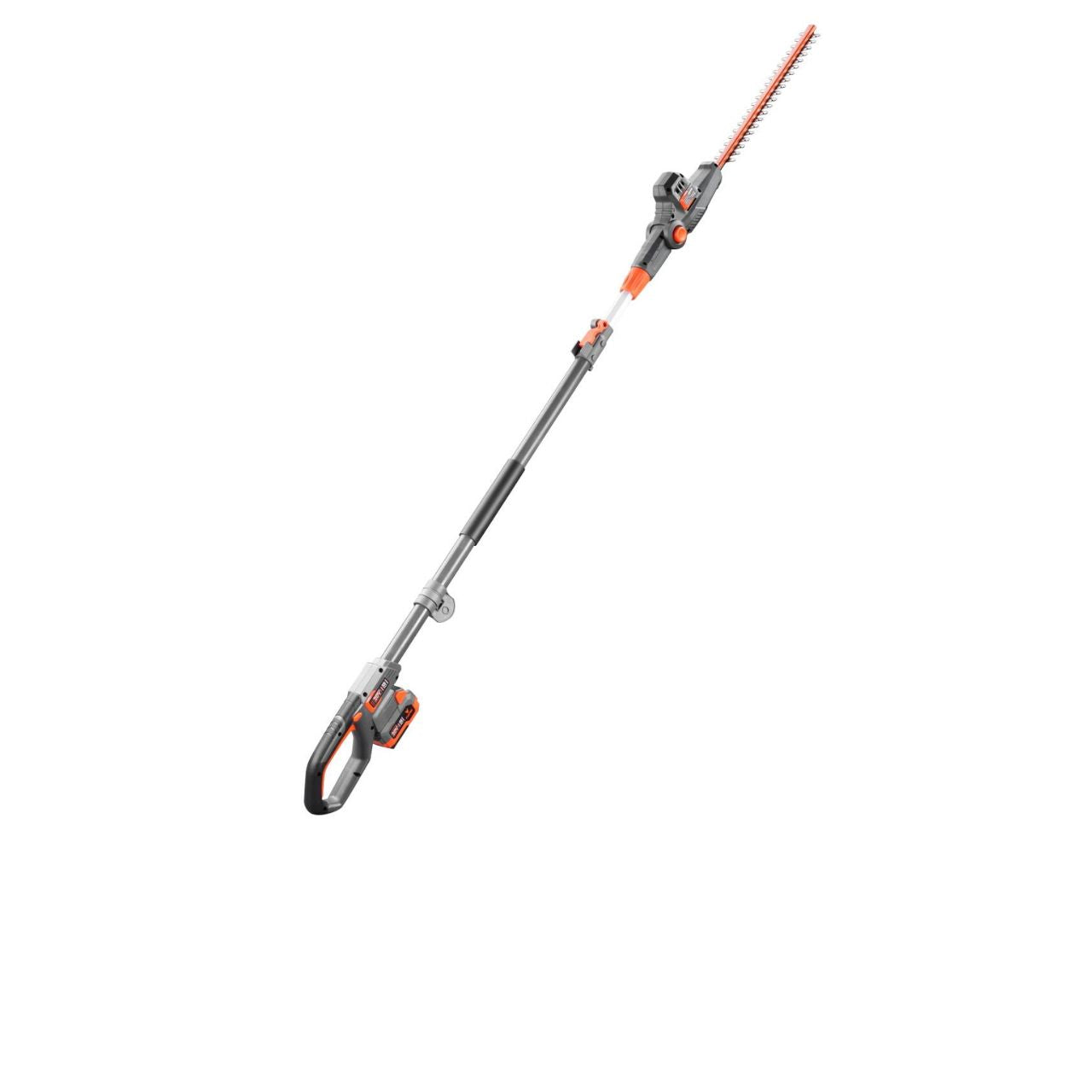
The best tools for caring for trees and hedges
More articles about tree and hedge care
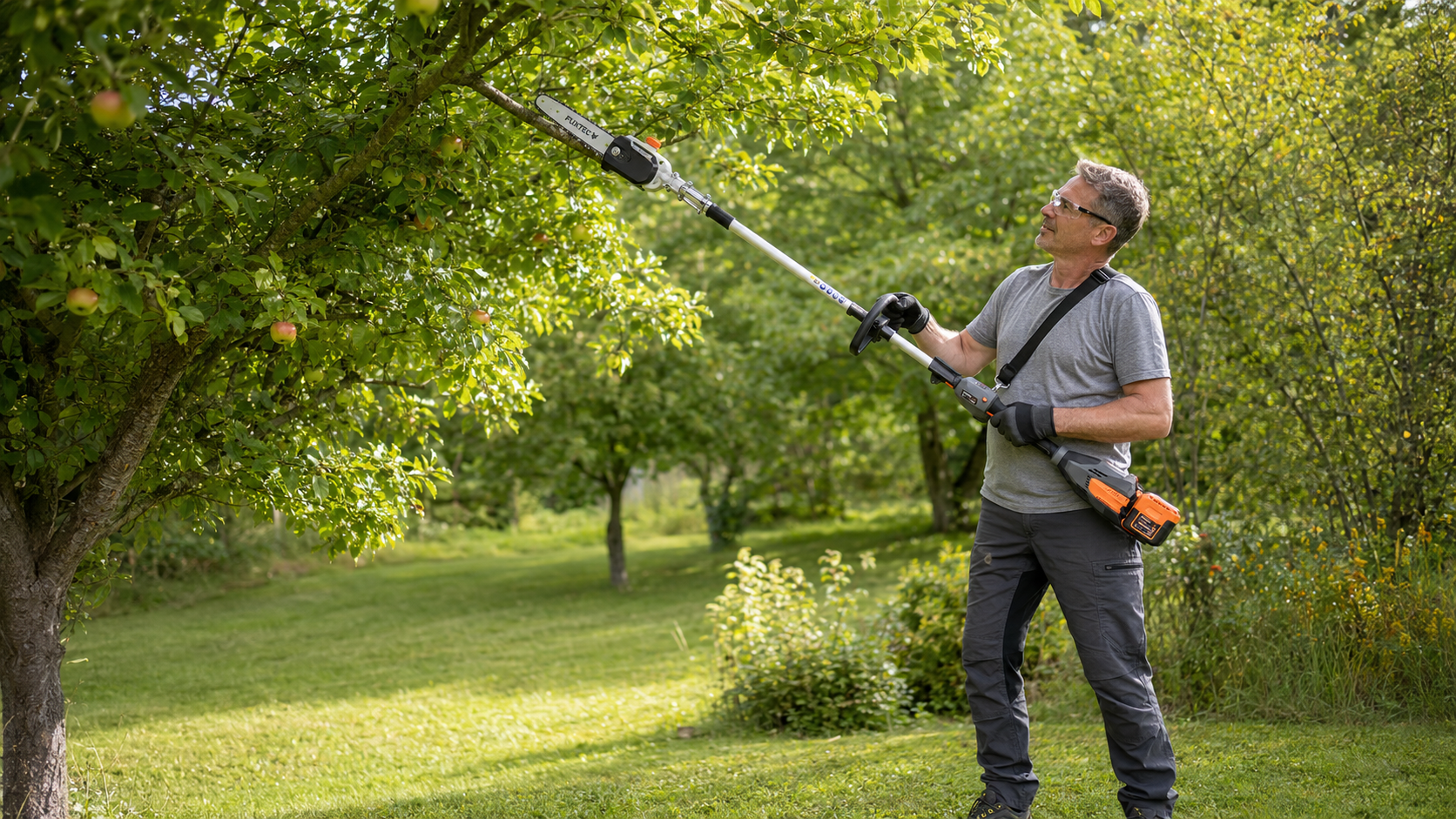
Summer Pruning Fruit Trees: The Complete UK Guide
Inhaltsverzeichnis Vorteile des Pflegeschnitts Schnittkalender für Obstgehölze So gehst Du Schritt für Schritt vor Äpfel und Birnenbäume Kirsche, Pflaume, Aprikose und Pfirsichbäume Jungbäume und ...
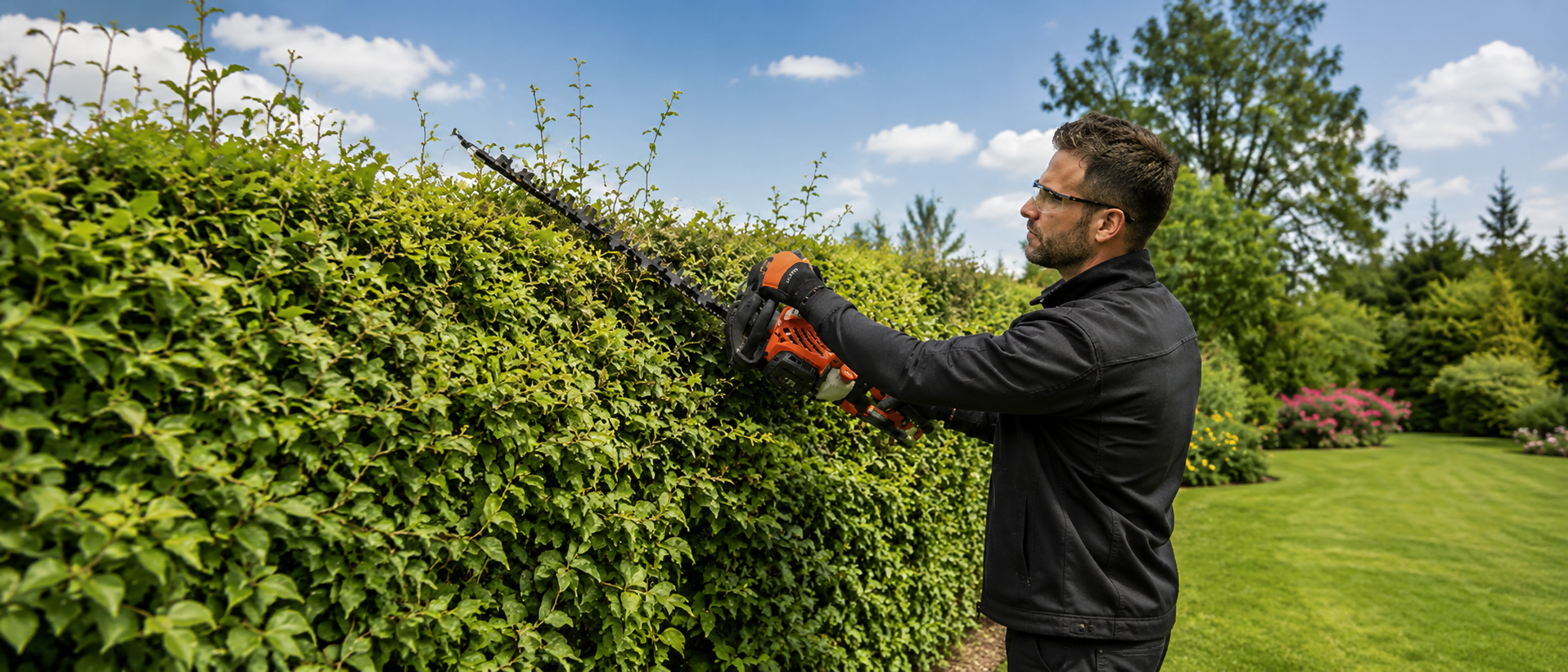
How to Cut an Overgrown or Tall Hedge | FUXTEC
An overgrown hedge can become too wide, patchy in places and riddled with thick branches. If it has also grown several metres tall, a quick trim with a standard hedge trimmer is no longer enough. ...
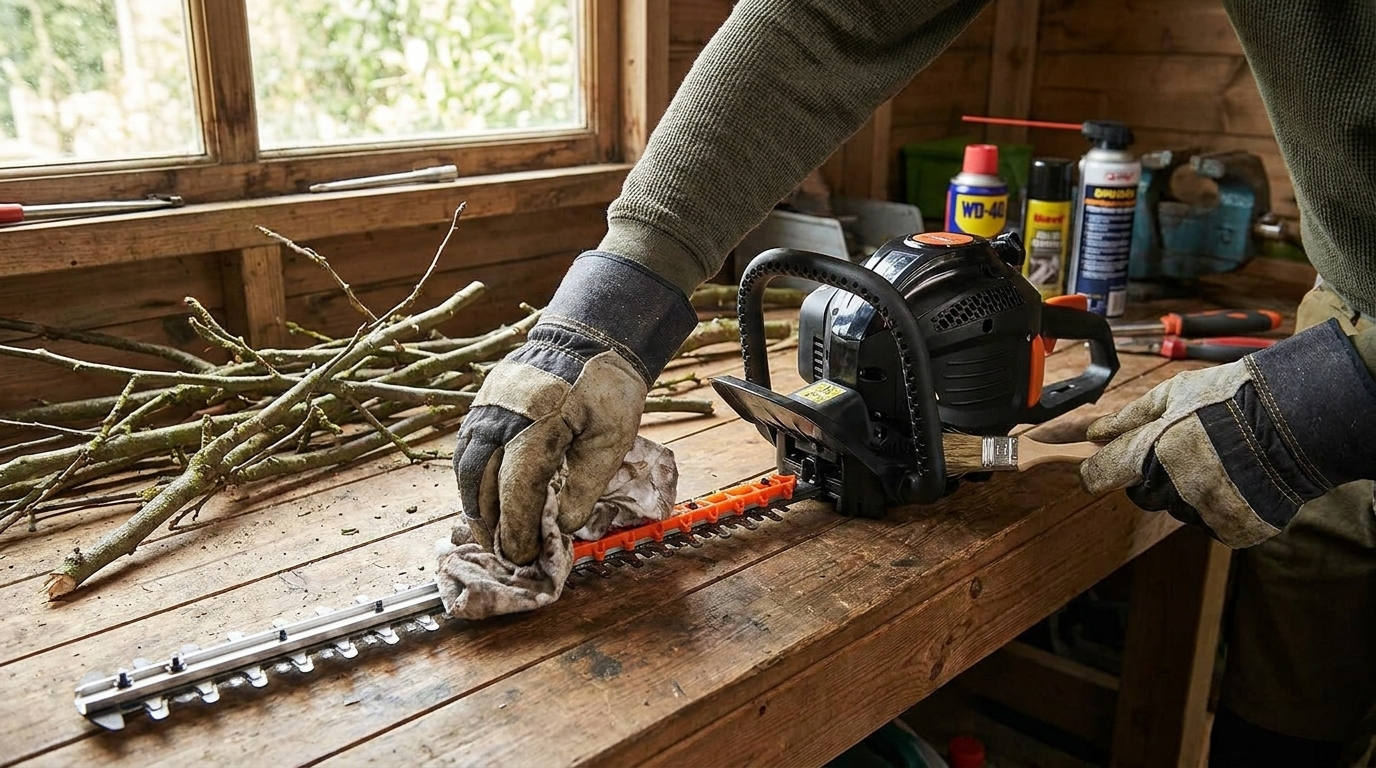
How to Clean & Maintain Your Hedge Trimmer
A well-maintained hedge trimmer is essential for a tidy garden. If you want to keep your hedges looking their best, you need a tool that works reliably – with clean, sharp blades. Yet many gardener...


