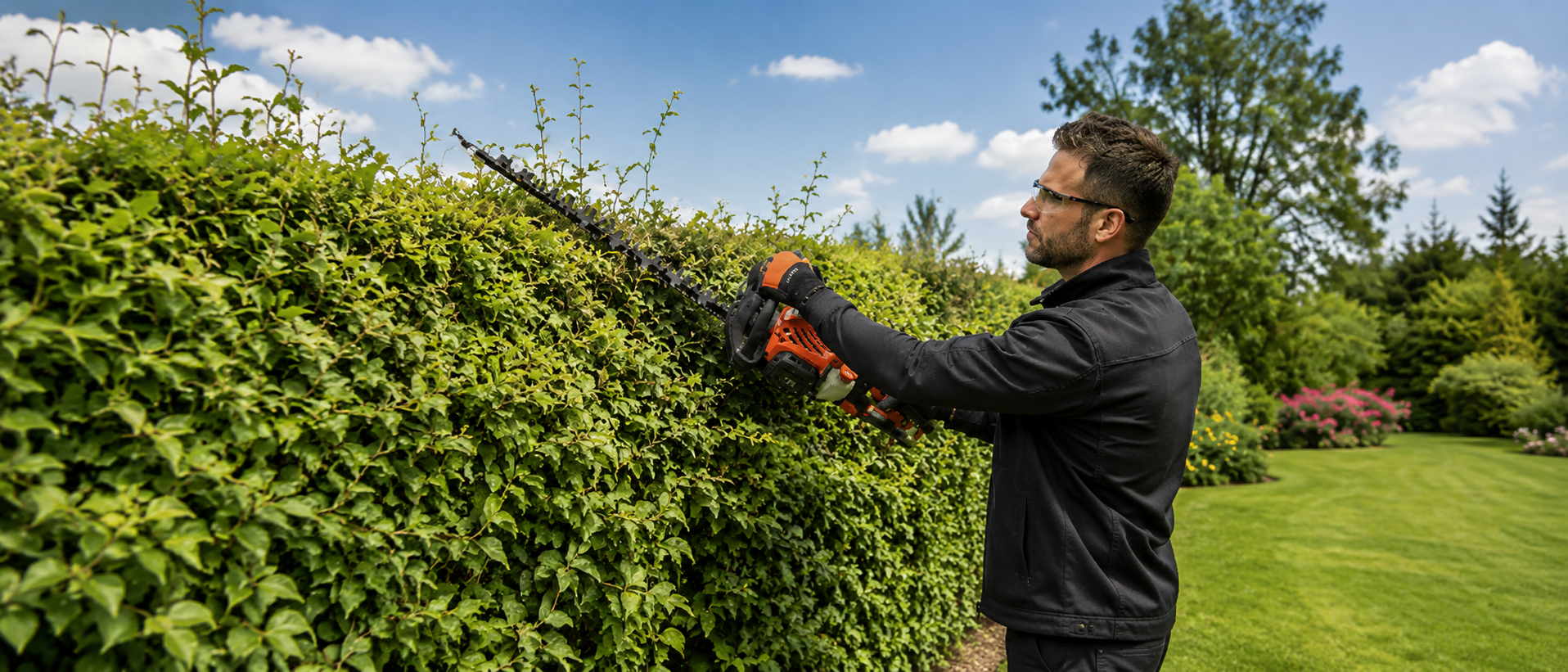
An overgrown hedge can become too wide, patchy in places and riddled with thick branches. If it has also grown several metres tall, a quick trim with a standard hedge trimmer is no longer enough. Before cutting it back, you should therefore carefully assess the plant species, its tolerance to hard pruning and its overall condition.
With the right approach, an old privet hedge, hornbeam or yew can often be successfully rejuvenated. With Leyland cypress, western red cedar and other sensitive conifers, however, cutting too far back can leave permanent bare patches. In this FUXTEC garden guide, we explain how to cut an overgrown or tall hedge correctly, which tools to use and how to dispose of or recycle the clippings afterwards.
Find FUXTEC more often in your Google search results.
Add FUXTEC on GoogleBefore You Cut an Overgrown Hedge
If a hedge has not been maintained for a long time, do not simply reach straight for the trimmer. First identify the plants involved. The species determines how hard you can cut and whether the plant is capable of regenerating from old wood.
Deciduous shrubs such as privet, hornbeam, beech, field maple and many cherry laurel varieties have a comparatively good ability to recover. Yew can also produce new growth after severe pruning. That said, any radical pruning of an old plant should be well planned and, if in doubt, spread over several seasons.
Leyland cypress, lawson cypress, spruce and other conifers generally will not re-shoot from completely bare, old wood. If you cut such a hedge back too far, brown or bald patches can become a permanent feature. With these plants, always work only within the green, needle-bearing or scale-covered growth.
When Can You Cut a Tall or Overgrown Hedge?
In the UK, the Wildlife and Countryside Act 1981 makes it an offence to intentionally damage or destroy the nest of any wild bird while it is in use or being built. In practice, this means that hard pruning — cutting back, coppicing or removing hedges — should be avoided during the main bird nesting season, which typically runs from March to the end of August.
Significant cutting back of an overgrown hedge therefore generally falls in the period from September to the end of February. For many deciduous hedge plants, a frost-free day in early spring before bud-break is ideal. Spring-flowering shrubs should only be trimmed after they have finished blooming, where only light maintenance pruning is required.
Choose a dry, frost-free and ideally overcast day for the work. In bright sunshine, freshly exposed leaves and shoots can dry out or scorch more quickly. You should also avoid pruning during hard frost.
Which Hedge Trimmer Is Right for the Job?
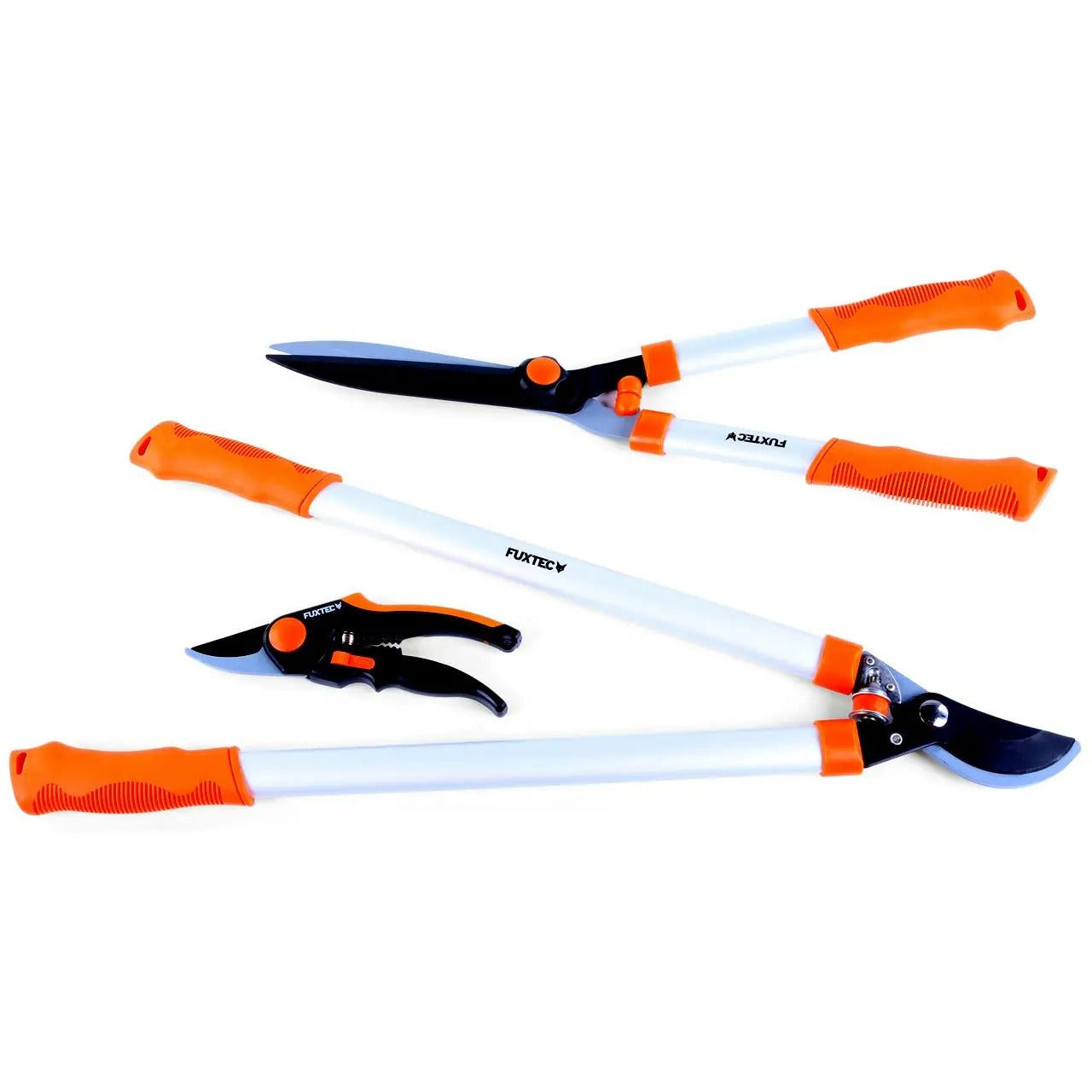
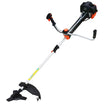
Thin new growth and light shaping can be managed with a standard cordless hedge trimmer. For tall hedges, a telescopic long-reach hedge trimmer makes working on the sides and top much easier. A compact shrub shear is best suited to small corrections and detailed tidying on individual branches.
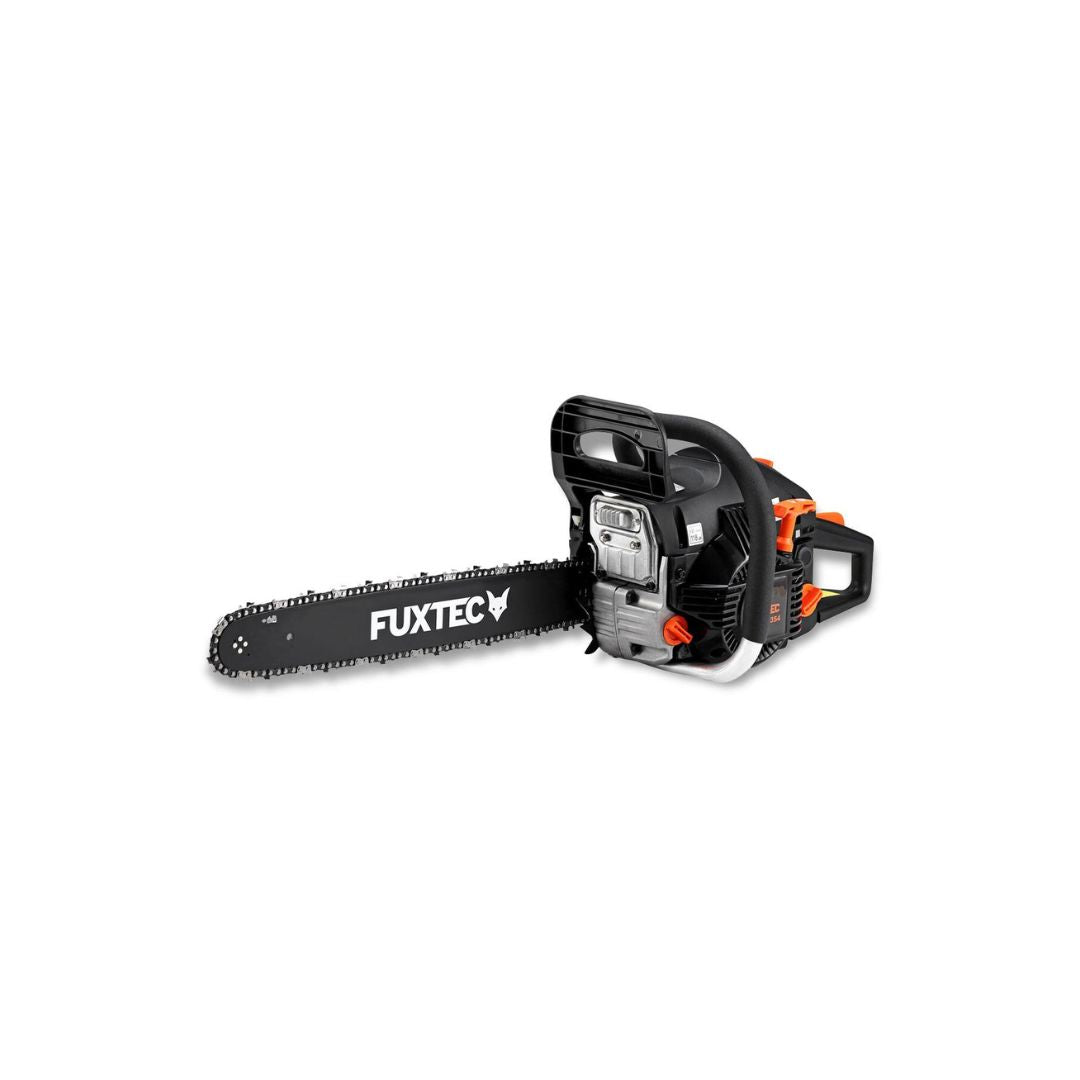
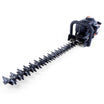
Thick old branches should never be forced through the blade. Use a pair of loppers or a suitable pruning saw instead. A petrol hedge trimmer is particularly well suited to long, dense hedges and larger plots where a high output is needed over extended periods without the constraints of a cable or battery runtime.
A pole pruner is not a substitute for a long-reach hedge trimmer. It is designed for individual thicker branches, not for cutting hedge surfaces evenly.
Cordless Hedge Trimmers for Height, Area and Detail Work
Cable-free tools for different aspects of hedge maintenance – from tall hedge tops to precise shaping.

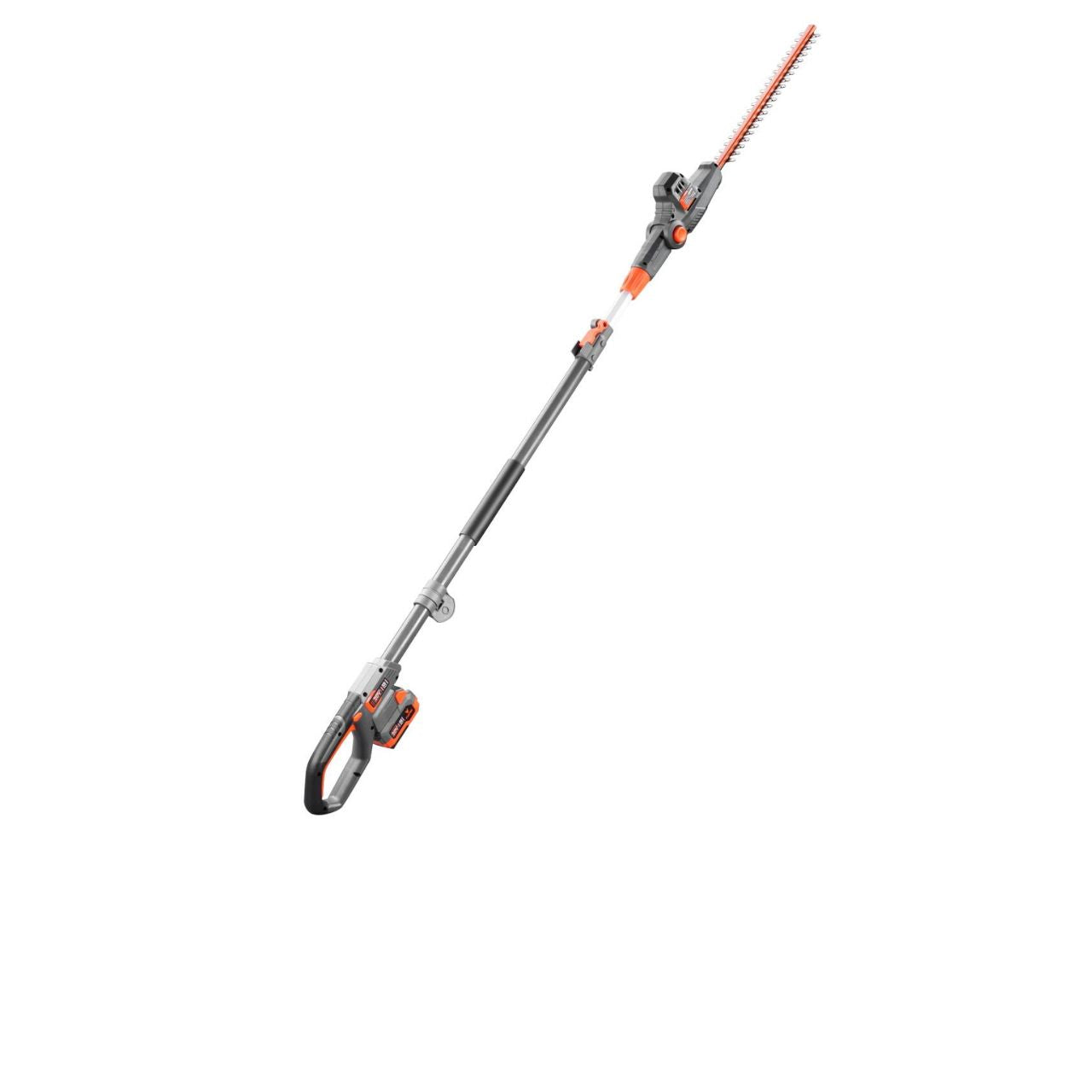
FUXTEC FX-E1HH20 SET
The cordless long-reach hedge trimmer for hard-to-access sides and hedge tops – with an adjustable head and variable length.
- Adjustable cutting head for different angles
- Shoulder strap included
- 2 Ah battery and 2.4 A charger included
- Compatible with the FUXTEC 20V battery system

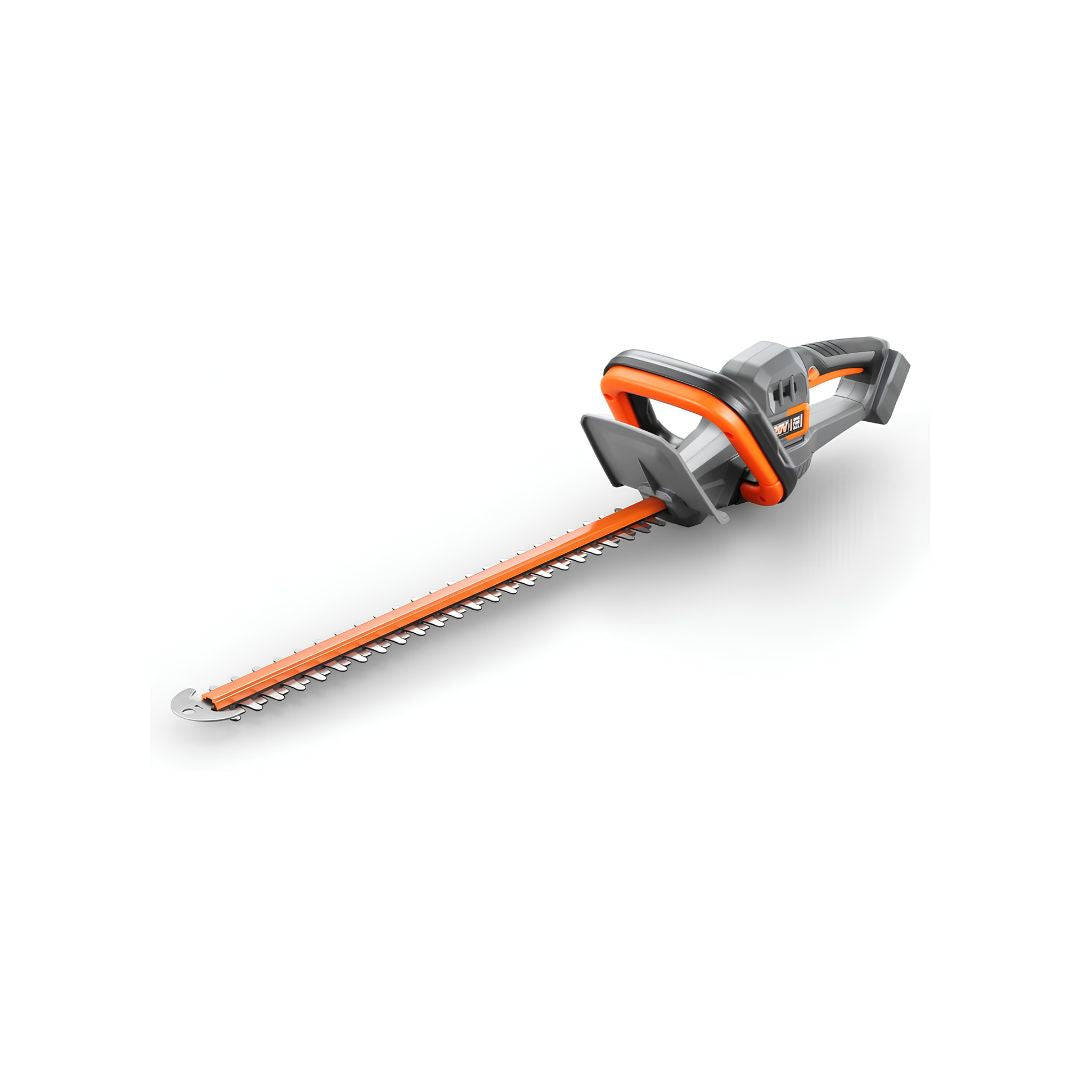
FUXTEC FX-E1HS20 SET
For even shaping cuts on easily accessible sides and shorter to medium-height hedges.
- Cable-free working along longer hedge sections
- Suitable for young growth and regular maintenance cuts
- 2 Ah battery and charger included
- Battery compatible with other 20V tools

FUXTEC FX-E1HHS20 SET
For small gaps, ornamental shrubs, young hedge plants and controlled detail trimming in hard-to-reach spots.
- Grass shear and shrub shear attachments included
- Tool-free blade change
- For precise small shaping cuts
- Battery and charger included in the set
How to Cut an Overgrown Hedge: Step-by-Step Guide
With a heavily overgrown hedge, work in a controlled manner from the outside inwards. Do not remove all the green growth at once. Keep a close eye throughout on how much living wood and foliage remains.
How Much Can an Overgrown Hedge Be Cut Back?
During a standard shaping cut, you remove mainly the new season's growth. With species that tolerate pruning well, it is common practice to leave around a third of the new growth in place. This retains sufficient leaf mass and prevents the plant from being unnecessarily weakened.
If an old hedge needs to become significantly narrower or lower, a gradual renovation is often the safer approach. With a very wide deciduous hedge, for example, start by cutting the top and one side. The second side can follow in the next suitable pruning window. This way the plant retains enough foliage on one side to sustain itself.
Privet, hornbeam and a number of other deciduous shrubs often respond well to hard pruning. However, it can take until the following spring or summer for dormant buds to produce new shoots. A freshly cut hedge therefore does not look dense again immediately.
Cutting a Tall Hedge Safely at the Sides and Top
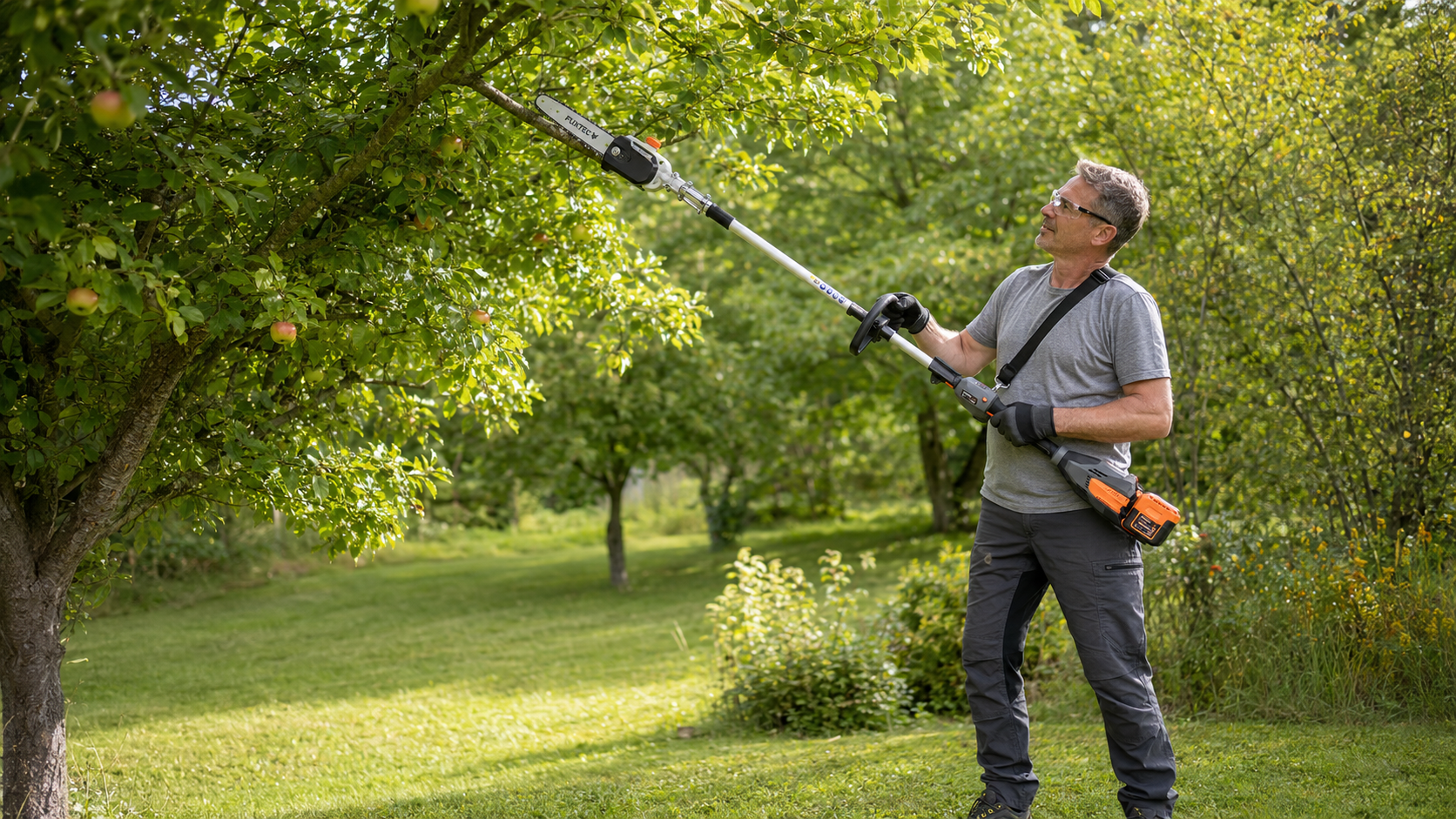
A tall hedge does not become safer to work on by leaning far over the edge of a ladder with a standard hedge trimmer. Use a telescopic long-reach hedge trimmer wherever possible, allowing you to reach large sections of the top from ground level. The cutting head should be adjustable so that you can skim across the upper surface in a controlled manner.
If the tool's maximum reach is insufficient, a stable work platform or appropriate scaffolding is generally safer than a free-standing ladder. If a ladder is unavoidable, it must not wobble or rest on soft ground. Never reach sideways beyond your centre of balance, and reposition the ladder in good time.
Safety goggles, sturdy gloves, long clothing and solid footwear are essential. When using a petrol hedge trimmer, appropriate hearing protection should also be worn. Keep children, pets and bystanders well clear of the working area.
When Is a Petrol Hedge Trimmer Worth It?
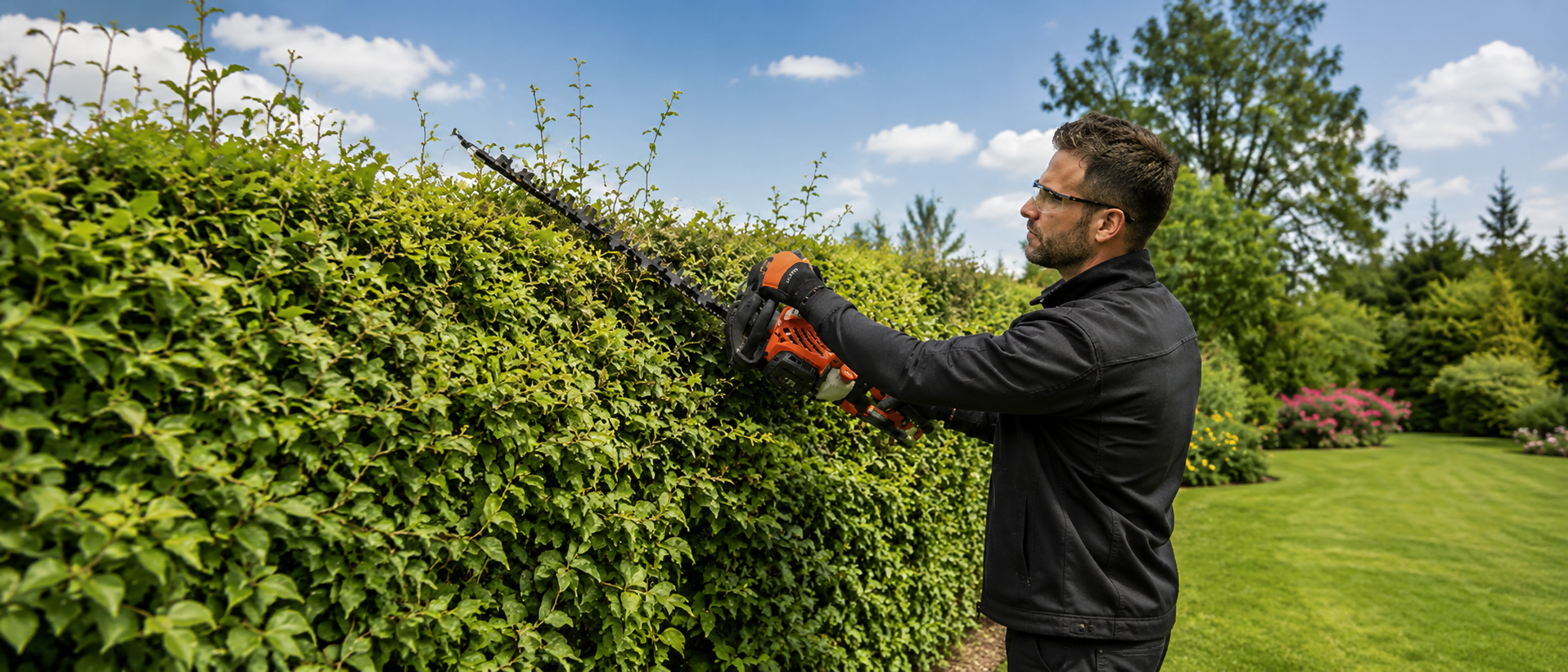
A petrol hedge trimmer is well suited to long, sprawling and vigorously growing hedges where sustained high cutting performance is required over an extended period. It works independently of a power socket or battery charge and provides more power in dense growth than lightweight tools designed for routine maintenance.
The greater weight and higher noise levels do, however, demand good working technique. Plan regular breaks, keep both hands on the machine and use the rotating handle in the appropriate position for horizontal or vertical cuts.
Power for Long and Densely Grown Hedges
Three models for tough growth, large cutting areas and independent working without cables.

FUXTEC FX-MH126
The versatile model for dense hedges, regular larger jobs and both horizontal and vertical cuts.
- Rotating handle for different cutting positions
- Four-point anti-vibration handle frame
- Counter-rotating, double-sided cutting blades
- 6 kg net weight

FUXTEC FX-MHP245
High output power with a 55 cm cutting length – for tough, densely grown hedges and larger areas.
- Suitable for branches up to 28 mm
- Dual-sided adjustable handle
- Counter-rotating safety blades
- One-piece blade guard included

FUXTEC FX-MHP126
The long cutting blade enables a swift and even cut across wide and extensive hedges.
- XXL blade for high area coverage
- Rotating handle for horizontal and vertical cuts
- Four-point anti-vibration handle frame
- 450 ml fuel tank
Cutting the Hedge Straight and in the Right Shape
A taut string line is the simplest guide for a straight hedge top. Fix it at the desired height between two canes and maintain a small clearance from the line as you cut. This leaves enough room for minor corrections.
Hold the hedge trimmer with both hands and move it in small, even sweeping arcs. Large arm movements create dips more quickly. When working on the sides, it helps to look towards the section you have not yet cut. This makes it easier to follow the desired line.
The hedge should remain wider at the base than at the top. This tapered shape ensures that light reaches the lower growth. If the hedge is cut wider at the top than the bottom, it shades itself and can become bare at the base.
Common Mistakes When Cutting an Overgrown Hedge
Cutting too far back into old conifers
Leyland cypress, lawson cypress and other sensitive conifers rarely produce new growth from completely bare branches. Always work within the green zone. If such a hedge is already too wide and completely bare on the inside, planting a new hedge may be a more practical long-term solution than attempting a hard cutback.
Forcing thick branches through the trimmer blade
If the blade jams on a thick branch, switch off the motor and disconnect the tool from the battery, mains supply or drive. Remove the branch with loppers or a pruning saw. Never force the running blade into woody growth.
Renovating the entire old hedge in one go
Hard pruning of both the top and both sides removes a large proportion of the plant's leaf mass. With old, wide hedges, a two-stage approach is often kinder to the plant. Observe the new growth before tackling the second side in the next suitable pruning window.
Starting without checking for nests
An overgrown hedge in particular provides birds with excellent cover. Check not only the outer face but also the lower section of the hedge and any densely tangled areas. As soon as an active nest is found, work must stop immediately.
Filling Gaps in the Hedge
Small gaps in privet, hornbeam and other freely shooting deciduous shrubs will often close again once sufficient light reaches the affected area. Lightly trim the tips of neighbouring shoots to encourage branching.
Larger holes can be bridged with long, flexible shoots. Train the branches horizontally or diagonally along a bamboo cane and tie them loosely in place. As new side shoots develop, the gap will gradually fill in.
With bare old wood on a Leyland cypress or similar conifer, this method only works if green branches can still be guided across the open area. The bare wood itself will not turn green again.
Chipping, Mulching or Composting Hedge Clippings
A heavy pruning session can quickly produce a large pile of branches and twigs. Lay a tarpaulin beneath or alongside the hedge before you begin. This makes it much easier to collect leaves, small shoots and short cuttings afterwards.
A garden shredder significantly reduces the volume of waste material. The chipped material can be composted or spread as mulch under shrubs, depending on the plant species and its health. Diseased, pest-infested or otherwise problematic cuttings should not go on a standard garden compost heap.
Process Hedge Clippings Quickly and Efficiently
Two roller shredders with 2,800 W for branches, twigs and shrub cuttings up to 44 mm.

FUXTEC FX-EGH2800T
Compact roller shredder with automatic infeed and a flexible 60-litre collection bag.
- Roller cutting system with automatic infeed
- Forward and reverse function
- Overload protection and safety switch
- Carry handle and 18 cm wheels

FUXTEC FX-EGH2800B
Powerful roller shredder with a transparent collection box, sturdy chassis and automatic material infeed.
- Low-noise roller cutting system
- Forward and reverse operation
- Adjustable counter plate
- Collection box with safety switch
Caring for Your Hedge After Hard Pruning
After heavy pruning, the plant needs time to produce new growth. During dry spells, keep the soil consistently moist without causing waterlogging. A thin layer of mulch helps protect the roots and reduces moisture loss.
A moderate application of garden compost in spring can support your hedge's recovery. However, excessive feeding is no substitute for adequate watering and should be avoided late in the season. Soft, sappy new shoots are more susceptible to frost damage.
Check the pruned hedge regularly over the following months. Remove any dead wood and guide long new shoots into existing gaps. Once the desired shape has been re-established, keeping on top of regular trimming will maintain a dense hedge and prevent it from becoming overgrown again.
Summary: Plan Your Approach Rather Than Taking a Drastic Shortcut
An old or tall hedge can often be brought back into shape. The key factors are the plant species, the right timing and a controlled approach. Deciduous shrubs such as privet and hornbeam can generally tolerate far more than Leyland cypress and other sensitive conifers.
Remove thick branches separately, work the sides from the bottom upwards and cut the hedge into a gently tapered shape. For tall sections, a FUXTEC cordless long-reach hedge trimmer makes it easy to work from the ground. For long and vigorous hedges, FUXTEC petrol hedge trimmers provide the cutting power required. The resulting clippings can then be processed efficiently with a FUXTEC garden shredder, reducing them to a handy volume for composting or mulching.