
Hedge Trimmer Maintenance: Clean, Oil & Sharpen
Hedge Trimmer Maintenance Made Easy – How to Keep Your Garden Equipment in Top Condition
Oiling Your Hedge Trimmer
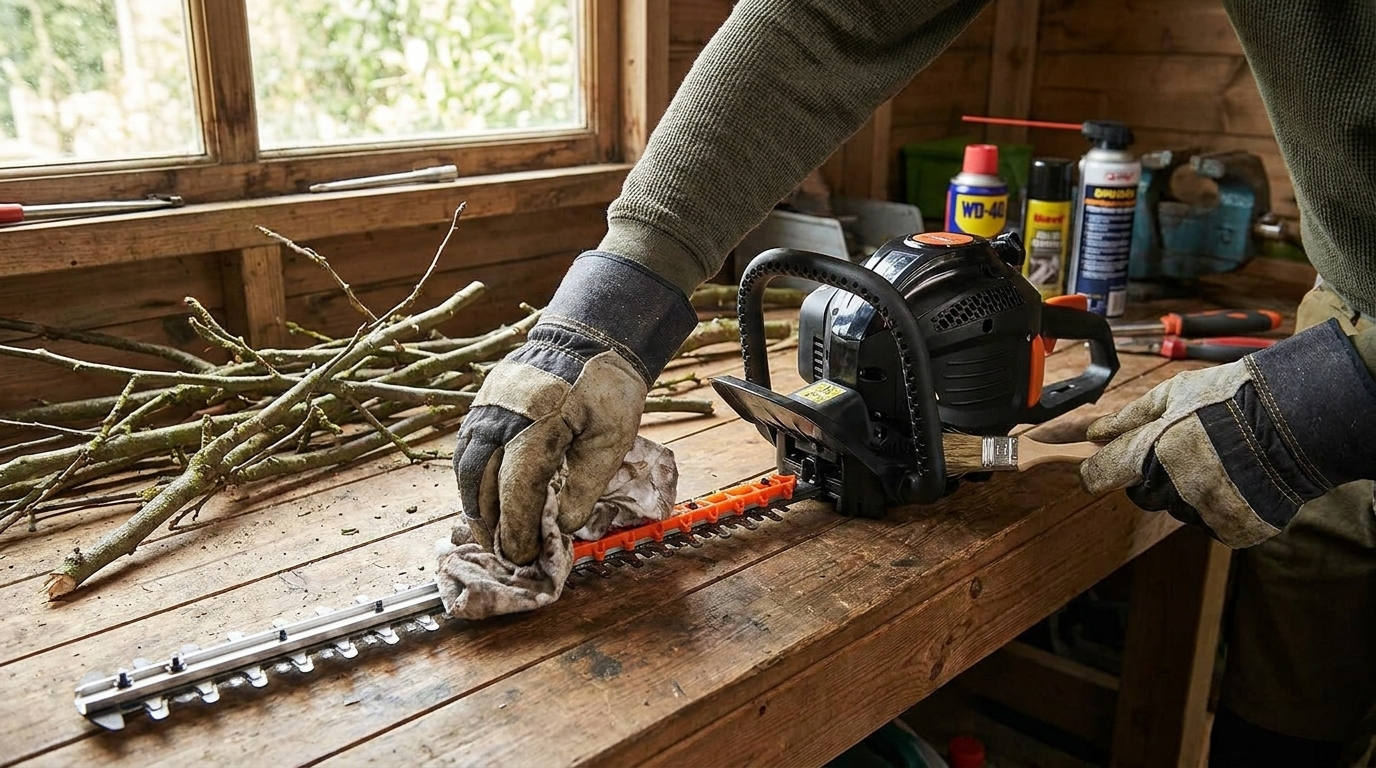
Immediately after cleaning your hedge trimmer, it should be oiled. This is essential for preventing rust and ensuring the trimmer continues to run smoothly. Oil and grease displace moisture effectively and reliably. When the cutting blades are coated with oil, rust cannot form because atmospheric moisture cannot reach them.
Choosing the Right Oil for Your Hedge Trimmer
Most manufacturers recommend their own proprietary maintenance oil, specifically formulated for their models. Following this recommendation is always a safe choice. However, branded products can be rather expensive. A cost-effective alternative is chainsaw bar oil. Thanks to its similar consistency and properties, it provides the same level of lubrication and rust protection as specialist hedge trimmer oil.
You should avoid using WD-40 or other penetrating oils. Whilst these reliably prevent rust and can even remove it once it has formed, they can also damage rubber seals and cause plastic components to become brittle. There is also a risk that penetrating oil will displace the grease from the blade bearings, which can lead to irreparable damage over time.
Oil or Grease for Hedge Trimmers?
You should also avoid greases of any kind. Whilst oils are liquid at room temperature, greases are solid. Although the compositions are broadly similar and grease is easier to apply generously, lubricating your hedge trimmer with grease may cause problems when you need to use it in cooler conditions. Always use a free-flowing, lightweight oil.
Cooking oils and other food-grade oils are not suitable for maintaining hedge trimmers or other garden tools. They turn rancid quickly, which is not only unpleasant but also negatively affects their lubricating properties. Furthermore, everyday oils cannot withstand the mechanical stresses of hedge trimmer operation and break down. If the cutting blades are not adequately oiled, they become more prone to contamination and wear out more quickly.
Oil Bath for Your Hedge Trimmer
When it comes to applying maintenance oil to your hedge trimmer, you have two options:
Many maintenance products are available as sprays. Simply spray these onto the cutting blades, running the trimmer briefly every so often in between applications. This allows the oil to distribute itself evenly, ensuring the full length of the blades is adequately coated.
The second option is to store the blade bar of your hedge trimmer in an oil bath. Use the blade sheath supplied with the trimmer for this purpose. If it is not fully watertight, you may need to reinforce it – for example with gaffer tape. Fill it approximately halfway with chainsaw bar oil and carefully immerse the blade bar of the hedge trimmer. With the blades completely surrounded by oil, they will be protected even during long periods of storage. They will be as good as new when you next bring out the trimmer.
Sharpening Your Hedge Trimmer
Even if you always clean and oil your hedge trimmer after use, it will show signs of wear over time. The considerable stress placed on the blades during hedge trimming causes them to gradually become duller. This means more effort for you – the blunter the blades, the more force you need to apply to cut through branches and foliage. The quality of the cut also suffers when the blades are no longer sharp. Hedge leaves tend to be torn rather than cleanly cut, which looks particularly unsightly on large-leaved plants such as cherry laurel, beech, and hornbeam, and also harms the plant by increasing the cut surface area through which moisture is lost. As soon as you notice that your hedge trimmer is cutting noticeably harder and less cleanly than before, you should sharpen it as soon as possible.
Honing the Hedge Trimmer for a Quick Fix
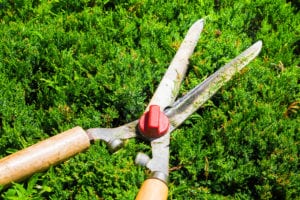
If you need your hedge trimmer back in action quickly, don't have the grinding equipment to hand, or don't feel confident doing the job yourself, you can temporarily improve the sharpness by manually honing the blades. This involves working the cutting edges of the blades with a whetstone. A whetstone is typically made from fine-grained quartz and must always be used wet. Use it to work along the edges of the blades, smoothing out the burrs and minor irregularities that develop during use. The cutting performance of the hedge trimmer will improve as a result.
Manual honing is a quick, short-term measure, but its scope is limited. By hand, you can only correct minor imperfections on the blade edges. Whilst cutting performance does improve, the effect is generally temporary. Repeated honing typically yields diminishing returns. In the long run, the only way to fully restore your hedge trimmer's performance is to grind the blades.
Sharpening Your Hedge Trimmer by Grinding
To sharpen your hedge trimmer effectively and for the long term, the blades need to be ground. If you have no prior experience in this area, it may be worth leaving the job to a professional. As hedge trimmer blades are generally very fine, even small errors during grinding can render them unusable.
Ideally, don't wait until the very last moment – when your hedge trimmer has almost no cutting power left – before grinding the blades. It is better to grind them more regularly, as less material needs to be removed each time to keep them sharp. As a rule of thumb, you should sharpen the hedge trimmer blades approximately every 50 hours of use.
Sharpening Your Hedge Trimmer Yourself – What You Need to Know
To grind the cutting blades of your hedge trimmer carefully, you will first need to remove them. Undo the bolt at the handle end and carefully detach the blades. Clean them with a damp cloth before you begin grinding.
As with honing, grinding hedge trimmer blades must be done wet. Dry grinding removes too much material, meaning the blades can become unusable after only a few sharpenings. It is also important to maintain a consistent, flat grinding angle. You may find this easier if you secure the blade you are working on. The direction of grinding should be consistent, always towards the cutting edge.
In principle, both a honing steel and a sharpening stone are suitable for grinding hedge trimmer blades. The technique and approach are broadly the same for both. Since a sharpening stone tends to remove slightly more material than a honing steel, you should use it with extra care. If available, you can also use a file or a multi-tool with diamond file attachment. More important than the tool you use is ensuring you maintain the original angle precisely.
Use a whetstone to remove the burr that forms on the back of the blade during grinding. Work horizontally along the blade, again moving in the direction of the cutting edge.
Once you have finished sharpening, take the opportunity to apply fresh lubricating oil to the drive mechanism of your hedge trimmer before reassembling the blades. Remember to protect the freshly ground blades with a maintenance oil to guard against rust and corrosion. As any protective coating may be removed during grinding, this step is even more important after sharpening than before.
Having Your Hedge Trimmer Sharpened Professionally – Where to Go and What It Costs
If you don't feel confident sharpening your hedge trimmer yourself and don't want to risk damaging it, you should take it to a professional. Many DIY stores, garden centres, and specialist tool shops offer a sharpening service for hedge trimmers and other garden tools. You can also contact your hedge trimmer's manufacturer, who may be able to recommend a suitable service centre near you.
Depending on the type of hedge trimmer, having the blades professionally sharpened typically costs between £15 and £45. The price depends primarily on the amount of work involved. Sharpening a manual hedge trimmer is considerably quicker and therefore cheaper than working on a powered model. The cost will also be higher if the technician needs to remove the blades themselves, compared with bringing in an already-dismantled blade for sharpening.
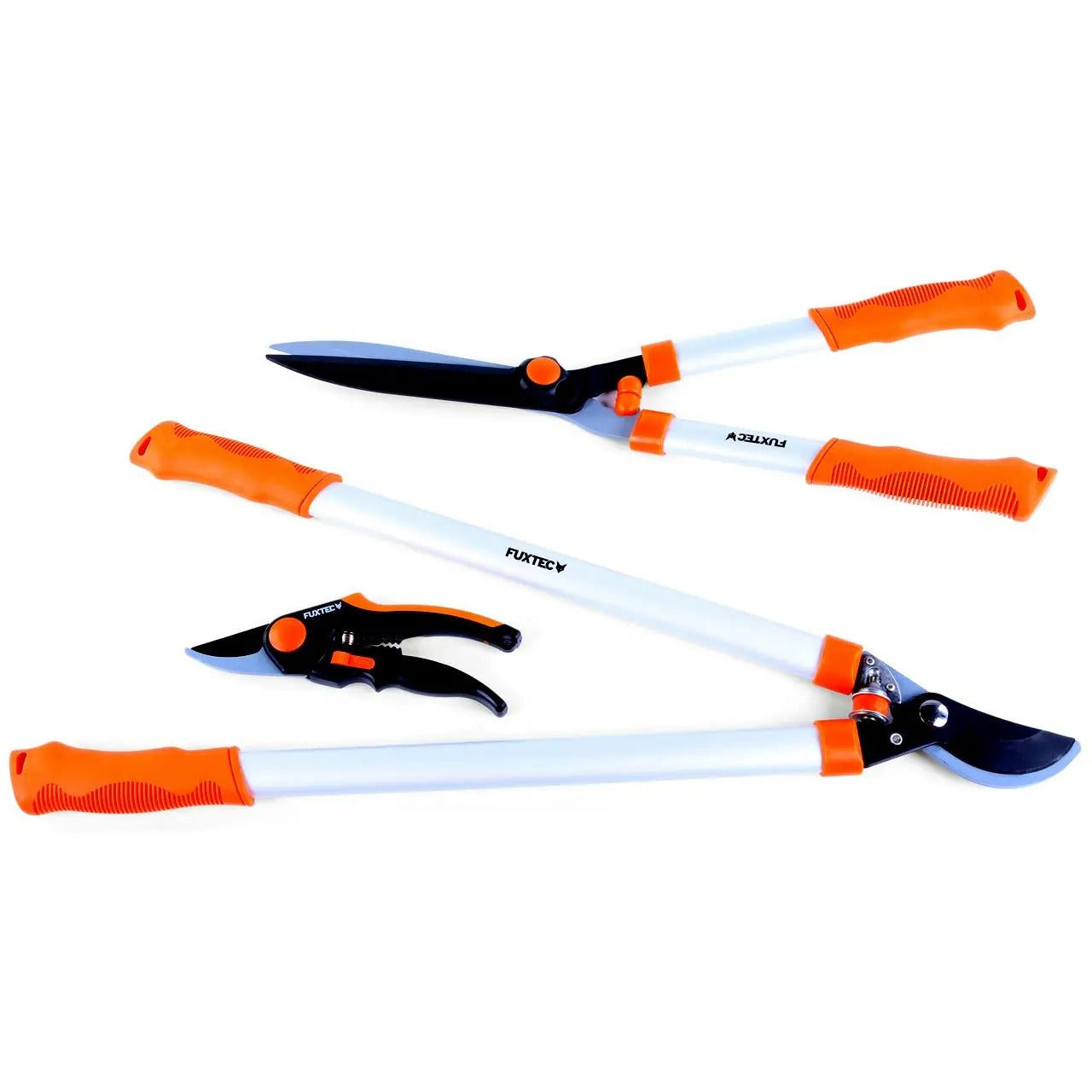
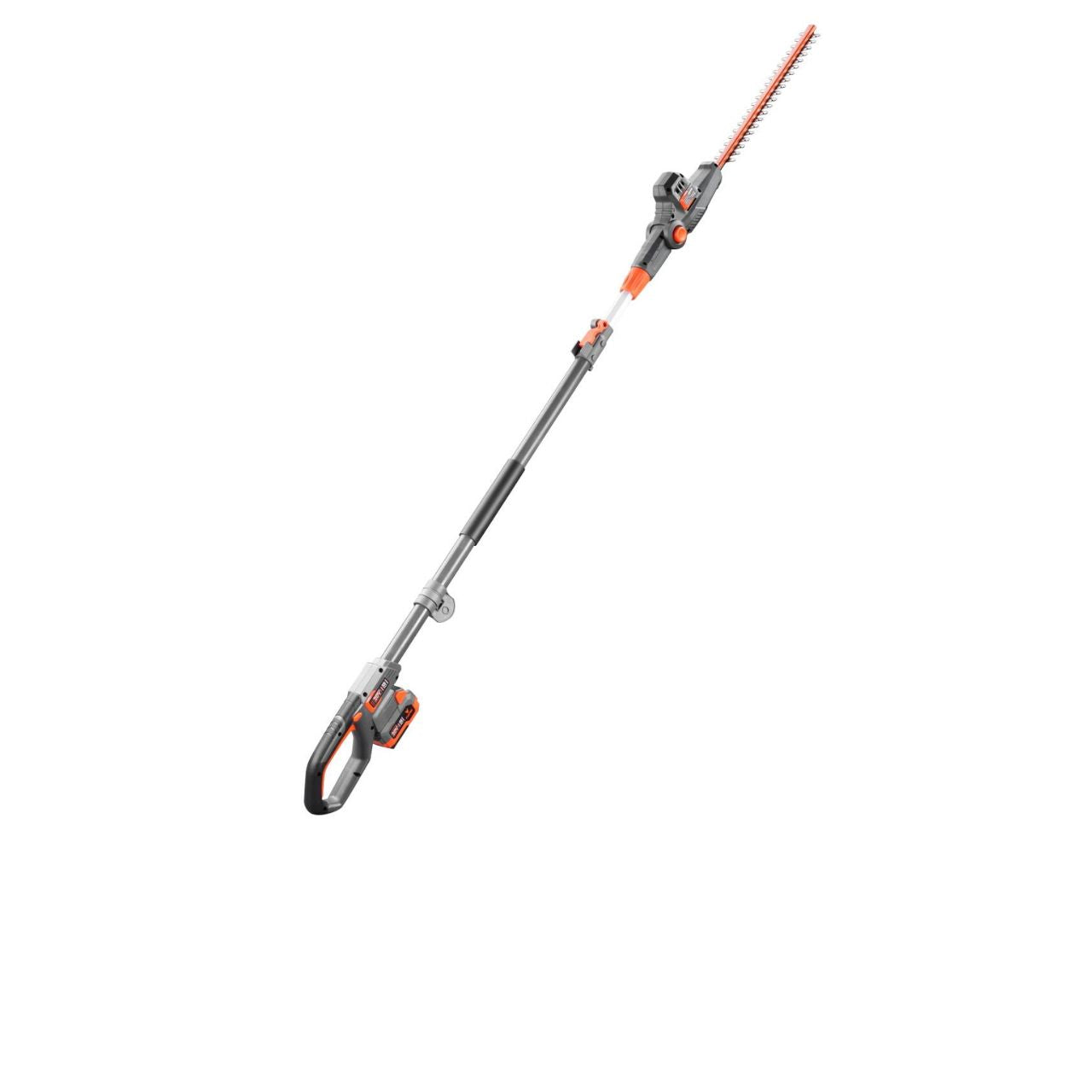
The best tools for caring for trees and hedges
More articles about tree and hedge care
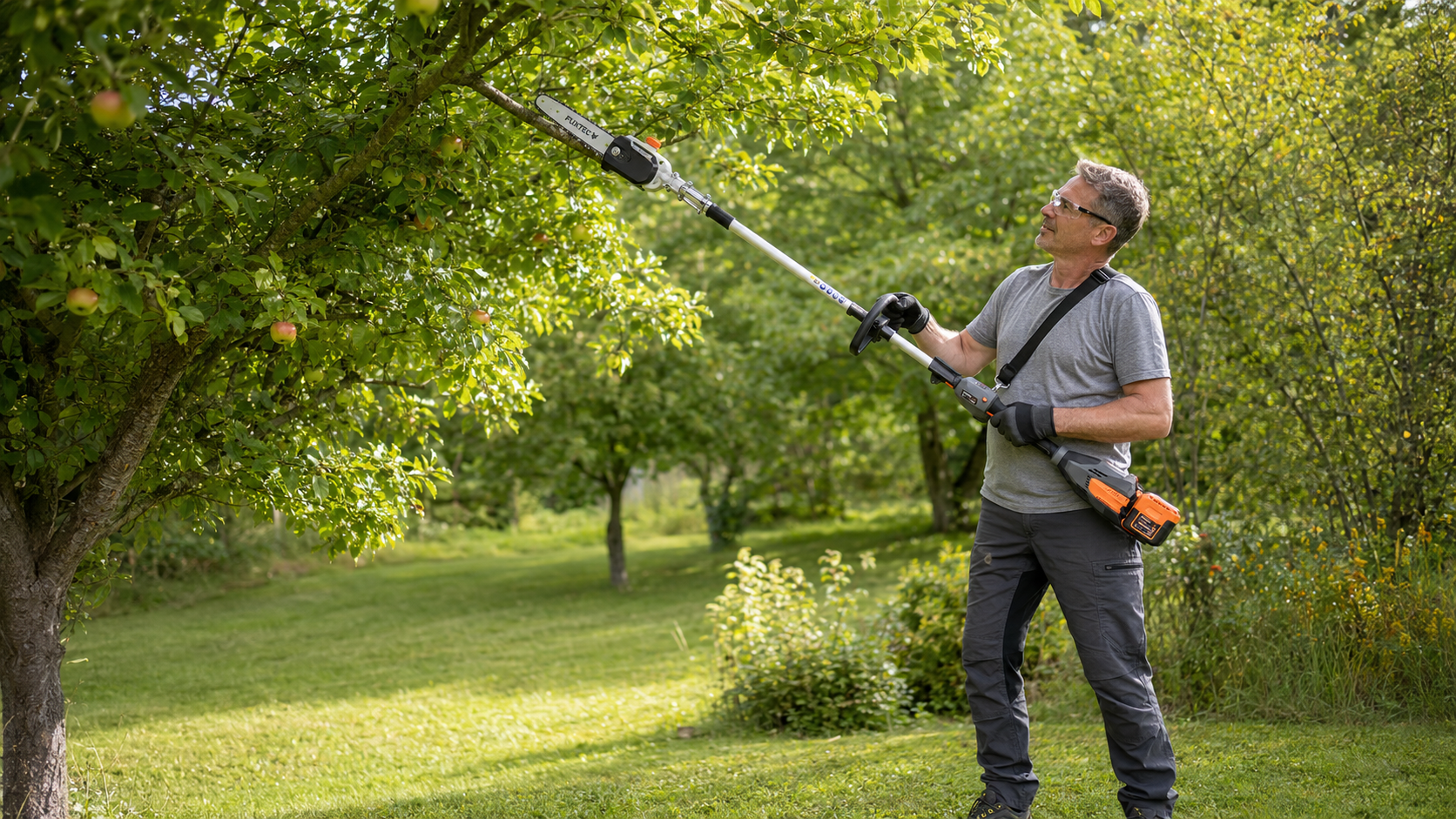
Summer Pruning Fruit Trees: The Complete UK Guide
Inhaltsverzeichnis Vorteile des Pflegeschnitts Schnittkalender für Obstgehölze So gehst Du Schritt für Schritt vor Äpfel und Birnenbäume Kirsche, Pflaume, Aprikose und Pfirsichbäume Jungbäume und ...
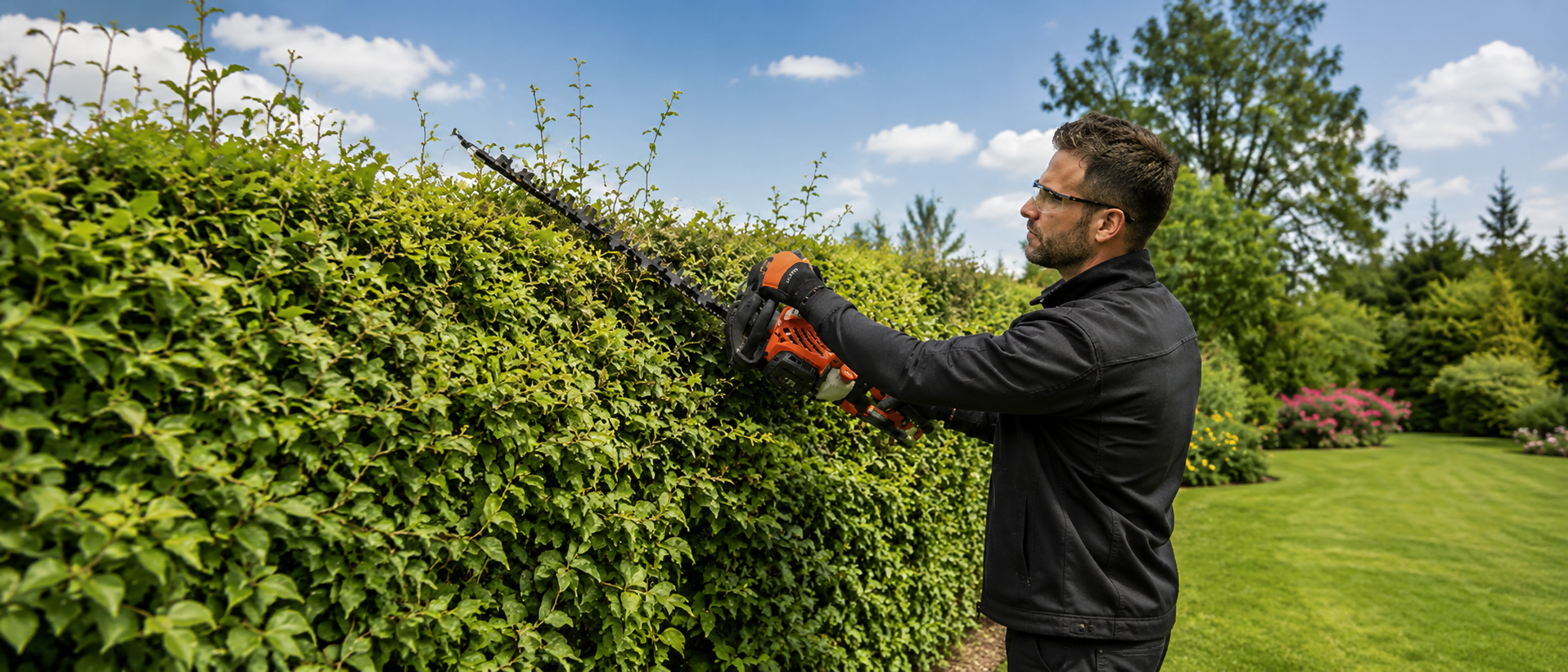
How to Cut an Overgrown or Tall Hedge | FUXTEC
An overgrown hedge can become too wide, patchy in places and riddled with thick branches. If it has also grown several metres tall, a quick trim with a standard hedge trimmer is no longer enough. ...
How to Clean & Maintain Your Hedge Trimmer
A well-maintained hedge trimmer is essential for a tidy garden. If you want to keep your hedges looking their best, you need a tool that works reliably – with clean, sharp blades. Yet many gardener...


