
Baum- und Heckenpflege
Fertilising Hedges: Tips, Timing & Best Fertiliser
When is the right time to fertilise hedges?
There are two types of fertilisation for hedge plants: planting fertilisation and regular feeding. Planting fertilisation is carried out at the same time as planting the hedge. Whether it is necessary depends on the type of hedge and the condition of the soil. Regular fertilisation, however, is essential. It supports plant growth and ensures that your plants receive all the nutrients they need.
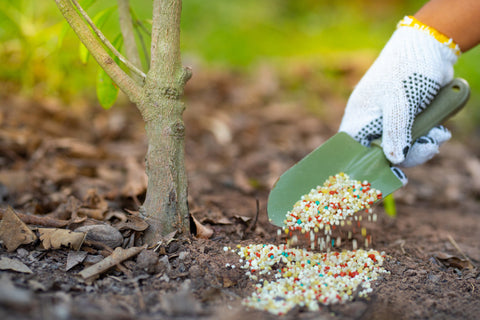
The right time to fertilise your hedge in the garden is spring through to summer, between March and August. In particular, between March and the end of June lie the two main growth phases of hedges. During this period, plants depend on nutrients absorbed through their roots in order to produce new shoots and branch out. Providing the right minerals can stimulate growth, which is especially important when the hedge has not yet reached its desired height and width.
You should avoid fertilising your hedges again in autumn. In the worst case, feeding at that time can cause the plants to produce a fresh flush of growth. However, these new shoots will not fully harden before winter and will remain vulnerable to frost and cold damage. At best, only the new shoots die back, leaving a few gaps. At worst, the entire plant may be lost to frost damage. For this reason, the last application of fertiliser should take place in August. Ideally, use a fertiliser with a high potassium content at this stage, as this nutrient helps the plant cope better with frost.
How often do hedges need to be fertilised?
As a rule, it is sufficient to feed hedge plants once a year. This does, however, depend on which fertiliser you use. Mineral fertilisers break down more quickly than organic ones, meaning their long-term effect is weaker and you may need to fertilise hedges in their growing phase several times a year. If, on the other hand, you don't want the hedge to grow any larger, it is definitely better to fertilise just once a year — otherwise you'll simply be creating extra work for yourself, as stimulating growth will mean more frequent and heavier trimming. An exception is, of course, an acute nutrient deficiency that threatens the health of your hedge plants, which should be remedied as quickly as possible.
Should hedges be fertilised when planting?
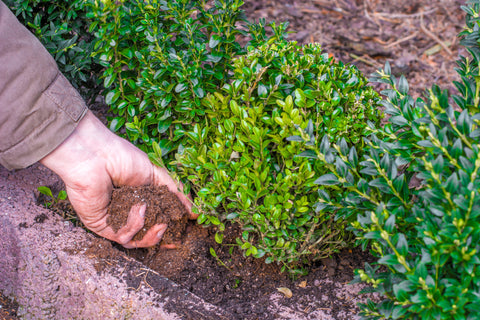
Whether you should fertilise your hedge at the time of planting depends on whether the plants have already been supplied with fertiliser before purchase. Most hedge plants sold in pots are already supplied with a slow-release fertiliser that provides all the essential nutrients in the early stages. If, however, you buy bare-root plants, a planting feed will make establishment considerably easier. To do this, mix the excavated soil with well-rotted compost and horn meal before backfilling. You should avoid using mineral fertiliser on young hedge plants altogether, as the risk of it damaging their still-delicate, underdeveloped roots is too great.
Fertilising hedges after trimming?
A common misconception is that hedge plants must be fertilised immediately after trimming. As you may already know from our guide to trimming hedges, the best time for a hard cut is in early spring. Unlike many other plants, garden hedges should not be encouraged to regrow as quickly as possible after cutting — instead, they should hold their neat shape for as long as possible. A feed with immediately available mineral nutrients would therefore be counterproductive. However, you can apply an organic slow-release fertiliser after the spring trim. As this takes some time to release its minerals, your hedge will be perfectly nourished when it begins its first flush of growth in spring. The ideal approach is to follow trimming with an application of organic fertiliser and then cover this with compost or the shredded hedge clippings. This also helps to suppress unwanted weeds.
How to recognise nutrient deficiency in hedges
Like all plants, garden hedges require above all nitrogen, phosphorus and potassium. These three nutrients are also the main components of so-called NPK fertilisers. Nitrogen is primarily responsible for leaf growth, while phosphorus supports flower formation and potassium regulates water balance. If your hedge shows little or no growth in spring despite sufficient watering, a nutrient deficiency is the most likely cause. Discolouration of leaves or flowers can also be symptoms of underfeeding. Here is an overview of different symptoms and the mineral deficiencies they indicate:
| NUTRIENT: | DEFICIENCY SYMPTOMS: | SYMPTOMS OF EXCESS: |
|---|---|---|
| Nitrogen | stunted growth leaves turn light green to yellow-green |
excessive growth overly soft, unstable shoots |
| Phosphorus | dark discolouration on the undersides of leaves few flowers and fruits |
growth disorders |
| Potassium | limp leaves poor growth |
brown leaf margins calcium and magnesium deficiency |
| Magnesium | yellow and rusty-brown leaf discolouration, first on older leaves, later on younger ones |
potassium and calcium deficiency |
| Calcium | gradual die-back of young leaves, later of older leaves increased susceptibility to fungal disease |
yellow-green leaf discolouration excessively high pH |
Hedge fertiliser – which one should you choose?
Not only does the timing matter, but so does the type of fertiliser you provide for your plants. There are a number of general-purpose fertilisers that are also suitable for hedges. Many manufacturers also offer dedicated hedge fertilisers or bespoke nutrient blends tailored to specific hedge plants.
Mineral hedge fertiliser
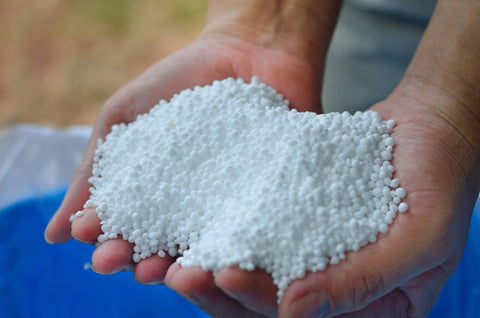
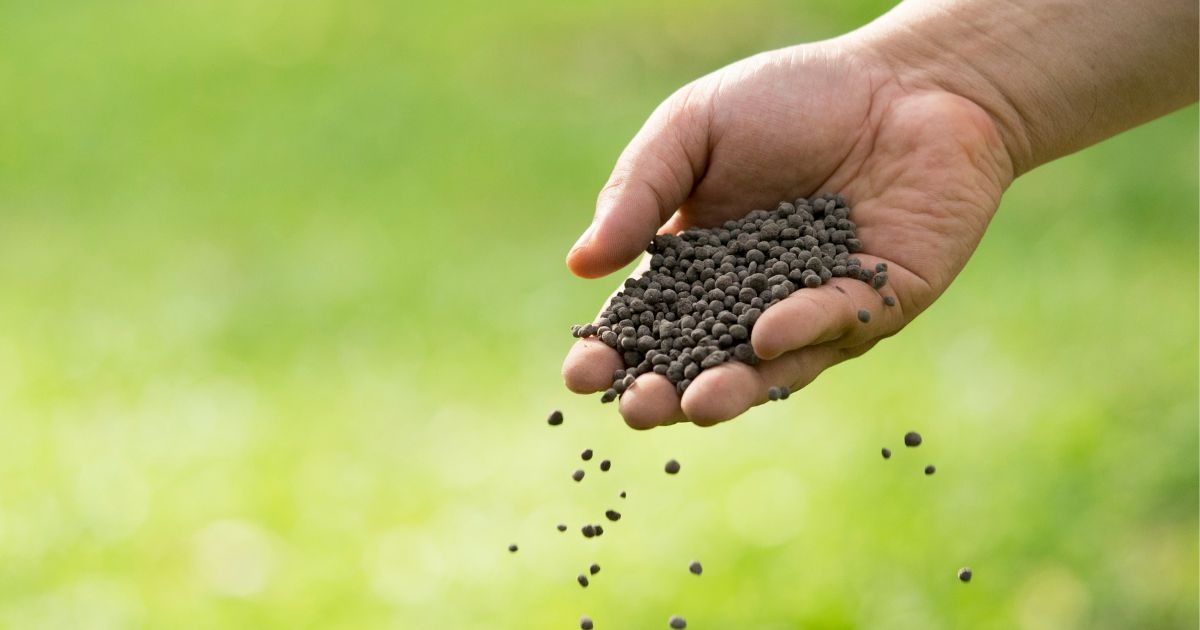
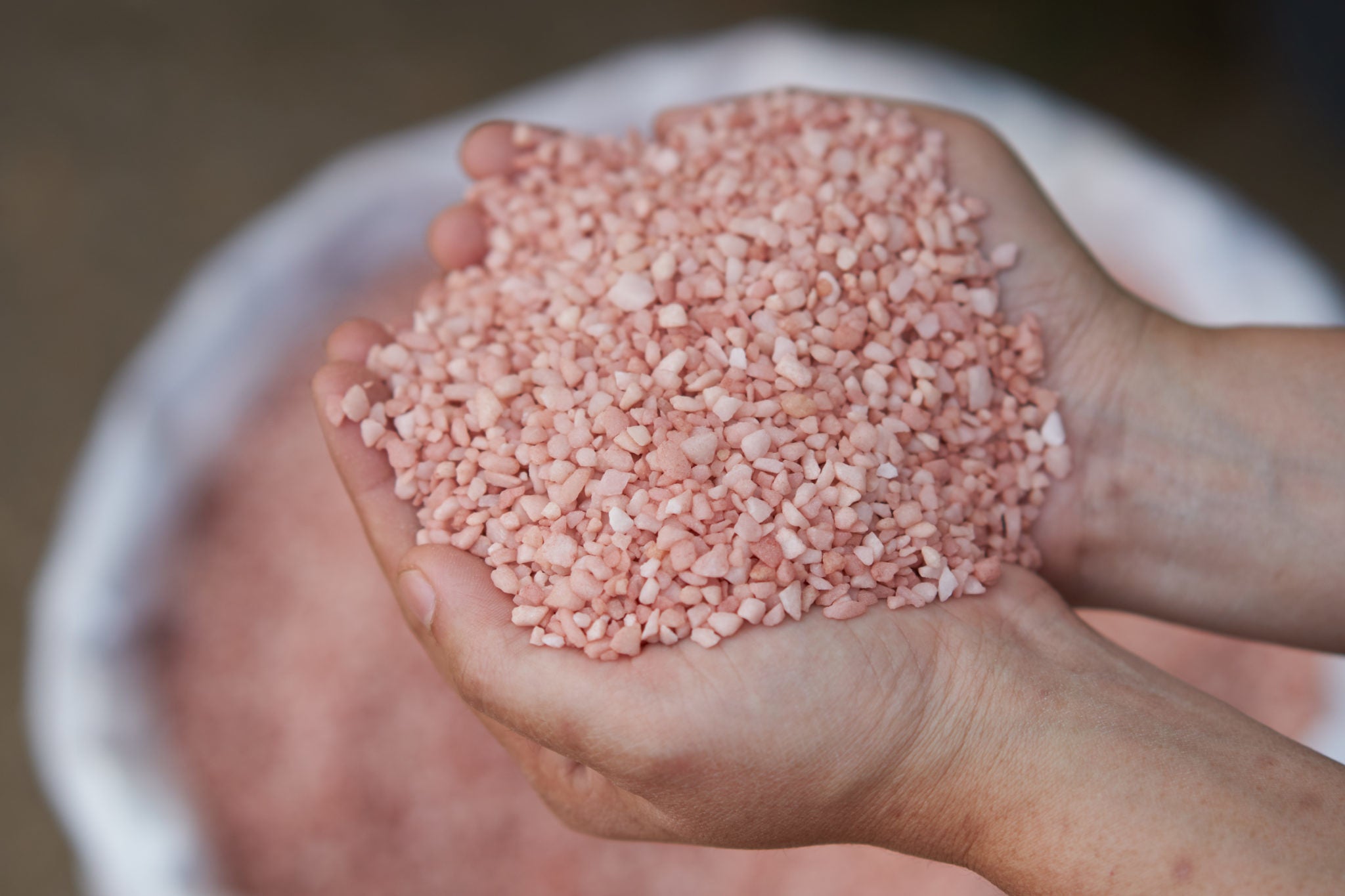
Mineral fertilisers are produced synthetically, which means their composition can be precisely tailored to the specific needs of plants. However, because they dissolve very quickly and enter the soil rapidly, there is also the greatest risk of over-fertilisation. The minerals can then draw water away from the roots, causing irreparable damage to the plants. You should therefore always dose mineral fertilisers with particular care and precision, and use them sparingly. If in doubt, opt for a lower quantity and apply another feed later in the year. Mineral fertilisers are ideal when your hedge is already suffering from nutrient deficiency due to a prolonged lack of feeding. Their rapid availability helps prevent the damage from worsening and avoids large gaps appearing in the hedge.
Compound NPK granules as hedge fertiliser
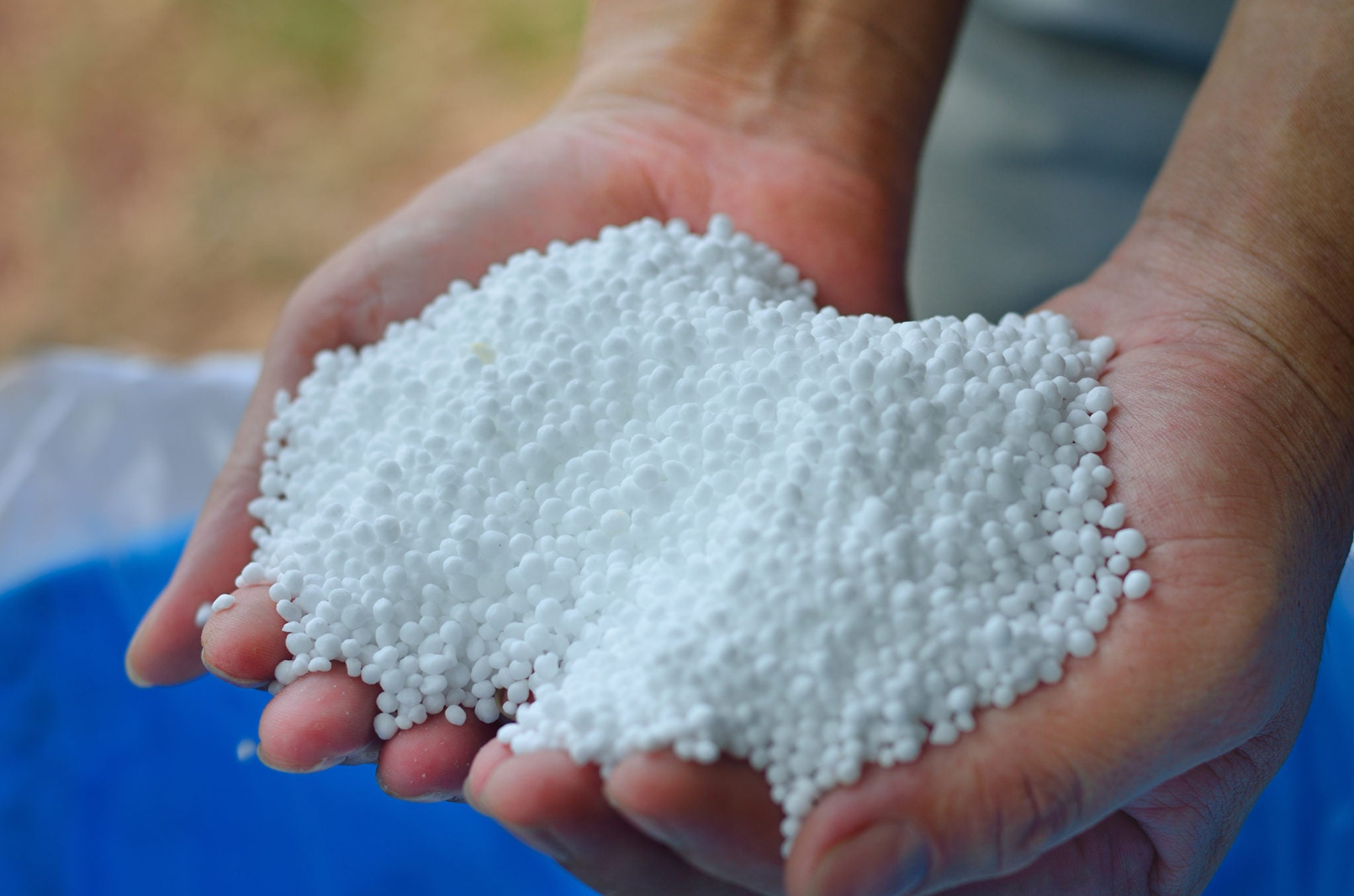
Compound NPK granular fertiliser (known in Germany as "Blaukorn" or sold under names such as Nitrophoska) is a complete fertiliser, meaning it contains all the minerals plants need for growth. It is well suited to quickly restoring all essential nutrients to garden hedge plants suffering from an acute deficiency. You can either scatter it around the base or dissolve it in water and apply it as a liquid feed. Always remember to use compound fertiliser sparingly, as over-application can significantly harm plants and also place an unnecessary burden on the environment.
Epsom salt for hedges
Epsom salt is the common name for magnesium sulphate. It is often used specifically when hedges are suffering from a magnesium deficiency. This is particularly common in conifers and evergreen hedging. A magnesium deficiency is also more likely on sandy soils, where the nutrient is leached out more quickly, or following over-application of potassium or calcium. If you are confident that your hedge is lacking in magnesium, the best remedy is a foliar feed with Epsom salt. To do this, dissolve the mineral in water and spray it directly onto the leaves. The plants can absorb it immediately, and there is no competition from other nutrients in the soil. When choosing a hedge fertiliser, also check that it contains Epsom salt or another source of magnesium. If it does not, you can add a small amount of Epsom salt as a preventative measure.
Organic hedge fertiliser
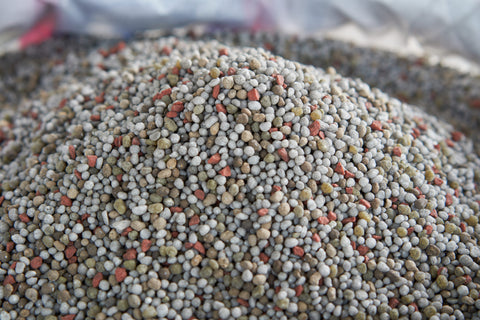
Organic fertiliser is made from natural plant or animal materials, most of which are by-products of agricultural processes. Once applied, they must first be broken down by microorganisms in the soil before the nutrients they contain become available to plants. On one hand, this means it is almost impossible to over-fertilise with organic products, since the soil organisms can only release a portion of the nutrients at any one time. On the other hand, organic fertiliser is not suitable as a quick fix for an acute nutrient deficiency. In addition, the composition cannot be precisely tailored to the needs of individual plants — you can only choose the product that most closely matches their requirements.
Horn meal and horn shavings as hedge fertiliser
Popular and easy-to-use organic fertilisers are horn shavings and horn meal. They are derived from slaughterhouse by-products and are therefore relatively affordable. Horn meal is finer and consequently releases its nutrients somewhat more quickly than horn shavings. The latter, in turn, make the better long-term fertiliser. Both contain mainly nitrogen and phosphate, which means that a potassium, calcium or magnesium deficiency can develop over time if you rely solely on horn-based products. Many organic fertilisers available in garden centres are therefore additionally enriched with these nutrients.
Horn shavings and meal can be combined wonderfully with mineral fertilisers to achieve both an immediate and a long-term effect. Used alone, horn products can also be applied in autumn. This allows the nutrients to break down slowly over winter and become readily available in spring, just in time to support the plants' first growth spurt.
Fertilising hedges with compost
When compost breaks down through the action of microorganisms, it not only releases nutrients into the soil — it also improves the overall soil structure. If you work it lightly into the earth after applying it, the decomposition process helps keep the soil nicely aerated and free-draining. Organic matter also retains moisture, which is a considerable advantage in summer — both for you and for your hedge plants, as you'll need to water them less frequently. Compost in the form of shredded hedge or shrub clippings can also be spread underneath the hedge. Not only does this look tidy, but it also suppresses weeds effectively.
The main drawback of compost as a hedge fertiliser is that it raises the soil pH slightly towards the alkaline end of the scale. Plants that prefer acidic soils will not appreciate this at all — examples include rhododendrons, holly and cypress. Conversely, compost that raises the soil pH suits box (buxus), privet and thuja very well. These plants dislike acidic conditions and ideally require a soil that remains slightly alkaline.
Ready-to-use hedge fertiliser
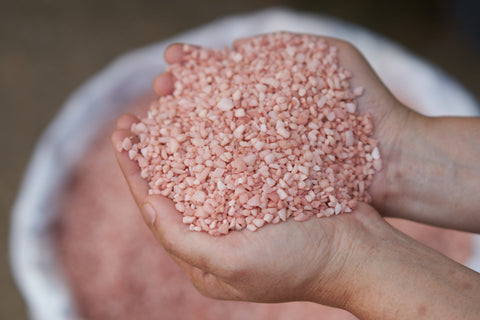
There are, of course, many specialist hedge fertilisers available from various manufacturers in garden centres and online. Most are marketed as fertilisers for trees, hedges and shrubs. Even though most hedge plants are shrubs or trees in the conventional sense, their nutritional requirements differ from those of free-standing specimens. Because they grow so closely together, they compete more intensely for both soil nutrients and sunlight. They therefore rely particularly heavily on adequate feeding. The application guidelines on some packaging do not account for this. It is important to keep a close eye on your hedge so you can identify any signs of deficiency at an early stage.
Commercially available so-called hedge fertilisers cannot cater to the specific needs of every possible hedging plant, given the huge variety of species that can be grown as hedges. A good-quality general-purpose fertiliser is therefore equally suitable. Ideally, this should be based on organic matter and enriched with all the necessary minerals. This way, you only need to fertilise once a year without having to worry about deficiencies.
To meet the individual requirements of different plants, it is best to choose a specialist thuja, box or conifer fertiliser. The reason you won't find a dedicated product for every single hedging plant is that many species — such as hornbeam, cherry laurel, hawthorn and firethorn — are relatively undemanding when it comes to soil nutrient composition. For these, you cannot go far wrong with a well-balanced slow-release fertiliser.
The best tools for caring for trees and hedges
More articles about tree and hedge care
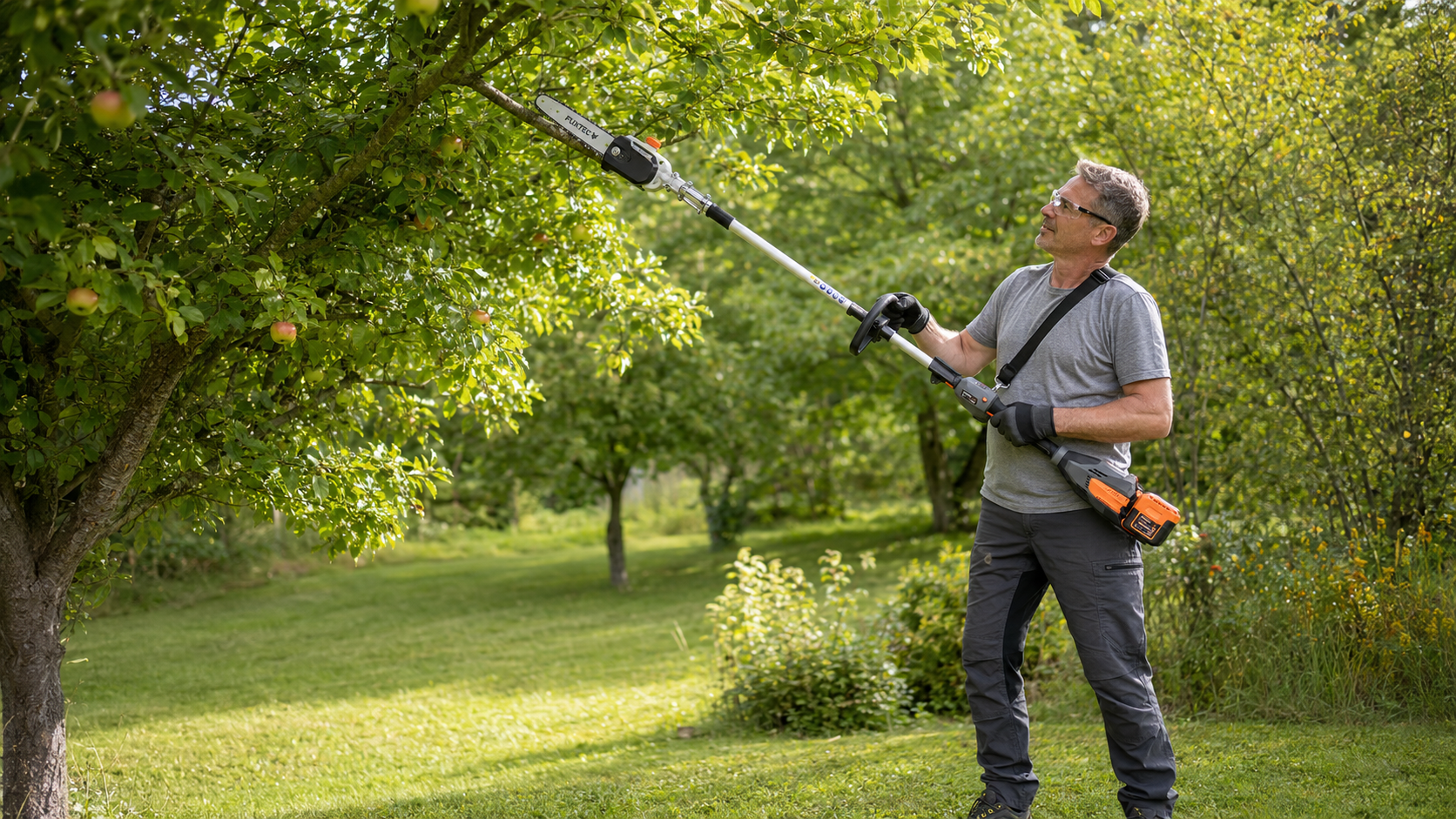
Summer Pruning Fruit Trees: The Complete UK Guide
Inhaltsverzeichnis Vorteile des Pflegeschnitts Schnittkalender für Obstgehölze So gehst Du Schritt für Schritt vor Äpfel und Birnenbäume Kirsche, Pflaume, Aprikose und Pfirsichbäume Jungbäume und ...
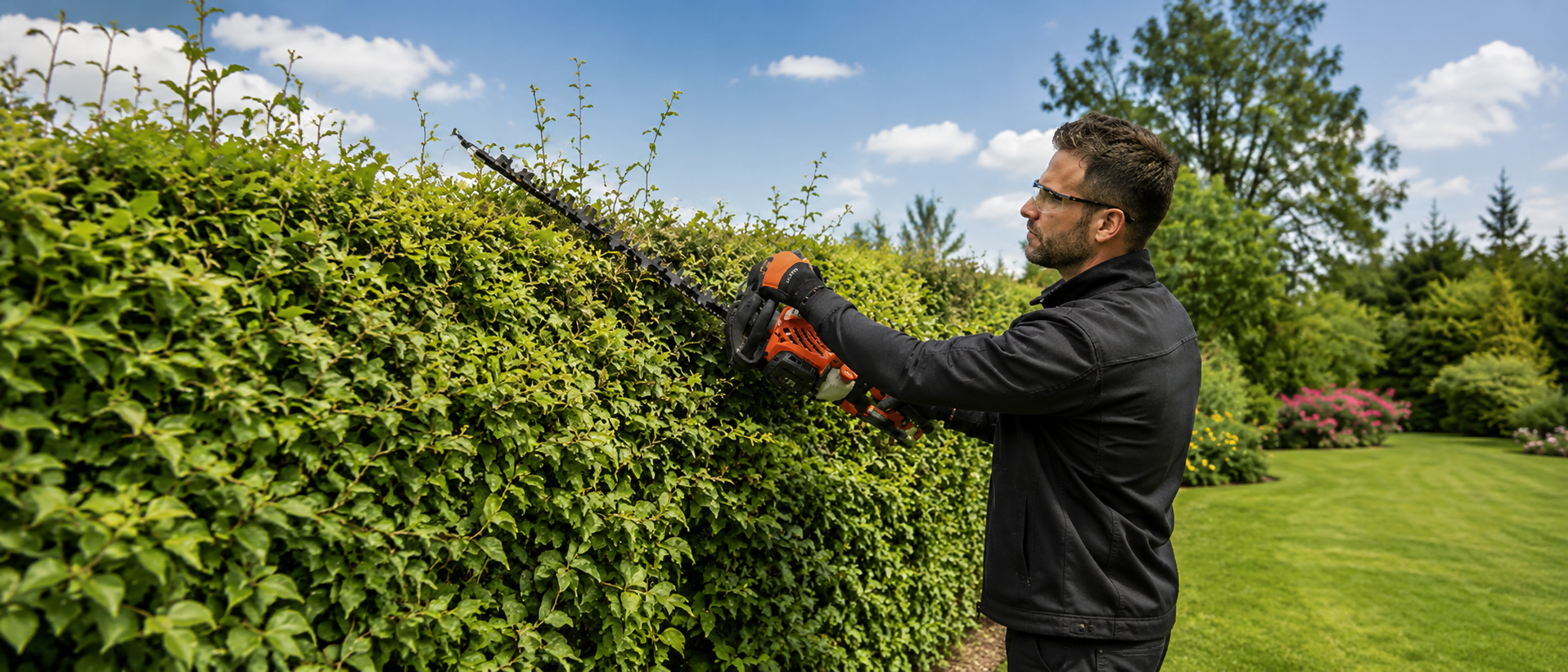
How to Cut an Overgrown or Tall Hedge | FUXTEC
An overgrown hedge can become too wide, patchy in places and riddled with thick branches. If it has also grown several metres tall, a quick trim with a standard hedge trimmer is no longer enough. ...
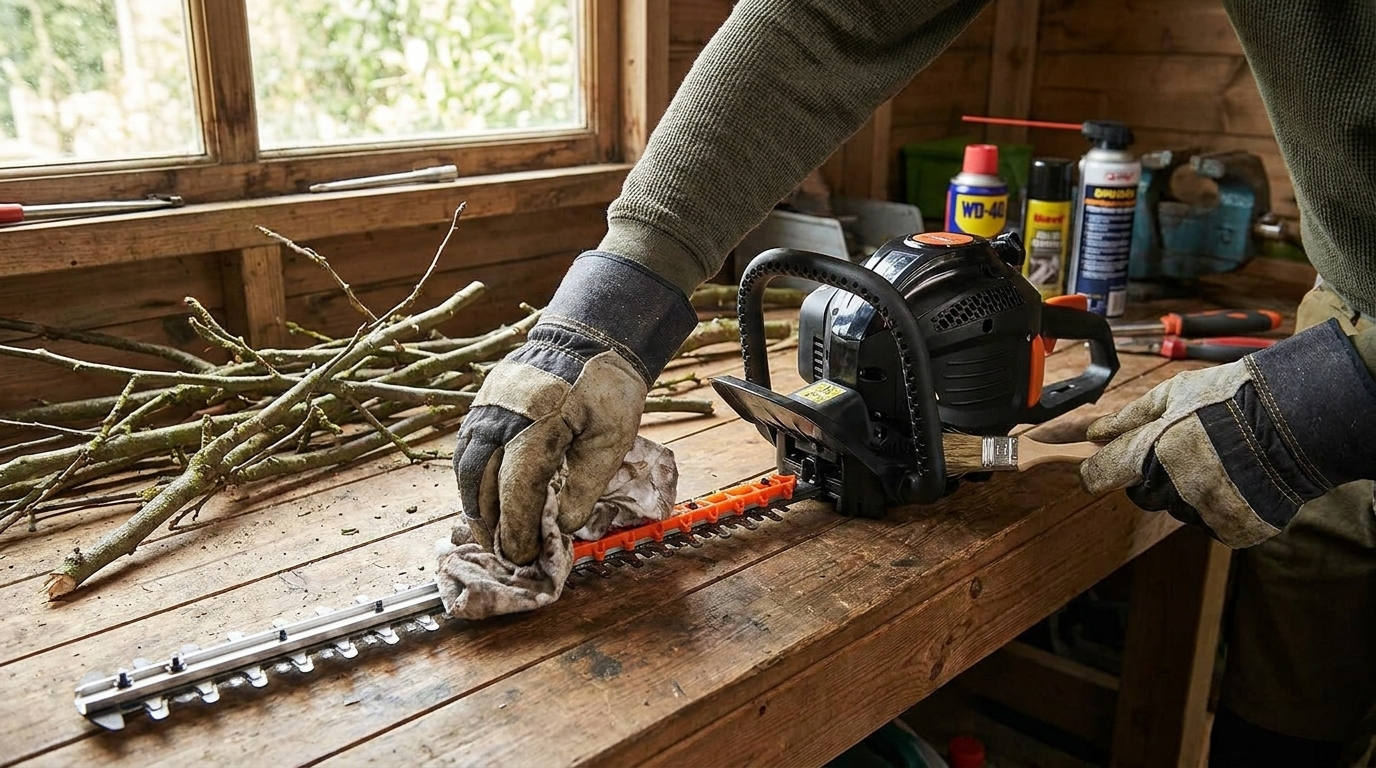
How to Clean & Maintain Your Hedge Trimmer
A well-maintained hedge trimmer is essential for a tidy garden. If you want to keep your hedges looking their best, you need a tool that works reliably – with clean, sharp blades. Yet many gardener...


