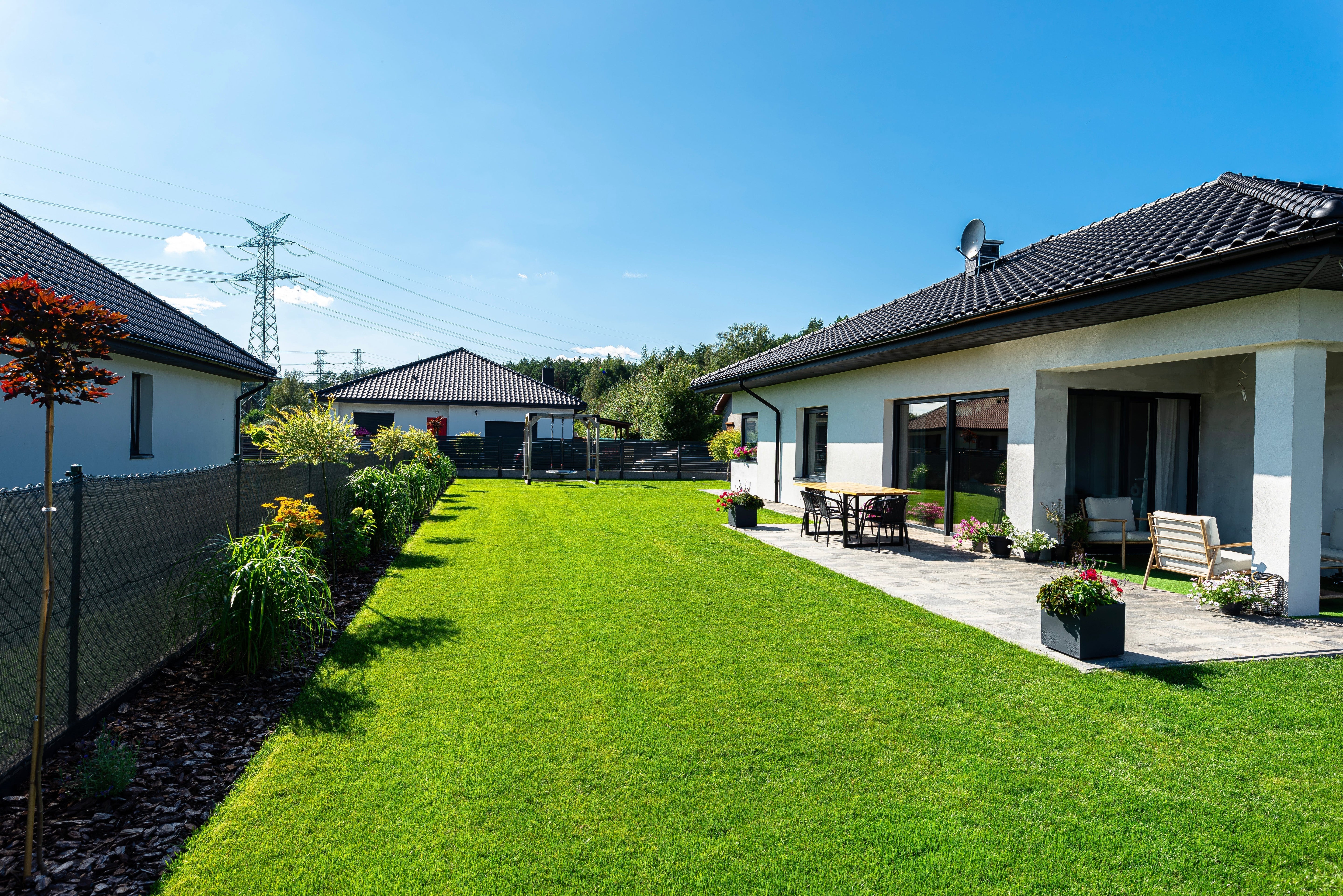
Dichondra repens, often simply called dichondra, is one of the most popular alternatives to a traditional lawn. It is particularly well suited to anyone who wants a lush, neat green surface without constantly reaching for the lawn mower.
Unlike conventional grass, dichondra barely grows upright. Instead, it forms a dense, low-growing carpet of foliage. The small, rounded leaves create a uniform, attractive appearance. At the same time, the plant is surprisingly resilient – tolerating both moderate foot traffic and dry spells.
If you are looking for a low-maintenance, visually pleasing lawn, dichondra repens is a very solid option.
What is Dichondra Repens and what makes it special?
Dichondra repens belongs to the family Convolvulaceae and originates from tropical and subtropical regions. In Europe, it has been used as ground cover for many years.
The key difference from a conventional lawn lies in its growth habit: the plant spreads horizontally. Its stems trail directly across the ground, rooting at the nodes as they go. Over time, this produces a dense, closed surface – with virtually no upward growth. As a result, you barely need to mow.
In mild climates, dichondra remains green for most of the year. In cooler regions it may lose some colour or slow its growth over winter, but reliably shoots back into growth in spring.
Advantages over a traditional lawn
A dichondra lawn offers several clear advantages. Maintenance requirements are significantly lower, as regular mowing is almost entirely unnecessary. Water use is also reduced, because the plant withstands dry periods better than many lawn grasses.
The surface looks even and compact, even in more challenging areas such as partial shade or sloping ground. You will also need less fertiliser and fewer tools overall, which simplifies upkeep further.
Sowing Dichondra Repens: Step by Step
Thorough preparation is essential for an even result. The best time to sow is in late spring, once temperatures are consistently above 10 °C.
Loosen the soil to a depth of around 15 to 20 cm and remove any stones, roots, and weeds. Then level the area carefully to prevent waterlogging.
Distribute the seeds evenly at a rate of approximately 20 to 30 grams per square metre. Cover them lightly with soil and firm down gently.
For the first two weeks, the soil should be kept consistently moist. Germination takes 10 to 20 days depending on temperature, and full coverage is typically achieved after around 6 to 10 weeks.
Watering correctly
Consistent moisture is crucial in the early stages. Once the root system has established itself, the plant becomes considerably more robust.
During summer, watering two to three times a week is usually sufficient. It is important that the water penetrates deep into the soil rather than simply moistening the surface.
During prolonged dry spells the area may turn slightly yellow, but it recovers quickly once watering resumes. Avoid watering during the hottest part of the day to prevent scorching.
Feeding and nutrition
Dichondra also benefits from targeted feeding. A nitrogen-rich fertiliser in spring promotes vigorous growth and a dense surface.
Feeding should be reduced during summer, while a potassium-rich fertiliser in autumn helps the plant build resistance to cold. Two to three applications per year are generally sufficient.
Ongoing care throughout the year
Maintenance remains manageable. In the early stages, remove weeds regularly so that the dichondra can spread undisturbed.
An occasional trim can be useful if certain areas become particularly thick. Bare patches can easily be reseeded or filled in by transplanting existing sections of the plant.
Light aeration every one to two years can help to improve soil drainage and airflow.
Winter behaviour
Dichondra repens is not a true evergreen. In mild areas it remains largely green, whereas in cooler parts of the country it may partially lose its colour.
The roots remain intact, however, so the plant shoots back vigorously in spring. During frosty periods, try to avoid walking on the area where possible.
Common problems and solutions
Yellowing leaves are usually a sign of insufficient water, nutrient deficiency, or compacted soil. A combination of watering, feeding, and aeration will generally remedy this.
Bare patches often result from excessive foot traffic or waterlogging and can be addressed by reseeding.
Slugs can also be a problem. In such cases, appropriate protective measures such as slug pellets or physical barriers will help.
A great choice for containers too
Dichondra is not only suitable as a lawn but also works beautifully on balconies and patios. In pots and planters it trails over the edges, creating an attractive cascading effect.
A free-draining compost and regular watering are key here. The variety 'Silver Falls', with its shimmering silver foliage, is particularly popular.
Summary
Dichondra repens is a practical alternative to a traditional lawn. Maintenance is minimal, water requirements are moderate, and the overall look is pleasingly uniform.