

So wird es was mit satten Grün in deinem Garten!
How to Sow a Lawn: Step-by-Step Guide
Achieving a dense, even lawn involves a great deal more than simply scattering seed. Lawn seeding always begins with thorough soil preparation, continues with choosing the right seed, and doesn't end until you've maintained consistent care throughout the first few weeks. Whether you're sowing your lawn in spring or autumn, the fundamental steps remain the same. Skipping any of the stages risks patchy areas, weak growth, or increased weed pressure.
In this FUXTEC Garden Guide, we'll walk you through each step so you can establish your lawn properly from the very beginning and avoid the most common mistakes.
Why Soil Preparation Is So Important
The soil is the foundation of every lawn. If it's too compacted, nutrient-poor, or poorly draining, this will directly affect germination and subsequent growth. Young grass seedlings in particular are extremely sensitive and require a loose, well-aerated growing medium.
At FUXTEC, we've found that the majority of problems that appear later can be traced back to this stage. A properly prepared seedbed significantly reduces uneven growth, yellow patches, and waterlogging issues.
Ideally, work the soil to a depth of 15 to 20 centimetres. This allows the roots to develop firmly, keeping the lawn resilient even during dry spells. For more detail on preparing your garden with a rotavator, see our FUXTEC Garden Guide "Rotavating Your Garden: Instructions, Pros and Cons".
When Should You Sow Your Lawn?
The best time for lawn seeding in the UK is autumn, roughly between late August and mid-October. Temperatures are moderate, the soil is still warm, and moisture levels favour germination.
Spring is also a suitable time in principle, but requires closer attention to watering. Dry spells can quickly dehydrate young seedlings.
Summer sowing is best avoided where possible. Conditions are typically too dry and too warm, which considerably hinders germination.
FUXTEC also recommends completing sowing at least two weeks before any risk of ground frost.
Preparing the Soil: How to Go About It
Clear the Area
Start by removing all obstructions such as stones, roots, branches, and any other debris. A clean surface ensures that the seeds make optimal contact with the soil later on.
Even small stones can prevent even germination. Take care to be thorough at this stage.
Loosen the Soil
Break up the soil with a rotavator or spade to a depth of approximately 15 to 20 centimetres. This improves aeration and makes it easier for roots to penetrate.
For heavy clay soils, working in sand will help improve drainage. If the soil is very sandy, incorporate organic matter such as compost to boost water retention.
After cultivation, leave the soil to settle for a few days before proceeding.
Level and Finish the Surface
Once the soil has been loosened, level the surface. Use a rake to smooth it out and remove any remaining clumps.
Work in several directions to achieve an even result. Uneven areas will later lead to waterlogging or dry patches.
Walk the area and fill in any small dips. A well-levelled surface is the foundation for a visually even lawn.
Lightly Firm the Soil
Next, lightly roll the soil. This ensures there are no air pockets and that the seeds have optimal contact with the soil surface.
Use a lawn roller and work in two directions. The soil should be firm, but not hard.
Over-compacting the soil will hinder root development and should be avoided at all costs.
Sowing the Lawn Seed
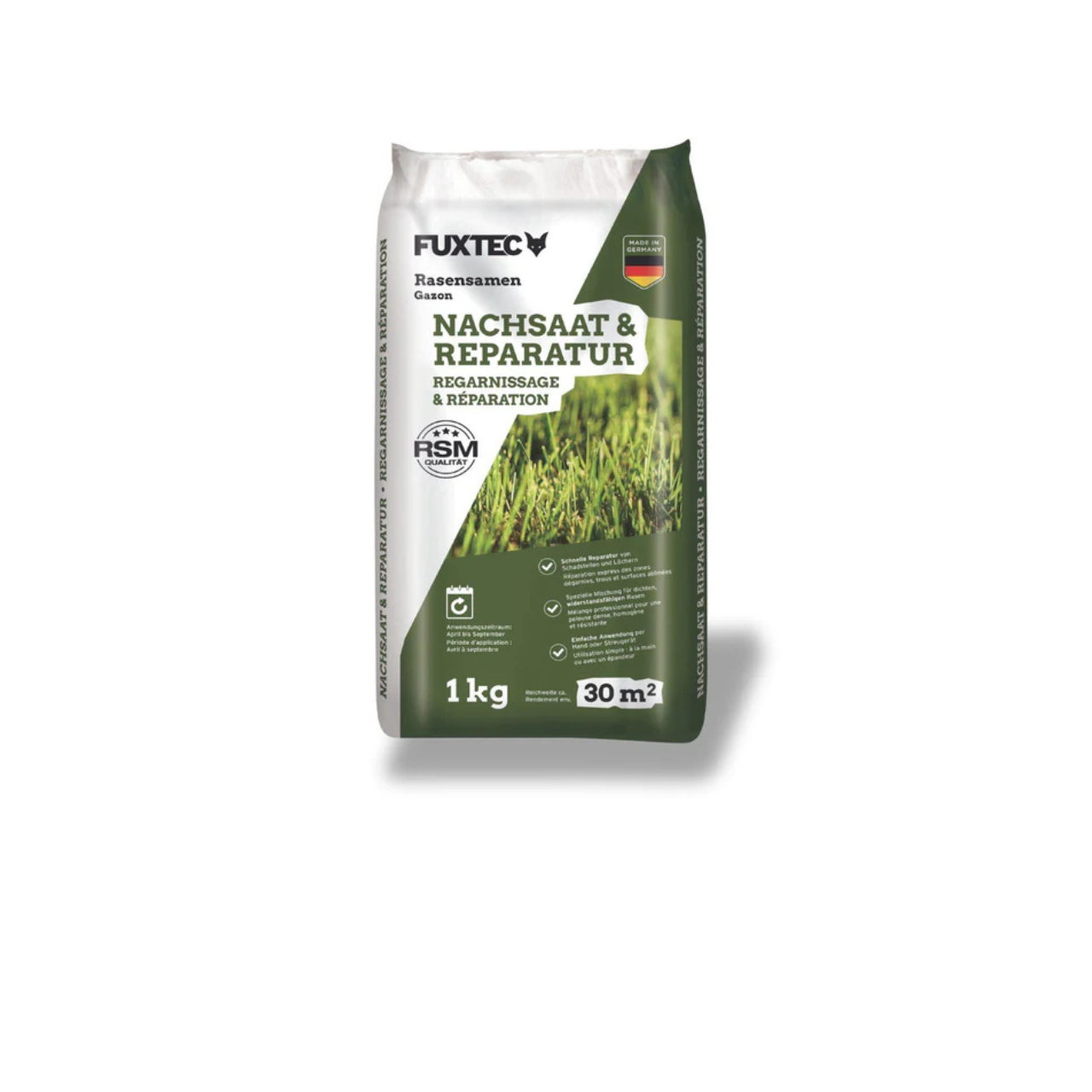
Lawn seed should be spread as evenly as possible. The recommended rate is approximately 30 to 40 grams of FUXTEC lawn seed per square metre.
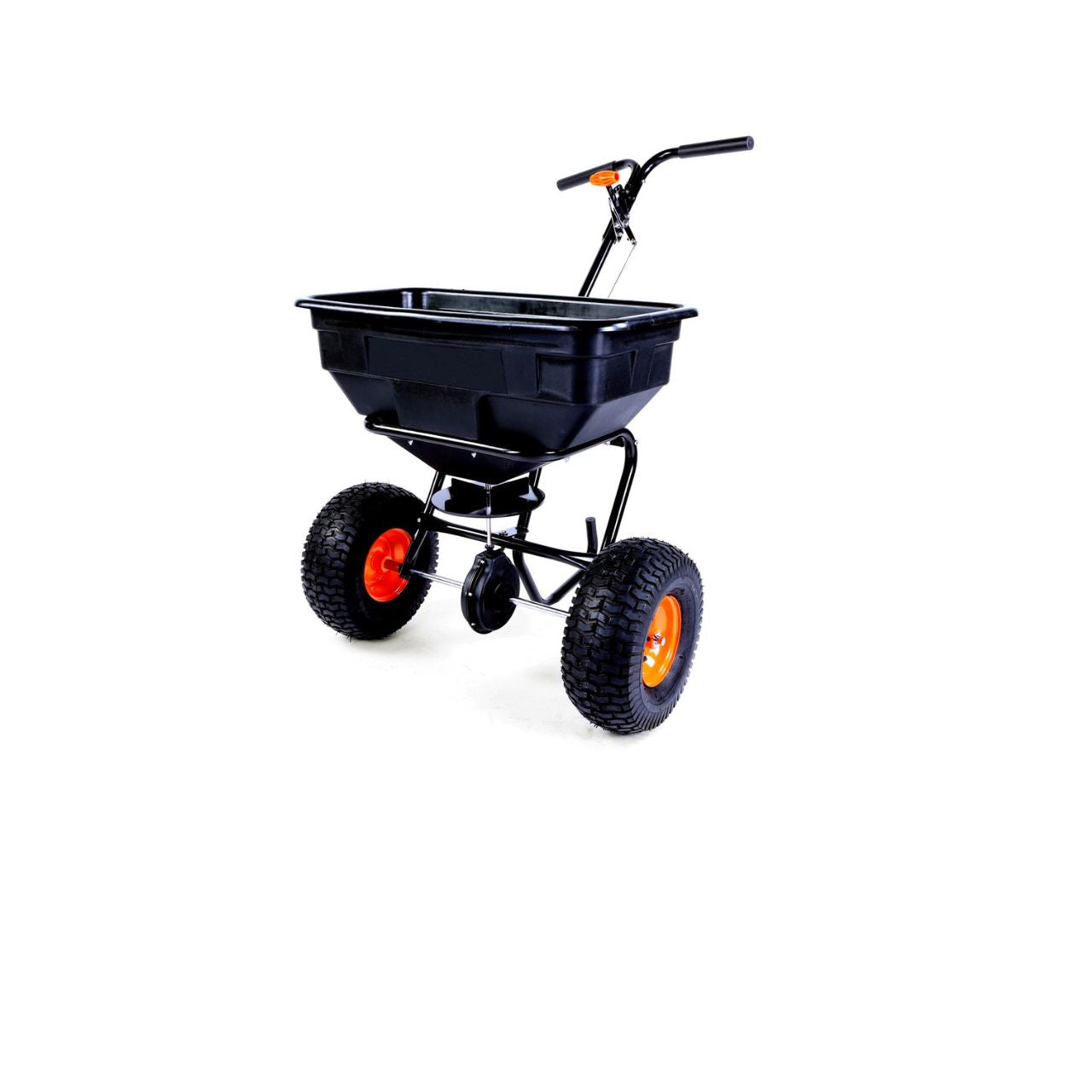
For larger areas, a seed spreader is recommended. For smaller areas, you can sow by hand. Divide the seed into two equal portions and work in a crosswise pattern to achieve even coverage.
Afterwards, lightly rake the seed into the soil to a depth of around 0.5 to 1 centimetre.
Watering After Sowing
Immediately after sowing, the most critical phase begins: watering.
Keep the soil consistently moist without waterlogging it. During the first two weeks in particular, water regularly — ideally morning and evening.
Use a fine spray setting so the seeds are not washed away.
As the grass begins to establish, you can extend the intervals between watering sessions and water more deeply. This encourages deeper root growth and makes the lawn more resilient.
Germination and Early Development
Germination time depends on the grass variety. You can typically expect to see results within 7 to 14 days.
If germination doesn't occur, it is usually due to inconsistent moisture, incorrect sowing depth, or poor-quality seed.
FUXTEC recommends avoiding additional fertiliser during the first few weeks, as young plants are still very sensitive at this stage.
The First Mow
Give the lawn its first cut once it has reached a height of around 7 to 8 centimetres.
Set your FUXTEC lawn mower to a cutting height of approximately 4 to 5 centimetres. Never cut more than one third of the blade length at a time.
The soil should be dry at the time of mowing, so that the young plants are not damaged.
Nutrients and Ongoing Care
A healthy lawn needs the right nutrition from the very start.
Before sowing, you can incorporate a pre-seeding fertiliser to support root development.
After a few weeks, once the lawn is visibly established, a light nitrogen feed can help to improve density.
At FUXTEC, we always recommend careful dosing to avoid causing damage to the lawn.
Avoiding Common Mistakes
Many problems arise from simple errors: inadequate soil preparation, incorrect watering, or mowing too early.
The pH level of the soil also plays an important role. The ideal range is between 6.0 and 7.0.
If the pH is too low or too high, the lawn will struggle to absorb nutrients effectively.
By keeping these basics in mind, you can avoid the most common problems right from the start.
Summary
Lawn seeding is a structured process in which each stage builds on the last. From soil preparation through to sowing and ongoing care, careful execution at every step determines the final result.
With the right approach, you'll establish a dense, resilient lawn that remains in excellent condition for years to come.
Entdecke unsere Auswahl an Gartengeräten



Alles, was dein Rasen braucht



Weitere Beiträge zum Thema Rasenpflege

Mulchen mit Pinienrinde: So nutzt du organischen Mulch, um Unkraut zu verhindern
Das Mulchen mit Pinienrinde gehört zu den effektivsten Methoden im modernen Gartenbau und in der nachhaltigen Landwirtschaft. Dabei wird eine Schicht Mulchmaterial auf die Bodenoberfläche aufgebrac...

Bodenverbesserung im Garten: So verbesserst du deinen Gartenboden im Frühjahr für gesunde Pflanzen
Inhaltsverzeichnis Warum Bodenverbesserung im Garten im Frühjahr so wichtig für einen gesunden Gartenboden ist Gartenboden nach dem Winter prüfen: Bodenstruktur, Verdichtung und Bodenart erke...

Richtig Düngen im Garten: Schritt für Schritt erklärt
Inhaltsverzeichnis Warum Düngen im Garten so wichtig ist Bodenanalyse: Grundlage für die richtige Düngung Organische vs. mineralische Dünger: Was ist besser? Kompost, Hornspäne & Co.: Organi...


