
Baumpflege leicht gemacht!
Arborist Saw vs Chainsaw: Key Differences Explained
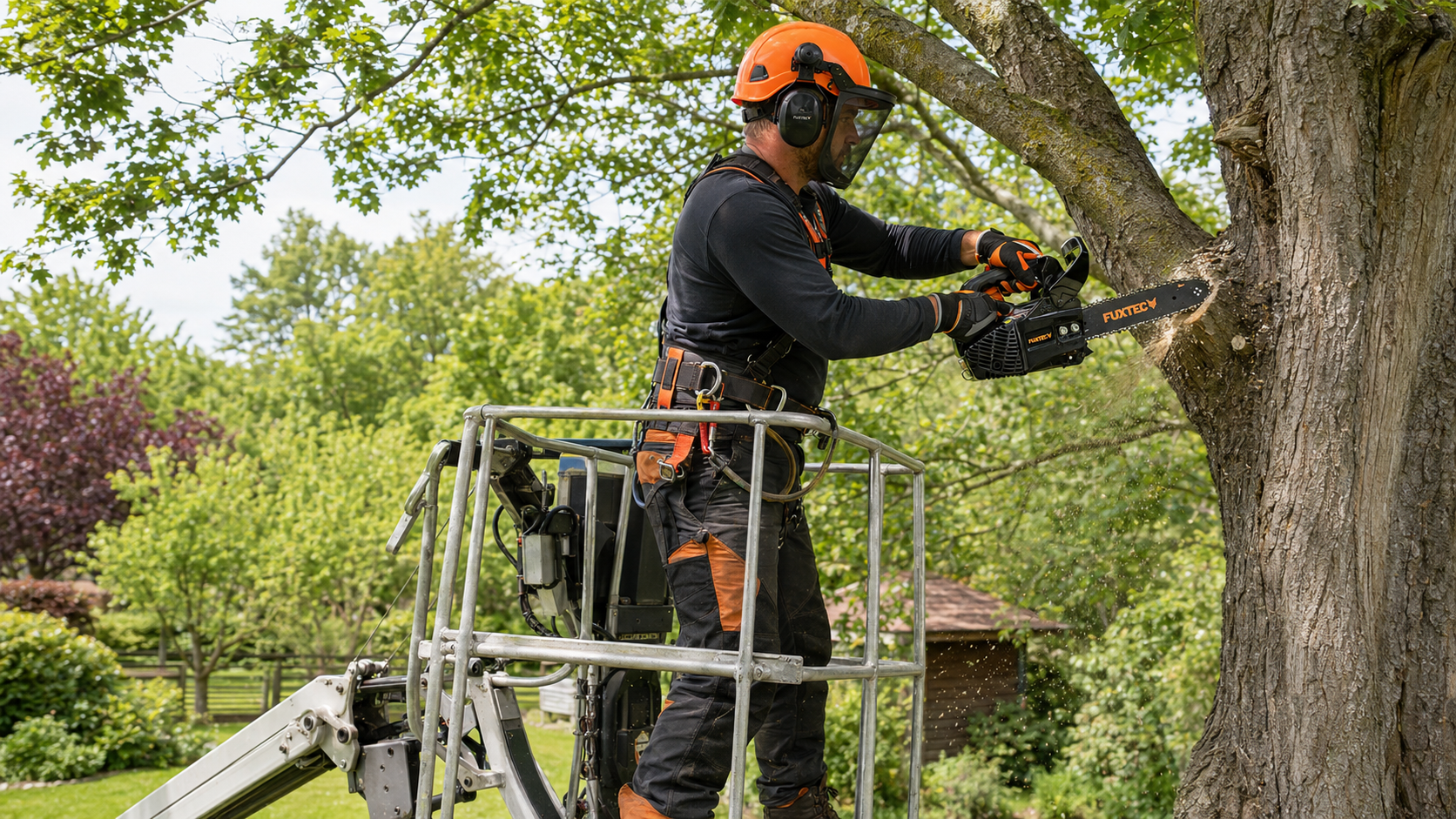
At first glance, an arborist saw looks like a particularly compact chainsaw. In reality, however, it's a specialist tool with a clearly defined range of use. The short build, low weight and top-mounted handle make it much easier to work inside a dense tree canopy. But this very design also brings higher demands in terms of training, technique and safety.
In this FUXTEC garden guide, you'll learn what sets an arborist saw apart from a conventional chainsaw, which tasks the specialist design is intended for, and when a standard model remains the better choice. We'll also introduce you to the FUXTEC arborist chainsaw.
What is an arborist saw? Using a top-handle chainsaw compactly, precisely and professionally in tree care
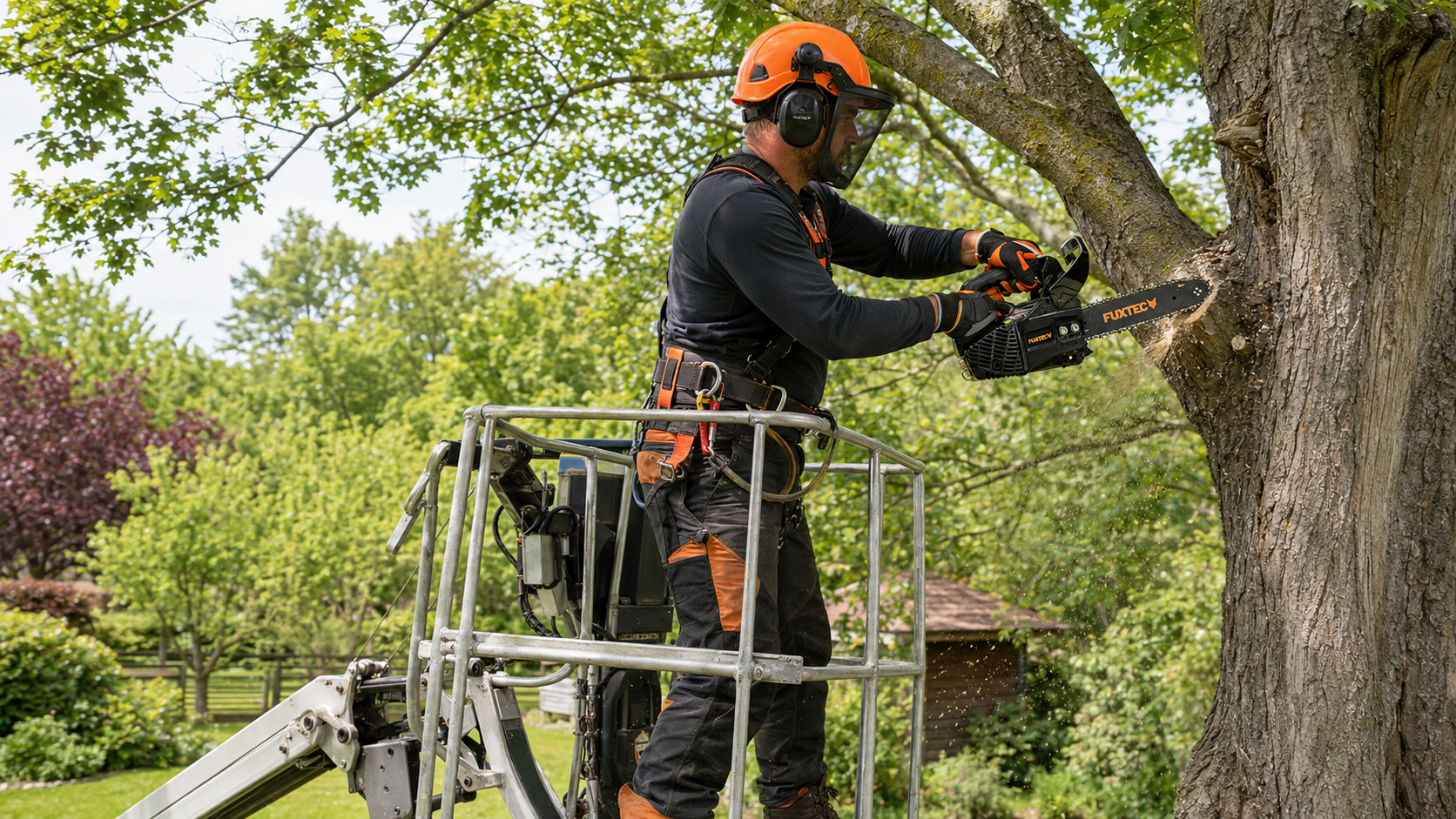
Arborist saws are specialist power tools for work carried out in the canopy of a standing tree. Their rear handle isn't positioned well behind the engine housing, but above it. This makes the tool noticeably shorter and easier to position precisely in confined spaces. In professional tree care, this saw is a tool with clearly defined limits.
A top-handle saw like this is used mainly for targeted crown reduction and limbing. It isn't designed to cut through large volumes of timber, but rather to give a trained arborist controlled movements and clean cuts in hard-to-reach spots. A professional arborist saw is therefore no substitute for a felling saw or a saw for cutting firewood to length. Even for a professional, using the tool only for its intended purpose remains essential.
Arborist saw vs standard chainsaw: the difference in handle position, power, cuts and cutting diameter
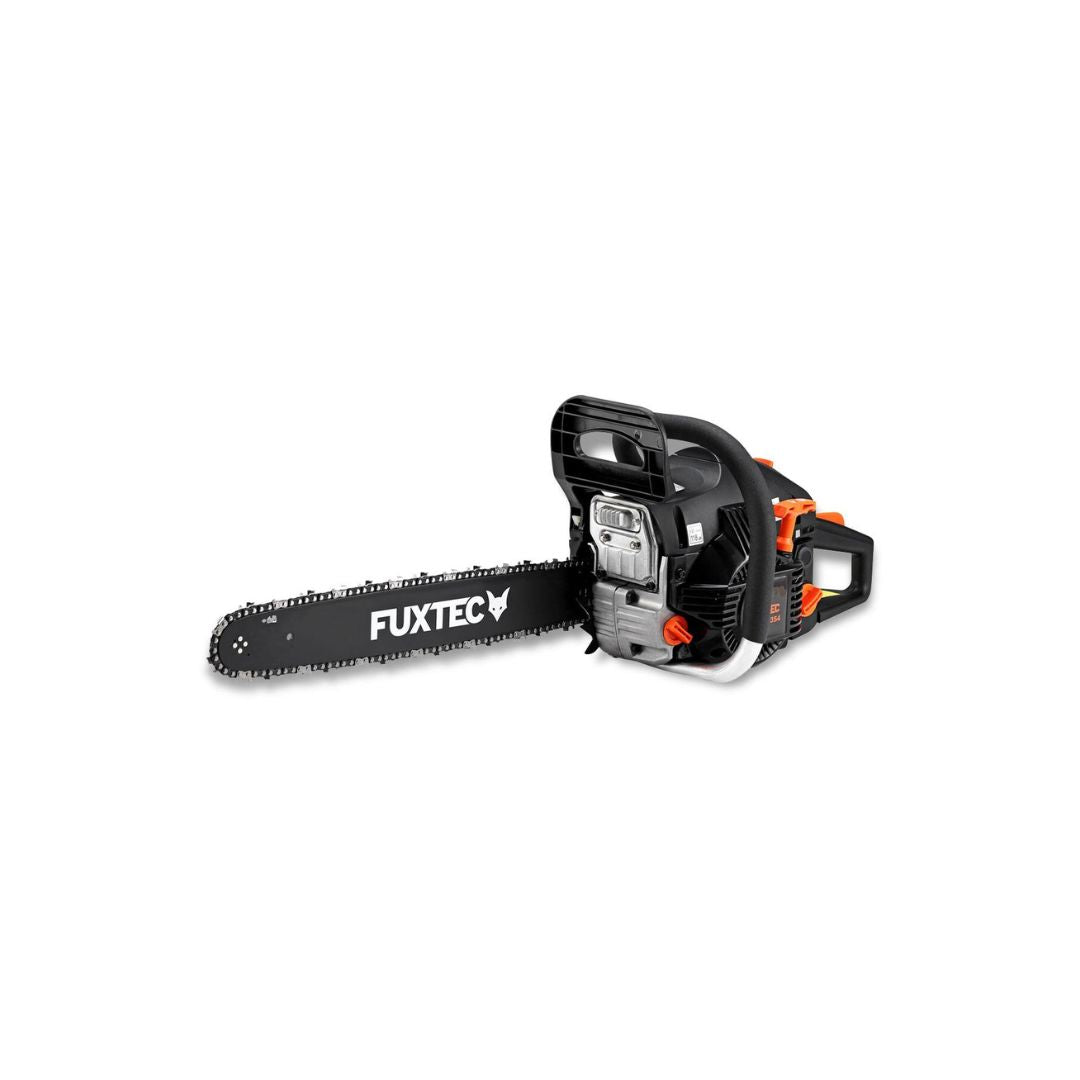
A classic rear-handle chainsaw has a handle positioned well towards the back. The greater distance between both hands improves leverage and makes it easier to hold the saw steady when working at ground level. Depending on the model, these chainsaws also tend to offer more power, longer bars and extra capacity for thicker trunks.
An arborist chainsaw, by contrast, is short, light and compact. Its advantage lies in manoeuvrability, not in maximising cutting diameter. For felling work, processing fallen trunks and producing firewood, you should therefore use a conventional two-handed model.
| Feature | Top-handle design | Standard rear-handle design |
|---|---|---|
| Handle position | Above the engine housing | Behind the engine housing |
| Build | Short, light and especially manoeuvrable | Longer, with greater distance between the hands |
| Typical task | Limbing and reducing standing tree crowns | Felling, cutting to length, firewood and ground-level work |
| User | Appropriately trained professionals | Users trained for the relevant task |
| Strength | Manoeuvrability in confined spaces | Control, leverage and a wider power range |
Top-handle chainsaw and one-handed use: pruning branches safely
Terms like "one-handed saw" are widely used in shops and search results, but they can be misleading. A top-handle chainsaw is not meant to be operated with just one hand out of convenience. You should always keep your right hand on the rear handle and your left hand on the front handle.
The compact layout makes professional work up in the tree easier. It does not, however, override fundamental safety rules. Only use the tool if you're properly trained for this type of work, wear the necessary personal protective equipment, and have fully understood the operating instructions. A ladder is not a safe working platform for this kind of sawing work.
Safety first: To operate an arborist chainsaw professionally in the UK, you should hold a recognised chainsaw qualification (such as an NPTC/City & Guilds unit covering aerial or climbing chainsaw work). Always get proper training before using a top-handle chainsaw in a tree.
Battery arborist saw or petrol arborist saw: which drive type works efficiently?
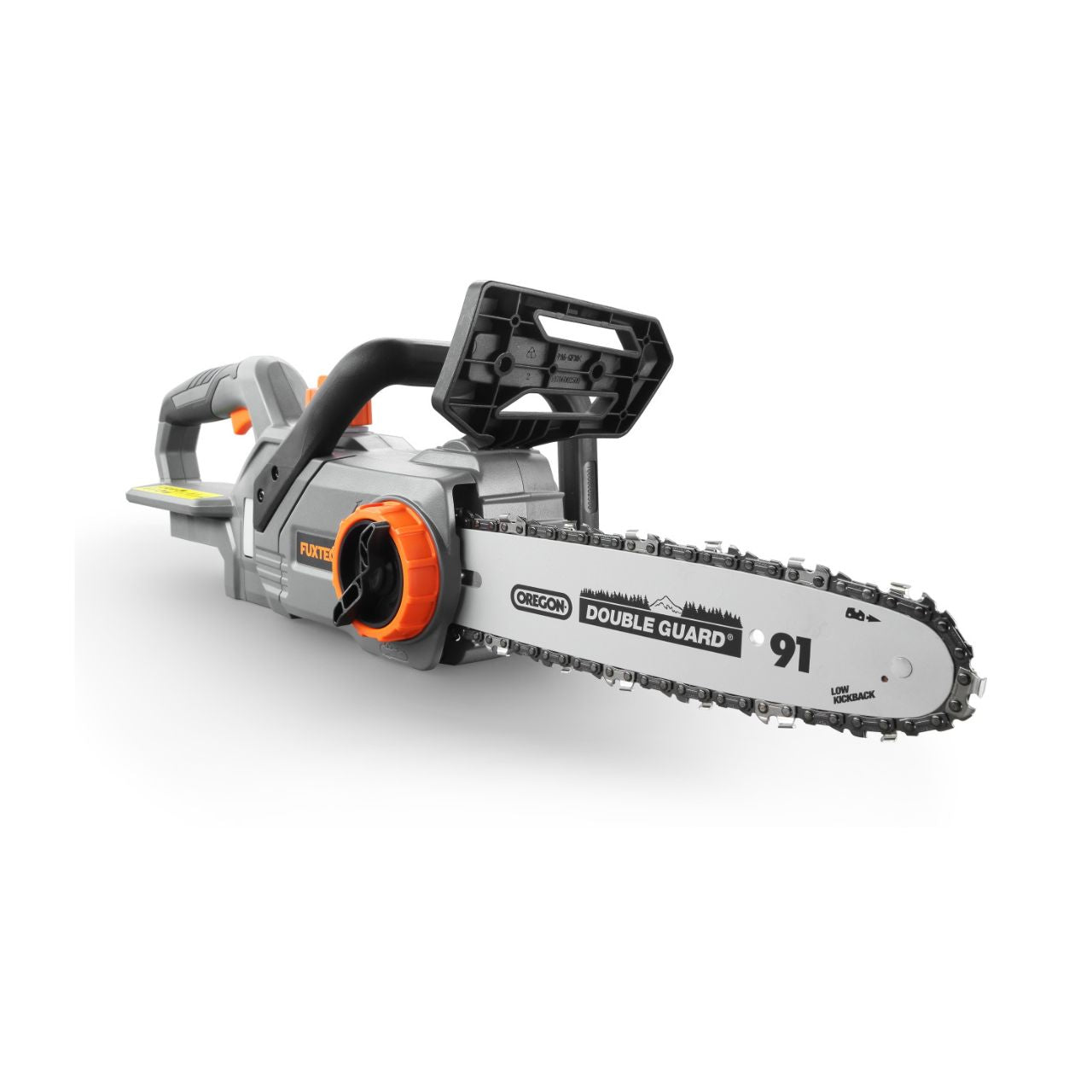
A battery-powered arborist saw starts at the push of a button, produces no local exhaust emissions, and runs more quietly. This can be an advantage in residential areas and other noise-sensitive locations. On the other hand, run time and power output depend on the battery used, its charge level and the outdoor temperature.
A petrol arborist saw can be used again straight away once refuelled and offers a favourable balance of weight, endurance and power. However, it requires fuel mix, regular engine maintenance and careful handling of fuel. The term "petrol arborist saw" simply describes the drive type — it's not a licence to use the tool for any task. Which variant suits you best therefore depends on how long you'll be working, the environment, and the equipment platform you already have — not on maximum power alone.
25cm, 30cm or 35cm guide bar: understanding bar length and usable cutting length
Guide bar length and usable cutting length aren't automatically the same thing. A 30cm bar, for example, may offer a shorter actual cutting length, because part of the guide bar sits inside the housing. Figures such as 25cm or 30cm are simply shorthand descriptions. A model with a 35cm bar isn't automatically better: a longer cutting set needs more power and can reduce manoeuvrability among branches.
Choose the bar length to suit typical branch diameters and the manufacturer's approved specification. What matters for safe working isn't fitting the longest possible bar, but making sure the entire cutting attachment is correctly matched to the tool and the task.
FUXTEC FX-KS226 petrol chainsaw: 25.4cc engine capacity for precise pruning cuts
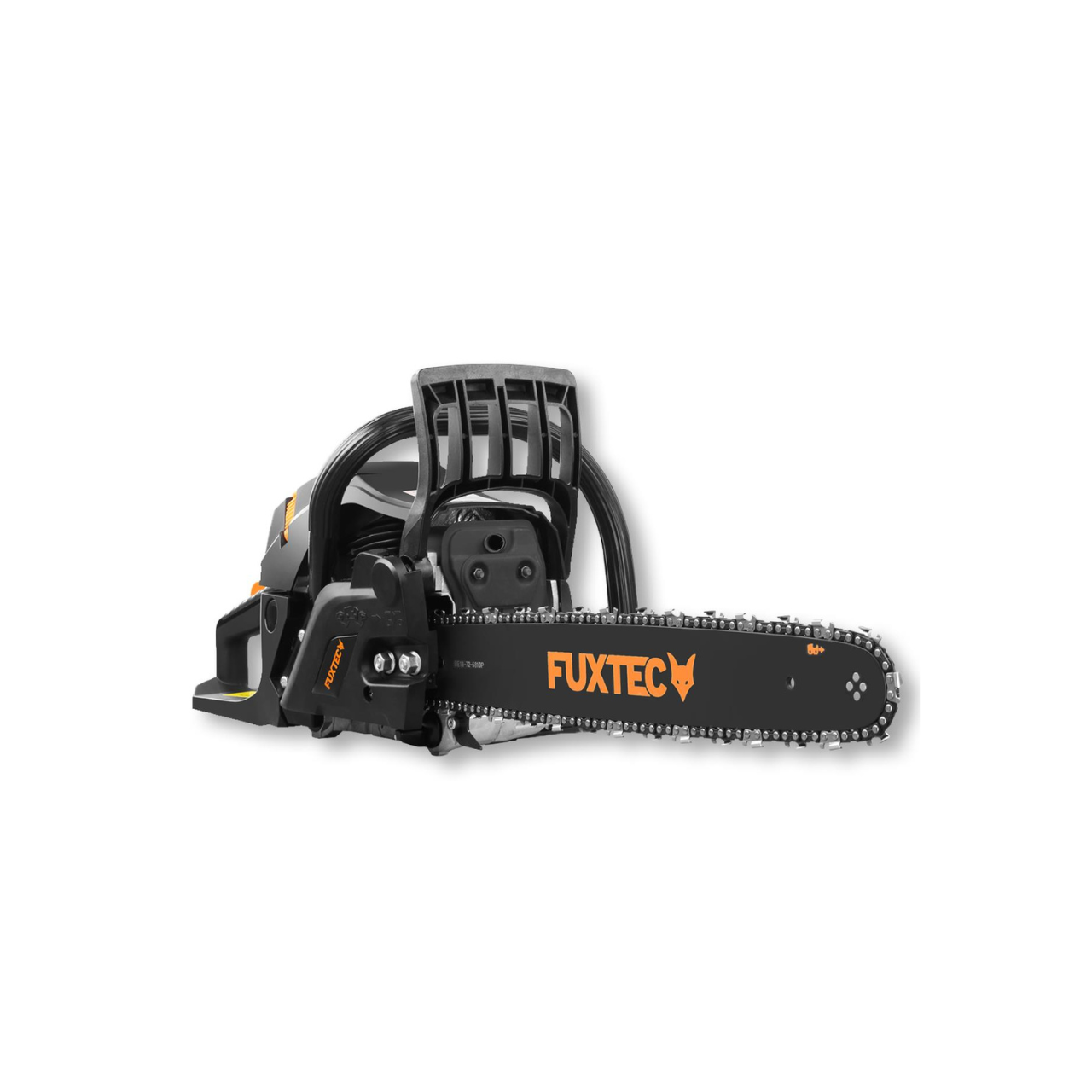
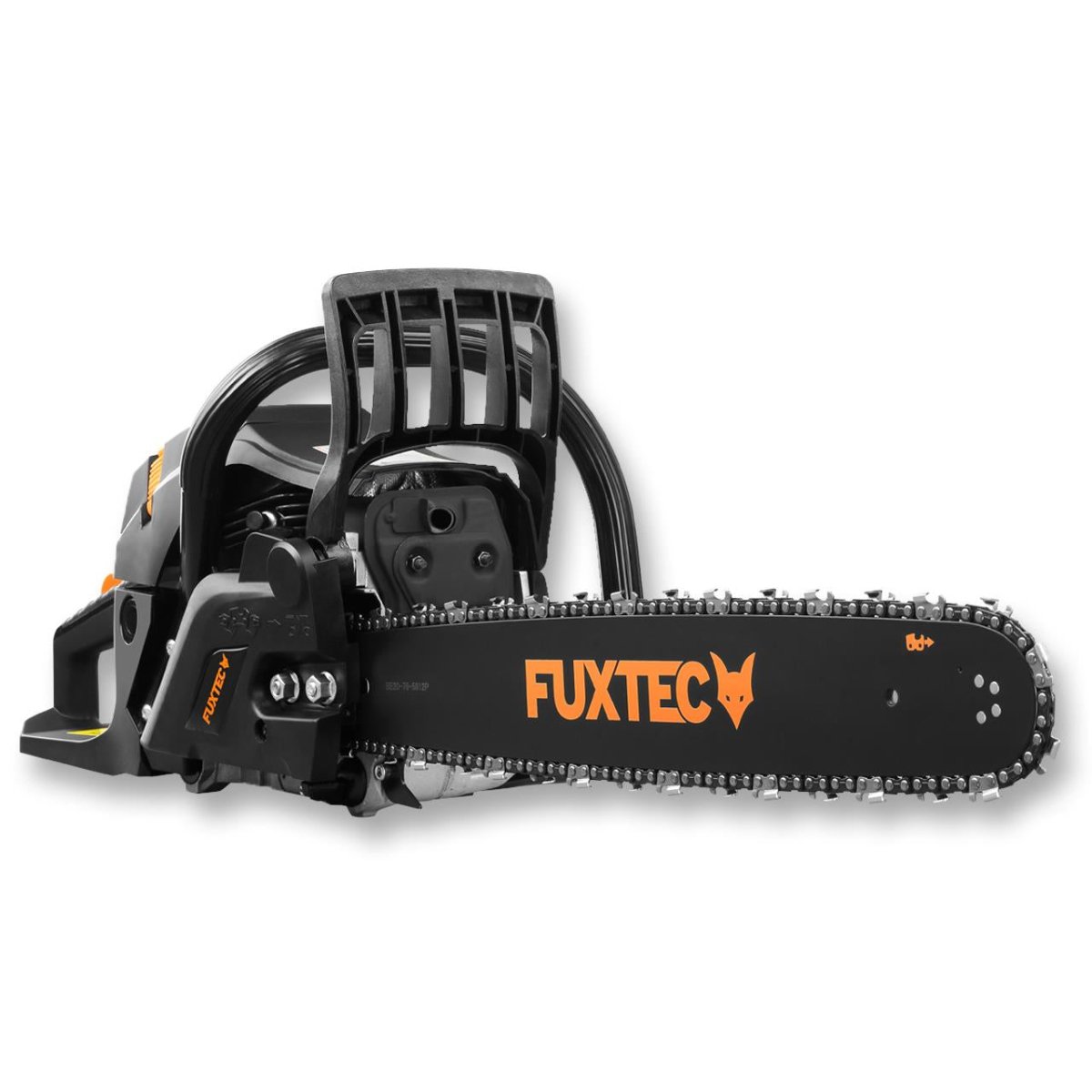
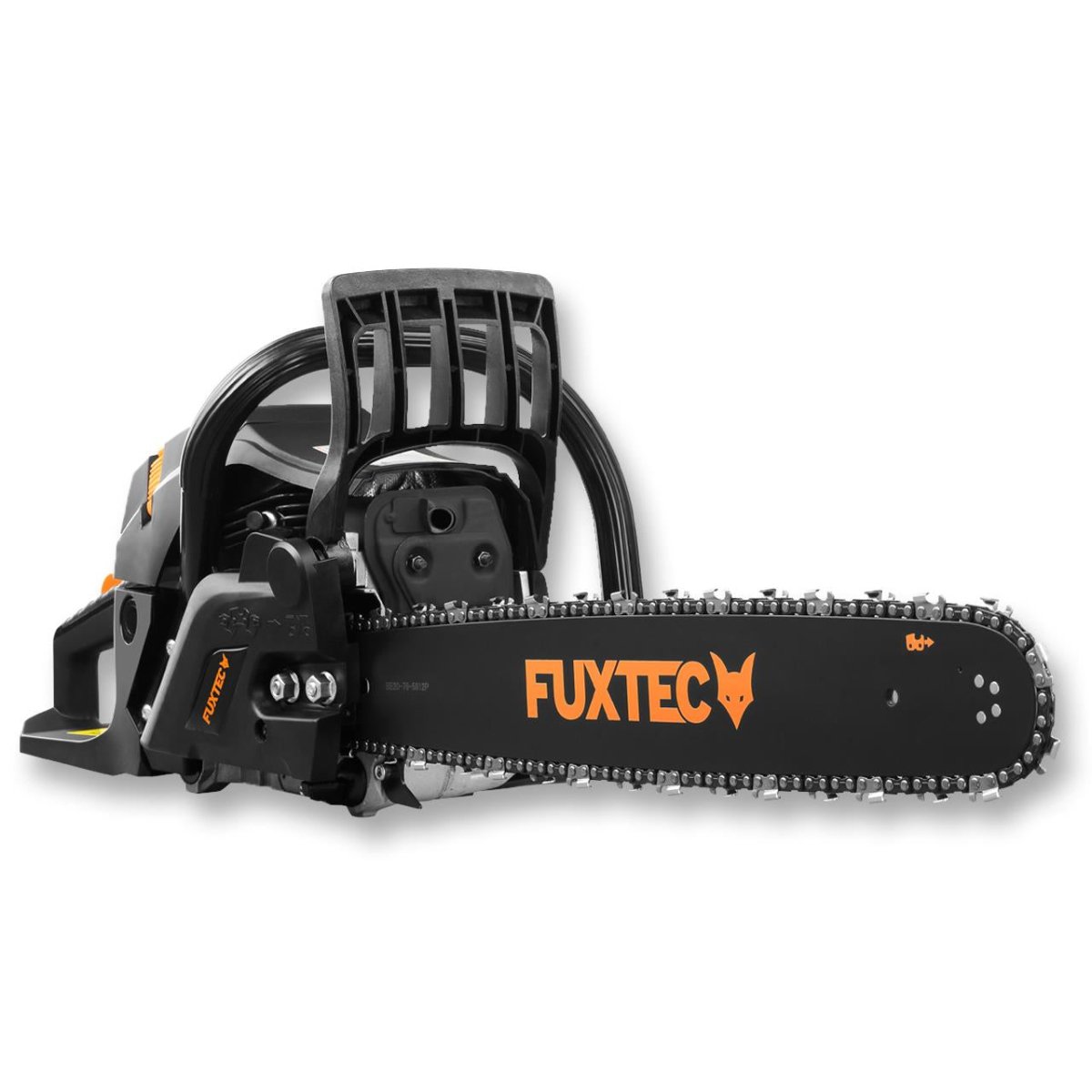
The FUXTEC FX-KS226 is designed as a small, manoeuvrable arborist saw for limbing, branch removal and crown reduction. According to the product description, it weighs around 3kg. As a petrol chainsaw, its two-stroke engine delivers 0.7kW from a 25.4cc capacity. Maximum chain speed is 23m/s. When pruning, it must always be used within these intended operating limits.
The standard guide bar measures 30cm, giving a cutting length of 25cm. Alternatively, a 12-inch bar can be fitted, available from FUXTEC. The easy-pull recoil starter assists starting. For chain lubrication, the saw has a 160ml oil tank, while the fuel tank holds 230ml; the recommended fuel mix ratio is 1:40.
View product: FUXTEC 12-inch chainsaw bar FX-KS226E1019
Safety features include kickback protection, a mechanical chain brake, throttle lock and chain catcher. This makes the FX-KS226 a capable tool, but it doesn't change the need for proper training and two-handed operation.

FUXTEC FX-KS226
For trained users who need a lightweight specialist tool for limbing and controlled branch removal when working in the canopy.
View product: FUXTEC FX-KS226 petrol chainsaw
What tasks and branch cuts is an arborist chainsaw designed for?
The strength of this specialist design shows itself in controlled cuts within a standing tree's canopy. There, the user can remove individual branches, thin out the crown, or carry out a planned branch drop. This type of work belongs in skilled hands, since branch tension, fall direction, kickback zone and protecting the surrounding area all need to be assessed before every cut.
For pruning branches from the ground, depending on the height involved, loppers, a telescopic pruning saw or a long-reach pole pruner are the more sensible option. For thick trunks at ground level, felling cuts and firewood, use a rear-handle saw approved for that purpose. That way, each design is used where it offers the greatest control and efficiency.
View product: FUXTEC 5-in-1 multi-tool FX-MT252ER
Accessories, chains and spare parts for consistently clean cuts
A sharp, correctly tensioned and adequately lubricated chain is essential for precise cutting. Chains must always match the guide bar and drive sprocket. Before starting work, check the guide bar, chain brake, throttle lock, chain catcher, fixings and lubricant level. Only use accessories and spare parts approved for your specific model.
Personal protective equipment should include a safety helmet with eye and hearing protection, suitable gloves, chainsaw-resistant clothing and safety boots. For work in the canopy, appropriate climbing or aerial work platform equipment and the corresponding training are also essential. Maintenance improves reliability, but it never replaces careful, safe work planning.
Which saw suits you: a professional arborist saw or a standard chainsaw?
If you want to fell trunks, cut fallen timber to size or process firewood, a standard chainsaw with a rear handle is the right category. For suitably qualified users working professionally in standing tree canopies, on the other hand, the short specialist design offers far greater freedom of movement.
The decision should always start with the task at hand: where is the work being carried out, how thick is the timber, what training has been completed, and how can the work area be made safe? Anyone who answers these questions honestly will quickly see that the two designs aren't competing with each other, but rather serve different purposes.
Conclusion: arborist saws are specialist tools, not smaller all-purpose chainsaws
The defining feature isn't the low weight alone, but the entire design built for work in the tree canopy. The top-mounted handle makes the tool short and manoeuvrable, but it also reduces the distance between the hands compared with a rear-handle model. That's why training, two-handed control and full protective equipment are always essential.
With the FX-KS226, FUXTEC offers a lightweight model with 0.7kW output, a short cutting attachment, automatic lubrication and a mechanical chain brake. Use it strictly as intended. For ground-level work, felling and firewood, a conventional two-handed chainsaw remains the better and safer choice.
Is your chainsaw getting old?
Discover the powerful FUXTEC chainsaws.
When should I use a top-handle chainsaw instead of a standard chainsaw?
A top-handle chainsaw is designed for work in a standing tree's canopy, such as limbing and crown reduction. Use a standard rear-handle chainsaw for felling, cutting timber to length, or processing firewood at ground level. Each design serves a specific purpose and neither is a substitute for the other.
Can you operate a top-handle chainsaw with one hand?
No. Although the compact design makes it easier to position in confined spaces, you must always use both hands—keeping your right hand on the rear handle and your left on the front. One-handed operation is unsafe and violates fundamental chainsaw safety rules.
Do I need special training to use an arborist saw?
Yes. In the UK, you should hold a recognised chainsaw qualification such as an NPTC/City & Guilds unit covering aerial or climbing chainsaw work. Proper training is essential before using a top-handle chainsaw in a tree, as it involves assessing branch tension, fall direction and kickback zones.
Is a battery arborist saw better than a petrol one?
Each has trade-offs. Battery saws offer instant starting, no exhaust emissions and quieter operation—ideal for residential areas. Petrol saws provide longer run time and better power output once refuelled. Your choice depends on working duration, environment and your existing equipment platform rather than maximum power alone.
What does guide bar length actually mean on an arborist chainsaw?
Guide bar length (like 30cm) is a shorthand description, but usable cutting length is often shorter because part of the bar sits inside the housing. A longer bar isn't automatically better—it requires more power and reduces manoeuvrability among branches. Choose bar length to suit typical branch diameters and the manufacturer's specification.
What's the difference between an arborist saw and a standard rear-handle chainsaw?
An arborist saw has its handle mounted above the engine for compactness and manoeuvrability in tree canopies, whilst a rear-handle chainsaw has its handle positioned well behind the engine for greater leverage and control at ground level. Standard chainsaws offer more power and can handle thicker trunks, making them unsuitable for precision pruning work aloft.
Do I need personal protective equipment when using an arborist saw in a tree?
Yes, absolutely. You must wear a safety helmet with eye and hearing protection, suitable gloves, chainsaw-resistant clothing, and safety boots. For work in the canopy, you also need appropriate climbing or aerial work platform equipment and corresponding training for safe working at height.
Looking for the right tools to make your own firewood?
Log splitters, axes and more from FUXTEC
More chainsaw tips
Arborist Saw vs Chainsaw: Key Differences Explained
At first glance, an arborist saw looks like a particularly compact chainsaw. In reality, however, it's a specialist tool with a clearly defined range of use. The short build, low weight and top-mo...
Brennholz lagern: Alles, was Du wissen solltest!
Das Wichtigste in Kürze Richtige Lagerung von Brennholz: Wie Du Brennholz am besten lagerst, um Feuchtigkeit, Schimmel und Fäulnis zu vermeiden, sowie die ideale Lagerplatzwahl und Stapeltechnik....
Kettensäge springt nicht an: Häufige Ursachen und ihre Lösungen
Das Wichtigste in Kürze Sicherheitsvorkehrungen vor der Fehlersuche treffen zu den häufigsten Ursachen zählen Kraftstoffprobleme, eine verschmutzte Zündkerze, ein verstopfter Luftfilter, ein versc...


