A garden pump is the crucial factor when it comes to supplying your garden with water efficiently. Whether you're drawing water from a well, a rainwater harvesting tank, or a water butt – without the right equipment, water cannot be pumped and distributed reliably.
In this FUXTEC garden guide, we show you how to find the right garden pump, which systems have proven their worth, and how to set up your entire garden irrigation in a way that is efficient and long-lasting.
Garden Pumps: Why They Are Indispensable for Irrigation and Water Distribution
Many garden owners face the same problem: the available water pressure is insufficient, or the water source sits below the area that needs to be irrigated. This is exactly where a water pump comes in.
With a suitable garden pump, water can be drawn, distributed, and used through an existing irrigation system. A pump is especially indispensable when using harvested rainwater or drawing water from a well.
Garden Pumps at a Glance: Submersible Pumps, Home Water Systems, and High-Performance Water Pumps
Not every garden pump is suited to every application. The deciding factors are the intended use and the available water source.
A classic submersible pump is placed directly in the water and is ideal for emptying water from a rainwater harvesting tank, a garden pond, or a water butt. Models such as the FUXTEC submersible pumps often feature an integrated float switch that automatically activates the pump once a certain water level is reached.
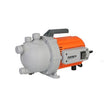
Electric garden pumps are the most common solution for private use. They are generally self-priming, work reliably, and can be used flexibly around the garden. Models such as the electric FUXTEC garden pumps FX-GP1200N or FX-GP2800 deliver strong flow rates and are ideal for larger areas.
When constant pressure is required, a home water pressure system is the best choice. Systems such as the FUXTEC FX-HWW2200 feature an integrated pressure vessel that maintains constant pressure throughout the system. This makes a home water system particularly well suited to automated irrigation with sprinklers.
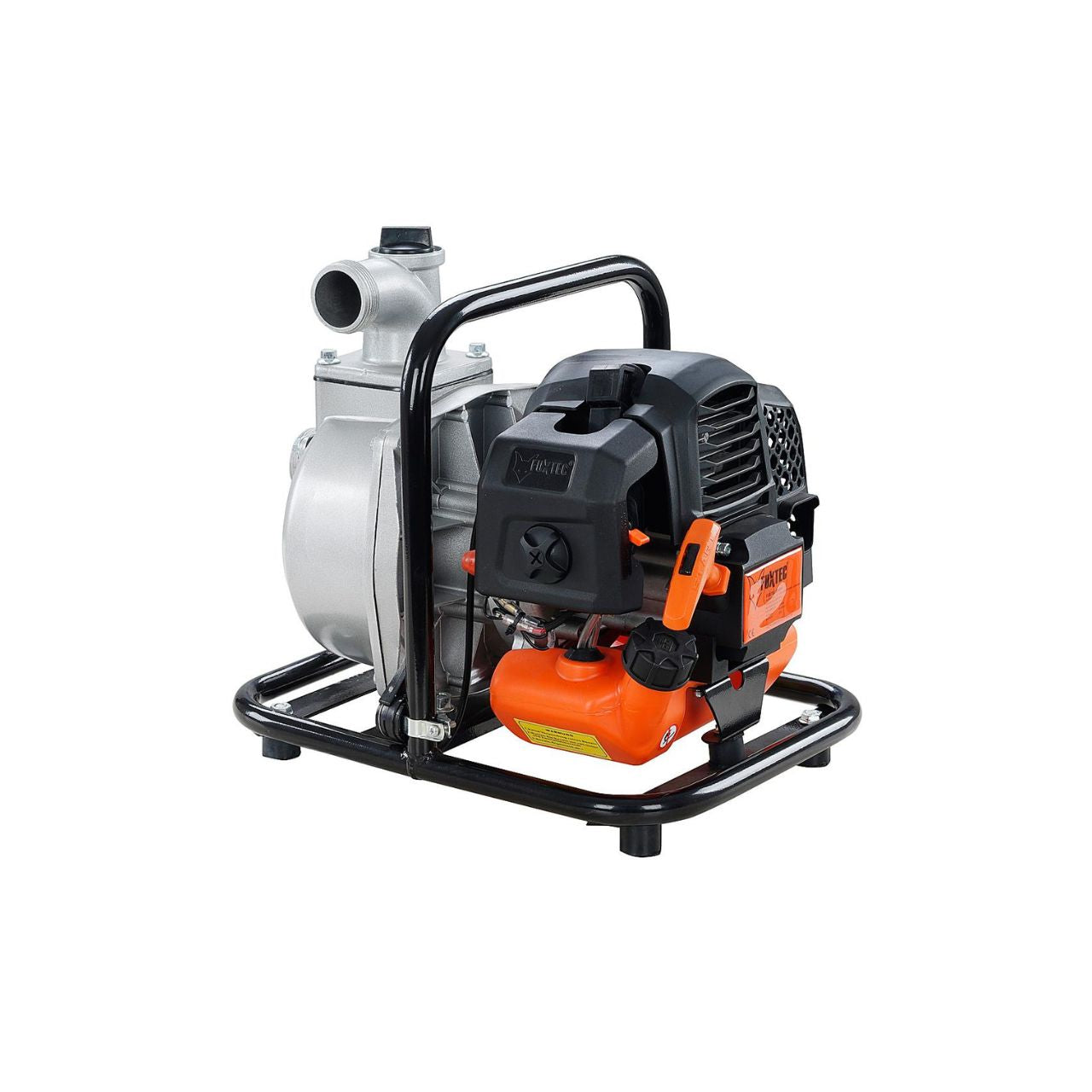
For maximum performance – for instance on large properties or when working away from mains power – high-performance petrol water pumps such as the FUXTEC FX-WP152 are the right choice.
Head Height, Flow Rate, and Pressure: How a Garden Pump Really Works
To choose the right garden pump, you need to understand the basic technical specifications. The most important figure is the head height, which indicates how high the water can be pumped.
The head height of a pump is determined by the difference in elevation between the water source and the destination. Friction losses in the hose also play a role.
Another important factor is the flow rate, which describes how much water is moved per hour. The larger the area, the higher the required flow rate.
Pressure is measured in bar. For simple applications, 2–3 bar is often sufficient, whereas sprinklers or more complex systems frequently require 4 bar or even 5 bar to distribute water adequately across the garden.
The suction depth is also crucial. Standard garden pumps can draw water from depths of up to approximately 8 metres. For deeper sources, a specialist borehole pump is required.
Installation and Maintenance: Connecting and Operating Your Garden Pump Correctly
Correct installation and maintenance has a significant impact on the service life of your system. When connecting the pump, ensure that all joints are completely airtight. Even minor leaks allow air into the system, preventing the pump from working efficiently.
A sturdy suction hose with a non-return valve and an integrated pre-filter protect the pump from debris and considerably extend its service life.
When setting up the system, also consider the location of the pump. Keeping the distance to the water source short reduces performance losses and improves efficiency.
Modern systems feature dry-run protection, which prevents the pump from being damaged if it runs without water. There are also models that switch on automatically as soon as water is required.
Systematic Garden Irrigation: Making the Most of Water from a Well or Rainwater Tank
A garden pump or home water pressure system becomes particularly worthwhile when you want to make use of alternative water sources.
The combination of a well or rainwater harvesting tank and a capable pump allows you to irrigate your garden independently of the mains supply. Using harvested rainwater in particular is a sustainable choice and saves money in the long run.
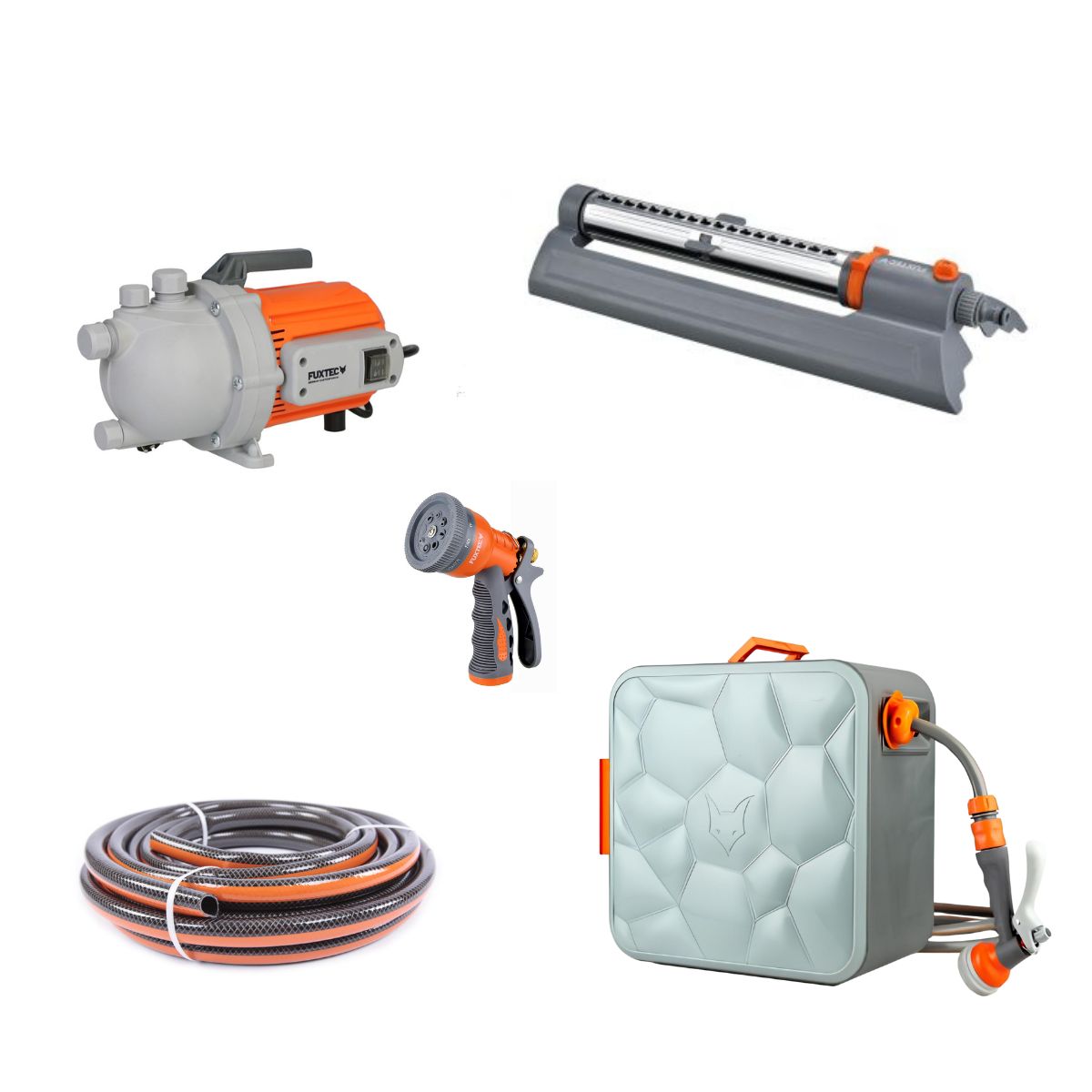
Via a garden hose or an automated system, you can water your garden precisely where it's needed – both beds and lawns can be efficiently supplied.
The choice of the right pump depends on whether you want to draw water occasionally or run a complete irrigation system.
Choosing the Right Garden Pump: What to Look Out for When Buying
Several factors come together when choosing the right garden pump. The first consideration is the available water source – whether groundwater, a water butt, or a rainwater tank.
The required performance is equally important. A pump that is too weak will not be able to build up the necessary pressure, while an oversized solution wastes energy unnecessarily.
When looking to buy a garden pump, always ensure it is suited to your specific application. For larger installations or complex systems, an automatic home water station that self-regulates and delivers constant pressure can be a very sensible choice.
Maximum Mobility
FUXTEC Petrol Water Pump FX-WP152
The right choice when you need to move large volumes of water and there is no mains power nearby. Ideal for green spaces, ponds, pools, wells, rainwater tanks, or mobile use.
- Flow rate: up to 15,000 l/h
- Engine: 2-stroke petrol engine with approx. 2.0 hp
- Max. head: up to 35 m
- Connection: 1.5" hose connections
- Advantage: independent of mains power
View petrol water pump
For Emergencies & Dirty Water
FUXTEC Submersible / Dirty Water Pump FX-SP11100
When water needs to be removed quickly, this submersible pump is the practical solution. It is suitable for draining, emptying, and transferring water from ponds, wells, shafts, or flooded areas.
- Power: 1,100 watts
- Flow rate: up to 15,000 l/h
- Max. head: up to 11 m
- Particle size: up to 35 mm
- Set includes: 10 m hose, clips & strainer basket
View submersible pump
For Garden Irrigation
FUXTEC Electric Garden Pump FX-GP2800
The quiet and effective helper for garden irrigation. The FX-GP2800 is suitable for watering, transferring, and emptying water, as well as drawing water from wells, water butts, and rainwater tanks.
- Power: 800 watts
- Flow rate: up to 3,400 l/h
- Pressure: up to 3.8 bar
- Max. head: up to 38 m
- Suction depth: up to 9 m
View garden pump
FUXTEC Tip: For mobile use without mains power, the petrol water pump is ideal. For regular garden irrigation, the electric garden pump is the perfect fit. When water needs to be pumped away quickly, reach for the submersible/dirty water pump.
Summary: Garden Pumps as the Key to Efficient Water Supply
Whether a simple garden pump, a high-performance petrol solution, or a complete home water pressure system – modern water pumps are the key to a functioning water supply in the garden.
With the right combination of head height, flow rate, and a reliable system, you can use water efficiently and keep your garden optimally supplied.