




Wildflower Lawn Guide: How to Create a Meadow
Wildflower Lawn Guide – Essential Tips for Creating and Caring for Your Meadow
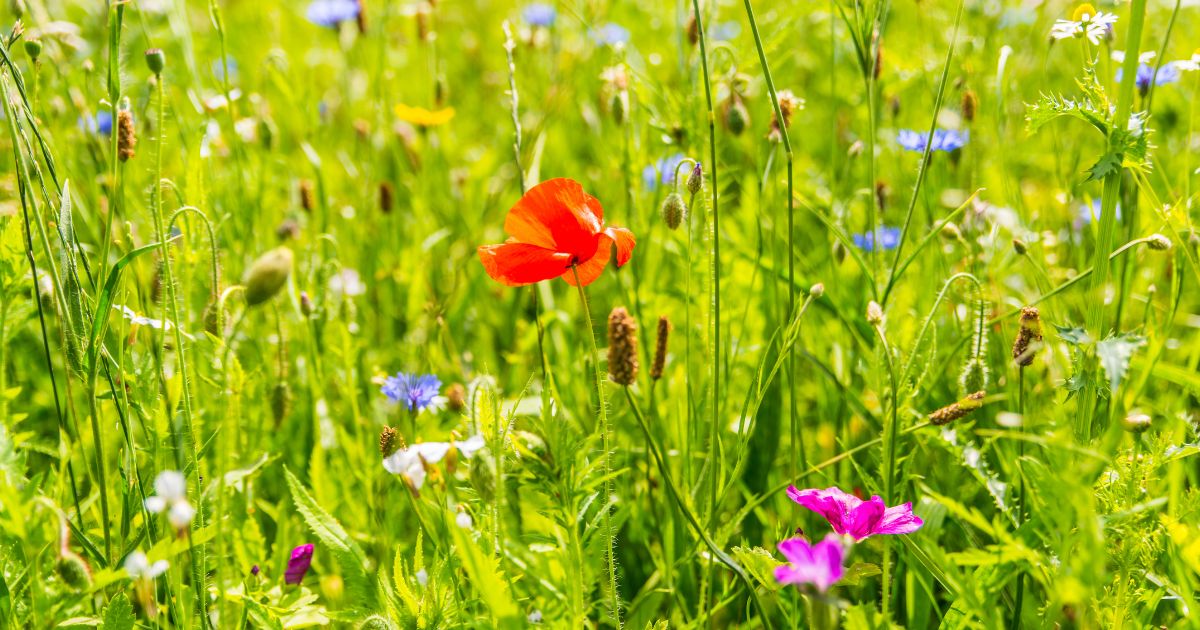
If you find the upkeep of a traditional lawn too demanding and would rather not mow every week, a wildflower lawn could be just the thing for you. In these seed mixes, grasses make up only part of the blend — the rest consists of a variety of flowering plants. Wildflower meadows are not only far lower maintenance than a conventional lawn, but also provide valuable food for bees, bumblebees, and many other insects. It's no surprise they are becoming increasingly popular.
The Differences Between a Wildflower Meadow and a Traditional Lawn
Whether you'd rather skip the weekly mowing or simply want to do more for biodiversity in your garden — there are plenty of good reasons to choose a wildflower lawn. That said, this low-maintenance alternative to a conventional grass lawn does have a few drawbacks worth bearing in mind:
- Low wear tolerance: Unlike grasses, flowering plants really don't appreciate being walked on, let alone trampled by children or pets. A wildflower lawn is therefore only suitable for areas that are rarely — or ideally never — walked across. Otherwise, the colourful blooms you're hoping for simply won't materialise, and weeds may well take over instead. You can of course create dedicated paths through the meadow using stone, timber, paving slabs, or regular turf.
- Tricky weed control: Because a wildflower lawn is only cut twice a year, unwanted plants can easily establish themselves among the flowers. As weedkillers would damage the wildflowers too, you're left with no choice but to remove the intruders by hand. The good news is that once a wildflower meadow has been established on a patch of ground for several years, the number of weeds often decreases considerably.
- Regular reseeding: Many of the flowers commonly found in wildflower seed mixes are annuals. In ideal conditions they self-seed after flowering, but if that doesn't happen, you'll need to reseed by hand each spring to keep your meadow lush and prevent weeds from moving in.
If these few drawbacks don't put you off, a wildflower lawn is definitely a wonderful way to green up your outdoor space. Compared with a traditional lawn, you'll need to mow, feed, scarify, and water far less frequently — and in return you'll be rewarded with colourful blooms, a wealth of insects, and perhaps even a few garden birds. If you'd like to use part of your garden more intensively but still want to minimise upkeep, you can of course combine a wildflower area with a section of conventional lawn. That way you really do get the best of both worlds.
Wildflower Meadows in Countless Varieties and Styles
Given the enormous range of different flower species and varieties suitable for wildflower lawns, the choice of seed mixes on the market is almost overwhelming. However, not all of them are well-balanced. Ultimately, it is the composition of your soil that determines which species will thrive and which won't. On nutrient-rich ground, many wildflowers struggle to establish themselves as they are crowded out by faster-growing species. Your garden could therefore work against you. If your soil is predominantly clay-rich and nutrient-dense, but you'd like to create a lean meadow, your only option is to alter the soil composition by adding sand or lime. This is only effective up to a point, however. Equally, establishing nutrient-hungry plants on poor soil is hard work, as they'll need frequent feeding. If you want to enjoy the low-maintenance benefits of a wildflower lawn, you should therefore choose species that suit the conditions you already have.
It's also worth making sure you choose native seed. A wildflower lawn filled with exotic blooms may sound appealing, but bees and bumblebees may not be able to make much use of them. They are adapted to species native to the UK and depend on them for food. Don't worry though — there are plenty of colourful native wildflowers to make your meadow a real highlight in your garden.
Rank grassland (fertile meadow)
Rank grassland, sometimes called improved grassland, is used in agriculture for hay or silage production. Generous applications of fertiliser encourage faster grass growth, and the high nitrogen content in the soil attracts a number of fast-growing flowering plants, including:
- Yarrow
- Bellflower
- Ox-eye daisy
- Cow parsley
- White bedstraw
- Hogweed
- Buttercup
- Common sorrel
- Dandelion
The soil of an unimproved meadow is nutrient-poor, which means that undemanding species thrive here — plants that would be outcompeted by faster-growing, nutrient-hungry plants on richer ground. To create an unimproved meadow in your garden, you can either wait until a rank meadow has exhausted the soil's nutrients, or artificially reduce nutrient levels by adding lime or sand. Sowing a wildflower mix will speed up the process. The relevant species will also colonise the area naturally over time on their own. This low-maintenance meadow type only needs cutting once a year, ideally in September.
Enhancing your wildflower lawn with spring bulbs
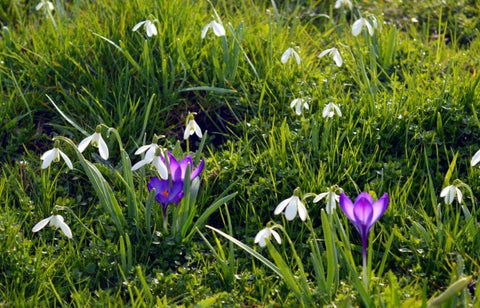
If you find the wait for the first blooms in spring a little long, you can supplement your wildflower lawn with some early-flowering bulbs. Because these flower so early in the season, they don't compete with the other plants in the meadow and work beautifully alongside them. The bulbs are best planted in early spring or in autumn. Good choices include snowdrops, crocuses, and daffodils, as well as hyacinths and tulips. Winter aconite, snake's head fritillary, star of Bethlehem, hepatica, and spring snowflake are just a few of the many further options. Do check that the varieties you choose are well suited to the conditions in your wildflower lawn, as not all species cope well with the often sunny aspect and the slightly moister conditions created by the longer grass.
Creating and Caring for a Wildflower Lawn
There are several approaches to take when embarking on your wildflower lawn project. If you're greening a new area, the process isn't very different from establishing a standard lawn. Preparing the ground and getting the soil composition right are key factors in ensuring your seeds germinate and thrive. Bear in mind that a wildflower lawn requires comparatively little seed per square metre. Sowing too thickly will cause the plants to compete with one another. To make sowing easier and more even, you can mix your wildflower seed with a carrier material — something as simple as sand or sawdust works well, as does a starter fertiliser or vermiculite. This natural mineral retains moisture and helps keep seedlings hydrated.
Turning an Existing Lawn into a Wildflower Meadow
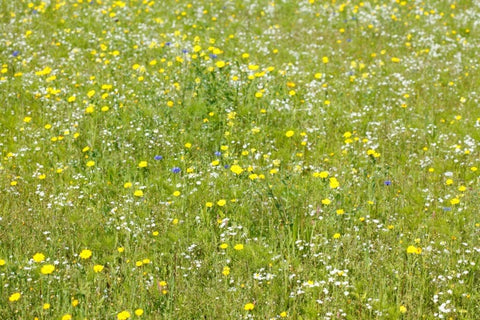
If you'd like to convert an existing area of grass into a wildflower lawn, the approach will depend on your goal. For an unimproved meadow, start by stopping all regular fertilising and allow the existing grasses to exhaust the soil's nutrients. Scarify thoroughly the following spring and sow a suitable wildflower mix into the freshly scratched surface. Make sure you choose a mix that does not contain grass seed — you've already got that covered.
If you're patient, you can simply stop all maintenance and wait for the lawn to gradually thin out as nutrients are depleted, making way for self-seeding wildflowers. The downside is that you're relying on the wind to carry the right seeds into your garden — which doesn't always happen. The resulting mix will then be largely down to chance, so if you're looking forward to a varied and truly spectacular display of colour, this approach is less than ideal.
Discover our range of garden tools

Everything your lawn needs



More articles about lawn care
Mulchen mit Pinienrinde: So nutzt du organischen Mulch, um Unkraut zu verhindern
Das Mulchen mit Pinienrinde gehört zu den effektivsten Methoden im modernen Gartenbau und in der nachhaltigen Landwirtschaft. Dabei wird eine Schicht Mulchmaterial auf die Bodenoberfläche aufgebrac...
Bodenverbesserung im Garten: So verbesserst du deinen Gartenboden im Frühjahr für gesunde Pflanzen
Inhaltsverzeichnis Warum Bodenverbesserung im Garten im Frühjahr so wichtig für einen gesunden Gartenboden ist Gartenboden nach dem Winter prüfen: Bodenstruktur, Verdichtung und Bodenart erke...
Richtig Düngen im Garten: Schritt für Schritt erklärt
Inhaltsverzeichnis Warum Düngen im Garten so wichtig ist Bodenanalyse: Grundlage für die richtige Düngung Organische vs. mineralische Dünger: Was ist besser? Kompost, Hornspäne & Co.: Organi...


