How to Water Your Lawn in Spring | FUXTEC Guide

A lush lawn needs one thing above all else in spring: the right watering. Yet many gardeners are unsure when and how often to water their lawn, and just how much is actually needed. Water too frequently and the roots stay shallow, leaving the grass more vulnerable to drought. Water too little and yellow, dry patches appear before you know it.

Dry lawn with yellow patches

In this FUXTEC garden guide, you'll find out when to give your lawn a proper drink, how much water is sensible, and how to keep your grass healthy throughout spring.

Watering Your Lawn Properly in Spring

In spring, grass enters a new growth phase, making this a particularly important time for successful lawn care. Alongside mowing, scarifying and feeding, proper watering is also a key part of the routine. Many gardeners wonder just how often they really need to water their lawn in spring.

In most cases, rainfall during spring provides the lawn with sufficient moisture naturally. Additional watering is therefore usually unnecessary. However, if temperatures rise early in the season or there is a prolonged dry spell, it may be worth giving the lawn a water. Sandy soils in particular don't retain moisture well and dry out more quickly.

If the grass shows the first signs of drought stress, you should act. A greyish tinge, limp blades or dry patches are typical indicators that the lawn needs watering.

Lawn Watering – What Is the Best Time of Day to Water?

When the top layer of soil dries out, the grass needs additional moisture. This doesn't only happen in summer – it can occur in spring too, when temperatures climb and dry spells set in. Light, sandy soils dry out particularly quickly, so lawns on these soil types will need watering more often.

The time of day also plays an important role when watering your lawn. The best time to water is early in the morning or in the evening. At these times, less water evaporates and moisture can penetrate deeper into the soil. Avoid watering at midday, as the heat causes significant evaporation and the water is lost before it reaches the roots.

You can usually spot poor water supply in the grass itself quite early. The blades lose their springiness, look dull and take on a slightly bluish or greyish hue. When walked on, the grass is slow to spring back up. At this point at the latest, the lawn should be watered to prevent lasting drought damage.

How Often Should You Water Your Lawn?

How frequently your lawn needs watering depends mainly on temperature, soil type and rainfall. During prolonged dry periods, most lawns require supplementary watering two to three times a week. What matters is not just the frequency, but also the right amount of water each time.

Many gardeners make the mistake of giving the lawn a brief sprinkle every day. This keeps the watering too shallow and the roots don't grow deep enough. A properly watered lawn, on the other hand, develops strong roots and stays green for longer even in hot weather.

Tip: It's easy to test whether the soil still has enough moisture. Push a screwdriver or a small trowel into the ground. If the tool goes in several centimetres without resistance, there is still enough moisture. If you meet resistance quickly, it's time to give the lawn a thorough water.

How Much Water Does a Lawn Need in Spring?

In spring, lawns generally need less water than in summer, as the soil is often still sufficiently moist from rainfall. Whether additional watering is needed depends mainly on temperature, soil type and recent precipitation.

Loose, humus-rich soils retain water better than very sandy or clay-heavy soils. This means some lawns dry out more quickly and need watering more often. If there is a prolonged dry spell in spring, you should water your lawn additionally. As a rough guide, apply between 10 and 20 litres of water per square metre during a dry spring.

It is important that the water penetrates deep enough into the soil, so that the roots receive adequate moisture and the lawn stays healthy. A FUXTEC sprinkler should therefore not just be run briefly. For effective irrigation, 20 to 30 minutes is usually needed to allow the water to soak several centimetres into the ground.

Watering a New Lawn or Overseeded Areas

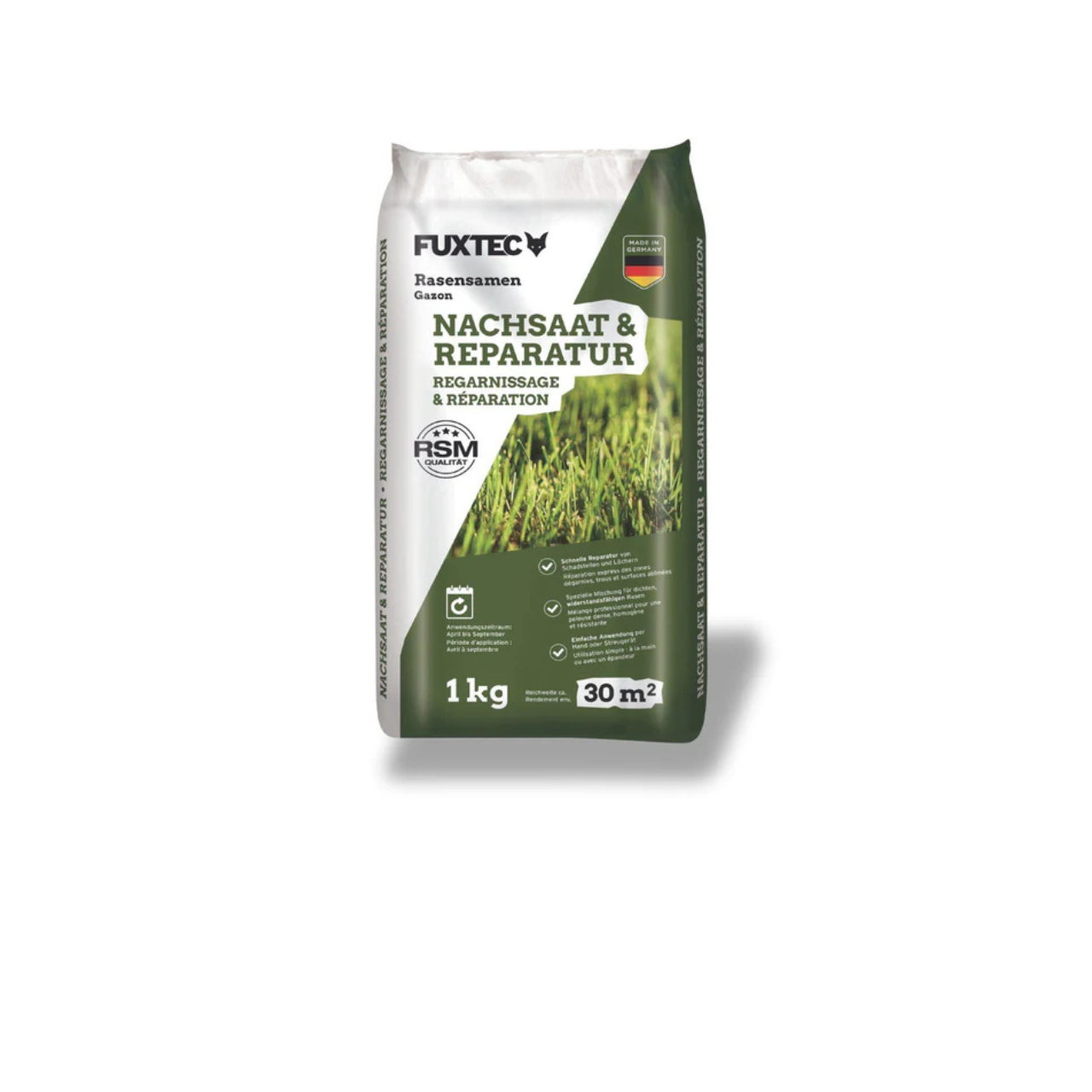
For your newly sown lawn to germinate — whether using FUXTEC grass seed or any other — the soil must be kept consistently moist after sowing. Spring generally offers good conditions for this, as the weather is milder and rainfall is more frequent. That said, during dry spells it may still be necessary to water additionally.

FUXTEC sprinkler watering a lawnEven watering is particularly important in the first few weeks. If the top layer of soil dries out, germination is interrupted and young grass seedlings cannot establish properly. As the fresh seedlings initially have almost no root system, they need regular, adequate water.

In warm, dry weather, the area should therefore be lightly watered several times a day. A sprinkler with a fine spray pattern is ideal, so that the seed is not washed away whilst the soil remains consistently moist. Avoid creating puddles — the ground should stay lightly damp, not waterlogged.

The same applies after overseeding: keep watering regularly until the new grass has established firmly. You'll find more detailed tips in our article "Step-by-Step Guide: Repairing, Patching & Overseeding Bare Patches in Your Lawn".

Keeping the Lawn Moist After Feeding

After applying FUXTEC fertiliser, you should keep the lawn adequately watered. The moisture helps the lawn feed to work into the soil more quickly, allowing the nutrients to be absorbed more effectively. It also prevents fertiliser residues from sitting on the grass blades and scorching the turf.

Especially in spring, combining lawn feeding with correct watering is key to achieving a dense, green lawn. If there is no rain after applying fertiliser, make sure to water the lawn deliberately.


Watering Your Lawn with FUXTEC

To keep your lawn optimally hydrated in spring, it's not just about the right frequency — the watering technique matters just as much. With FUXTEC sprinklers and garden hose attachments, watering your lawn becomes simple and efficient.

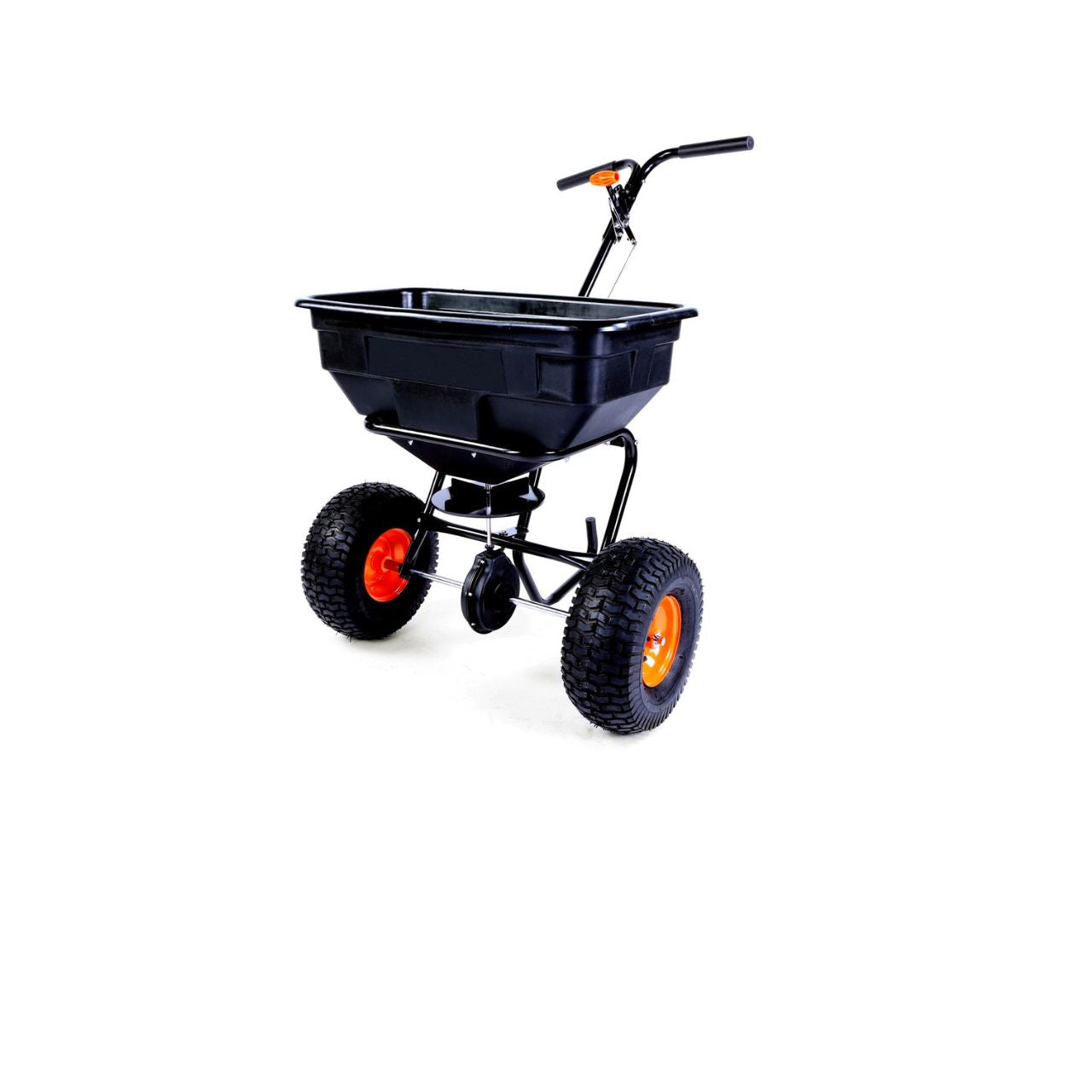
FUXTEC sprinklers and garden hose attachments

For larger lawns, rotary sprinklers or oscillating sprinklers are particularly well suited, as they distribute water evenly and keep the soil reliably moist. This ensures uniform coverage across the lawn and helps prevent dry patches. With various spray angles and reach settings, the irrigation can be adapted flexibly to suit the size of your garden.

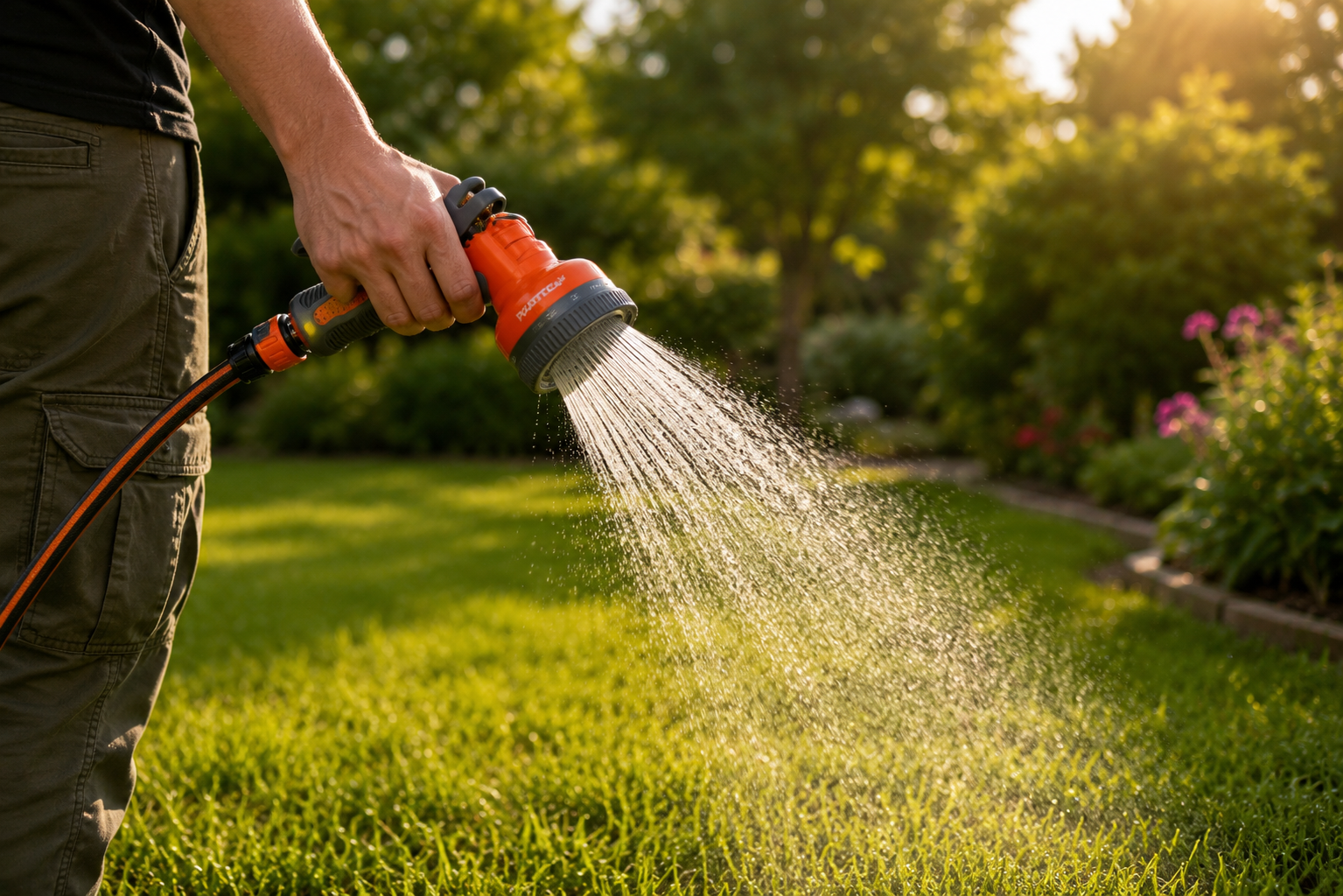
If you want to water sensitive areas, freshly seeded patches or specific spots with precision, a garden hose attachment with different spray patterns gives you exactly that control. A fine mist setting ensures the seed is not washed away whilst the soil stays consistently moist.

With FUXTEC products, you can water your lawn efficiently whilst conserving water at the same time. Because water is distributed evenly, your lawn receives exactly the amount it actually needs — supporting a dense, green lawn and making spring lawn care that much easier.

Entdecke unsere Auswahl an Gartengeräten
How often should I water my lawn in spring?

In spring, most lawns need watering two to three times a week during prolonged dry spells, though natural rainfall often provides sufficient moisture. The key is to water deeply rather than frequently, as shallow daily sprinkles keep roots shallow and vulnerable to drought.

What's the best time of day to water my lawn?

The best time to water is early morning or evening, as less water evaporates and moisture penetrates deeper into the soil. Avoid watering at midday when heat causes significant evaporation and water is lost before reaching the roots.

How much water does a spring lawn need?

Apply between 10 and 20 litres of water per square metre during dry spells in spring. Water should soak several centimetres into the ground, which typically takes 20 to 30 minutes of watering to be effective.

What are the signs my lawn needs watering?

Look for a greyish or bluish tinge to the grass blades, limp blades that don't spring back when walked on, or dry patches appearing across the lawn. You can also push a screwdriver into the soil; if it meets resistance quickly, it's time to water.

Do I need to water newly seeded areas differently?

Yes, newly sown areas need consistent moisture in the top soil layer to germinate properly. Water lightly several times a day in warm weather with a fine spray pattern to keep the soil damp without creating puddles, and continue until new grass establishes firmly.

Should I water my lawn after applying fertiliser?

Yes, keep the lawn adequately watered after fertilising, as moisture helps the feed work into the soil more quickly and allows nutrients to be absorbed effectively. Watering also prevents fertiliser residues from scorching the grass blades.

Weitere Beiträge zum Thema Rasenpflege

Alle ansehen
Mulchen mit Pinienrinde: So nutzt du organischen Mulch, um Unkraut zu verhindern

Mulchen mit Pinienrinde: So nutzt du organischen Mulch, um Unkraut zu verhindern

Das Mulchen mit Pinienrinde gehört zu den effektivsten Methoden im modernen Gartenbau und in der nachhaltigen Landwirtschaft. Dabei wird eine Schicht Mulchmaterial auf die Bodenoberfläche aufgebrac...
Bodenverbesserung im Garten: So verbesserst du deinen Gartenboden im Frühjahr für gesunde Pflanzen

Bodenverbesserung im Garten: So verbesserst du deinen Gartenboden im Frühjahr für gesunde Pflanzen

Inhaltsverzeichnis Warum Bodenverbesserung im Garten im Frühjahr so wichtig für einen gesunden Gartenboden ist Gartenboden nach dem Winter prüfen: Bodenstruktur, Verdichtung und Bodenart erke...
Düngen im Garten Titelbild

Richtig Düngen im Garten: Schritt für Schritt erklärt

Inhaltsverzeichnis Warum Düngen im Garten so wichtig ist Bodenanalyse: Grundlage für die richtige Düngung Organische vs. mineralische Dünger: Was ist besser? Kompost, Hornspäne & Co.: Organi...