

Utility Lawn: Seed Mixes, Types & Care Tips
A utility lawn is by far the most commonly used lawn type. It is also known as a recreational lawn, garden lawn, or standard lawn. Overall, it is relatively low-maintenance and handles moderate wear without any problems, though it is not quite as neat and uniform as an ornamental lawn.
There are four main categories into which utility lawn seed mixes are divided. These are based on the intended use, as well as site conditions and maintenance requirements. If you think carefully in advance about exactly what you want your lawn to do, it will be much easier to choose the right mix. That choice will reward your forward planning with minimal upkeep and a consistently tidy appearance.
A common feature of all utility lawn mixes is their relatively low maintenance demand. Whilst sports or ornamental lawns typically need mowing once — sometimes even twice — a week, some utility lawns only need cutting every two weeks. This type of lawn is therefore particularly well suited to home gardeners who appreciate less upkeep. Utility lawns also consist of relatively undemanding grass species. These are more forgiving of minor care mistakes than the performance- or appearance-focused grasses found in hard-wearing or ornamental lawns. So if you place slightly less importance on a perfectly trimmed, uniform lawn surface but would love to save yourself a great deal of work, a utility lawn standard seed mix is exactly the right choice for you.
Standard Utility Lawn

The standard utility lawn seed mix is the traditional formulation that was widely used before modern classifications introduced more refined categories. Whilst updated seed standards have replaced it in formal specifications, seed mixes based on this composition are still widely available and sold under similar names. It remains a practical choice for private gardens and lightly used public green spaces. Today, the play lawn mix or specialist mixes for dry or shaded locations are more commonly recommended for these situations.
The standard utility lawn offers low to moderate wear tolerance with an average maintenance requirement. It tolerates quite short cutting heights of two to three centimetres. It is therefore still suitable for areas where an ornamental lawn would struggle due to light use — such as a seating area or occasional barbecue gatherings — but which are also not subjected to heavy traffic.
Compared with the play lawn mix, the standard lawn is somewhat less hard-wearing. This is because it consists exclusively of Red Fescue (Festuca rubra), Smooth-stalked Meadow Grass (Poa pratensis) and possibly a small proportion of Common Bent (Agrostis capillaris). It lacks the fast-growing, robust and wear-resistant Perennial Ryegrass (Lolium perenne) that gives play lawns their resilience. However, because of the slower growth rate of its grass species, the standard lawn needs mowing less frequently.
Utility Lawn for Dry Conditions
Most grasses need sufficient water, particularly in summer, to keep growing and avoid drying out. If you regularly battle with brown and eventually bare patches in your lawn, it may well be worth choosing a seed mix that copes well with dry conditions. Dryness does not always mean simply a lack of rainfall. Sandy soils retain water very poorly — it drains away quickly and the grasses can only absorb a fraction of what falls. To establish a successful lawn in such conditions without needing to replace the entire soil profile, seed mixes formulated for dry sites are the ideal solution.
The most important component of these mixes is Tall Fescue (Festuca arundinacea). Compared with other grass species, it has relatively broad leaves and deep roots, which make it exceptionally drought-resistant. It is unfussy about its growing conditions: it thrives on clay, loamy, or sandy soils alike. Tall Fescue is even tolerant of occasional waterlogging and is also very wear-resistant. The only drawback is that it does not form a particularly dense sward and its thick stems give it a somewhat coarse appearance.
To achieve a higher grass density in dry-site utility lawns, Tall Fescue is not used exclusively. The mixes also include a small proportion of Perennial Ryegrass (Lolium perenne) and Smooth-stalked Meadow Grass (Poa pratensis). Whilst these are slightly more demanding — particularly regarding water supply — they considerably enhance the appearance of the dry-site lawn.

Play & Recreational Lawn
The play lawn mix has largely replaced the standard mix as the most popular seed blend for private gardens, as well as for public play areas and amenity grassland. It is not only attractively green, but also resilient and hard-wearing. It meets the needs of most garden owners and stands out for its comparatively low maintenance requirements. It is no surprise, then, that this is the most popular lawn choice for UK gardens.
The key components of a play lawn mix are:
- Red Fescue (Festuca rubra) in its various tufted and creeping cultivars: it produces a dense sward that forms the basis of the lawn's wear resistance. It grows more slowly than the other species in the mix, which helps reduce the amount of mowing required.
- Perennial Ryegrass (Lolium perenne) grows and tillers quickly, also forming a dense sward. Its proportion ensures the excellent recovery of the sports and play lawn. As it is more vigorous than Red Fescue, it produces more grass clippings.
- Smooth-stalked Meadow Grass (Poa pratensis) is particularly wear-resistant and therefore helps prevent bare patches forming too quickly under heavy use. It also withstands prolonged dry spells, reducing the maintenance demands of the utility lawn mix.
- Supina Bluegrass (Poa supina) is not found in all play lawn mixes. Its proportion is at most 5%; it is added to make the play lawn shade-tolerant.
Utility Lawn with Wildflowers and Herbs (RSM 2.4-type)
A utility lawn mix containing herbs and wildflowers has a very broad species spectrum, which makes it extremely low-maintenance. The dense cover of the lawn surface by various grass species and herbs leaves little room for weeds. This type of mix is therefore robust and needs mowing far less frequently (approximately four to eight times per year) than a purely grass-based lawn. It thrives best on relatively poor, low-fertility soil, which also reduces the need for regular feeding. Herbs and wildflowers make up around 20% of the mix, with the remainder consisting of the usual popular lawn grasses also found in other utility lawn mixes. Commonly used herbs and wildflowers include:
- Crimson clover, bird's-foot trefoil, and hop trefoil
- Thyme and sage
- Salad burnet and self-heal
- Spring cinquefoil
- Ox-eye daisy
- Dandelion
- Bedstraw
- Maiden pink
- Daisy
- Yarrow
Utility Lawn with Microclover
A comparatively recent innovation is deliberately blending lawn grasses with white clover cultivars. Ordinarily, clover is an unwelcome guest in a lawn, but under the right circumstances both the clover and the grasses can benefit from one another. The so-called microclover consists of exceptionally small-leaved cultivars that enhance the appearance of a lawn rather than standing out unpleasantly. At the same time, the lawn benefits from clover's ability to fix nitrogen in the soil through symbiosis with rhizobial bacteria. Clover is also extremely hardy and remains green and attractive in winter and during prolonged dry spells when grasses are under stress. The microclover content should be around 5 to 10%. Regular mowing and fertilising ensure that the clover does not take over and spread too vigorously.
Once you have chosen the right mix, you can get started. A full step-by-step guide on how to lay your new lawn can be found here.
Even though utility lawn grass has been specifically bred to be highly low-maintenance whilst remaining reasonably hard-wearing, there are a few important points to bear in mind. Only with the right care will you be able to enjoy your lawn for years to come.
Watering a Utility Lawn
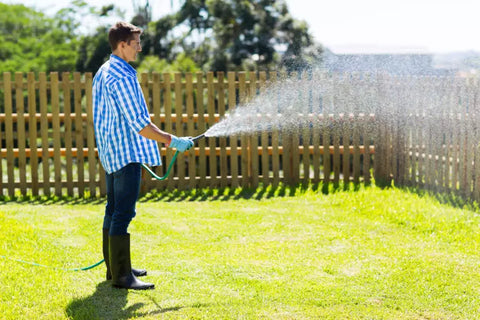
Seed mixes formulated for dry conditions are specifically suited to drought-prone sites, but this does not mean they require less water overall than other grasses. Rather, they survive long dry spells thanks to their deeper root systems, which can access moisture reserves down to around half a metre. By comparison, most other grass species reach a maximum root depth of only around fifteen centimetres. Dry-site mixes therefore cope well with sandy soils where water does not remain in the upper soil layers but drains away. Whilst the surface may show cracks, these grasses continue to draw moisture from deep below. During exceptionally prolonged drought periods, however, even deep-rooting grasses will reach their limits. You will either need to water them or even these mixes will turn brown and die back.
Standard and play lawn mixes have an average water requirement and therefore depend on artificial irrigation during very hot and dry weather. Utility lawn mixes containing herbs are somewhat more drought-tolerant. This is mainly because the herbs included are relatively undemanding and manage well with less water. They also shade the soil, reducing the amount of moisture that evaporates from the surface.
Mowing a Utility Lawn
A utility lawn generally needs mowing far less frequently than an ornamental or hard-wearing sports lawn. This depends mainly on the proportion of fast-growing Perennial Ryegrass in the mix — the higher its share, the more often you will typically need to get the mower out. Overall, a utility lawn requires approximately 8 to 20 cuts per year, during the growing season from April through to the end of October. Depending on the composition of your mix, you should mow every one to two weeks: growth is fastest in May and June, so mowing is most frequent then. In midsummer, growth slows again and you can gradually extend the intervals between cuts. In summer, you should also leave the grass of a utility lawn slightly longer than at other times of year. This so-called stress cut allows the grasses to shade the soil and themselves, slowing the evaporation of moisture from the ground. As a result, you need to water less frequently and your lawn copes better with heat and dry spells. The optimum cutting height throughout the year is between 3.5 and 4.5 centimetres. At this height, the grasses can still photosynthesise effectively for growth, whilst weeds are kept short enough to die back quickly and are unable to spread.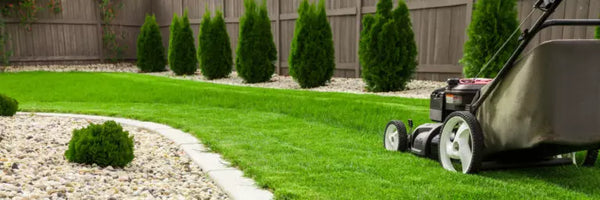
Feeding a Utility Lawn
Because it is mowed comparatively infrequently, a utility lawn also requires less fertiliser than, for example, an ornamental or hard-wearing lawn. In most cases, it is sufficient to feed it twice a year. The first application is made in spring, at the start of the growing season. Use a nitrogen-rich fertiliser at this point. In autumn, a further application — this time rich in potassium — will prepare your utility lawn for winter. To better address the individual characteristics of your soil and the specific needs of your lawn, it is advisable to carry out a soil test roughly every three years. This tells you precisely which nutrients your grasses need and in what proportions to thrive. Both in spring and in autumn, you can combine the feed with scarifying. This helps reduce moss and other weeds. Make sure, however, to overseed any bare patches that appear immediately afterwards.
Discover our range of garden tools
Everything your lawn needs

More articles about lawn care
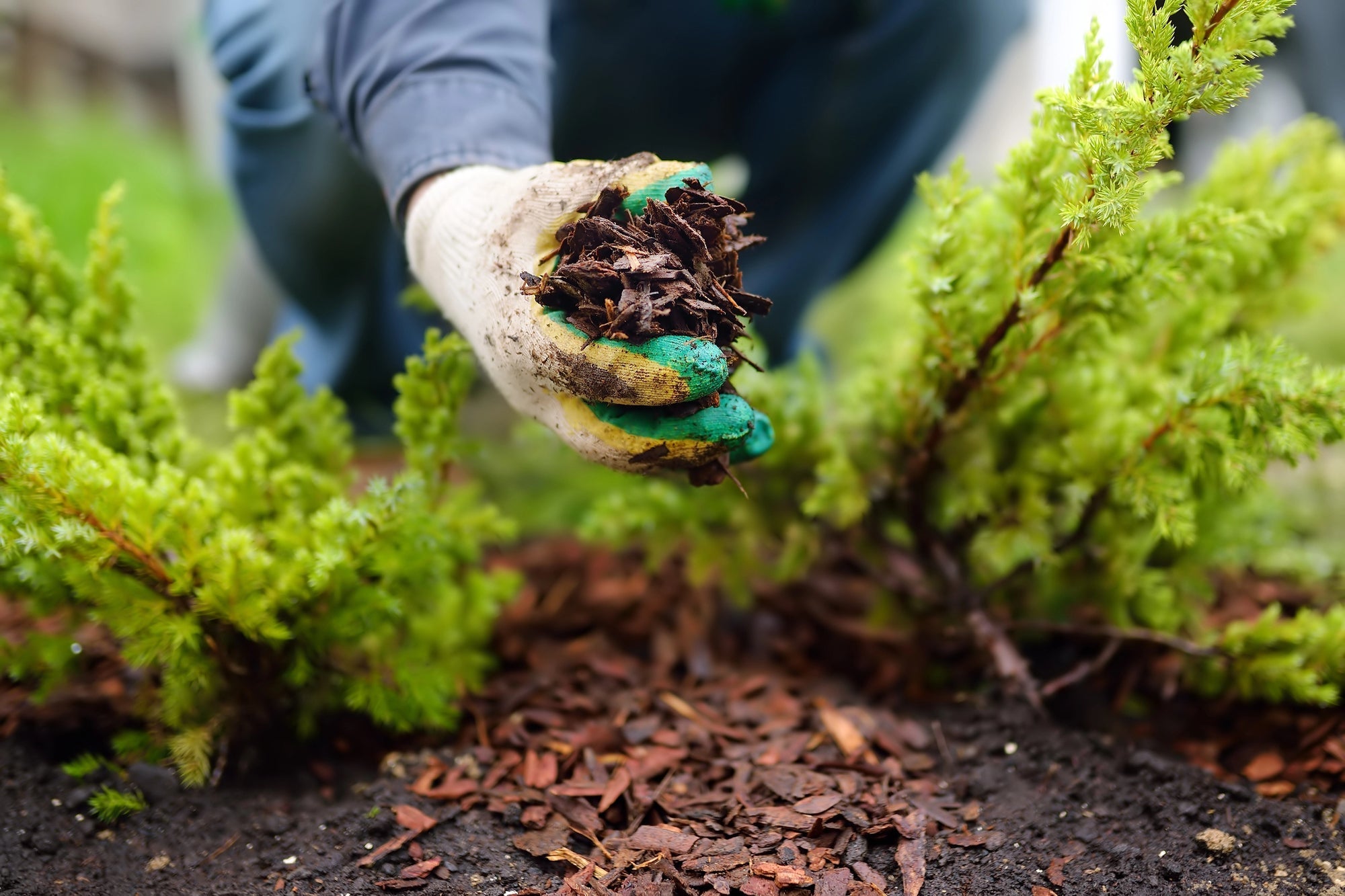
Mulchen mit Pinienrinde: So nutzt du organischen Mulch, um Unkraut zu verhindern
Das Mulchen mit Pinienrinde gehört zu den effektivsten Methoden im modernen Gartenbau und in der nachhaltigen Landwirtschaft. Dabei wird eine Schicht Mulchmaterial auf die Bodenoberfläche aufgebrac...
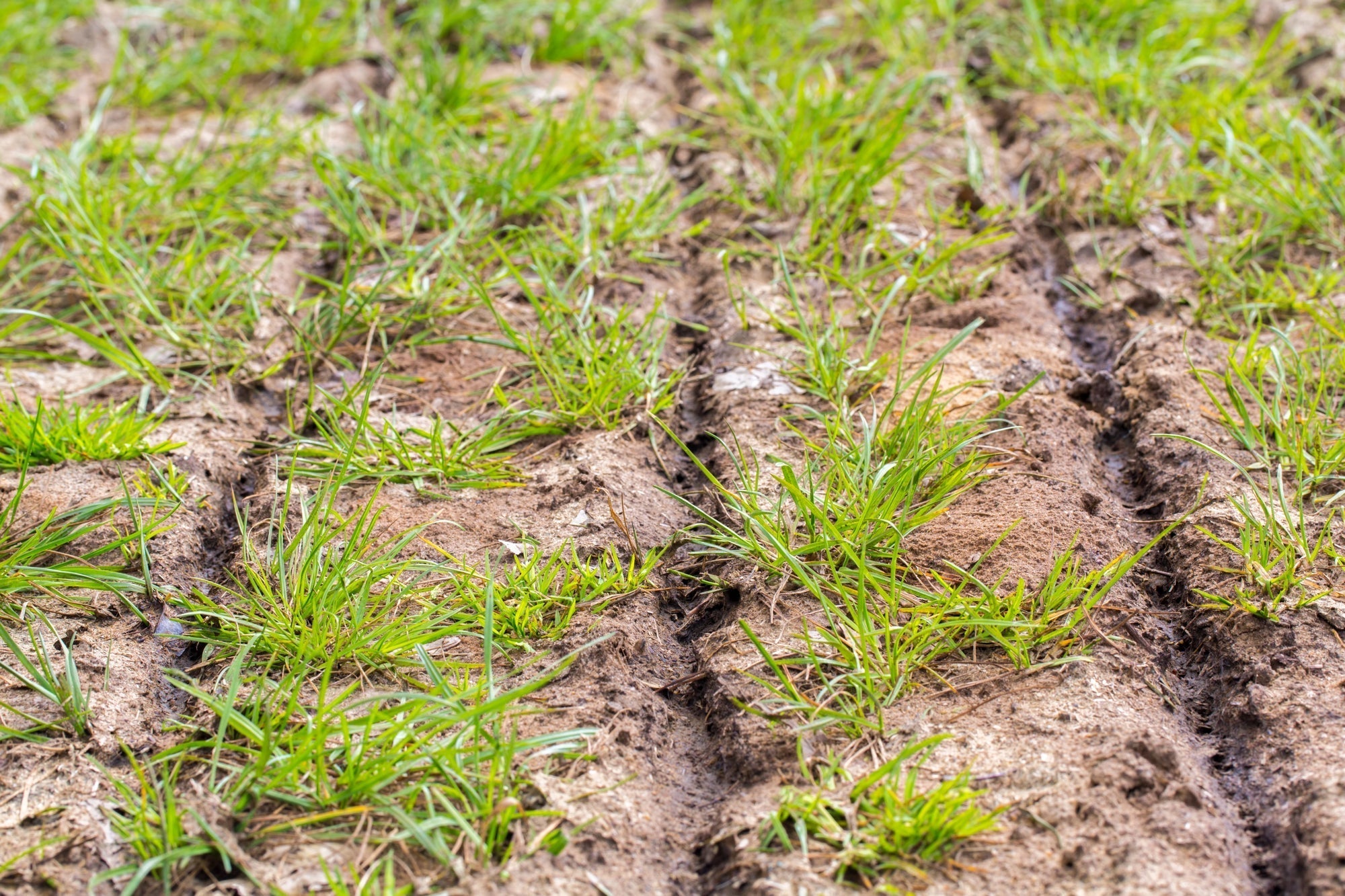
Bodenverbesserung im Garten: So verbesserst du deinen Gartenboden im Frühjahr für gesunde Pflanzen
Inhaltsverzeichnis Warum Bodenverbesserung im Garten im Frühjahr so wichtig für einen gesunden Gartenboden ist Gartenboden nach dem Winter prüfen: Bodenstruktur, Verdichtung und Bodenart erke...
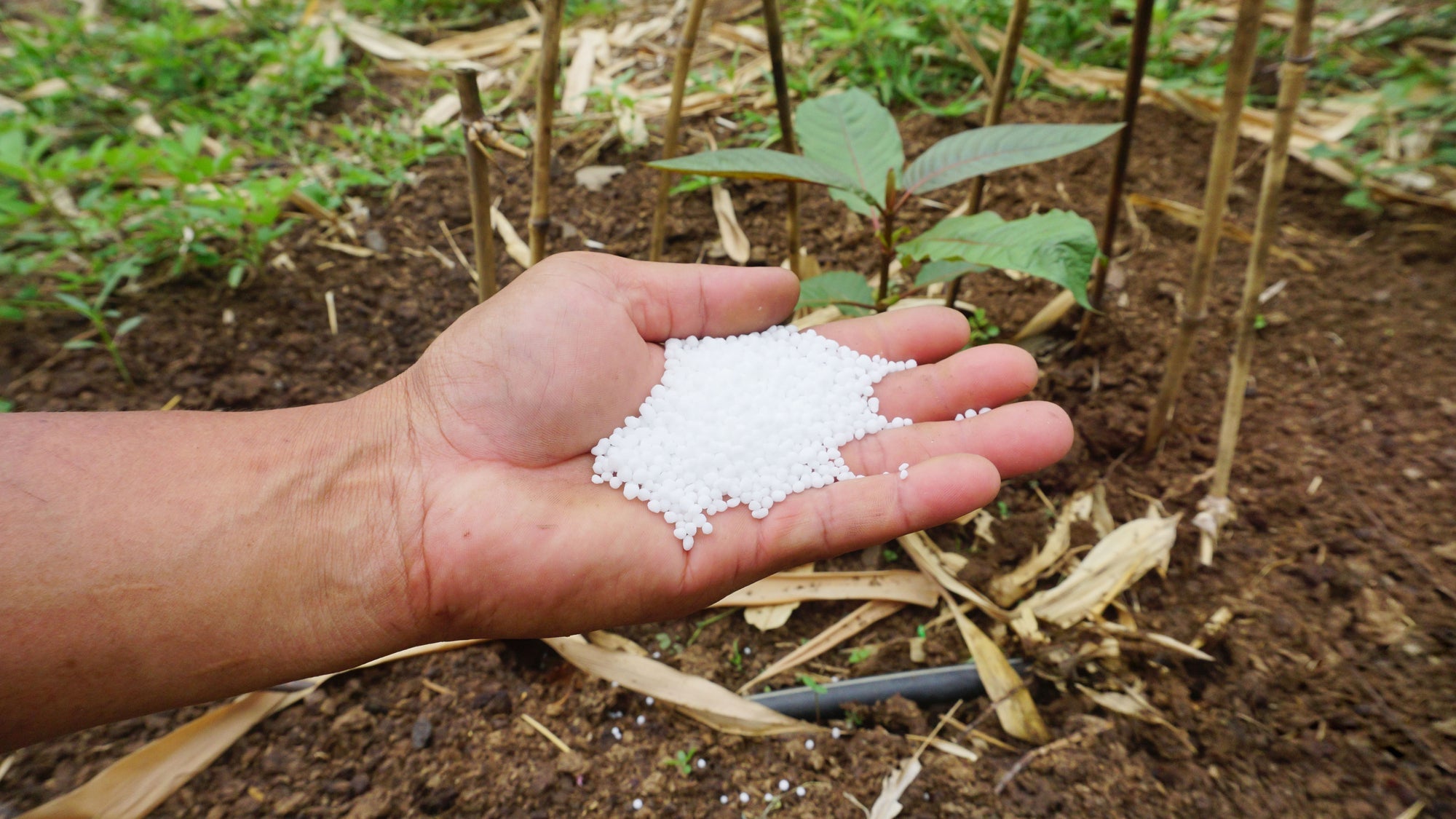
Richtig Düngen im Garten: Schritt für Schritt erklärt
Inhaltsverzeichnis Warum Düngen im Garten so wichtig ist Bodenanalyse: Grundlage für die richtige Düngung Organische vs. mineralische Dünger: Was ist besser? Kompost, Hornspäne & Co.: Organi...


