







Top-dressing Lawn with Sand – Healthier Grass
Top-dressing your lawn with sand – for loose, healthy soil
A healthy, lush lawn requires the right care throughout the year. One often overlooked technique is top-dressing your lawn with sand. This method not only improves soil structure but also helps your lawn become more resilient against moss and weeds. Read on to discover everything you need to know about sanding your lawn – from the benefits and choosing the right sand to the best application method and ongoing aftercare.
Why is top-dressing your lawn with sand worthwhile?
Sanding your lawn is about far more than appearances. It delivers real, practical benefits – especially on compacted soils or heavily used lawn areas.
- Loosens the soil: Sand improves drainage and prevents waterlogging.
- Encourages root growth: A looser structure supports strong, deep grass roots.
- Reduces moss and weeds: A well-aerated soil inhibits their growth.
- Optimises nutrient distribution: Sand helps spread nutrients evenly through the soil.
Did you know? Regular top-dressing with sand can significantly improve both the lifespan and appearance of your lawn.
The best time to top-dress with sand
The ideal time is spring, after scarifying or aerating, so the sand can work its way deep into the soil.
- After winter, the soil is often compacted and needs to be loosened.
- Spring is also the perfect time for fertilising or overseeding – sanding supports both.
Tip: The soil is particularly receptive immediately after scarifying.
Which sand should you use?
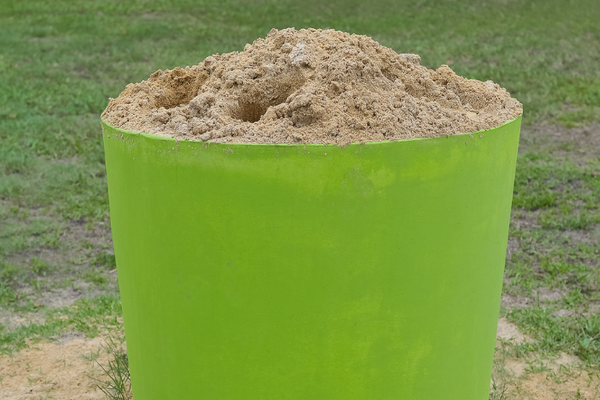
- Particle size: A 0–2 mm grade is ideal, allowing the sand to settle into the soil easily.
- Horticultural sharp sand: Clean, angular horticultural sharp sand delivers long-lasting improvement.
- Organic-free: Avoid sand containing organic residues – these can compact the soil again over time.
Tip: Play sand or building sand are poor substitutes – always use proper lawn top-dressing sand.
Step-by-step guide
- Mow the lawn: Cut the grass short to help the sand distribute evenly.
- Scarify or aerate: Remove moss and thatch from the lawn.
- Apply the sand: Spread evenly at a rate of 2–3 kg/m².
- Work it in: Lightly rake or brush the sand into the surface.
- Water thoroughly: Give the lawn a good water after sanding.
- Fertilise: Optional, but helps make the most of available nutrients.
Handy tools for even coverage
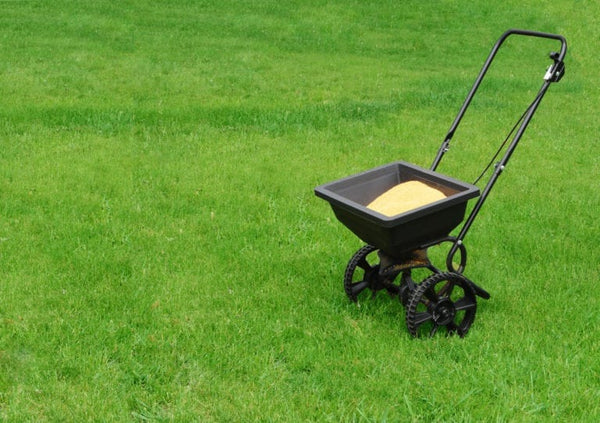
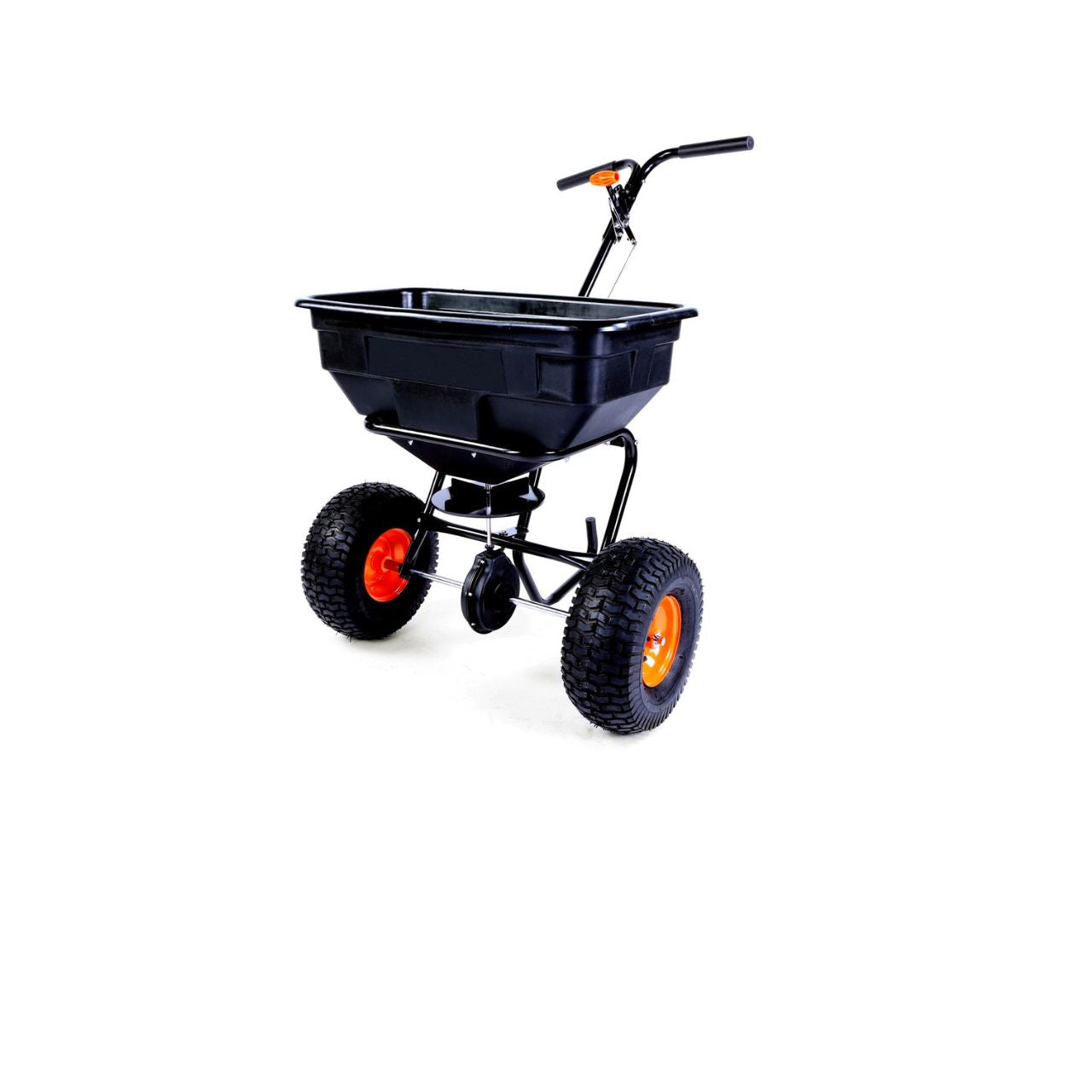
Use a broadcast spreader or battery-powered spreader to distribute the sand evenly across your lawn. This helps you avoid uneven patches and achieve a clean, professional finish.
Common mistakes when top-dressing with sand
- Too much sand: Can smother the lawn – stick to a maximum of 2–3 kg/m².
- Wrong type of sand: Too coarse or containing organic matter – avoid both.
- Uneven application: Leads to patchy areas in the lawn.
Benefits of regular top-dressing
- Loose, free-draining soil
- A more resilient lawn under heavy use
- Better water & nutrient distribution
- Less moss and fewer weeds
Regular top-dressing is key to maintaining a dense, healthy lawn.
Why you should top-dress your lawn with sand
Top-dressing with sand improves soil structure, promotes aeration and strengthens root growth. With the right sand and a little patience, your lawn will look healthier and more attractive all year round.
Discover our range of garden tools
When should I top-dress my lawn with sand?
Spring is the ideal time, particularly after scarifying or aerating your lawn. The soil is most receptive immediately after these treatments, allowing the sand to work its way deep into the soil structure.
How much sand do I need to apply to my lawn?
Apply sand at a rate of 2–3 kg per square metre. Avoid applying too much, as excessive sand can smother the grass. This rate provides optimal improvement without damaging your lawn.
What type of sand is best for lawn top-dressing?
Use horticultural sharp sand with a particle size of 0–2 mm, ensuring it is clean and free of organic residues. Avoid play sand or building sand, as these are poor substitutes and can compact the soil over time.
Does top-dressing with sand really reduce moss and weeds?
Yes, sand improves drainage and loosens compacted soil, which inhibits moss and weed growth. A well-aerated soil structure creates conditions where desirable grass thrives better than unwanted plants.
What tools do I need to apply sand evenly?
Use a broadcast spreader or battery-powered spreader to distribute sand evenly across your lawn. These tools help you avoid patchy areas and achieve professional, consistent coverage.
How do I apply sand after spreading it on the lawn?
After spreading the sand at 2–3 kg/m², lightly rake or brush it into the surface, then water the lawn thoroughly. This helps the sand settle into the soil and promotes good soil contact.
Can I top-dress my lawn with sand in autumn or winter?
Spring is the recommended time because the soil is more receptive after winter compaction and scarifying. Sanding in spring also complements other spring lawn care tasks like fertilising and overseeding for best results.
Everything your lawn needs



More articles about lawn care
Mulchen mit Pinienrinde: So nutzt du organischen Mulch, um Unkraut zu verhindern
Das Mulchen mit Pinienrinde gehört zu den effektivsten Methoden im modernen Gartenbau und in der nachhaltigen Landwirtschaft. Dabei wird eine Schicht Mulchmaterial auf die Bodenoberfläche aufgebrac...
Bodenverbesserung im Garten: So verbesserst du deinen Gartenboden im Frühjahr für gesunde Pflanzen
Inhaltsverzeichnis Warum Bodenverbesserung im Garten im Frühjahr so wichtig für einen gesunden Gartenboden ist Gartenboden nach dem Winter prüfen: Bodenstruktur, Verdichtung und Bodenart erke...
Richtig Düngen im Garten: Schritt für Schritt erklärt
Inhaltsverzeichnis Warum Düngen im Garten so wichtig ist Bodenanalyse: Grundlage für die richtige Düngung Organische vs. mineralische Dünger: Was ist besser? Kompost, Hornspäne & Co.: Organi...


