
No Mow May: How to Restore Your Lawn Afterwards
At the start of May, we wrote about why it can make good sense to leave part of your garden lawn unmown for a while. Throughout May, the mower stays in the shed, the lawn is allowed to grow wild, and plants can flourish for the benefit of wildlife. But once the No Mow May campaign is over, many garden owners are left wondering: what do you do now with the grass that has grown so tall? Simply cutting it back hard all at once is not a good idea.
In this FUXTEC garden guide, we explain how to get back into proper lawn care, how you should cut your lawn, why the one-third rule matters, and how you can keep insect-friendly areas for bees and other wildlife going well beyond May.
The First Mow After No Mow May
After not mowing in May, you should not go straight back to your normal lawn care routine and cut the long grass short all in one go. An unmown lawn needs a little time to get back into shape. If it is cut back too drastically, the grass blades lose a large amount of leaf mass at once and will struggle to recover from the cut. This is why the one-third rule is so important. The rule states that you should never remove more than one third of the current height in a single cut. If the grass has grown very tall, set your mower to a higher setting first and take off only a small amount. After around 7 days you can mow again, gradually working your way down to the desired height.
This avoids putting the grass under stress, protects the turf, and ensures the lawn can grow back thick and lush after No Mow May. Depending on the starting height, it may take several mowing sessions before a standard utility lawn is back to a neat height of around 5 cm, and a fine ornamental lawn to around 2.5 cm.

Unmown Lawn After No Mow May: How to Get Your Garden Back in Shape
After No Mow May, a full lawn renovation is not always necessary. Often it is enough to trim the grass gradually, feed it, and give it a targeted boost. If the lawn looks patchy after the first cut, is heavily matted, or has a lot of weeds spreading through it, a few care measures can help:
- Prepare the lawn area: First, remove any stones, twigs, fallen leaves, and other garden debris from the surface. This will make it much easier to mow the lawn afterwards.
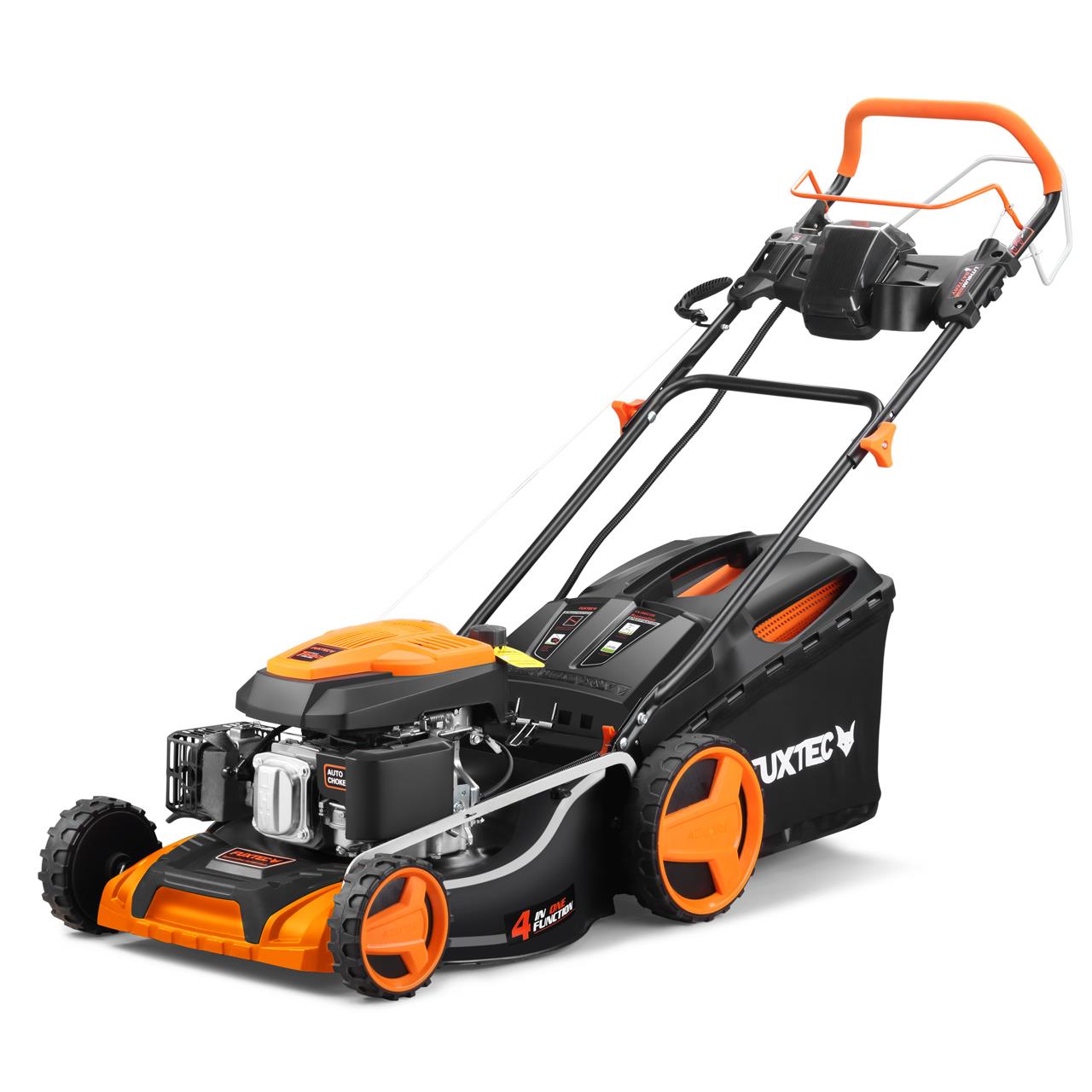
- Trim the grass gradually: Do not cut the long grass back hard all at once. Stick to the one-third rule and mow the lawn in several passes down to the desired height. For very long grass, you can use a FUXTEC scythe to begin with.
- Remove or mulch the clippings: When there are large amounts of clippings, you should remove them from the area so the lawn does not get smothered underneath. Smaller quantities can be composted or spread thinly as mulch beneath shrubs.
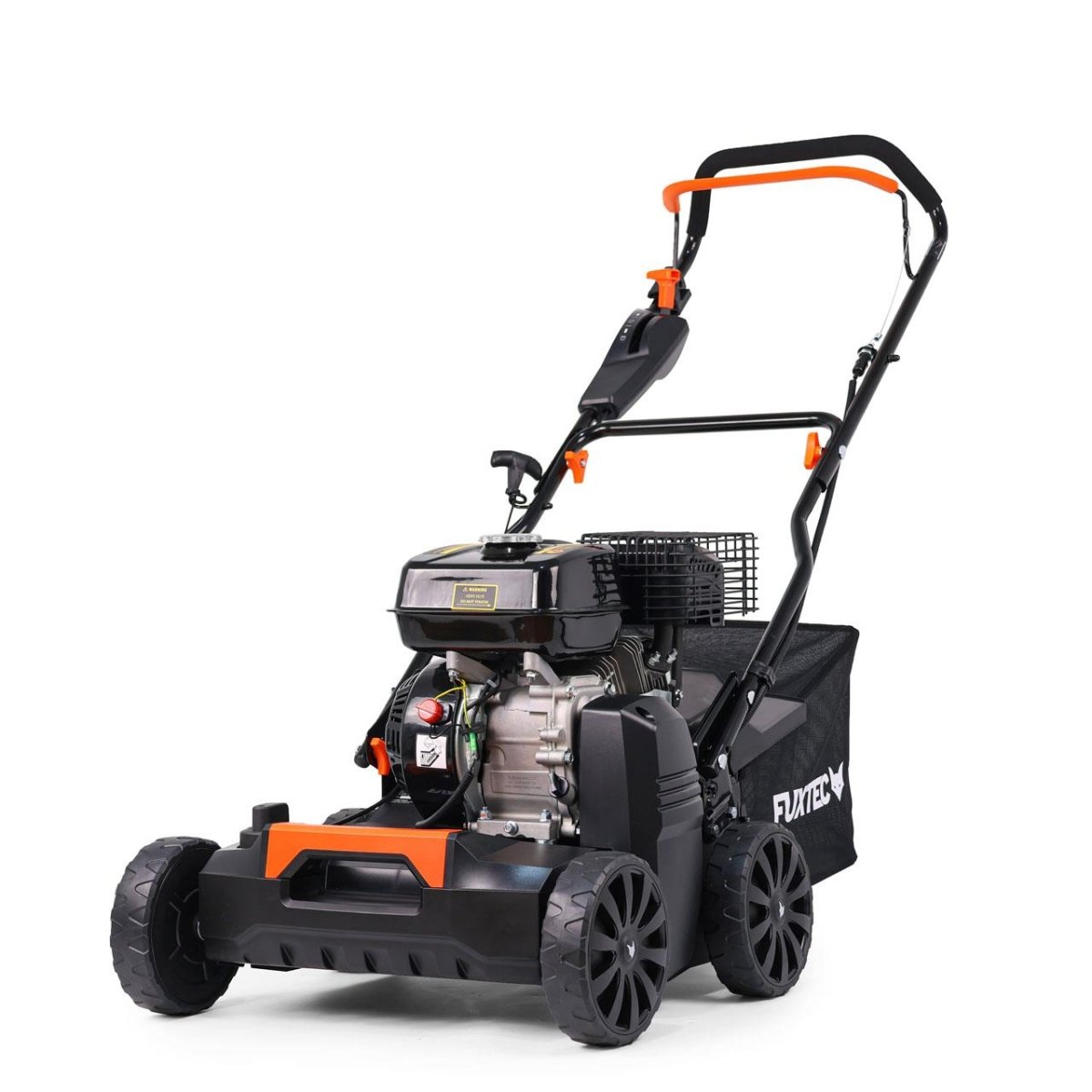
- Check for thatch: If a thick layer of thatch has built up in the unmown lawn, careful scarifying may be worthwhile. Only do this if the lawn is strong enough and the soil is neither too dry nor too wet.
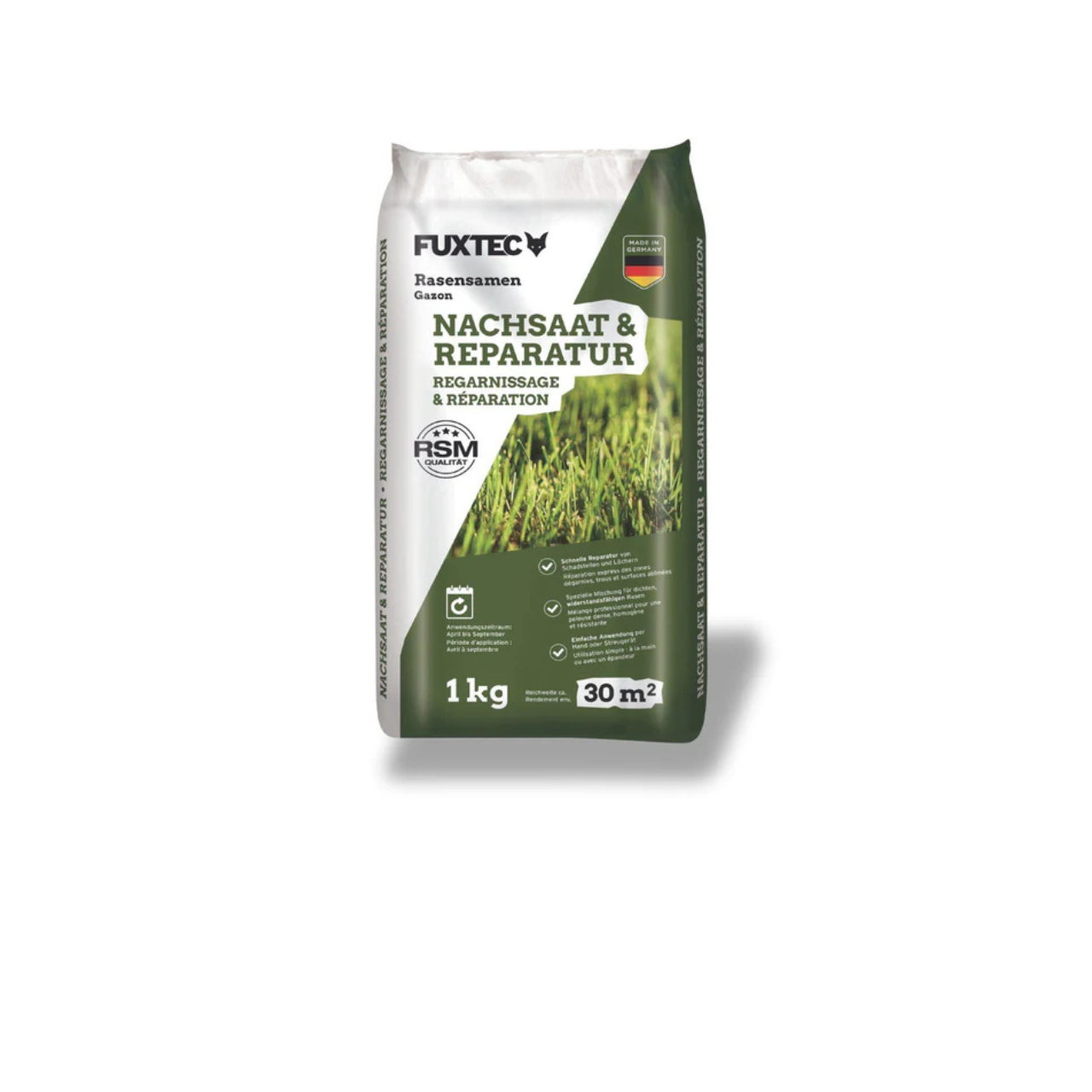
- Fill in bare patches: If you spot bare or uneven areas, you can top them up with a little topsoil and then apply FUXTEC overseeding mix. Gently firm the seeds down so they have good contact with the soil.
- Feeding: A suitable FUXTEC lawn fertiliser supplies the grass with essential nutrients and supports regrowth after the No Mow May break.
- Water the lawn properly: After overseeding, the soil should be kept evenly moist. A FUXTEC watering set makes this easy!
Less Work, More Wildlife: Why Skipping the Mower in May Makes Your Garden More Insect-Friendly

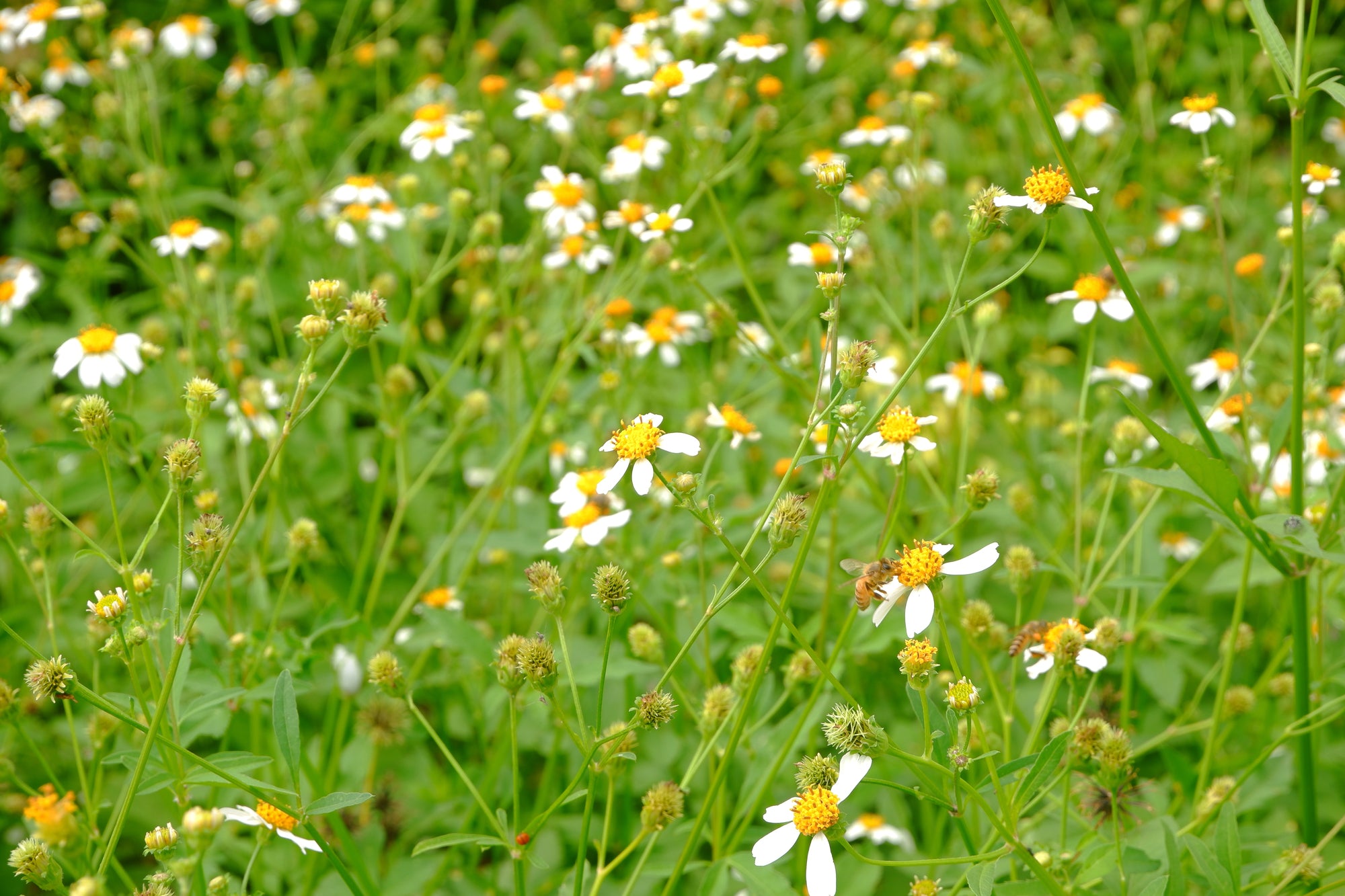
A month without mowing can do more for your garden than you might think at first glance. When grass is allowed to grow taller in May, many wildflowers and herbs get the chance to bloom at all. Dandelions, clover, daisies, ground ivy, and lady's smock all provide food for solitary bees, butterflies, and other pollinators. At the same time, unmown areas create more habitat for insects and small garden creatures. Longer grass provides shade, retains moisture in the soil more effectively, and protects soil life. Birds, hedgehogs, and ground beetles also benefit when not every flower-bearing patch in the garden gets cut.
And even if you do want to cut your lawn again in June, the break will not have been wasted. Many plants will have had the chance to bud, insects will have found food, and your garden will have been ecologically richer for a few weeks. Even more sustainable is to avoid cutting everything at once — if you can leave individual flower patches, wild corners, or a section of lawn unmown, your garden will stay tidy whilst remaining insect-friendly throughout the year.
Entdecke unsere Auswahl an Gartengeräten
What is the one-third rule for cutting grass after No Mow May?
The one-third rule states that you should never remove more than one-third of the grass's current height in a single cut. This prevents stress to the grass and allows it to recover properly after the No Mow May break, so you may need several mowing sessions over about a week to reach your desired height.
Can I cut my overgrown lawn back short all at once?
No, cutting the grass back drastically all in one go will cause the grass blades to lose too much leaf mass at once and struggle to recover. Instead, gradually reduce the height over several mowing sessions using the one-third rule.
How long does it take to restore a lawn after No Mow May?
It depends on the starting height and desired final height. A standard utility lawn typically takes several mowing sessions spread over a week or more to reach the neat height of around 5 cm, whilst a fine ornamental lawn may take longer to reach 2.5 cm.
Should I remove grass clippings after mowing a long unmown lawn?
Yes, you should remove large amounts of clippings to prevent the lawn from becoming smothered underneath. Smaller quantities can be composted or spread thinly as mulch beneath shrubs.
What should I do if my lawn looks patchy or matted after No Mow May?
Remove any debris first, then gradually trim the grass using the one-third rule. Consider scarifying if thatch has built up, fill in bare patches with topsoil and overseeding mix, apply a suitable lawn fertiliser, and water properly to support regrowth.
Can I keep some areas of my lawn unmown to help insects year-round?
Yes, leaving individual flower patches, wild corners, or sections of lawn unmown throughout the year keeps your garden tidy whilst remaining insect-friendly. This allows wildflowers to bloom and provides ongoing habitat for bees, butterflies, and other pollinators.
Alles, was dein Rasen braucht
Weitere Beiträge zum Thema Rasenpflege
Mulchen mit Pinienrinde: So nutzt du organischen Mulch, um Unkraut zu verhindern
Das Mulchen mit Pinienrinde gehört zu den effektivsten Methoden im modernen Gartenbau und in der nachhaltigen Landwirtschaft. Dabei wird eine Schicht Mulchmaterial auf die Bodenoberfläche aufgebrac...
Bodenverbesserung im Garten: So verbesserst du deinen Gartenboden im Frühjahr für gesunde Pflanzen
Inhaltsverzeichnis Warum Bodenverbesserung im Garten im Frühjahr so wichtig für einen gesunden Gartenboden ist Gartenboden nach dem Winter prüfen: Bodenstruktur, Verdichtung und Bodenart erke...
Richtig Düngen im Garten: Schritt für Schritt erklärt
Inhaltsverzeichnis Warum Düngen im Garten so wichtig ist Bodenanalyse: Grundlage für die richtige Düngung Organische vs. mineralische Dünger: Was ist besser? Kompost, Hornspäne & Co.: Organi...


