
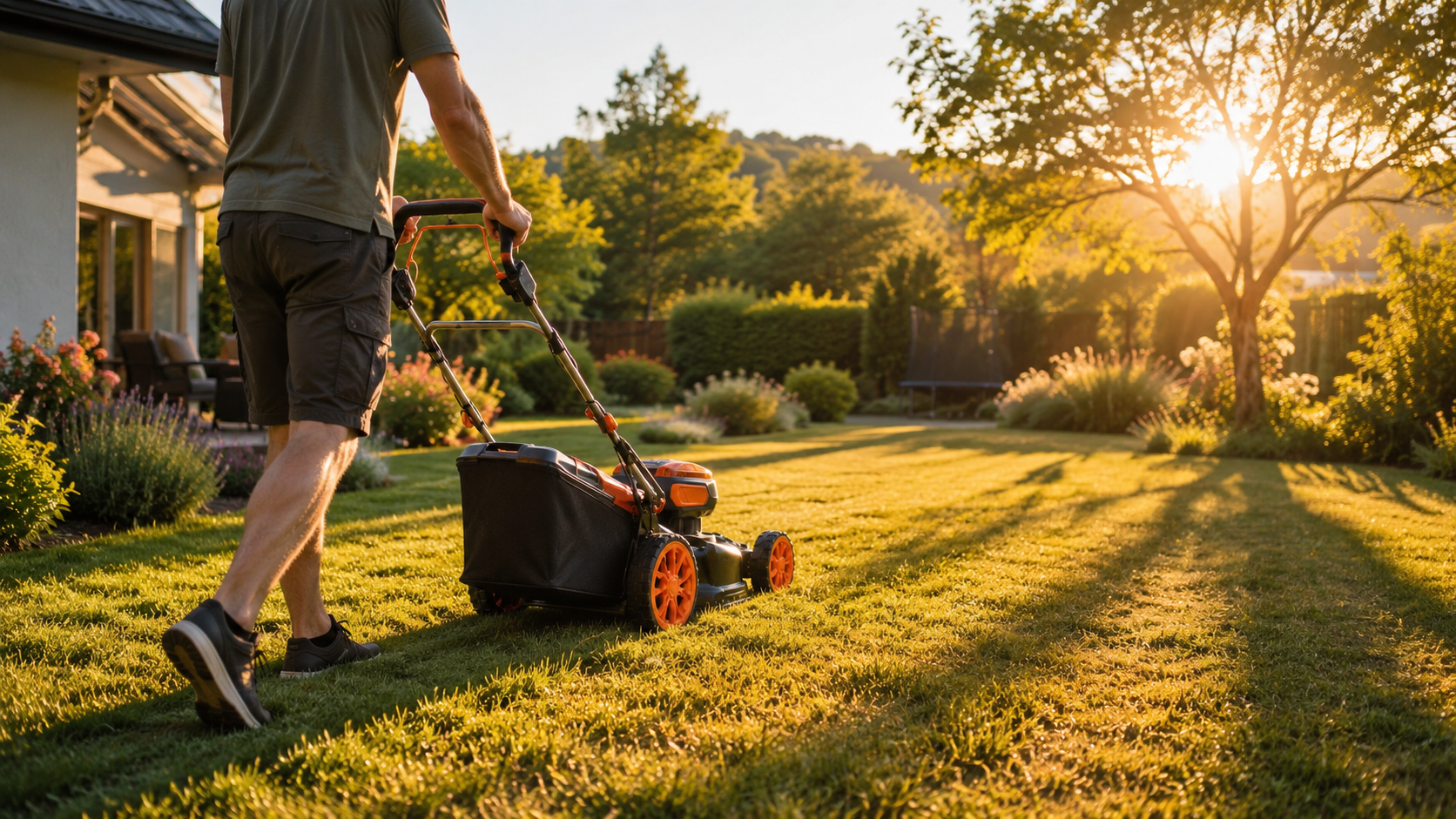
Mowing the Lawn in Summer: Tips for Hot Weather
When temperatures rise and rainfall is scarce, your lawn can quickly come under stress. Heat, dry weather, and intense sunshine cause grass to grow more slowly, dry out faster, and become more sensitive to care mistakes. When it comes to mowing the lawn in summer, the right lawn care routine, appropriate cutting height, and adjusted watering schedule all make a real difference.
In this FUXTEC garden guide, we share tips for mowing correctly in hot conditions, when you should mow your lawn during a heatwave, what cutting height is ideal in summer, and how to water your lawn properly on warm, dry days.
Lawn in Summer: The Right Cutting Height in the Heat
When mowing in hot weather, it's not just about choosing the right time — the cutting height matters just as much. If you cut your lawn too short on hot summer days, more soil is exposed, moisture evaporates more quickly, and the grass blades come under additional stress. The result is often scorched patches or a lawn that looks burnt.
That's why you should set the cutting height on your FUXTEC lawn mower a little higher in summer. In hot and dry conditions, around 5 to 7 centimetres is ideal. The longer blades provide better shade for the soil and help protect the lawn from drying out. Once temperatures drop again and the lawn has recovered, you can gradually cut it a little shorter.

Mowing After Your Holiday
Another important rule for summer lawn care is the one-third rule: never cut more than one third of the blade length in a single mow. This is especially relevant after your summer holiday, when the lawn has typically grown considerably longer. Rather than cutting it back drastically, aim to reach your desired height over several mowing sessions. This way, your lawn stays dense and resilient even in intense heat and dry spells.

Entdecke unsere Auswahl an Gartengeräten
What's the ideal grass cutting height for summer?
The ideal cutting height in summer is around 5 to 7 centimetres. Longer blades provide better shade for the soil and help protect the lawn from drying out in hot, dry conditions.
When should I mow my lawn during hot weather?
The best time to mow is in the evening when the strongest sun has passed, allowing your lawn to recover overnight. Avoid mowing at midday when the sun is most intense, as freshly cut blades are particularly vulnerable to damage.
How often should I mow during summer?
Once a week is sufficient during summer. During periods of intense heat and drought above 30°C, it's best not to cut the grass at all, as it's already under drought stress and needs time to recover.
What is the one-third rule for lawn mowing?
Never cut more than one-third of the blade length in a single mow. This is especially important after your summer holiday when the lawn has grown considerably; reach your desired height over several mowing sessions to keep your lawn dense and resilient.
How should I water my lawn in hot, dry weather?
Water thoroughly once or twice a week rather than giving brief daily sprinkles, as this allows water to penetrate deeper and encourages stronger root growth. The best time to water is in the morning or evening to minimise evaporation.
Why does grass grow more slowly in summer heat?
Above 30°C, grass growth slows noticeably or can almost stop altogether. The lawn stops putting energy into new growth and instead focuses on coping with heat stress, making it particularly vulnerable during this period.
Alles, was dein Rasen braucht
Weitere Beiträge zum Thema Rasenpflege
Mulchen mit Pinienrinde: So nutzt du organischen Mulch, um Unkraut zu verhindern
Das Mulchen mit Pinienrinde gehört zu den effektivsten Methoden im modernen Gartenbau und in der nachhaltigen Landwirtschaft. Dabei wird eine Schicht Mulchmaterial auf die Bodenoberfläche aufgebrac...
Bodenverbesserung im Garten: So verbesserst du deinen Gartenboden im Frühjahr für gesunde Pflanzen
Inhaltsverzeichnis Warum Bodenverbesserung im Garten im Frühjahr so wichtig für einen gesunden Gartenboden ist Gartenboden nach dem Winter prüfen: Bodenstruktur, Verdichtung und Bodenart erke...
Richtig Düngen im Garten: Schritt für Schritt erklärt
Inhaltsverzeichnis Warum Düngen im Garten so wichtig ist Bodenanalyse: Grundlage für die richtige Düngung Organische vs. mineralische Dünger: Was ist besser? Kompost, Hornspäne & Co.: Organi...


