
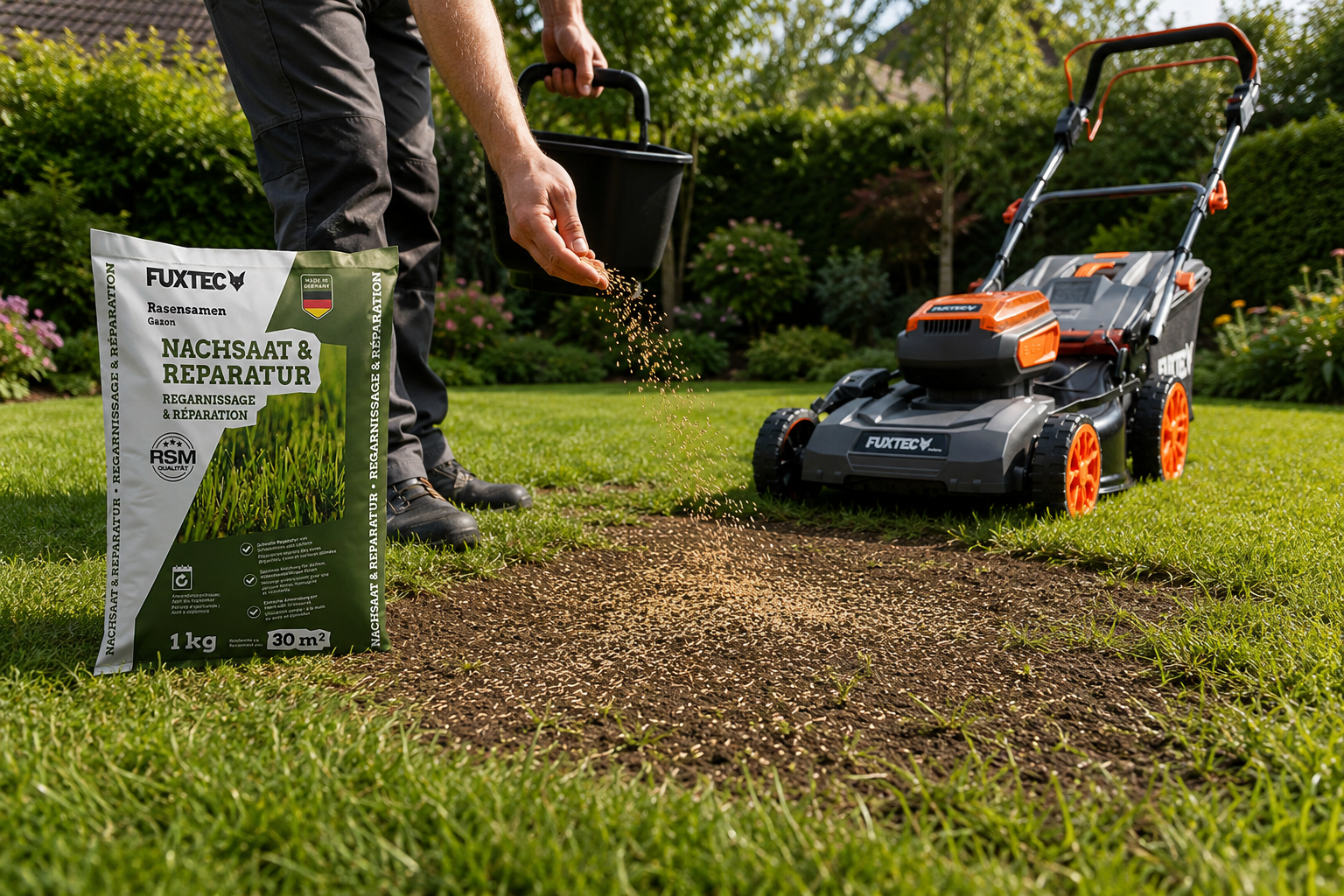
How to Repair Bare Patches in Your Lawn
If you didn't overseed your lawn in autumn, you'll often discover bare patches, thin areas, or even larger gaps come spring. Frost, waterlogging, and the wear and tear of winter can be further causes, taking an additional toll on your lawn and leaving it damaged or scorched. That's precisely why spring is the perfect time to repair your lawn and encourage strong, healthy regrowth through targeted overseeding. As temperatures rise, seeds germinate reliably and the grass enters a new period of growth. By patching up bare spots now, you'll also prevent weeds and moss from taking hold on the open areas.
In this FUXTEC Garden Guide, we'll walk you through a step-by-step approach to overseeding your lawn and filling in any gaps with ease.
Preparing the Soil and Lawn Correctly for Overseeding
Before you can repair bare patches and sow new seed, you should thoroughly prepare the soil. Start by mowing the lawn with a FUXTEC lawn mower so that the new seed receives enough light later and can germinate more effectively. Then remove any dead grass, root debris, moss, stones, and weeds — a FUXTEC weed remover will make this easier.
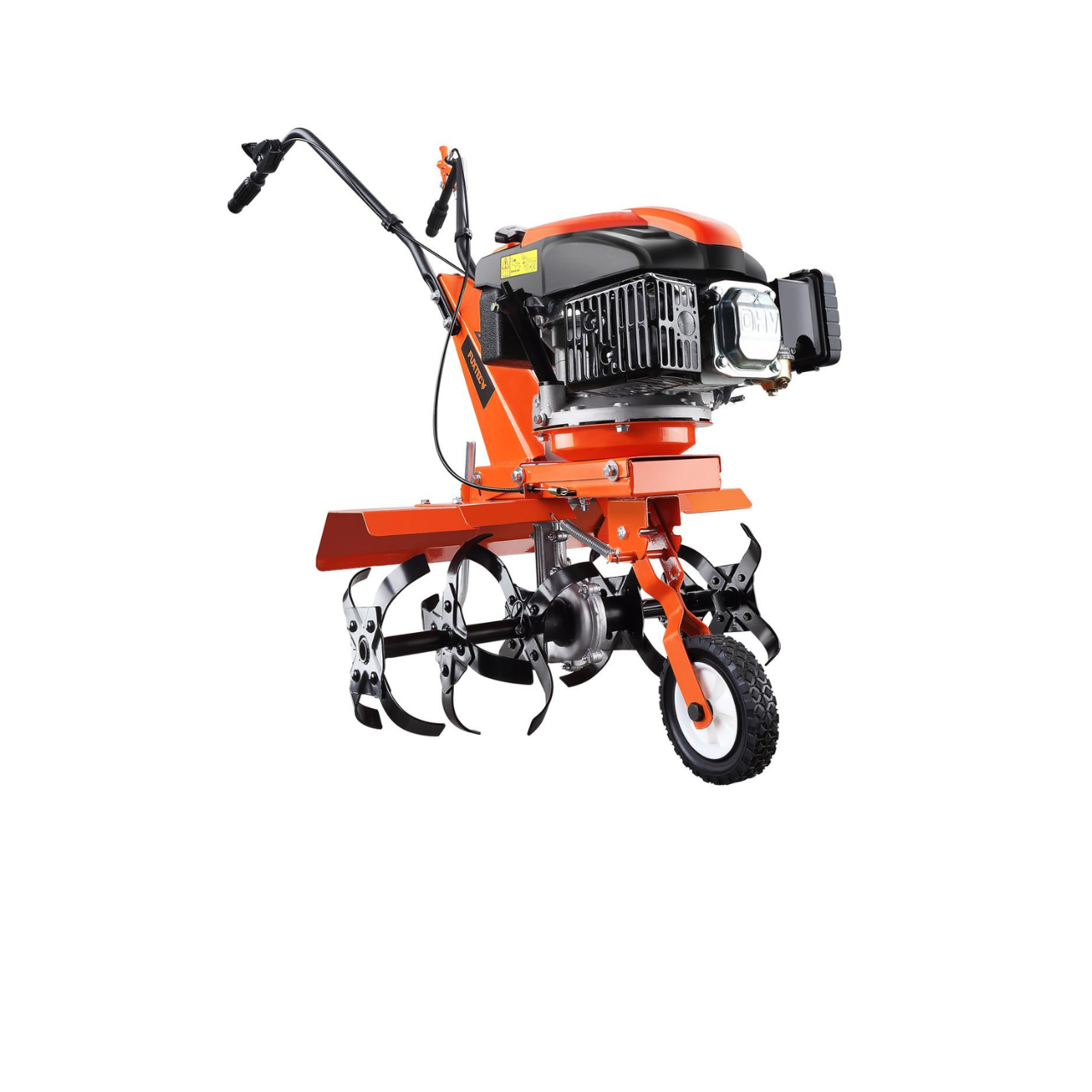
Next, loosen the surface carefully. Smaller areas can be treated well with a FUXTEC lawn aerator, whilst larger or heavily compacted sections may benefit from a FUXTEC scarifier. Scarifying opens up the upper layer of soil and improves seed germination. Particularly on bare patches and larger gaps, loose soil is essential so that young grass can take root properly and your lawn becomes dense again.
Clay-heavy soil should be improved with a little sand to prevent waterlogging and allow water to drain away more freely. Very sandy soil, on the other hand, benefits from humus-rich compost or a little horticultural grit, so that moisture and nutrients are retained for longer.

Step-by-Step Guide: How to Repair Bare Patches and Holes in Your Lawn
With the right preparation and careful overseeding, you can restore your lawn and get rid of gaps — often within just a few weeks. The most important factors are choosing the right time, ensuring the soil is well prepared, and keeping it sufficiently moist during germination. Here's how to do it, step by step:
1. Spring or Autumn: Choosing the Right Time to Repair Lawn Gaps
Bare patches and holes in your lawn are best repaired in spring or autumn. In spring, the ideal window for sowing is once soil temperatures reach around 10 °C, typically from April through to May. Alternatively, you can overseed between September and October. It's important that there is no further risk of frost and that the ground is not too dry.
2. Creating a Fine, Crumbly Seedbed for Successful Germination
For the seeds to germinate properly, the soil for overseeding needs to be loose and fine in texture. If needed, you can also work in some fresh lawn top dressing to improve the soil and support germination.
3. Supporting the Overseed to Tackle Lawn Gaps
To help young grass establish quickly, it's worth applying fertiliser directly after preparing the soil. A specialist lawn starter fertiliser supplies the new seed with essential nutrients. Phosphorus in particular encourages root development and helps the new lawn area to fill in more rapidly.
Lightly work the fertiliser into the soil before sowing the seed. This makes nutrients immediately available to the young grass and encourages more even establishment. Especially after winter, or on heavily worn or damaged areas, a suitable fertiliser can make the repair process considerably easier.
If you're already using seed with an integrated fertiliser or a specialist overseeding mix, you can skip this step.
4. Sowing Grass Seed Evenly for Full Coverage
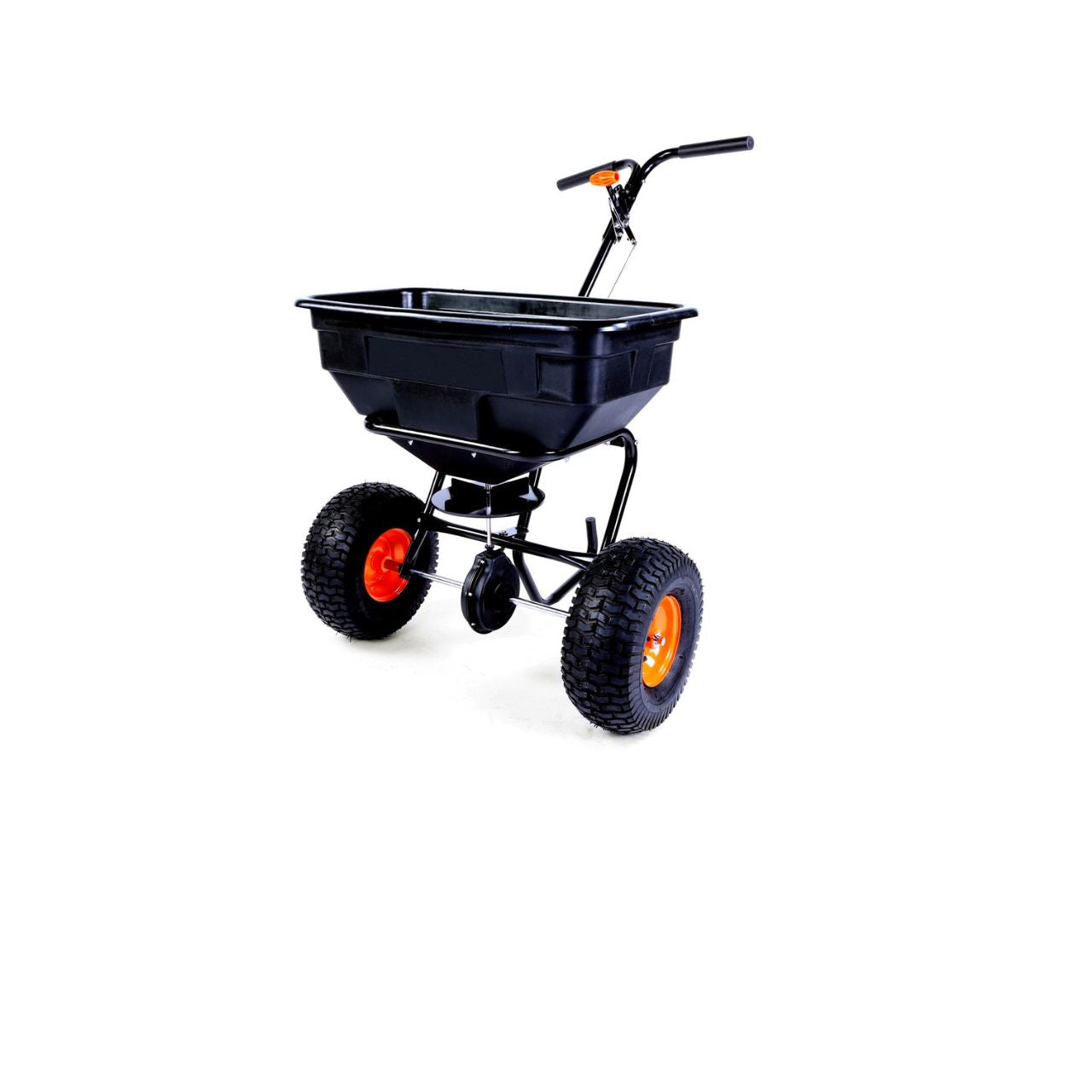
Spread the seed as evenly as possible over the bare areas of the lawn. Make sure to use high-quality grass seed so that the new lawn grows back thick and healthy.
5. Don't Cover Grass Seed with Soil
Many people make the mistake of pressing the seed too deeply into the soil. Grass seed should not be fully covered with earth, as it needs sufficient light to germinate. Instead, it's enough to gently press the seed down to ensure good contact with the soil.
6. Gently Firm Down the Overseeded Area
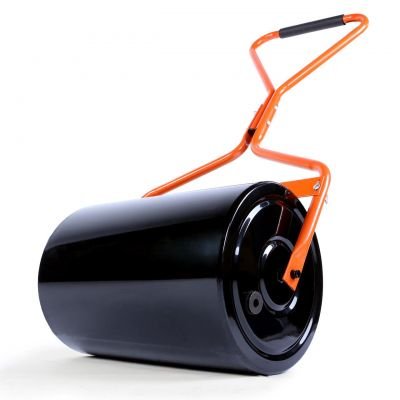
Press the sown grass seed down gently using your feet or a small lawn roller. This helps the seed stay in place and prevents it from being washed away by wind or watering. At the same time, it improves contact between the seed and soil, which supports germination.
7. Water the Lawn Regularly
During the first two weeks after sowing, consistent watering is crucial. The soil should remain constantly moist so that the grass seed does not dry out. Particularly during dry spells, germination can quickly be interrupted if the soil dries out. Do avoid waterlogging, however, as this can damage young grass.
8. Mowing the New Lawn for the First Time
Once the young grass has reached a height of around 6 to 8 centimetres, you can mow for the first time. Use sharp blades on your lawn mower and avoid cutting too short, so that the young shoots can continue to thicken up and form a dense, gap-free lawn.
Tips for Successful Lawn Overseeding
- Protect overseeded areas from birds: Freshly sown seed is attractive to many birds. If needed, cover the seeded patches with a fine fleece or netting to prevent the seed from being eaten and to allow undisturbed germination.
- Temporarily exclude robotic mowers: If you use a robotic lawn mower, mark off or fence in the overseeded areas to prevent any mowing there. Young grass is still delicate at first and could be cut before it has had the chance to develop into a full, gap-free sward.
- Keep foot traffic on the lawn to a minimum during the first few weeks: Freshly sown seed needs to be left undisturbed so that the young shoots can establish properly. Avoid walking on or putting any weight on the repaired patches immediately after sowing.
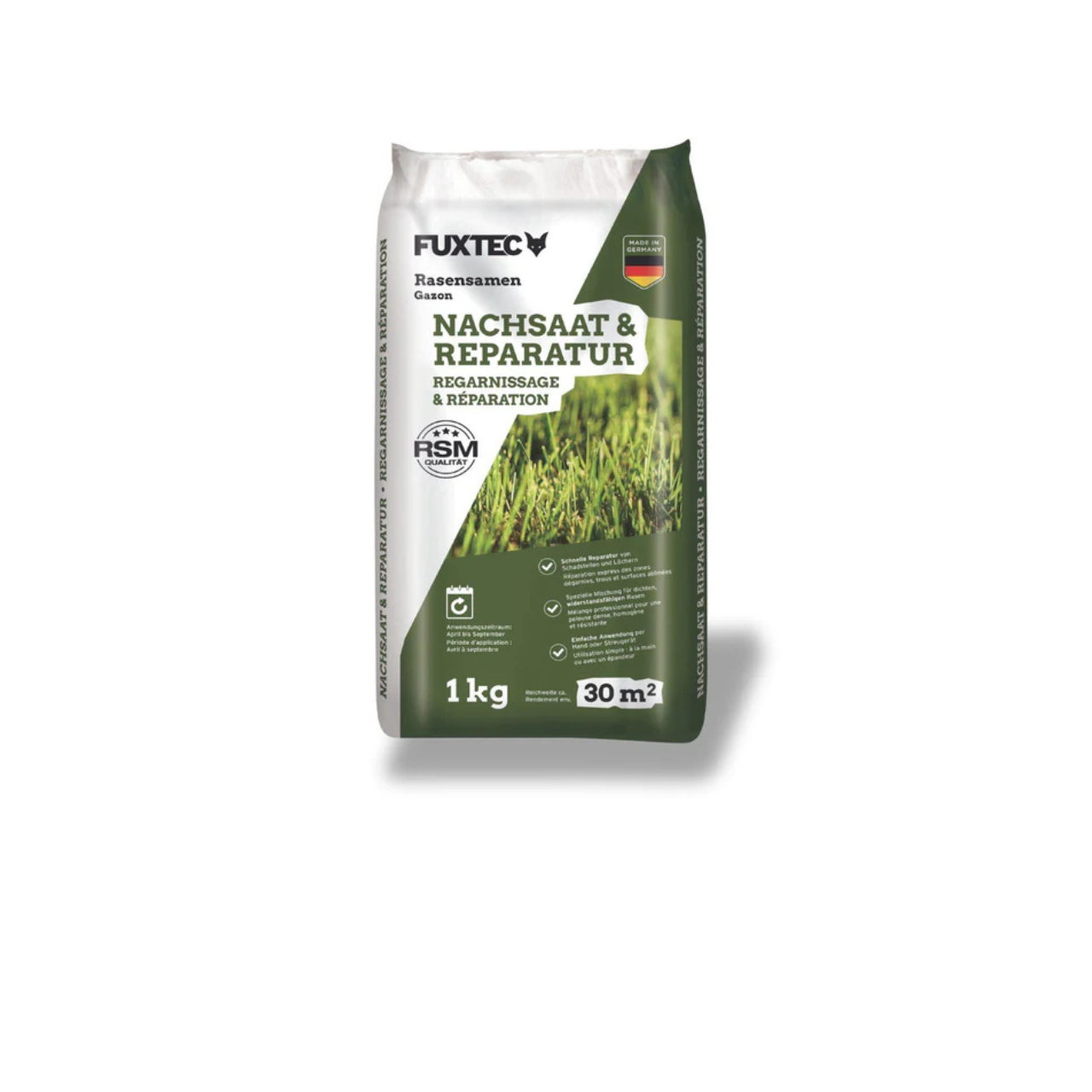
Repairing Lawn Patches: With FUXTEC Grass Seed and Overseeding Products
A healthy lawn requires not only the right care routine, but also quality products and proper nutrient supply. FUXTEC's overseeding products support rapid germination, strong new growth, and a resilient lawn surface.

Spring in particular is the ideal time to patch up bare areas of your lawn, get rid of gaps, and repair them through overseeding. FUXTEC grass seed ensures even coverage, promotes a uniform lawn, and helps to quickly thicken up worn or damaged areas. The result is a robust grass sward that can withstand even intensive use in the garden.
Whether it's small holes in the lawn or a complete overseed after the cold season: with the right FUXTEC seed, your lawn can be visibly transformed. Within just a few weeks, you'll notice a lusher green and a noticeably denser growth.
Entdecke unsere Auswahl an Gartengeräten


When is the best time to overseed my lawn?
Spring and autumn are the ideal seasons for overseeding. In spring, sow once soil temperatures reach around 10°C, typically from April to May, whilst autumn overseeding works well between September and October. Ensure there's no risk of frost and the ground isn't too dry.
How should I prepare my lawn before overseeding?
Mow the lawn short, then remove dead grass, moss, weeds, and stones. Loosen the soil with a lawn aerator for smaller areas or a scarifier for larger sections to improve seed germination. For clay-heavy soil, add sand to prevent waterlogging; sandy soil benefits from compost or horticultural grit.
Do I need to cover grass seed with soil?
No, grass seed needs light to germinate properly, so it should not be fully buried. Instead, gently press the seed into the soil to ensure good contact, which will help it germinate effectively without blocking out light.
How often should I water my lawn after overseeding?
Water regularly for the first two weeks after sowing to keep the soil constantly moist. Avoid waterlogging, which can damage young grass, but ensure the seed doesn't dry out, especially during dry spells, as this interrupts germination.
How tall should grass be before I mow it for the first time?
Wait until the young grass reaches a height of around 6 to 8 centimetres before mowing for the first time. Use sharp blades and avoid cutting too short so the young shoots can continue to thicken and form a dense lawn.
What can I do to protect newly sown seed from birds?
Cover freshly sown patches with fine fleece or netting to prevent birds from eating the seed and allow undisturbed germination. Remove the covering once the grass has established.
Why should I apply fertiliser before overseeding?
A specialist lawn starter fertiliser supplies new seed with essential nutrients, particularly phosphorus, which encourages root development and helps the new lawn area fill in more rapidly. Work it gently into the soil before sowing for best results.
Alles, was dein Rasen braucht


Weitere Beiträge zum Thema Rasenpflege

Mulchen mit Pinienrinde: So nutzt du organischen Mulch, um Unkraut zu verhindern
Das Mulchen mit Pinienrinde gehört zu den effektivsten Methoden im modernen Gartenbau und in der nachhaltigen Landwirtschaft. Dabei wird eine Schicht Mulchmaterial auf die Bodenoberfläche aufgebrac...
Bodenverbesserung im Garten: So verbesserst du deinen Gartenboden im Frühjahr für gesunde Pflanzen
Inhaltsverzeichnis Warum Bodenverbesserung im Garten im Frühjahr so wichtig für einen gesunden Gartenboden ist Gartenboden nach dem Winter prüfen: Bodenstruktur, Verdichtung und Bodenart erke...
Richtig Düngen im Garten: Schritt für Schritt erklärt
Inhaltsverzeichnis Warum Düngen im Garten so wichtig ist Bodenanalyse: Grundlage für die richtige Düngung Organische vs. mineralische Dünger: Was ist besser? Kompost, Hornspäne & Co.: Organi...


