

Lawn Fertilising in Spring: Timing, Tips & Guide
-
Warum dein Rasen nach dem Winter dringend Nährstoffe braucht
-
Rasen düngen im Frühjahr: wann ist der richtige Zeitpunkt?
-
Welcher Rasendünger eignet sich für die erste Düngung im Frühjahr?
-
Organisch oder mineralisch: Welcher Dünger ist für den Rasen im Frühling besser?
-
Warum ein spezieller Rasendünger für die Düngung im Frühling sinnvoll ist
-
Rasen im Frühjahr vorbereiten: mähen, Laub entfernen, vertikutieren
-
Rasen richtig düngen: so bringst du den Dünger gleichmäßig aus
-
Fazit: Mit der richtigen Düngung im Frühjahr zu einem sattgrünen Rasen
After winter, your lawn makes a slow and tentative return to life. Limited sunlight, fluctuating temperatures and the occasional cold snap all take their toll. At the same time, the grass plants' metabolism begins to kick back in as conditions become milder. It is precisely during this phase that you determine whether you build a lush, dense lawn quickly or whether extra lawn care becomes necessary later on.
In this FUXTEC garden guide, you'll find everything you need for a successful spring lawn feed: timing, preparation, dosage and common mistakes to avoid. You'll also learn everything you need to know to choose the right lawn fertiliser for spring lawn care.
Why Your Lawn Urgently Needs Nutrients After Winter
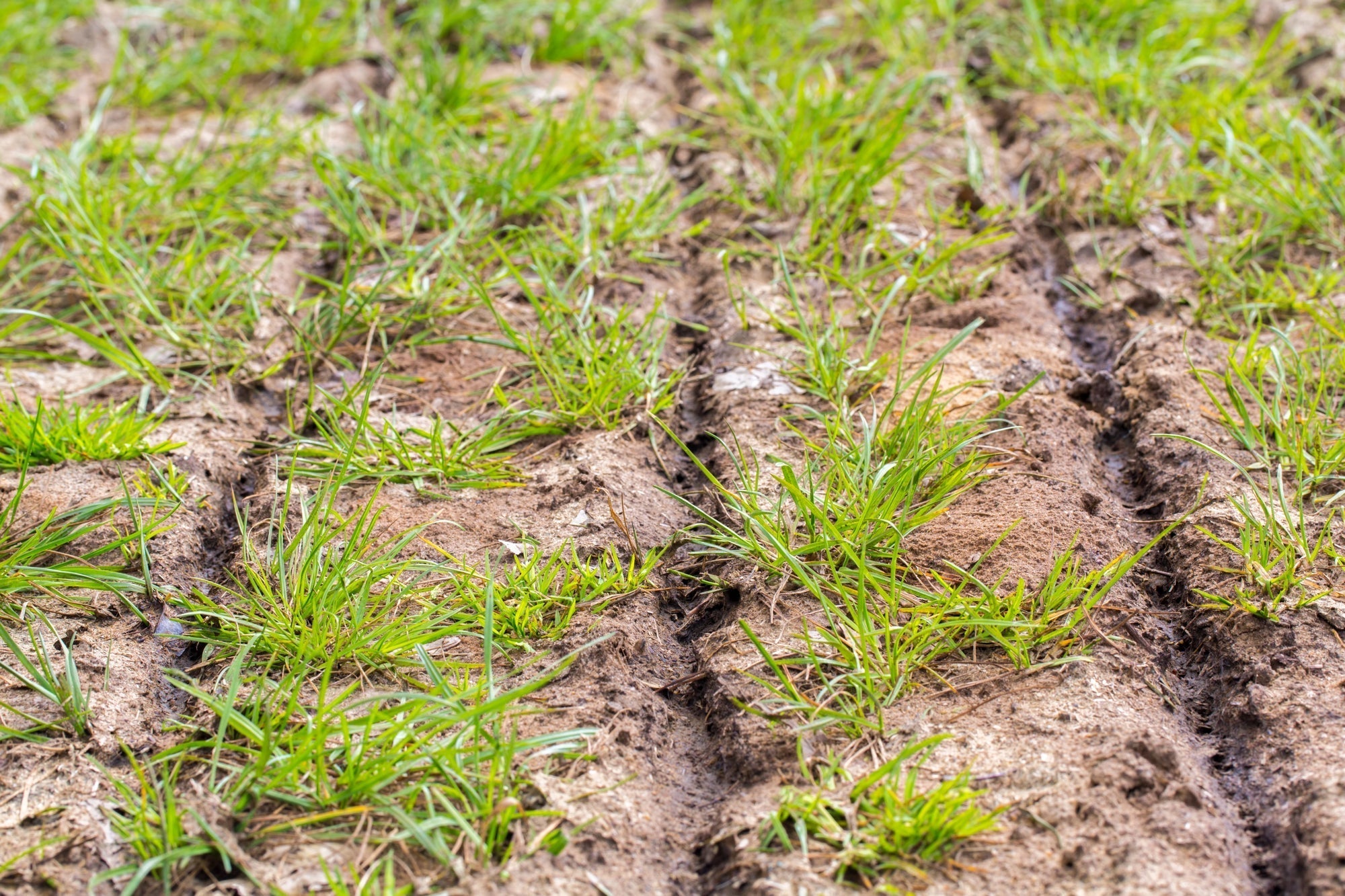
After winter, your lawn is weakened — the grass plants have been drawing on their reserves. In many gardens, fallen leaves add to the problem by blocking light and keeping the surface damp. This weakens the turf and leads to thin or bare patches. If the grass is not given nutrients promptly in spring, the lawn often starts unevenly: some areas shoot ahead while others remain pale and sparse.
A strong spring recovery depends heavily on your soil type. On sandy soils, reserves are depleted more quickly. On heavy, clay soils, more nutrients are retained, but the soil takes longer to warm up. There's another factor to consider: if the soil pH is too low, nutrients become less available, and the lawn becomes more susceptible to moss and certain weeds.
Feeding Your Lawn in Spring: What Is the Right Time?
The best time is not a fixed date, but a combination of weather conditions and soil temperature. As a practical guide: when the soil has warmed consistently and there is no further frost expected, the first application can begin. This window typically falls between mid-March and mid-April.
The condition of the lawn is also important:
-
The lawn should be showing signs of active growth, not still in full winter dormancy.
-
The surface should be able to dry out. Granules can clump and stick on wet grass.
-
Time your application so that water is available afterwards — either from rain or irrigation.
If you have recently sown seed, wait until the grass blades are clearly visible and the new turf looks well established before feeding. For an established lawn, it makes sense to support growth in spring as soon as the first mowing sessions become possible.
Which Lawn Fertiliser Is Right for the First Spring Feed?
For the season's start, you need a consistent, reliable supply of nutrients. In most domestic gardens, a slow-release fertiliser is the most dependable choice, as it releases nutrients steadily over several weeks and buffers fluctuations. During the main growing season, a consistent nutrient supply is essential to keep the turf dense and resilient.
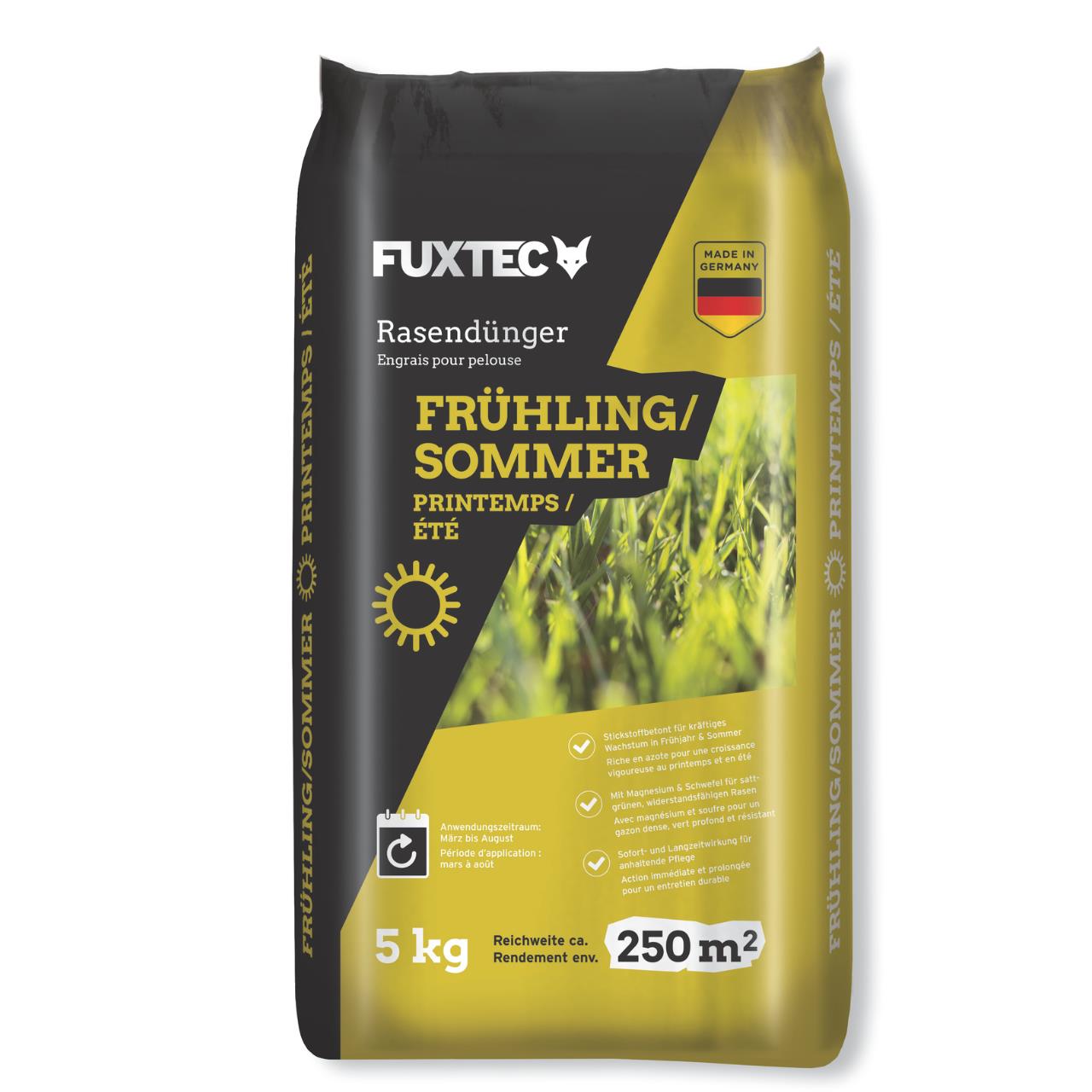
The FUXTEC Lawn Fertiliser Spring/Summer FX-RDFS is designed for exactly this period: March through to August. It features a fine granule structure for even distribution and is suitable for both ornamental and utility lawns. The fertiliser supports recovery after the stresses of winter and heavy use, keeping your lawn looking its best throughout the season.
Organic or Mineral: Which Fertiliser Is Better for Your Lawn in Spring?
Organic fertiliser releases nutrients more slowly, as soil organisms are needed to break them down. This works well when the soil biology is active and you prefer a more sustainable approach. Mineral fertilisers act more quickly but carry a greater risk if incorrectly dosed. Many gardeners therefore opt for organic or organic-mineral blends to combine the benefits of immediate and long-term action.
A useful rule of thumb: organic fertilisers that release nutrients gradually stabilise the supply over several weeks and improve soil structure over the long term.
In practice, choose a fertiliser that suits your weather conditions and maintenance routine. A fertiliser with a high nitrogen content promotes strong spring growth. Nitrogen feeds directly into leaf growth and overall green mass.
Why a Dedicated Spring Lawn Fertiliser Makes Sense
In spring, the aim is for the lawn to recover quickly from winter stress, fill in any thin patches and grow evenly. A seasonal product designed for spring lawn feeding is tailored to this purpose: steady nutrient release, the right nutrient balance and good spreadability. The fine granule structure of the FX-RDFS ensures accurate dosing and clean, even spreading.
Benefits of the FUXTEC Spring/Summer Lawn Fertiliser at a Glance
| Feature | FUXTEC Lawn Fertiliser Spring/Summer FX-RDFS | Standard Lawn Fertiliser |
|---|---|---|
| Application period | Specifically developed for spring through to summer (March–August) | Often only short-term or seasonally non-specific |
| Nutrient supply | Continuous, balanced supply throughout the main growing season | Irregular release with peaks |
| Growth appearance | Promotes even, dense turf growth | Often results in uneven growth |
| Granule structure | Fine granules for even application without clumping | Coarser granules, potential for uneven distribution |
| Areas of use | Suitable for ornamental and utility lawns | Usually not specifically tailored |
| Ease of use | Optimised for hand and spreader application | Sometimes limited spreadability |
| Origin | Made in Germany | Origin often not transparent |
What does this mean for your lawn?
The FUXTEC Spring/Summer Lawn Fertiliser ensures your lawn is evenly nourished throughout the most important growing months. Rather than rapid bursts of growth followed by a drop in performance, you get a dense, resilient turf with a consistently rich colour. The fine granule structure makes application easier and reduces streaking — a clear advantage for a neat, professional finish in your garden.
Preparing Your Lawn in Spring – Mowing, Clearing Leaves & Scarifying
Good preparation prevents mistakes during feeding. Work through the following steps in order:
-
Clear the area: Remove leaves, twigs and any winter debris. Light and airflow are essential, as light drives photosynthesis.
-
Mow the lawn: Once the grass reaches around 7 cm, you can carry out the first cut. Set the mower on a higher setting so as not to stress the plants. Remove the clippings afterwards; if left on the surface, they encourage the build-up of thatch.
-
Assess the need to scarify: Scarifying is worthwhile if you notice significant thatch and moss, or if water is not draining well. Scarifying lightly cuts through the surface to remove thatch and allow air to reach the roots.
-
pH test and liming plan: If the soil is noticeably acidic, it may be worth applying lime in spring. Lime should only be applied after testing, so that nutrient uptake can be restored to a healthy level.
FUXTEC recommends using the right equipment during preparation: a lawn mower for the first clean cut and a scarifier where thatch and moss are visible. The FUXTEC range includes a variety of lawn mower and scarifier models to suit your needs.
How to Apply Lawn Fertiliser Evenly: Getting It Right
Now comes the crucial step of the spring feed: applying the fertiliser evenly. A clean, even distribution makes all the difference to whether your lawn grows uniformly or develops pale streaks, over-fed patches or sparse areas later in the season. Plan your application for a dry day, ideally when rain is forecast within the following 24 to 48 hours, or when you have time to water the lawn thoroughly afterwards.
Step 1: Measure Your Lawn Area Accurately
Before you begin, make sure you know your lawn area as precisely as possible. This is the only way to dose the recommended amount correctly. Always follow the manufacturer's instructions — too much fertiliser can damage the lawn and, in the worst case, cause scorching in certain areas. Too little, on the other hand, means the product will not have the desired effect and weeds will establish themselves more readily.
Step 2: Apply Fertiliser Evenly Using a Spreader
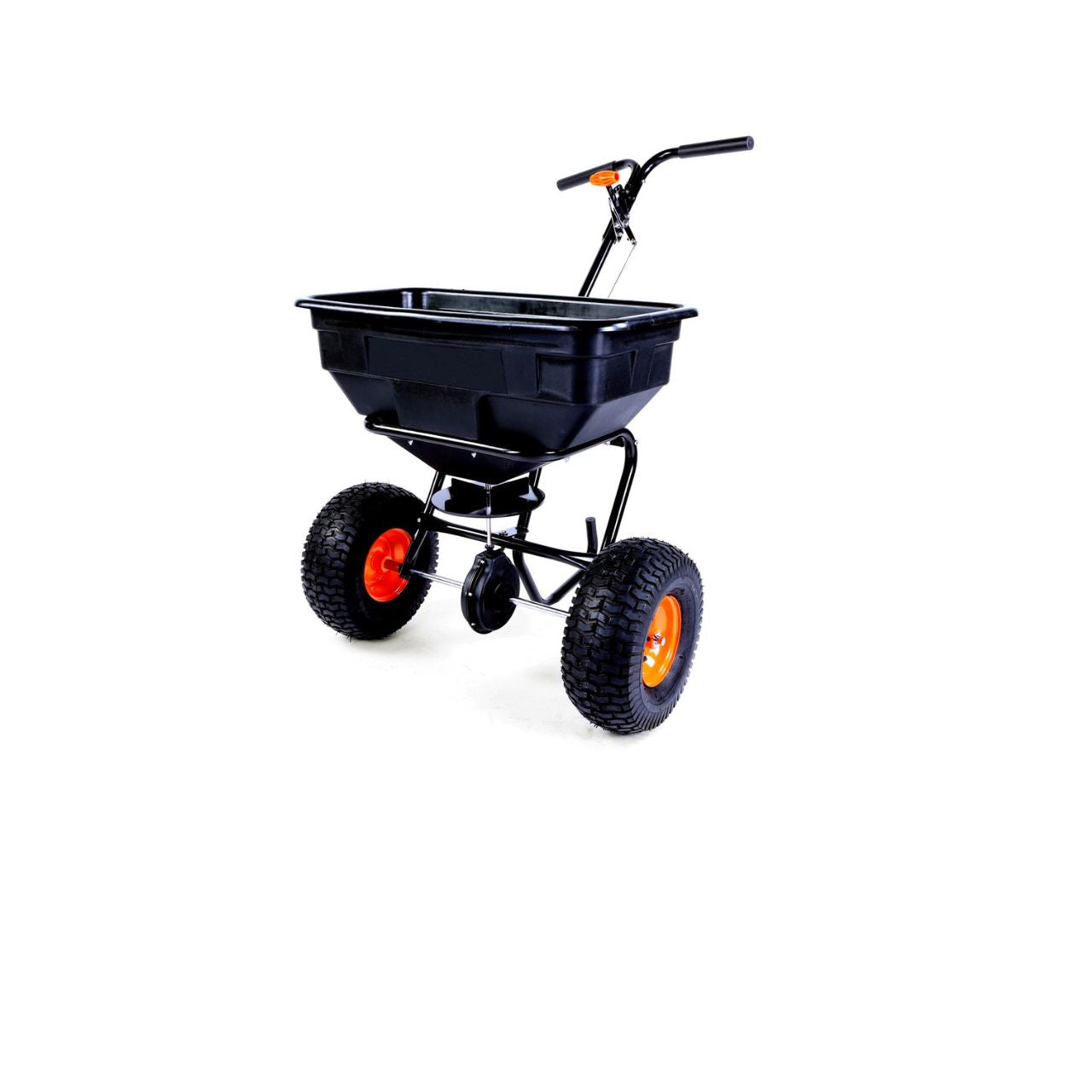
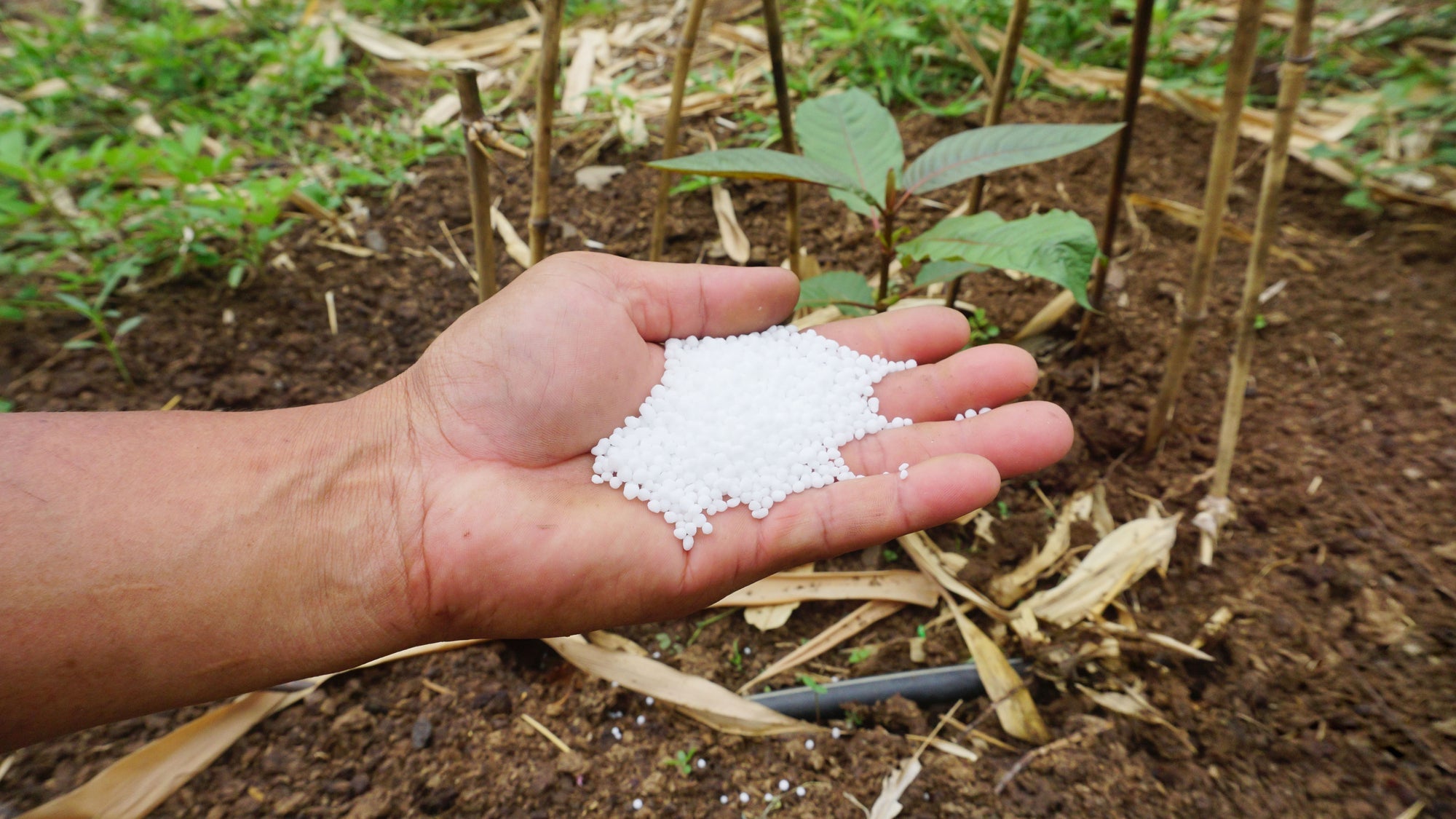
For an even distribution, particularly on larger lawn areas, using a spreader is strongly recommended. Compared to spreading by hand, a spreader offers several advantages:
-
consistent spread width
-
even dosage throughout
-
reduced risk of overlap
-
clean, repeatable results
Set the spreader according to the manufacturer's recommendation. Start at the edge of the lawn and work in steady, parallel runs. Each run should just touch the previous one without significant overlap, to avoid streaking.
Step 3: Water Thoroughly After Feeding
After applying the fertiliser, it should be watered into the soil promptly. If no rain falls, it is important to water the lawn thoroughly. This carries the nutrients down to the root zone and prevents any residue from sitting on the grass blades.
Step 4: Allow a Rest Period Before Mowing
After feeding, give your lawn a few days to settle. Only mow again once the fertiliser has been washed in and the grass is visibly responding.
When Will the Lawn Turn a Rich Green?
First signs of improvement should appear within 7–14 days. A consistent, rich green colour indicates that the fertiliser has been taken up evenly. The goal is a healthy lawn that stays in good condition throughout the season.
Summary: Achieving a Lush Green Lawn with the Right Spring Feed
If you prepare your lawn properly in spring, apply the first feed with care and keep an eye on your soil, your lawn will remain healthy and even. Pay attention to dosage, watering and temperature — this supports recovery after winter and significantly reduces the need for corrective action later in the season.
Want to strengthen your lawn and keep it evenly nourished? In the FUXTEC Lawn Fertiliser range, you'll find targeted fertilisers for spring and summer, developed for consistent nutrient supply, dense growth and a well-kept appearance throughout the entire season.
Discover FUXTEC Lawn Fertiliser Now!
Entdecke unsere Auswahl an Gartengeräten


When should I fertilise my lawn in spring?
The best time is when soil has warmed consistently and no further frost is expected, typically between mid-March and mid-April. Your lawn should show active growth, the surface should be dry enough for granules to spread evenly, and water should be available afterwards through rain or irrigation.
What type of fertiliser is best for spring lawn feeding?
A slow-release fertiliser is ideal for spring as it releases nutrients steadily over several weeks, preventing nutrient fluctuations. Choose one with high nitrogen content to promote strong spring growth and even recovery from winter stress.
How do I prepare my lawn before applying fertiliser?
Start by clearing away leaves, twigs and winter debris to allow light and airflow. Once grass reaches about 7 cm, give it your first cut on a higher setting and remove clippings. Consider scarifying if you notice significant thatch or moss, and test your soil pH to determine if liming is needed.
How should I apply lawn fertiliser evenly?
Measure your lawn area accurately first, then use a spreader for even distribution on larger areas. Apply in steady, parallel runs so each pass just touches the previous one without significant overlap. Follow the manufacturer's dosage instructions carefully to avoid damaging the lawn.
What should I do after spreading fertiliser on my lawn?
Water the lawn thoroughly within 24 to 48 hours to carry nutrients down to the root zone and prevent residue sitting on grass blades. Wait a few days before mowing again to allow the fertiliser to be absorbed and the grass to respond.
Is organic or mineral fertiliser better for spring lawn care?
Organic fertilisers release nutrients slowly as soil organisms break them down, improving soil structure long-term but acting more gradually. Mineral fertilisers work faster but carry greater risk if incorrectly dosed, so many gardeners choose organic-mineral blends to gain both immediate and sustained benefits.
How long does it take to see results after spring fertilising?
First signs of improvement should appear within 7 to 14 days, with a consistent, rich green colour indicating even nutrient uptake. A healthy lawn will maintain good condition throughout the season with proper preparation, careful application and attention to watering.
Alles, was dein Rasen braucht


Weitere Beiträge zum Thema Rasenpflege

Mulchen mit Pinienrinde: So nutzt du organischen Mulch, um Unkraut zu verhindern
Das Mulchen mit Pinienrinde gehört zu den effektivsten Methoden im modernen Gartenbau und in der nachhaltigen Landwirtschaft. Dabei wird eine Schicht Mulchmaterial auf die Bodenoberfläche aufgebrac...
Bodenverbesserung im Garten: So verbesserst du deinen Gartenboden im Frühjahr für gesunde Pflanzen
Inhaltsverzeichnis Warum Bodenverbesserung im Garten im Frühjahr so wichtig für einen gesunden Gartenboden ist Gartenboden nach dem Winter prüfen: Bodenstruktur, Verdichtung und Bodenart erke...
Richtig Düngen im Garten: Schritt für Schritt erklärt
Inhaltsverzeichnis Warum Düngen im Garten so wichtig ist Bodenanalyse: Grundlage für die richtige Düngung Organische vs. mineralische Dünger: Was ist besser? Kompost, Hornspäne & Co.: Organi...


