
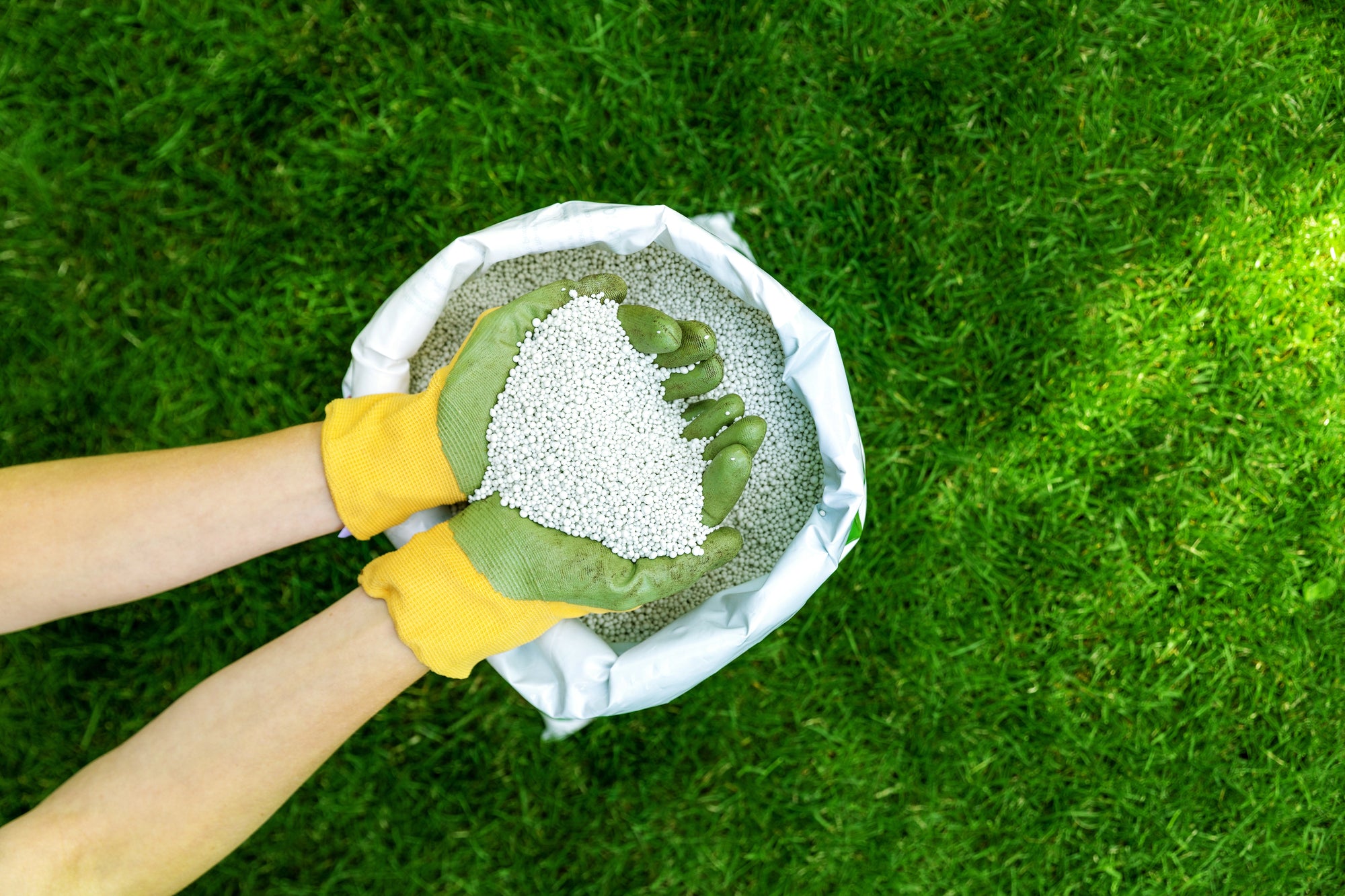
Mit dem FUXTEC Rasendünger bleibt dein Rasen wundervoll grün!
How to Fertilise Your Lawn in Spring | FUXTEC
Fertilising your lawn in spring is one of the most effective steps you can take to achieve a thick, resilient, and lush green lawn. After winter, the soil is often depleted and lacking the key nutrients needed for healthy growth.
Targeted fertilisation, tailored to your soil's needs and grass type, determines whether your lawn grows evenly or remains patchy. In this FUXTEC garden guide, we show you how to go about it systematically.
Why Spring Is the Right Time
In spring, the lawn enters its active growth phase. The roots begin absorbing nutrients again and the microorganisms in the soil become active.
Once temperatures consistently remain above 10 °C, the ideal moment for the first application has arrived. Fertilising too early risks the nutrients not being taken up. Starting too late means missing the most important growth phase of the year.
The Most Important Nutrients for Your Lawn
A high-quality lawn fertiliser contains three key nutrients.
Nitrogen (N) promotes growth and delivers that intense green colour.
Phosphorus (P) supports root development and strengthens the plant.
Potassium (K) increases resistance to wear and weathering.
In spring, the nitrogen content should be higher, as the lawn is primarily building leaf mass. Typical blends feature ratios such as 20-5-8.
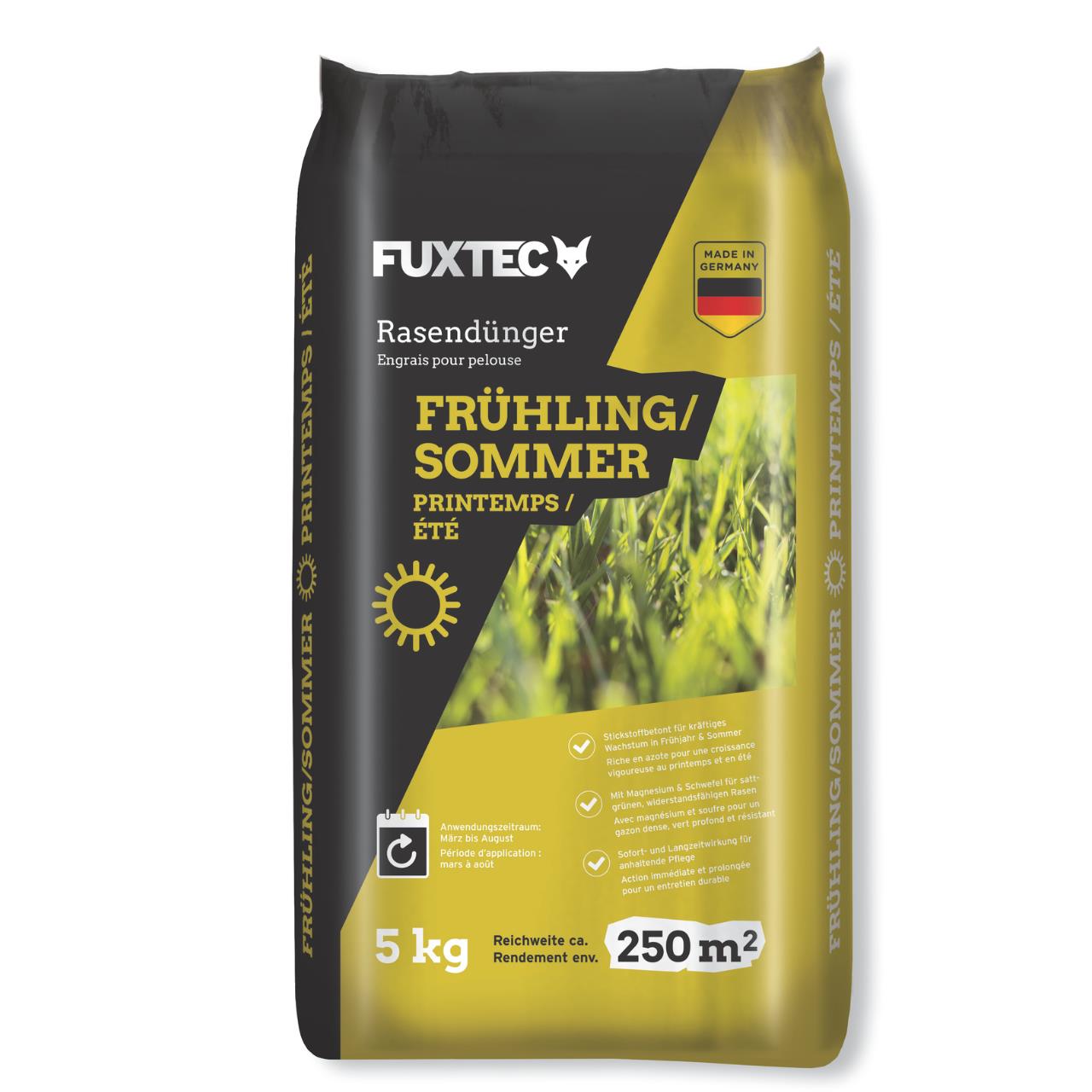
Our FUXTEC Spring/Summer Lawn Fertiliser is specially formulated for the growth phase and supplies your lawn with all the nutrients it needs to thrive.
Which Fertiliser Is Right for You?
Fast-Acting Fertilisers
These fertilisers show results within a few days and are particularly suited to cases of visible nutrient deficiency. However, they must be applied with precision, as overdosing can damage the lawn.
Slow-Release Fertilisers
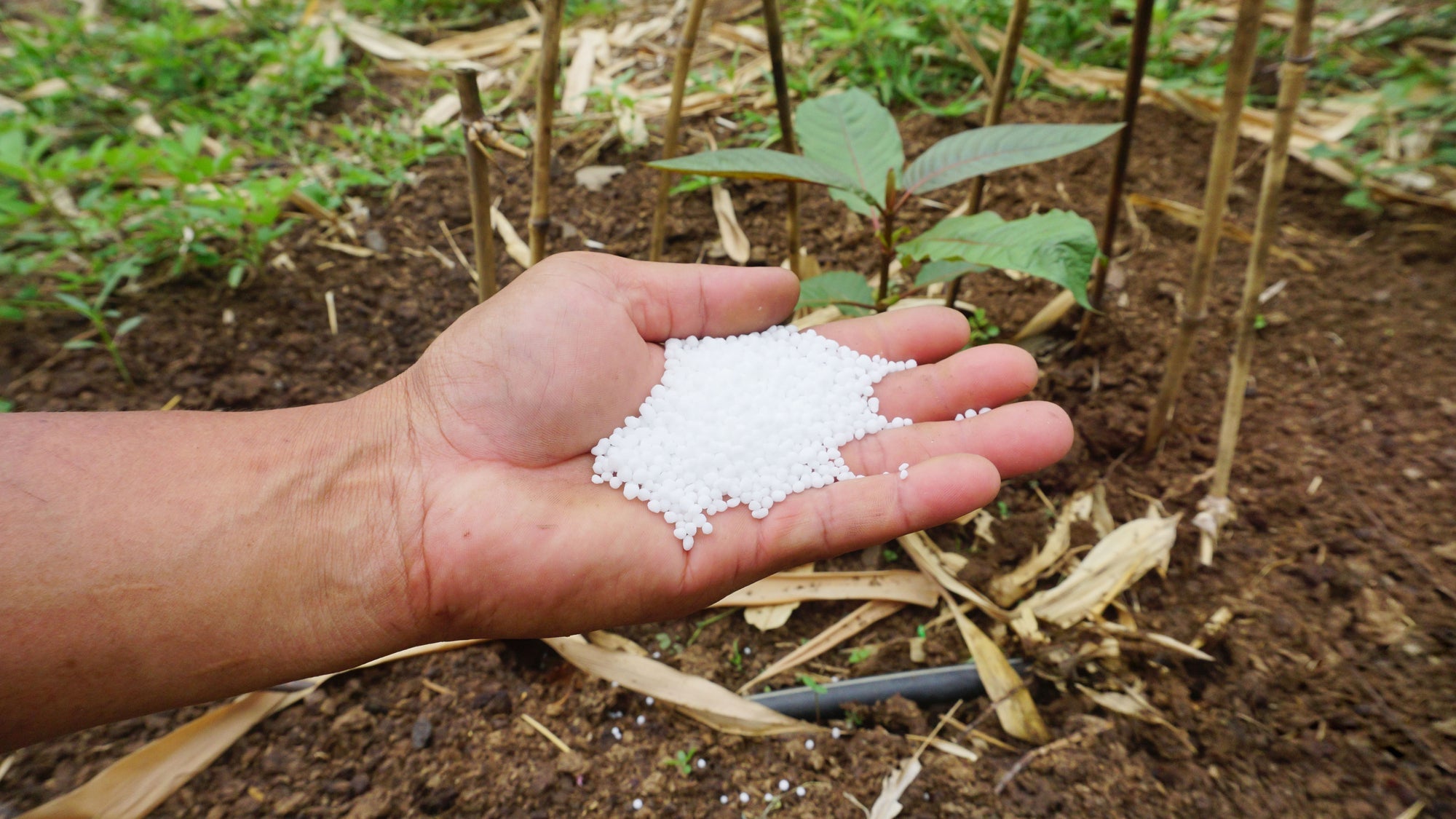
Slow-release fertilisers deliver nutrients gradually over several weeks or months. They promote steady growth and reduce the amount of maintenance required.
At FUXTEC, we recommend a high-quality slow-release fertiliser for most applications, as it delivers more consistent results.
The Right Dosage
The amount of fertiliser you apply is crucial. Too much leads to uncontrolled growth and increases susceptibility to disease.
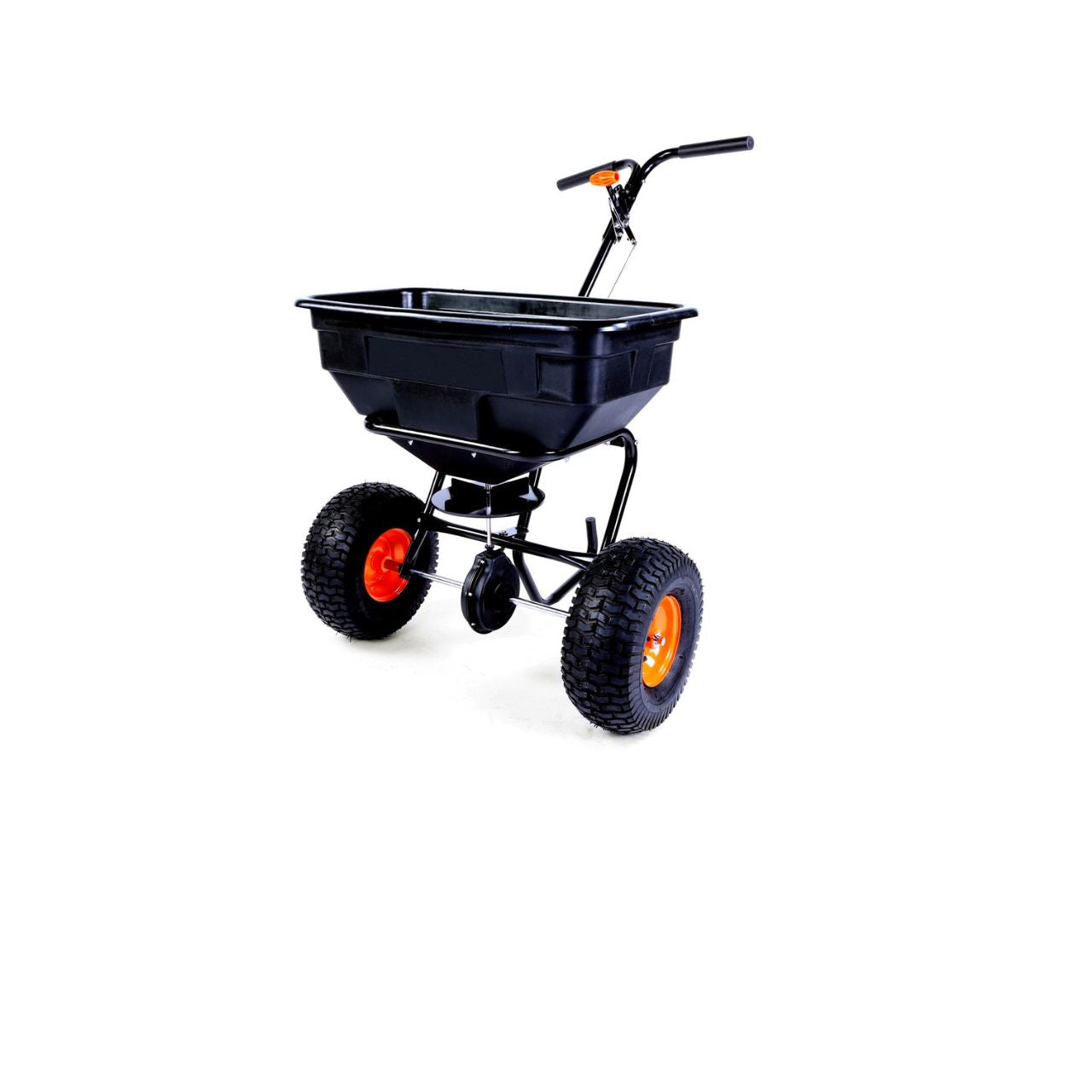
As a general rule, the recommended quantity is between 25 and 40 grams per square metre. For larger areas, a spreader is well worth using to ensure an even distribution.
Watering After Fertilising
After applying the fertiliser, the lawn should be watered thoroughly. Water dissolves the nutrients and carries them down to the roots.
Without watering, granules can sit on the grass blades and cause scorching. Approximately 10 to 15 litres of water per square metre is ideal.
Foliar Feeding as a Supplement
Foliar feeding can be beneficial when the lawn needs a short-term boost of additional nutrients. In this method, nutrients are absorbed directly through the leaves.
This approach does not, however, replace conventional soil fertilisation — it merely complements it. You can find out how to carry out foliar feeding and green manuring in our FUXTEC garden guide "Green Manure: Everything You Need to Know!".
Combining Fertilising and Overseeding
If you are overseeding your lawn in spring, you should coordinate your fertilising accordingly. A phosphorus-rich starter fertiliser supports root development.
The main nitrogen feed should only be applied after several mowings, once the lawn has established itself firmly.
Avoiding Common Mistakes
A frequent mistake is fertilising when the lawn is wet. This causes the granules to stick to the grass blades and can lead to scorch marks.
Fertilising too frequently or using the wrong products also causes problems. The pH level of the soil is equally important, as it influences nutrient uptake.
A Year-Round Fertilising Plan
A single application is not enough. For the best results, you should feed your lawn regularly throughout the year.
During summer, less nitrogen is required, whilst in autumn, specialist fertilisers help to strengthen the lawn's resilience ahead of winter.
Careful planning ensures your lawn stays healthy and hardwearing all year long.
Spring fertilising is the foundation for a dense and resilient lawn. Choose the right fertiliser, stick to the correct dosage, and carry out your care routine consistently — and you will see visible results in no time.
Entdecke unsere Auswahl an Gartengeräten



Alles, was dein Rasen braucht


Weitere Beiträge zum Thema Rasenpflege

Mulchen mit Pinienrinde: So nutzt du organischen Mulch, um Unkraut zu verhindern
Das Mulchen mit Pinienrinde gehört zu den effektivsten Methoden im modernen Gartenbau und in der nachhaltigen Landwirtschaft. Dabei wird eine Schicht Mulchmaterial auf die Bodenoberfläche aufgebrac...
Bodenverbesserung im Garten: So verbesserst du deinen Gartenboden im Frühjahr für gesunde Pflanzen
Inhaltsverzeichnis Warum Bodenverbesserung im Garten im Frühjahr so wichtig für einen gesunden Gartenboden ist Gartenboden nach dem Winter prüfen: Bodenstruktur, Verdichtung und Bodenart erke...
Richtig Düngen im Garten: Schritt für Schritt erklärt
Inhaltsverzeichnis Warum Düngen im Garten so wichtig ist Bodenanalyse: Grundlage für die richtige Düngung Organische vs. mineralische Dünger: Was ist besser? Kompost, Hornspäne & Co.: Organi...


