

How to Water Your Lawn: Amount & Best Time
Watering Your Lawn – The Right Amount and the Best Time
Summer is undoubtedly the most demanding season when it comes to garden care, and your lawn in particular. Warm temperatures and low rainfall mean that more water evaporates from the soil than is replenished. If you don't step in and make up for this moisture loss, your lush green lawn will soon turn into a parched wasteland.
Why does a lawn need watering?
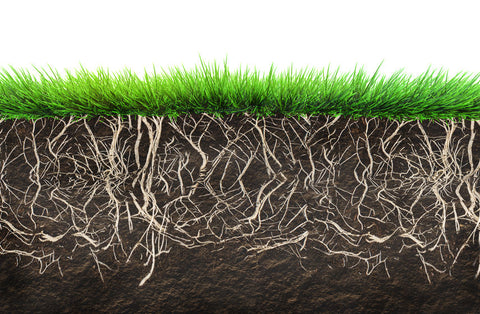 Watering your lawn – how hard can it be? Just turn on the tap and off you go! In reality, however, this is the area of lawn care where most mistakes are made. Because grass roots only about 15 cm deep, the lawn is often the first part of the garden to suffer during prolonged dry spells. Most gardeners wait too long before acting – only reaching for the sprinkler once the grass has already started to turn brown. By that point, the affected plants are already struggling and the lawn as a whole is often weakened. The bare patches left behind by dying grass are quickly colonised by weeds, which cope with dry conditions far better than the lawn itself.
Unfortunately, there are no hard-and-fast rules for when you should start watering your lawn. The soil's moisture balance depends largely on the weather, which can vary considerably from year to year. The first warning sign that it's time to get the sprinkler out is limp blades that take on a slightly bluish tinge. If you'd prefer a more precise indicator, keep an eye on the weather forecast. One square metre of lawn needs around 15 to 20 litres of water per week. If rainfall is significantly below this and temperatures are above 20 °C, you should definitely start watering.
Watering your lawn correctly – it's all about the amount
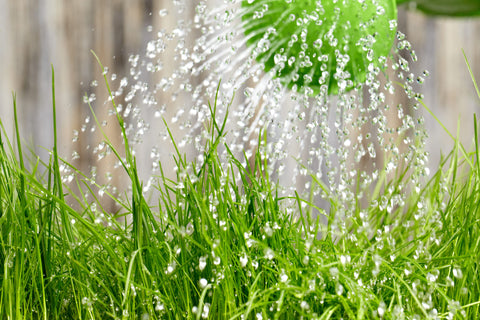 When it comes to watering your lawn correctly, it's not so much about how often you water, but rather getting the amount right. The most common mistake is watering briefly every evening – this only wets the surface, and most of the moisture evaporates or gets caught in the thatch before it ever reaches the roots. If only the top layer of soil is kept damp, the grass gradually moves its roots closer to the surface. This not only leads to a build-up of thatch over time, but also makes the lawn's water stress worse – with fewer deep roots, it becomes even less able to draw on the soil's natural moisture reserves.
The good news: there's absolutely no need to water your lawn every day. As long as you give it enough moisture regularly, watering once or twice a week is perfectly sufficient, depending on your soil type.
- Sandy soils drain quickly and don't hold water well. You should water roughly twice a week, using around 10 to 15 litres per square metre each time.
- Clay and compacted soils take longer to absorb water but retain it better. Once a week with 15 to 20 litres per square metre is usually enough.
Measuring and checking the right amount of water
There are three different ways to make sure your lawn is receiving the right amount of water:
- Spade test: This is the most accurate of the three methods, as you assess your soil directly rather than relying on general guidelines. Water the lawn with what seems like a sufficient amount, then use a spade to cut into the soil at the edge. The ground should be moist to a depth of at least 15 cm. If it isn't, run the sprinkler again. Once you've noted how long it takes to achieve optimal moisture penetration, you'll have a personalised benchmark to work from in future.
- Rain gauge: A slightly more involved method – unless you already have the right equipment – is to place a rain gauge on the lawn while watering. This lets you see exactly how much water the grass is receiving and, using the guidelines above, work out the ideal watering duration for your lawn.
- Water meter: The most sophisticated but also the most elegant solution is to fit a water meter (also known as a flow meter) into your irrigation system. Based on the size and soil type of your lawn, you can calculate the required water volume using the guidelines above. Once that volume is reached, you can confidently turn off the sprinkler, knowing your lawn has had enough. If you don't have a meter to hand, you can also measure manually how much water flows from the tap in, say, ten seconds, and use this figure to calculate how long to run the irrigation.
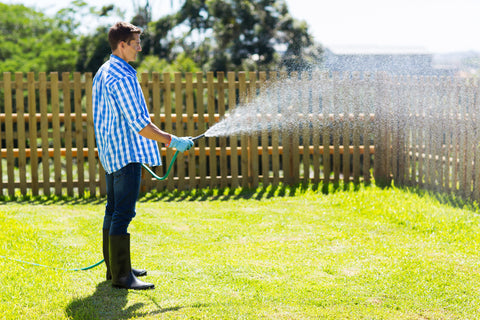 A word of caution: If you've been watering your lawn too frequently but not for long enough over the past few years, don't change this overnight. Because the grass will have developed many shallow roots near the surface, it has become dependent on the topsoil being kept moist and can no longer access the water stored deeper down. It's best to make the transition gradually – moving from daily light watering to one or two generous waterings per week over the course of around eight weeks. This gives the lawn enough time to re-establish deeper roots and begin drawing on the moisture stored further down in the soil.
Special case: watering a newly sown lawn
Freshly sown grass or recently laid turf has specific watering requirements. Because the roots haven't yet grown very deep, young grass cannot reach the water stored in the lower layers of soil. It therefore depends on moisture near the surface. As this evaporates quickly in warm weather, new lawns need more frequent watering in order to establish properly. You should aim to keep freshly sown grass evenly moist for around two to three weeks. This allows the seeds to germinate successfully and gives young plants everything they need to develop roots and grow. During this period, particularly in warm weather, daily watering may be necessary. To avoid your new lawn failing through lack of water, the best time to sow grass seed is in spring or early autumn, when milder temperatures mean less moisture is lost from the soil surface.
Can you overwater a lawn?
So far we've focused on the damage caused by too little water – but too much of a good thing is equally harmful. Excess water displaces air from the soil, leaving the roots unable to breathe properly. Waterlogging causes them to rot, and in the worst case the entire plant dies. If you suspect your lawn may have been overwatered, the spade test will tell you. If the soil smells musty or has taken on a grey-bluish colour, you should stop watering for a while. As long as you stick to the guidelines above, this shouldn't become an issue. Just remember to factor rainfall into your watering schedule. Summer thunderstorms in particular can deliver a significant amount of rain in a very short time. In such cases, check the forecast and consider whether your lawn actually needs any additional watering that week.
The best time of day to water your lawn
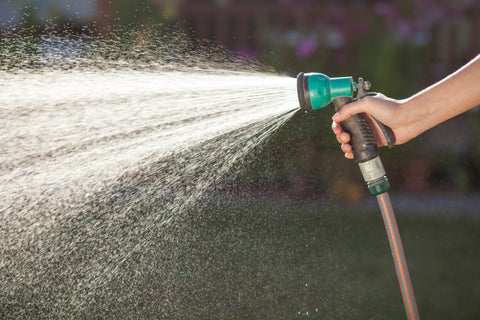
It's not just the amount of water that matters – when you apply it is equally important. You should always avoid watering at midday. During summer this is typically the hottest part of the day, meaning a large proportion of the moisture evaporates before it even reaches the deeper layers of soil. If the sun is shining directly onto the lawn at the same time, the water can actually cause harm: droplets act like tiny lenses, focusing the sun's rays and creating intense localised heat that scorches the grass.
The ideal time to water your lawn is technically around four o'clock in the morning. At that point the soil is at its coolest and watering is most effective. Watering in the middle of the night is only really practical if you have an automated irrigation system or a timer-controlled setup. If you need to operate your sprinkler manually, early morning is still an excellent option. At around six o'clock it's usually still quite cool, and the majority of the water can penetrate deep down to the root zone. If morning watering simply isn't feasible for you, late evening is the next best alternative. Bear in mind that the soil will still be warm from the day's heat, so more moisture will be lost to evaporation. To make sure enough water is reaching the roots when watering in the evening, it's worth carrying out the spade test.
Lawn watering made easy – with the right tools
 Given the large volumes of water a lawn needs regularly throughout the summer, a garden hose alone – let alone a watering can – simply won't cut it. It's also important that moisture is distributed evenly across the entire area; otherwise, dry patches will appear in some spots despite your efforts, leaving unsightly brown areas.
For larger lawns especially, it's well worth investing in a sprinkler. There are two main types of garden sprinkler to choose from:
- Oscillating sprinklers: As the name suggests, this type is best suited to rectangular or square areas. The oscillating sprinkler distributes water via a row of small nozzles that sweep back and forth, with the arc typically adjustable to suit different lawn sizes. Oscillating sprinklers can cover a wide range of areas effortlessly. The downside is that they work best on open, unobstructed areas. If your garden features trees or shrubs on the lawn, an oscillating sprinkler may not be the most practical choice.
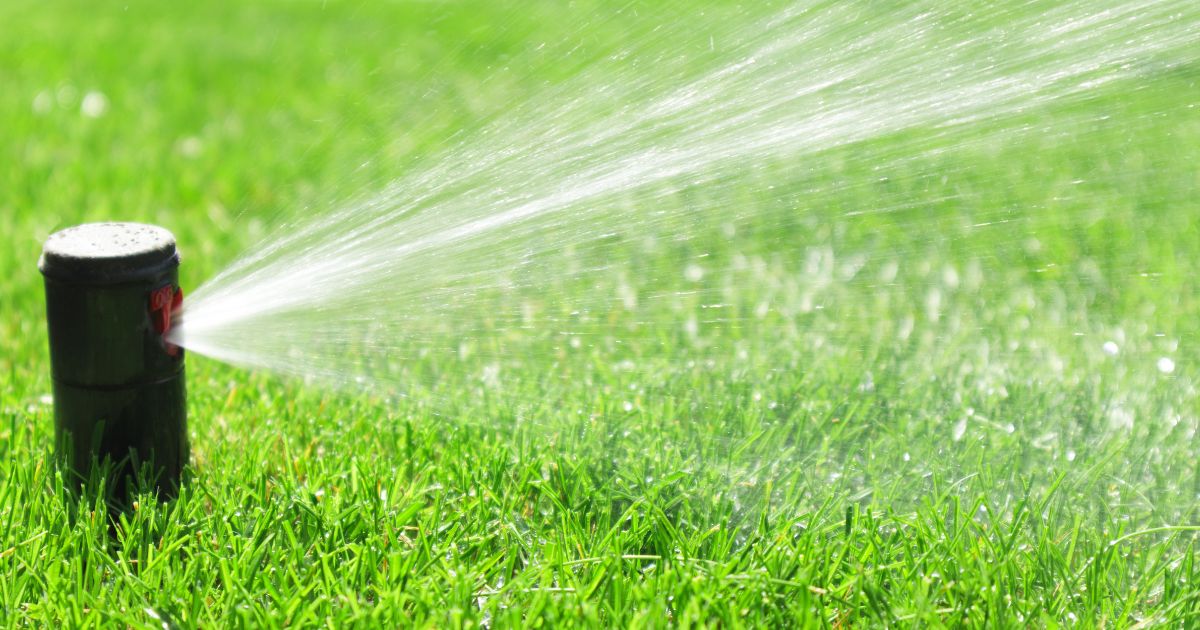
- Rotary/impact sprinklers: The name gives a clear hint as to the coverage pattern. Because the angle can also be adjusted, rotary sprinklers are equally suitable for various lawn sizes. The water is distributed close to the ground, so shrubs and trees don't pose a problem. However, for very large lawns they can be less efficient, as the watered areas tend to overlap significantly. They also need to be fixed into the ground, which can cause minor damage to the lawn at that point.
Lawn watering is also a question of cost
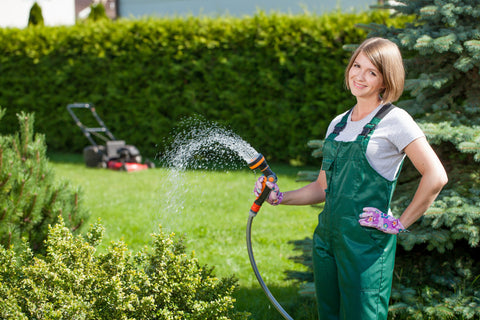
The equipment needed for lawn irrigation – garden hose, connectors and sprinkler – is generally not too expensive to buy. Many components are also useful for general garden watering and tend to be very durable. The biggest ongoing cost, assuming you're using mains water, is the water itself. It's therefore worth making sure you water as efficiently and sparingly as possible by following these tips:
- Minimise evaporation by watering in the late evening, at night, or in the early morning. The soil is at its coolest at these times and absorbs water most effectively.
- Shade the surface of your lawn by mulch mowing or by leaving the grass a little longer when cutting. When the sun doesn't shine directly on the soil, less moisture is lost to evaporation.
- Adjust your sprinkler so that as little water as possible is wasted on walls, paths or paved areas. It's worth measuring the area to be watered first and then choosing the right equipment accordingly.
Rainwater or borehole water – kinder on your wallet
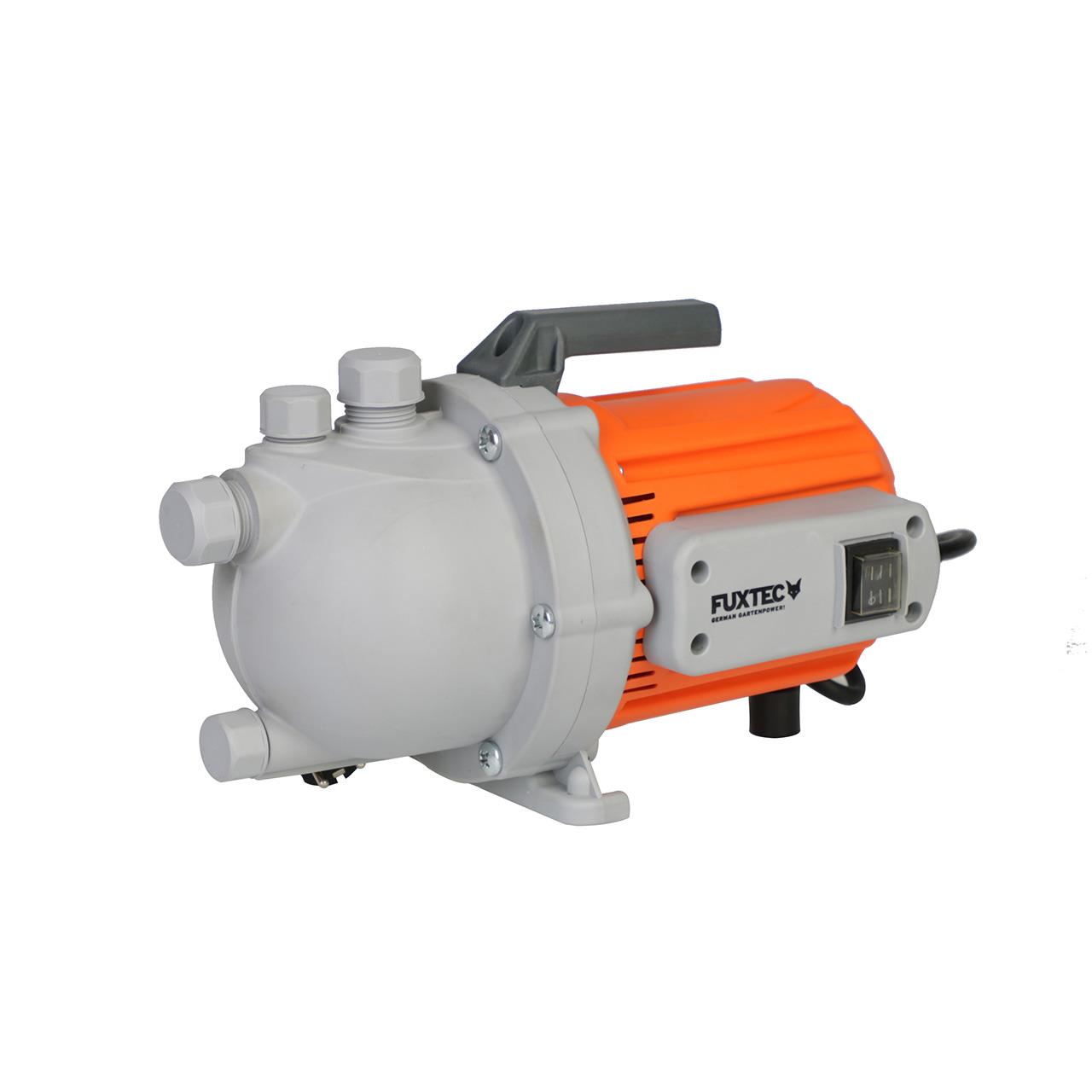
A great alternative to using mains water is collecting and using rainwater. It is generally softer and lower in minerals than tap water, and is therefore better tolerated by plants. Using rainwater also reduces the ongoing running costs of your garden. As summers are expected to become increasingly warm and dry, there is also a growing likelihood of hosepipe bans being introduced during prolonged dry spells to protect drinking water supplies. Setting up a rainwater harvesting system therefore not only saves money in the long run, but is a worthwhile investment to keep your garden looking lush and green in the years ahead. If you don't have sufficient roof area or space for a rainwater storage tank, borehole water is another option. In either case, the right water pump is essential. Make sure it provides sufficient power in terms of water pressure and flow rate, so that watering remains comfortable and effective.
Discover our range of garden tools
How deep should lawn roots be for proper watering?
Grass roots typically grow to about 15 cm deep, which is why lawns are often the first to suffer during dry spells if not watered properly. Shallow-rooted grass cannot access water stored deeper in the soil, making it more vulnerable to drought stress.
How much water does a lawn need per week?
One square metre of lawn generally needs around 15 to 20 litres of water per week, depending on your soil type and rainfall. Sandy soils require watering twice weekly with 10-15 litres per square metre, whilst clay soils only need weekly watering with 15-20 litres per square metre.
What's the best time of day to water my lawn?
The ideal time to water is around 4 am when the soil is coolest, but early morning around 6 am is a practical alternative for most people. Avoid midday watering as the heat causes excessive evaporation and water droplets can actually scorch the grass in direct sunlight.
Can you water your lawn too much?
Yes, overwatering displaces air from the soil and causes roots to rot, potentially killing the grass. To avoid this, factor rainfall into your watering schedule and use the spade test to check soil moisture depth of at least 15 cm.
How do I know if my lawn needs watering?
The most reliable sign is when grass blades become limp and take on a slightly bluish tinge. You can also check temperatures and rainfall—if temperatures are above 20°C and rainfall is significantly below 15-20 litres per square metre, watering is needed.
What's the best way to measure the right amount of water?
The spade test is the most accurate method: water your lawn, then dig into the soil to check that it's moist to at least 15 cm deep. Alternatively, use a rain gauge whilst watering to measure exact volumes, or fit a water meter to your irrigation system for precise control.
Do newly sown lawns need different watering?
Yes, freshly sown grass has shallow roots and needs frequent watering to keep the surface evenly moist for 2-3 weeks, allowing seeds to germinate properly. Daily watering may be necessary in warm weather, which is why spring or early autumn are the best times to sow.
Everything your lawn needs
More articles about lawn care
Mulchen mit Pinienrinde: So nutzt du organischen Mulch, um Unkraut zu verhindern
Das Mulchen mit Pinienrinde gehört zu den effektivsten Methoden im modernen Gartenbau und in der nachhaltigen Landwirtschaft. Dabei wird eine Schicht Mulchmaterial auf die Bodenoberfläche aufgebrac...
Bodenverbesserung im Garten: So verbesserst du deinen Gartenboden im Frühjahr für gesunde Pflanzen
Inhaltsverzeichnis Warum Bodenverbesserung im Garten im Frühjahr so wichtig für einen gesunden Gartenboden ist Gartenboden nach dem Winter prüfen: Bodenstruktur, Verdichtung und Bodenart erke...
Richtig Düngen im Garten: Schritt für Schritt erklärt
Inhaltsverzeichnis Warum Düngen im Garten so wichtig ist Bodenanalyse: Grundlage für die richtige Düngung Organische vs. mineralische Dünger: Was ist besser? Kompost, Hornspäne & Co.: Organi...


