








How to Sow a Lawn: When, How & Which Grass Seed
Laying a Lawn and Sowing Grass Seed: When, How and on Which Surface
A lush, green lawn is the dream of almost every garden owner — even, well-established, hard-wearing and free from unwanted weeds. Sowing your own grass seed gives you full control over the variety, quality and development of the lawn. In this FUXTEC Garden Guide, we walk you through step by step how to sow grass seed correctly, what preparation is essential, and how to care for your young lawn so that it establishes thickly and remains healthy in the long term.
Laying a Lawn: Why Getting the Sowing Right Matters
A beautiful, hard-wearing lawn doesn't happen by chance. Sowing grass seed lays the foundation for many years to come. Mistakes when sowing — such as wrong timing, uneven spreading or insufficient aftercare — quickly lead to weeds, bare patches or a weak turf.
Anyone looking to establish a new lawn should therefore take a systematic approach: assess the site, prepare the soil, spread the seed evenly and support the germination period consistently. The result is a dense lawn that is resilient and looks great.
When to Sow Grass Seed? Getting the Timing Right
Timing has a major influence on success or failure. Sowing grass depends above all on temperature and moisture. The ideal times are spring, from around mid-March, or early autumn, when soil temperature is sufficiently warm and evaporation rates are moderate.
Sowing too early delays germination; sowing too late increases stress from heat and drought. Working within these windows and taking aftercare seriously creates the best possible starting conditions.
Choosing Grass Seed: Quality Over Quantity
Choose high-quality, well-balanced mixtures. Grass seed blends contain different grass species whose combination determines how the lawn performs in terms of use, appearance and recovery. For front gardens, a fine ornamental lawn mix is suitable; for heavily used areas, a hard-wearing utility or sports turf mix is more appropriate.
Make sure your grass seed is fresh: old seed germinates poorly, which increases the risk of bare patches and weeds. Premium blends germinate more reliably, develop deeper roots and ensure a stable, long-lasting lawn.
FUXTEC Summer Grass Seed: Developed for Heat, Sun and Dry Soils
Summer conditions place particular demands on grass seed. High temperatures, intense sunshine and intermittent dry spells make germination more difficult for young grasses. This is precisely the situation for which a summer lawn mix for sunny and dry locations is designed — exactly what FUXTEC will be offering in the near future.
Summer Lawn Mix for Sunny & Dry Locations
The FUXTEC Summer Grass Seed is designed for hot summer periods and is ideal for areas with direct sunlight. The grasses it contains grow reliably even on dry soils and retain their vitality. Even during prolonged heatwaves, the lawn remains even and stable.
Drought-Resistant Lawn for Extreme Conditions
The blend contains drought-resistant grass seed varieties that can germinate even with limited water availability. This keeps the lawn green and resilient even during dry spells — without the need for regular watering.
Deep-Rooting Grass Seed for Greater Water Efficiency
Deep-rooting grass seed encourages better water uptake from lower soil layers. This increases resistance to drought stress and helps the lawn remain stable in the long term — particularly when combined with appropriate starter nutrition.
Hard-Wearing & Low-Maintenance: Ideal for Sports and Play Areas
The robust composition makes this seed especially suitable for sports and play lawns. Even under heavy use, the turf remains dense and resilient — a clear advantage for family gardens.
Easy Application & Targeted Overseeding in Summer
With a coverage rate of 1 kg per approx. 40 m², the seed is suitable for new lawns and as a rapid overseed. Particularly on hot, dry garden areas, bare patches can be effectively filled without having to start completely from scratch.
Preparing the Soil: The Foundation for a Healthy Start
Clear and Assess the Area
Before you begin sowing, the area must be completely free of anything that might interfere with establishment. Remove stones, roots and any existing weeds thoroughly, as these will otherwise hinder the even development of the turf. When working with freshly laid topsoil in particular, it is worth waiting one to two weeks. During this time, weed seedlings often emerge, which you can remove before sowing.
You should also test the pH of your soil. If it falls outside the optimum range, the grass will be unable to absorb available nutrients efficiently. This is particularly detrimental to young turf in the early stages and will slow the establishment of the lawn.
Break Up and Improve the Soil
A well-prepared seedbed determines whether grass seed takes properly or causes problems later on. Break up the soil deeply so that water, air and nutrients can reach the lower layers. Clay soils should be improved with sharp sand to prevent waterlogging. Very light, sandy soils benefit from organic matter, which helps retain moisture.
The aim is a stable yet free-draining soil. Only then can the roots develop sufficiently and the lawn establish more quickly.
Level the Surface and Allow It to Settle
After breaking up the soil, rake the surface smooth and carefully even out any undulations. This step is important to prevent water collecting in low spots later on. The area should then be rolled once so that the soil can settle.
After rolling, small bumps or hollows may still be visible. These can be corrected again with the rake. A clean, level surface prevents uneven growth later and makes it harder for new weeds to establish.
Spreading Grass Seed: Even and Controlled
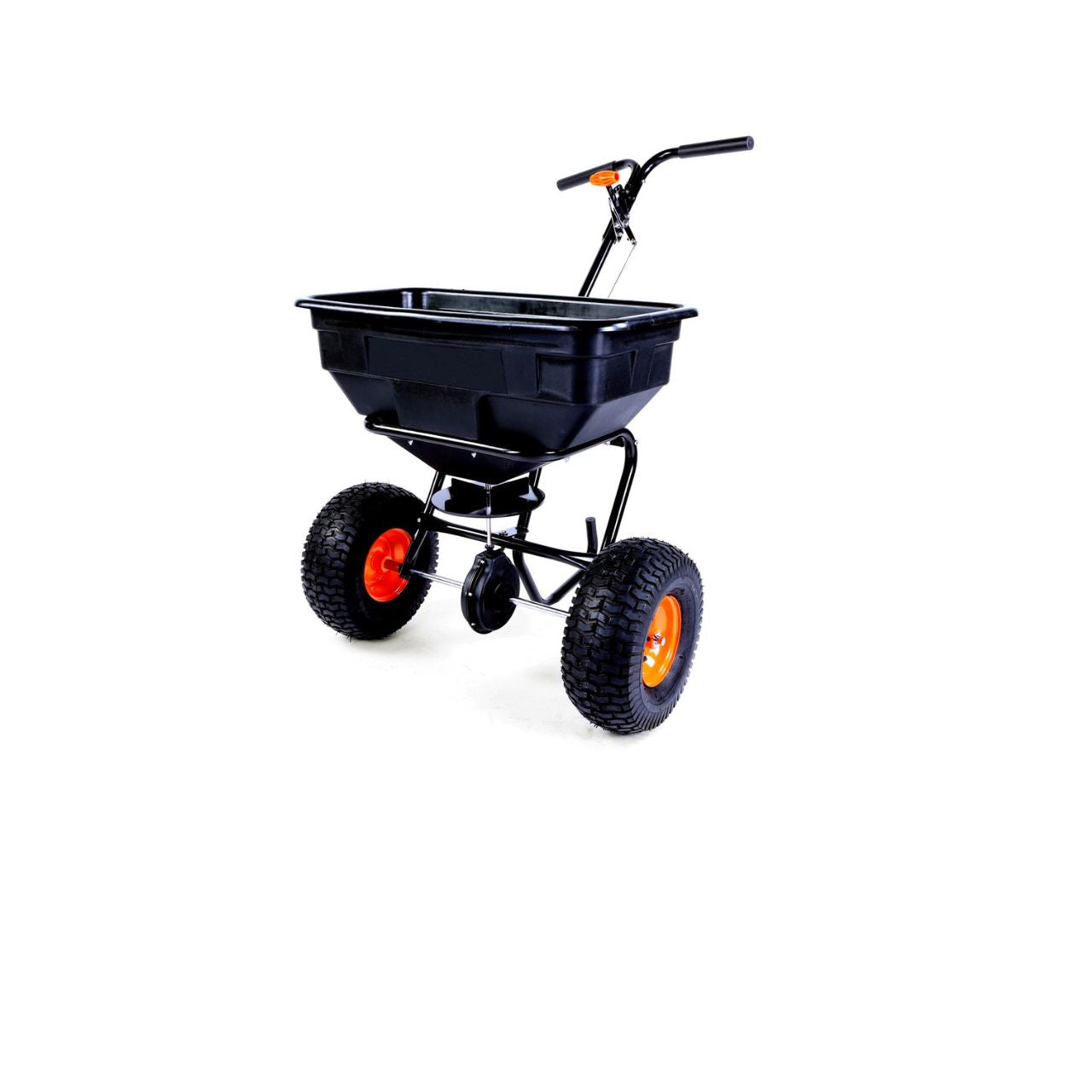
Whether sowing in spring or late summer, an even distribution is essential. Divide the area mentally into strips and apply the seed uniformly. A seed spreader is the most reliable tool, as it allows the seed rate to be precisely controlled.

Work at a steady pace and move systematically along the strips. Use the spreader in both lengthways and crossways directions to avoid overlaps and missed areas. For smaller areas you can sow by hand, but only when there is no wind and using a smooth, even throw.
Incorporating Grass Seed: Good Soil Contact Without Going Too Deep
After sowing, the seeds need to make contact with the soil but must not be buried too deep. Lightly work the seed into the surface — for example with a rake. The ideal depth is around 1 cm.
Even just a few millimetres into the soil is sufficient. If seeds are buried too deeply, they lack the light needed to germinate and will sprout far more slowly or unevenly. After incorporating, roll the area once more to ensure consistent soil contact throughout.
Watering: The Key to Germination
In the first few weeks, water is the deciding factor. Keep the surface consistently moist without causing waterlogging. Grass seed needs steady moisture to germinate reliably.
In dry weather, water little and often rather than infrequently and heavily. The aim is to keep the soil moist continuously until the seedlings have firmly anchored themselves. This allows the young shoots to develop evenly and the lawn to establish more quickly.
Germination and Early Care
Depending on the mix, the seeds will begin to germinate after a few weeks. During this sensitive phase, you should avoid walking on the area. Remove any emerging weeds by hand early on so that they do not compete with the young grass shoots.
A balanced nutrient supply supports root development and ensures that the sward builds up strongly — regardless of whether the end result is a sports, play or ornamental lawn.
First Cut: Mowing Your Lawn for the First Time
Once the lawn has reached a height of approximately 5 cm, you can mow it for the first time. Set the mower to a high cut and never remove more than one third of the blade length in a single cut.
This first cut encourages tillering, making the grass denser and more resilient. Cutting too early or too low will unnecessarily weaken the young sward.
Aftercare Following Sowing: From Establishment to Resilience
Once established, the lawn benefits from a regular routine. Consistent watering, appropriate mowing and targeted feeding ensure that the sward fills in and remains stable. During the growing season, two to three targeted treatments are usually sufficient.
Step by step, a resilient lawn develops that copes well with use and recovers quickly when needed.
Overseeding: Filling Bare Patches Effectively
Despite good preparation, bare patches can still appear — for example due to heavy foot traffic or uneven germination. Gently loosen these areas, apply the same seed mix and keep the patch consistently moist.
Summary: Sow Systematically, Enjoy Long-Term Results
A great lawn is achievable when preparation, timing and aftercare come together. With carefully chosen grass seed, thorough preparation and consistent care, you can establish a healthy, attractive lawn.
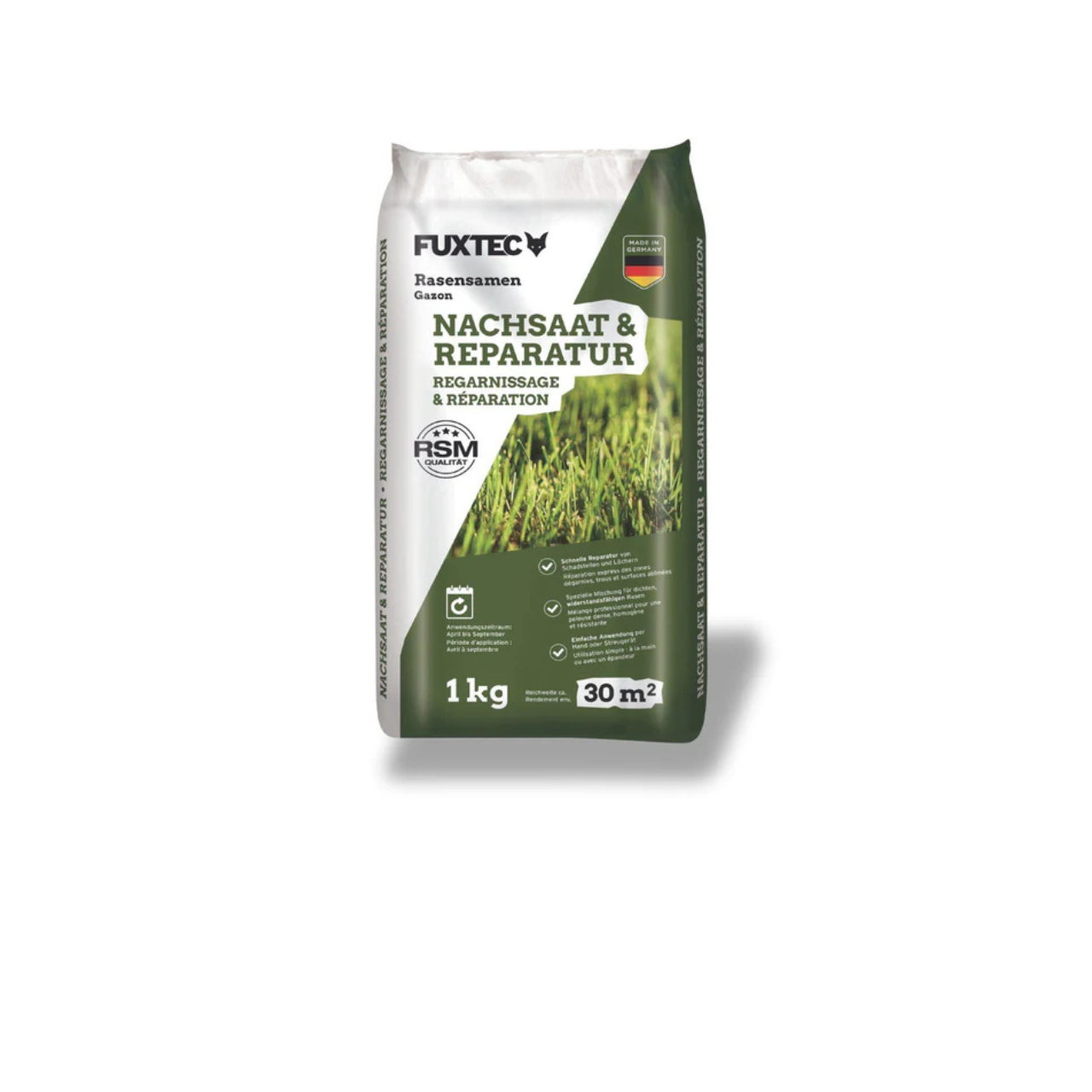
FUXTEC recommends: if you want to prepare your lawn specifically for spring and summer, it is worth looking at seasonally matched grass seed. The FUXTEC Spring and Summer Grass Seed is designed for sunny, dry sites and heavy use, and supports a dense, resilient lawn even in hot conditions. Check back regularly on the FUXTEC Garden Guide for news on product availability and useful application tips — so you are fully prepared when sowing time arrives.
Discover our range of garden tools



Everything your lawn needs



More articles about lawn care

Mulchen mit Pinienrinde: So nutzt du organischen Mulch, um Unkraut zu verhindern
Das Mulchen mit Pinienrinde gehört zu den effektivsten Methoden im modernen Gartenbau und in der nachhaltigen Landwirtschaft. Dabei wird eine Schicht Mulchmaterial auf die Bodenoberfläche aufgebrac...
Bodenverbesserung im Garten: So verbesserst du deinen Gartenboden im Frühjahr für gesunde Pflanzen
Inhaltsverzeichnis Warum Bodenverbesserung im Garten im Frühjahr so wichtig für einen gesunden Gartenboden ist Gartenboden nach dem Winter prüfen: Bodenstruktur, Verdichtung und Bodenart erke...
Richtig Düngen im Garten: Schritt für Schritt erklärt
Inhaltsverzeichnis Warum Düngen im Garten so wichtig ist Bodenanalyse: Grundlage für die richtige Düngung Organische vs. mineralische Dünger: Was ist besser? Kompost, Hornspäne & Co.: Organi...


