


Hard-Wearing Lawn Guide: Tips for Laying & Care
Hard-Wearing Lawn Guide – Key Tips for Laying and Maintenance
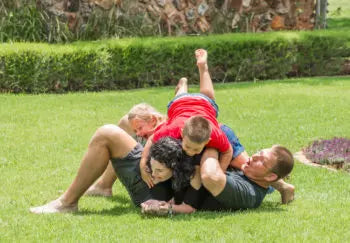
Hard-wearing lawn, also known as sports turf, is one of the most resilient grass seed mixtures available. It is sown primarily on sports pitches, but also in parks, recreation areas and car parks. Gardeners opt for hard-wearing lawn seed when their children frequently play on the lawn or the area regularly needs to withstand heavy use, such as garden parties and pets.
A Tough Lawn with Many Names
As there are no uniform standards for naming different lawn types, you will find hard-wearing lawn sold under many different names in the trade. It is also commonly known as amenity lawn, since it is well suited to public green spaces. These areas — particularly in summer — must cope not only with drought and minimal maintenance, but also with large numbers of people walking across them daily. An important subcategory of hard-wearing lawn is sports turf. Grass seed mixtures for professional sports pitches are among the most robust of all. The turf must withstand extreme wear and recover quickly. This typically requires a high level of maintenance — as is evident from the fact that every sports club employs a groundsman whose job it is to regularly mow, fertilise and water the grass. What is more, bare patches in sports turf must be overseeded as quickly as possible. It is precisely the very dense sward that gives sports turf its outstanding durability. Damage to it can spread rapidly and threaten the entire playing surface.
When choosing seed in the UK, it is worth looking at reputable amenity seed mixtures from established suppliers. Hard-wearing lawn sits broadly in the category of sports turf and utility lawn blends. However, you should pay close attention to the composition of mixtures intended for home use, as this ultimately determines how durable the lawn really is. Car park turf also counts as a genuinely hard-wearing grass surface. When purchasing seed for your new lawn, you should therefore not rely solely on the names given by manufacturers, but also consider the composition of the grass species.
Hard-Wearing Lawn and Its Characteristics
As already mentioned, sports and hard-wearing lawn is, thanks to its dense sward, one of the most robust and resilient lawn types. This is also reflected in its strong resistance to weeds. The dense grass growth leaves little room for weeds to establish themselves, and as long as the hard-wearing lawn is adequately fertilised and maintained, other plants stand virtually no chance against the vigorous grasses. The maintenance required for a hard-wearing lawn depends largely on two factors: the precise composition of the grass varieties used and the levels of wear it is regularly subjected to. If children play on your lawn every day, you will need to fertilise more frequently and overseed where necessary, compared with a lawn that is only used occasionally. The rapid growth and good recovery of the grass species used in sports turf does, however, have one drawback: a hard-wearing lawn needs mowing more frequently than most to keep it in check, producing a large amount of clippings in the process. This can be problematic, particularly with larger lawn areas or if you do not have a compost bin. It is therefore worth thinking carefully about how much wear your lawn will receive and whether a full sports mix is truly necessary, or whether a utility lawn would suffice. With the right care, your hard-wearing lawn will reward you with wonderfully dense growth and a rich, deep green colour. It is therefore ideal if you want to use your garden intensively without sacrificing a high-quality lawn. In terms of appearance, it comes closest to an ornamental lawn — which unfortunately remains rather delicate — of all the hard-wearing varieties.
Hard-Wearing Lawn for Dogs and Other Pets

Hard-wearing lawn is usually the right choice if you have a dog and regularly play with them on the lawn. The wear caused by the boisterous movement and sharp turns of a medium-sized or large dog should not be underestimated. Many utility lawn mixtures simply cannot cope with these demanding conditions.
For other pets too, hard-wearing lawn is a great asset thanks to its vigorous growth and strong regenerative power. Guinea pigs or rabbits can graze on it freely, as it grows back quickly. And if you keep chickens in your garden, hard-wearing lawn with its dense sward is considerably more resistant to their scratching and pecking than other lawn types.
Hard-Wearing Lawn Seed: Varieties and Compositions
Standard amenity seed mixtures distinguish between sports turf and play lawn seed for laying a new lawn and seed mixtures for the renovation and overseeding of an existing sports surface.
Sports Turf – New Lawn (Sports Pitches)
Standard seed mixtures for laying sports turf generally consist of roughly equal parts of Perennial Ryegrass (Lolium Perenne) and Smooth-Stalked Meadow Grass (Poa Pratensis). Lolium Perenne provides the dense growth, rapid recovery and high durability of sports turf. The grass forms both tufts of closely growing stems and runners with which it colonises large areas. Ryegrass also tolerates drought reasonably well. This vigorous grass species is very resistant to wear, but sensitive to frost, making it only partially suitable for higher elevations with prolonged cold spells. If a lawn with a high proportion of Perennial Ryegrass is not put to enough use, its constant growth and spread can become problematic. To prevent this, you should always combine it with other grass species.
Smooth-Stalked Meadow Grass is a true all-rounder. Like ryegrass, it shares high wear resistance and durability, making it equally suited to heavy use. It is not quite as vigorous, but spreads via underground rhizomes, helping bare patches to close quickly. It tolerates drought very well and handles higher elevations and cooler temperatures without difficulty. In agriculture, it is a popular choice for meadows and pastures thanks to its hardiness and good yield.
Sports Turf – Renovation Mix
Renovation mixtures for sports turf also typically consist of Perennial Ryegrass and Smooth-Stalked Meadow Grass. The latter plays a smaller role here, making up only around 15% of the total. This is because ryegrass grows faster — and it is precisely this characteristic that is desirable when overseeding. The sooner the sward closes over, the sooner the surface is fully usable again and further damage is prevented. Furthermore, areas that need overseeding tend to be subject to greater wear overall than those that remain intact. On a football pitch, for example, these are typically the areas around the goalmouth. Here it makes sense to reduce the proportion of Poa pratensis, as the wear is so high that any risk of overly aggressive spread is eliminated. Instead, the benefits of the resilient grass species and its rapid recovery are unequivocally the priority.
Many grass seed mixtures for overseeding also already include Poa pratensis, which helps ensure that the grass seed has ideal conditions in which to establish. The faster it germinates and grows, the less opportunity other plants have to take hold in the bare patches.
Utility Lawn – Play Lawn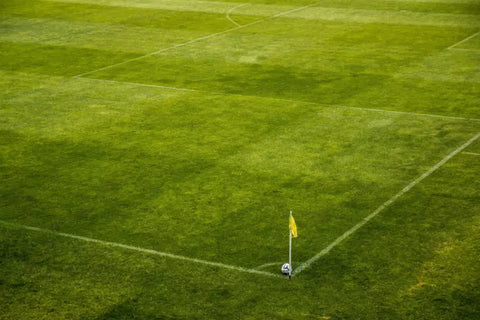
Hard-wearing lawn specifically intended for garden use is classified as utility lawn by seed authorities. It consists of Perennial Ryegrass (Lolium Perenne), Smooth-Stalked Meadow Grass (Poa Pratensis) and various subspecies of Red Fescue (Festuca Rubra). These seed mixtures are somewhat less vigorous as a result — you need to mow less frequently and clipping volumes are reduced. Naturally, durability is also slightly lower. The Red Fescue content also means the mixture copes a little better with moist soils. The species has very fine stems, contributing to a more uniform, attractive lawn appearance. Its inclusion also makes the sward even denser, giving weeds even less chance to establish.
Car Park Turf
Grass on car parks — whether purely grass surfaces or a combination of reinforced grid pavers and turf — is arguably subject to the greatest wear of all. It must cope not only with the load of vehicle tyres, but also with often less than ideal environmental conditions. To this end, Perennial Ryegrass, Smooth-Stalked Meadow Grass and Red Fescue are used, as with sports and play lawn for gardens. In addition, car park turf seed mixtures often include 2% yarrow. This helps create an even denser turf and is also highly resistant to wear.
Laying a Hard-Wearing Lawn – Getting the Mix Right
There is no single perfect seed mixture for a hard-wearing lawn. Which grass species you use and in what proportions depends on the location and the expected level of wear. If you are not yet certain how robust your future lawn needs to be, you can start with a standard utility or play lawn mixture. Make sure to avoid cheap, poor-quality seed. It germinates considerably less reliably than high-quality grass seed and will cost you time and patience through repeated overseeding. If your lawn turns out to be not robust enough over time, you can overseed with a more vigorous mixture containing a higher proportion of Perennial Ryegrass and Smooth-Stalked Meadow Grass. In this way, you gradually work towards the optimum grass composition for your garden. Doing it the other way round — starting with a very robust mixture and gradually adding more Red Fescue — is unfortunately less effective. Once the robust grasses have established and formed a dense sward, they are difficult to displace. This is not a major problem in itself, but their rapid growth may mean more maintenance work and a greater volume of clippings.

Caring for Sports Turf Properly
Even the most hard-wearing lawn is only as robust as it is healthy. Without sufficient nutrients, even the finest lawn will deteriorate rapidly. Hard-wearing lawn therefore needs the right care in order to thrive at its best.
Mowing Hard-Wearing Lawn Regularly
Regular mowing is particularly important for sports turf. Given the vigorous growth of the grass species used, you should aim to mow your hard-wearing lawn once or twice a week. This encourages the individual grasses to tiller and helps to build a dense, even sward that gives the lawn its robustness. Since hard-wearing lawn requires a great deal of nitrogen for growth, it responds particularly well to a mulching mower. By chopping the clippings and distributing them across the lawn, valuable nutrients are returned directly to the soil. At the same time, in summer this protects the soil from drying out and makes it harder for weeds to take hold. The correct cutting height for hard-wearing lawn is between three and four centimetres. Cutting shorter than this may encourage the spread of Annual Meadow Grass, which can increasingly take over and reduce sward density. Cutting too short also risks accidentally damaging the root system, causing die-back in those areas and creating bare patches. Since few weeds can tolerate being regularly cut back, frequent mowing also prevents them from ever getting a foothold on your lawn.
Discover our range of garden tools
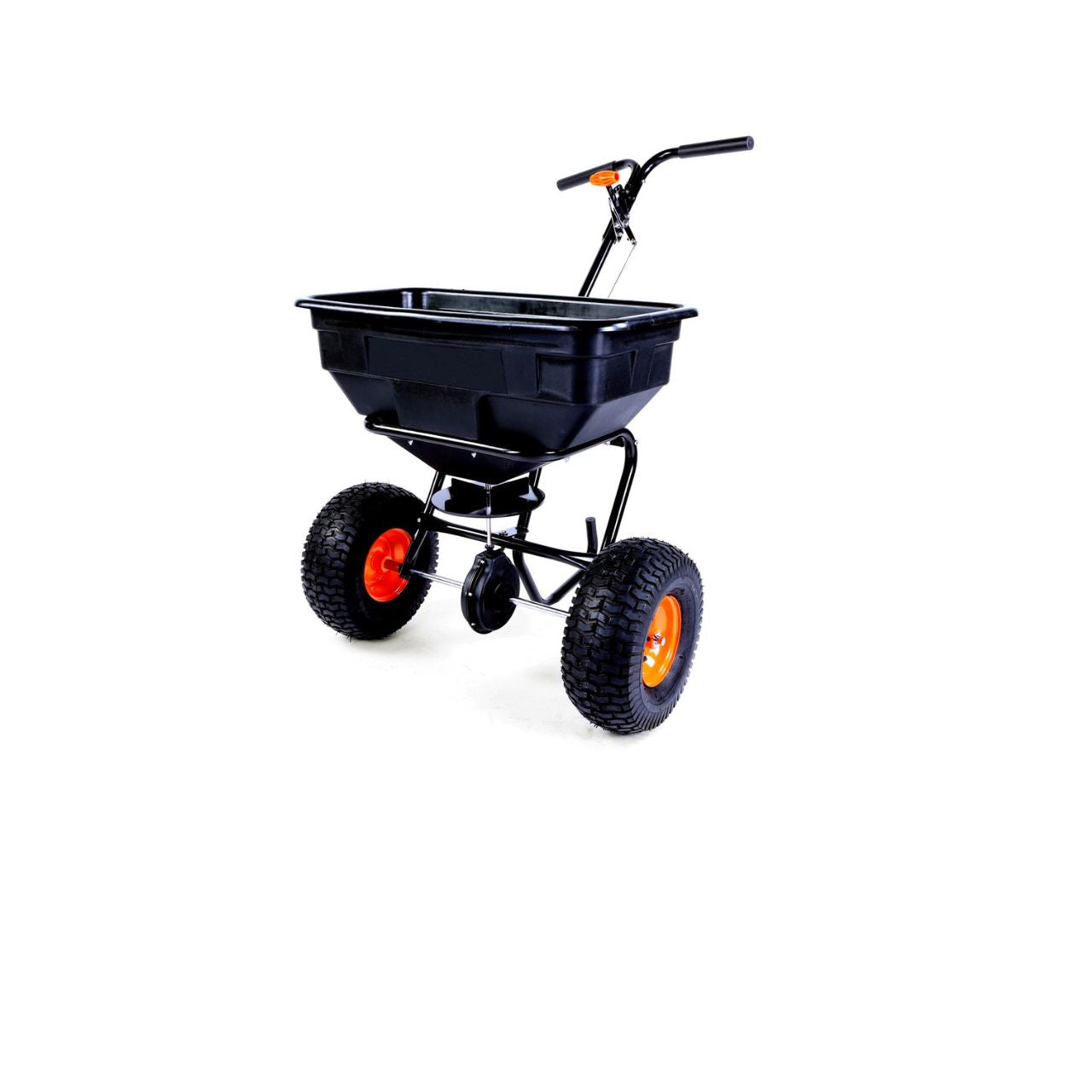
Everything your lawn needs

More articles about lawn care
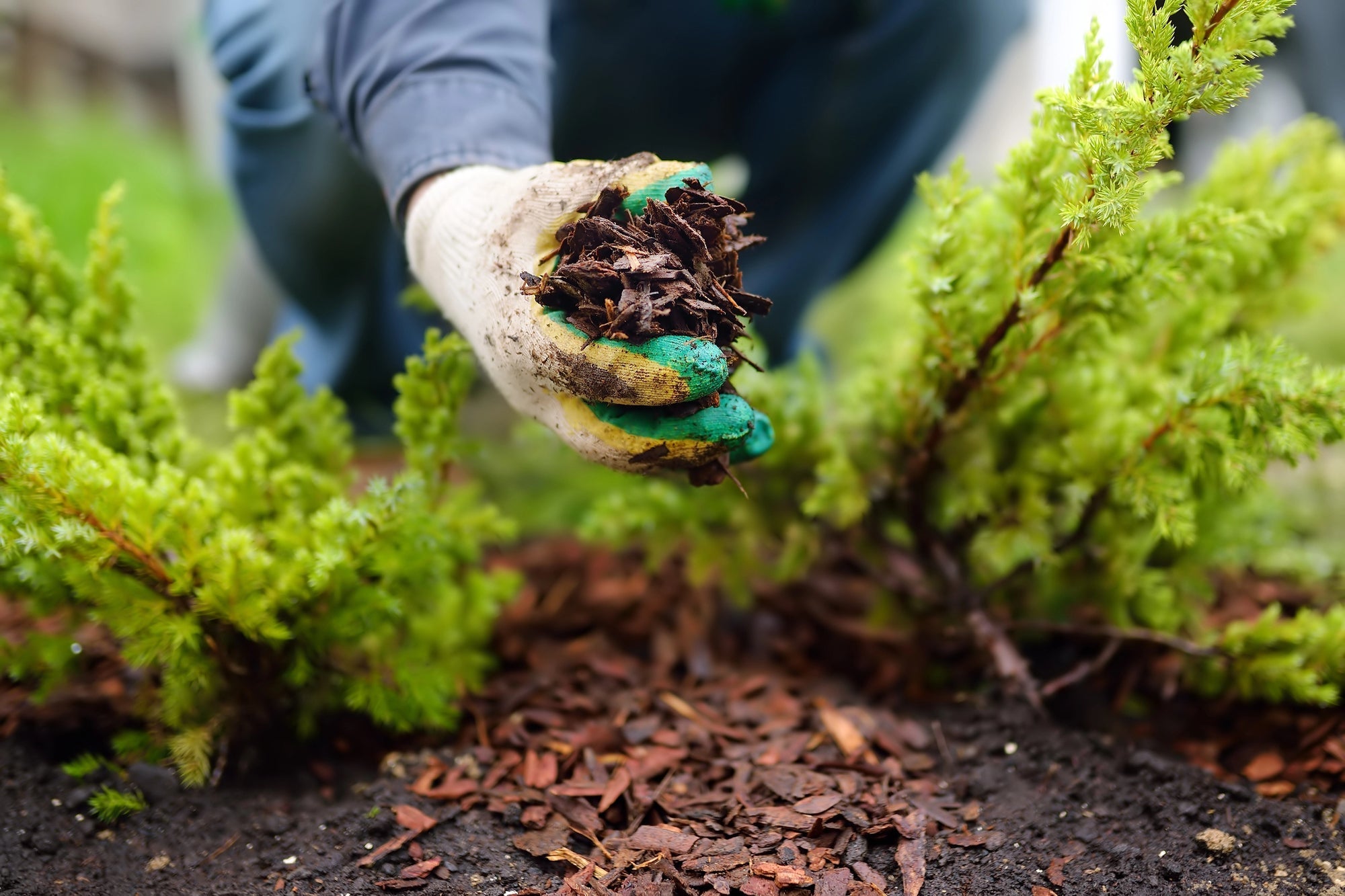
Mulchen mit Pinienrinde: So nutzt du organischen Mulch, um Unkraut zu verhindern
Das Mulchen mit Pinienrinde gehört zu den effektivsten Methoden im modernen Gartenbau und in der nachhaltigen Landwirtschaft. Dabei wird eine Schicht Mulchmaterial auf die Bodenoberfläche aufgebrac...
Bodenverbesserung im Garten: So verbesserst du deinen Gartenboden im Frühjahr für gesunde Pflanzen
Inhaltsverzeichnis Warum Bodenverbesserung im Garten im Frühjahr so wichtig für einen gesunden Gartenboden ist Gartenboden nach dem Winter prüfen: Bodenstruktur, Verdichtung und Bodenart erke...
Richtig Düngen im Garten: Schritt für Schritt erklärt
Inhaltsverzeichnis Warum Düngen im Garten so wichtig ist Bodenanalyse: Grundlage für die richtige Düngung Organische vs. mineralische Dünger: Was ist besser? Kompost, Hornspäne & Co.: Organi...


