
Caring for your lawn in autumn is one of the most important factors in achieving a thick, resilient lawn the following year. Many gardeners underestimate this phase and simply leave the lawn to its own devices — and that's a mistake. Autumn offers ideal conditions: mild temperatures, adequate moisture, and soil that is still warm. In this FUXTEC Garden Guide, we walk you through how to prepare your lawn properly, step by step.
Why Autumn Is the Most Important Season for Lawn Care
In autumn, above-ground growth slows down whilst the plant directs its energy towards the roots. This is precisely the advantage: actions such as overseeding, fertilising, or soil aeration have a more lasting effect than the same work carried out in spring.
At FUXTEC, we've found that a well-prepared lawn comes through winter significantly more robustly and grows back thicker and faster in spring.
Clearing and Preparing Your Lawn
Before you begin any further treatment, give your lawn a thorough clear-out. Remove fallen leaves, twigs, and plant debris. These block light, air, and water, and encourage disease.
At the same time, you'll reduce the so-called thatch layer — a build-up of dead organic material that inhibits healthy growth.
Give your lawn exactly the care it really needs right now
Whether it's scarifying, overseeding, fertilising, or regular upkeep in between: the FUXTEC Lawn Care collection has the right tools and products to help you strengthen your lawn and keep it in great shape all year round. Explore the full range now and find exactly what your garden needs.
Ideal for these lawn care steps
Scarifying Your Lawn in Autumn
Scarifying is one of the most important treatments you can carry out. It removes the thatch layer and loosens the soil, allowing air, water, and nutrients to reach the roots more effectively.
After scarifying, the lawn may look sparse — but don't worry, that's perfectly normal. Under good conditions, it will regenerate noticeably thicker within just a few weeks.
Aerating and Improving Soil Structure
For compacted soils in particular, aeration is well worth the extra effort. Small holes are made in the surface, significantly improving drainage and permeability.
Applying a light topdressing of horticultural sand after aerating can improve soil structure in the long term and help reduce waterlogging.
Overseeding Your Lawn in Autumn
The Right Time
Overseeding works best whilst the soil temperature remains above 10 °C. In the UK, this is typically between mid-September and mid-October.
How to Do It
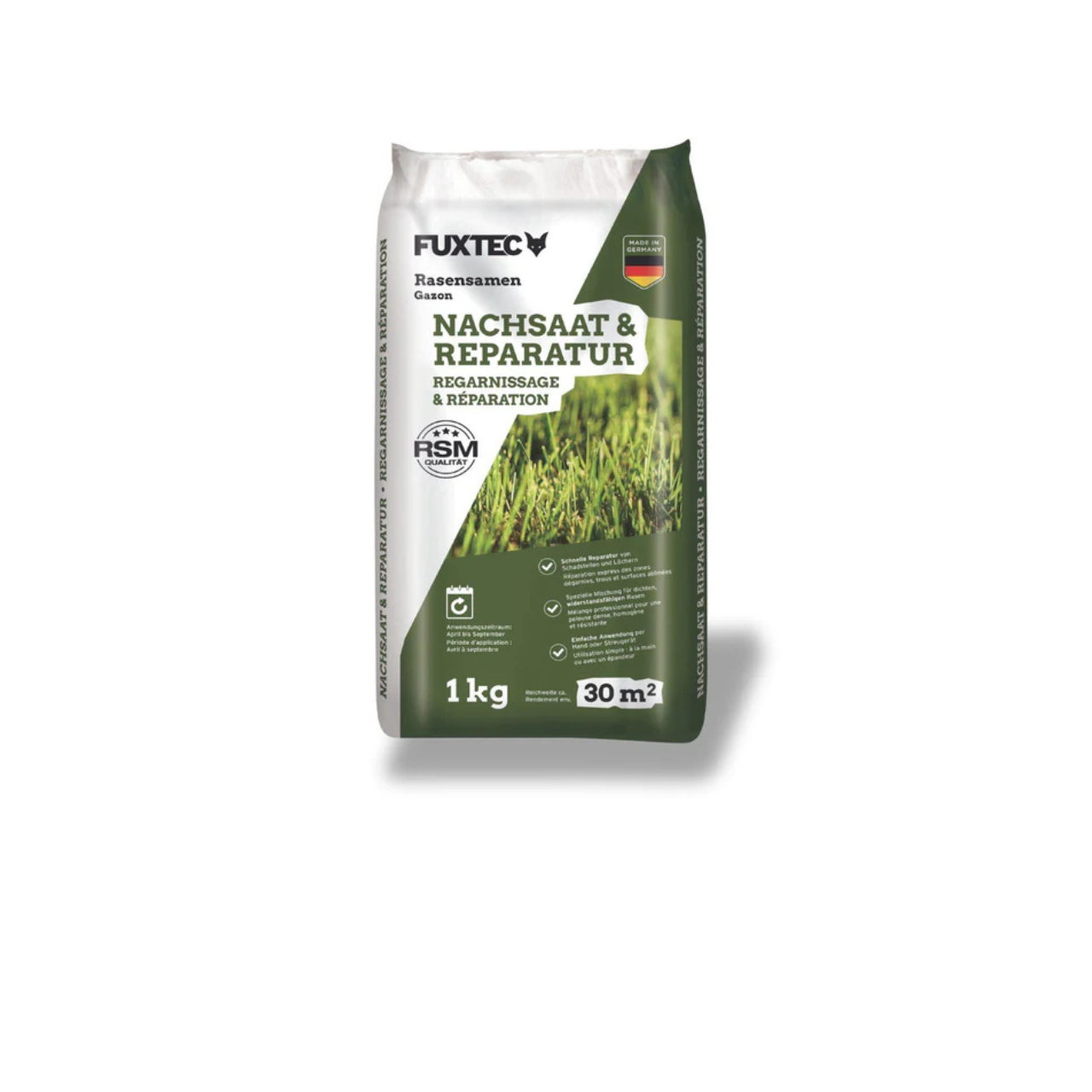
Spread the seed evenly across the surface — ideally using a spreader. Then gently press the seed into the soil and water carefully.
It's important to keep the soil consistently moist during the first few days so that germination can take place reliably.
Fertilising Your Lawn in Autumn
Autumn fertilising is quite different from what you'd apply in spring. At this time of year, the focus is not on promoting growth but on building resilience.
A good autumn lawn fertiliser contains less nitrogen and more potassium and phosphorus. These nutrients strengthen the cell structure and encourage root development.
Removing Moss and Weeds
Moss commonly develops in damp, shaded areas with poor air circulation. It can be treated effectively using iron sulphate-based products, which are widely available in UK garden centres.
Autumn is also an excellent time to tackle weeds, as they are still actively growing and absorb treatments more readily.
Final Steps Before Winter
Keep on top of lawn maintenance right up until the first frost. Continue mowing regularly, but avoid cutting too short — a height of around 4 to 5 cm is ideal going into winter.
Avoid walking on the lawn when it's frosty or waterlogged. Doing so can cause lasting damage to the turf.
Common Mistakes to Avoid
Overseeding too late in the season is one of the most frequent errors. Once temperatures drop too low, seeds will no longer germinate reliably.
Overwatering can also be counterproductive. Waterlogged soil encourages disease and weakens the grass plants.
Tools and Products for Autumn Lawn Care
You don't need a great deal of kit for effective autumn lawn care, but having the right equipment makes a real difference. A scarifier, a lawn spreader, and a suitable autumn fertiliser are the essential basics.
Buy FUXTEC Autumn Lawn Fertiliser and Lawn Spreader
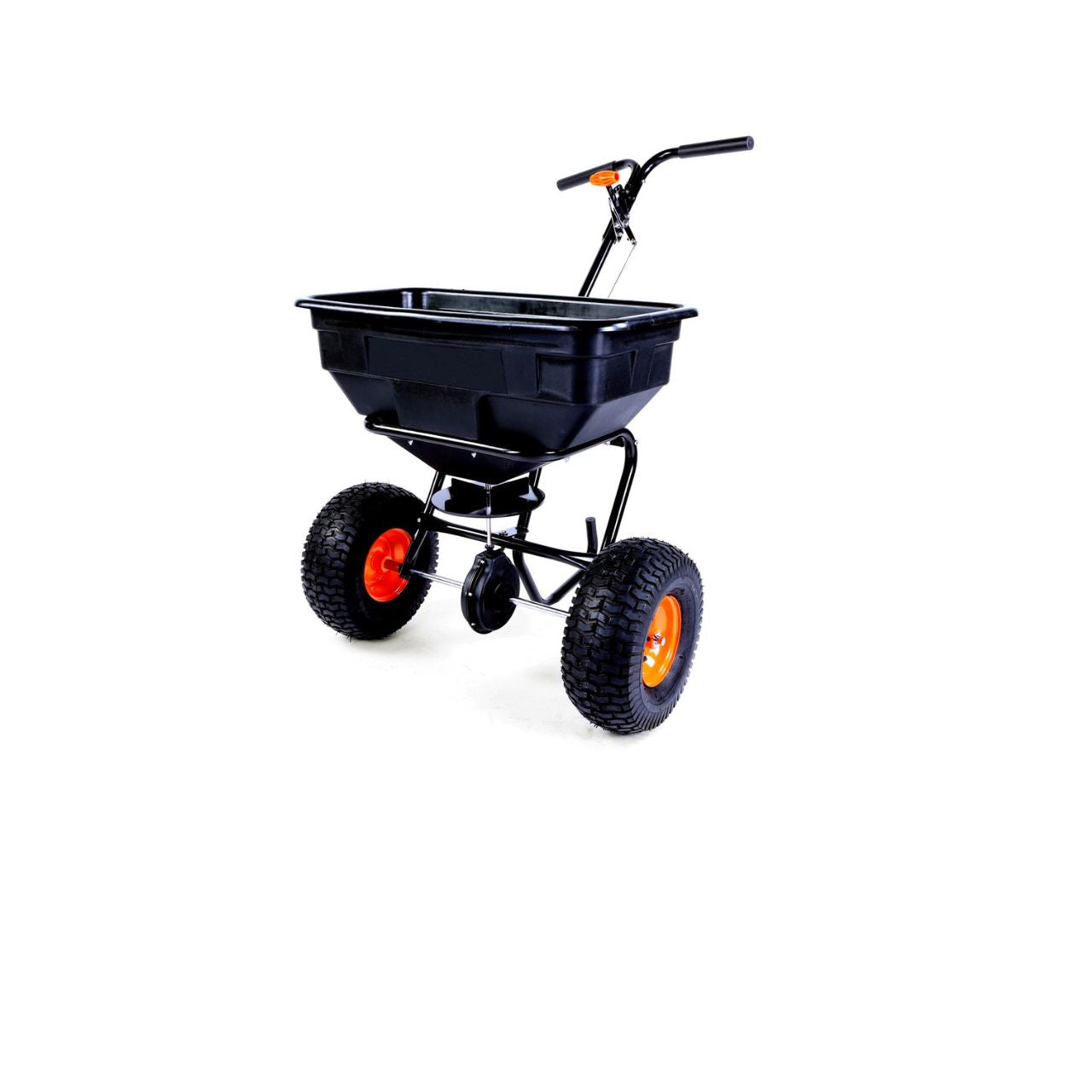
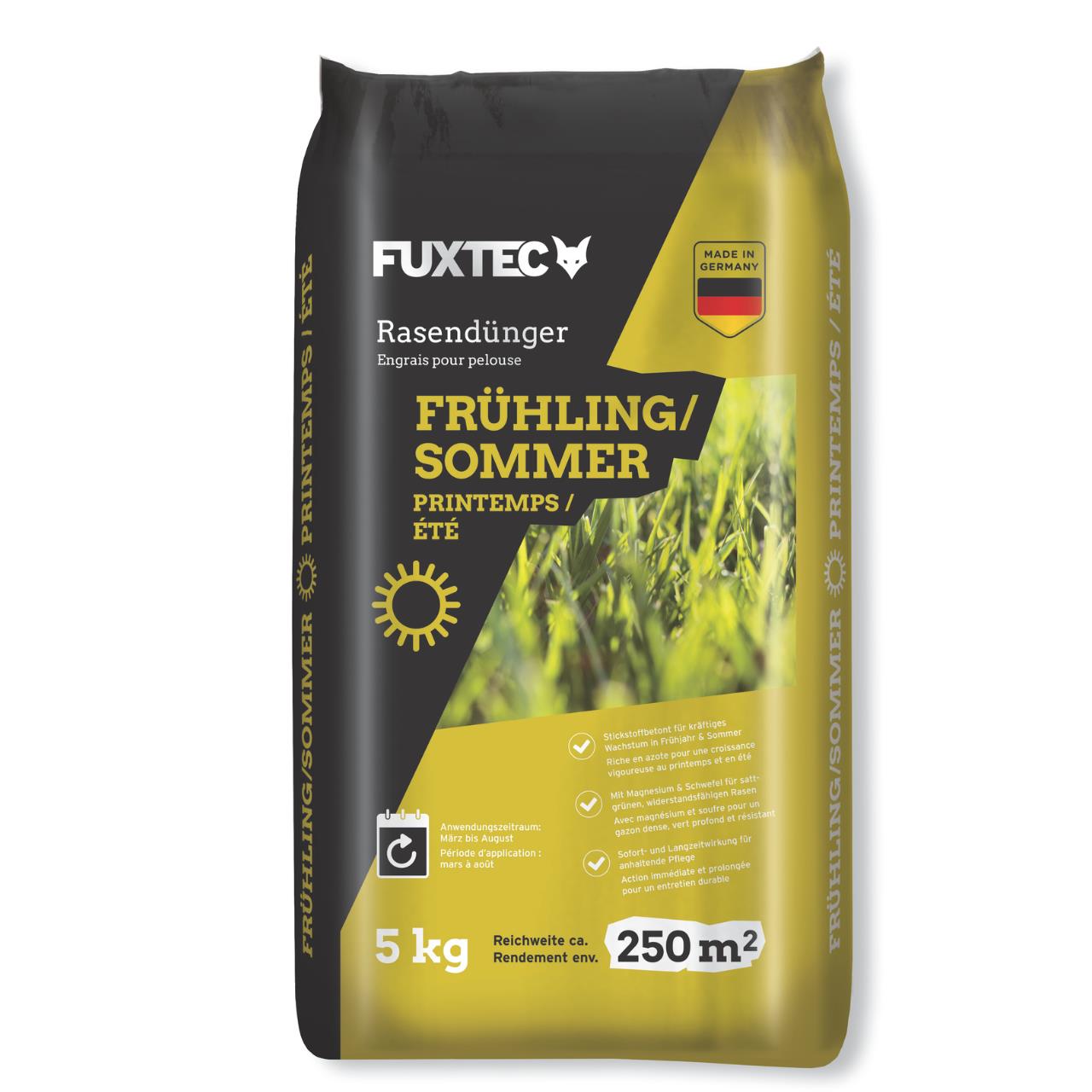
If you want your lawn to come through autumn and winter strong and healthy, it's not just the right fertiliser that matters — it's also how you apply it. With the FUXTEC Autumn Lawn Fertiliser FX-RDH10 and the matching lawn spreaders, you'll achieve a clean, even, and far more efficient approach to lawn care.
The winning combination for a resilient lawn
The FUXTEC Autumn Lawn Fertiliser FX-RDH10 is formulated specifically for the demands of the cooler season. Its potassium-rich formula supports resistance to frost and wear, whilst the organically bound nitrogen feeds the lawn in a sustained, measured way. The fine granule structure also makes it easy to spread evenly across the surface.
This is exactly where the FUXTEC lawn spreaders come into their own. Rather than scattering fertiliser by hand and risking an uneven application, you can distribute it in neat, consistent passes across the lawn. This helps you avoid over-fertilising, bare patches, and unnecessary wastage — and on larger lawns, it's not only more convenient, it's a much more precise solution overall.
With the right tools, you can give your lawn targeted care and prepare it thoroughly for the colder months ahead.
If you follow through on the key steps consistently, your lawn will be noticeably thicker, healthier, and more resilient come spring — and that's exactly what a well-planned autumn care routine is all about.
Entdecke unsere Auswahl an Gartengeräten
Alles, was dein Rasen braucht


Weitere Beiträge zum Thema Rasenpflege

Mulchen mit Pinienrinde: So nutzt du organischen Mulch, um Unkraut zu verhindern
Das Mulchen mit Pinienrinde gehört zu den effektivsten Methoden im modernen Gartenbau und in der nachhaltigen Landwirtschaft. Dabei wird eine Schicht Mulchmaterial auf die Bodenoberfläche aufgebrac...
Bodenverbesserung im Garten: So verbesserst du deinen Gartenboden im Frühjahr für gesunde Pflanzen
Inhaltsverzeichnis Warum Bodenverbesserung im Garten im Frühjahr so wichtig für einen gesunden Gartenboden ist Gartenboden nach dem Winter prüfen: Bodenstruktur, Verdichtung und Bodenart erke...
Richtig Düngen im Garten: Schritt für Schritt erklärt
Inhaltsverzeichnis Warum Düngen im Garten so wichtig ist Bodenanalyse: Grundlage für die richtige Düngung Organische vs. mineralische Dünger: Was ist besser? Kompost, Hornspäne & Co.: Organi...


