





Gartenpflege
How to Remove a Tree Stump: Methods & Tips
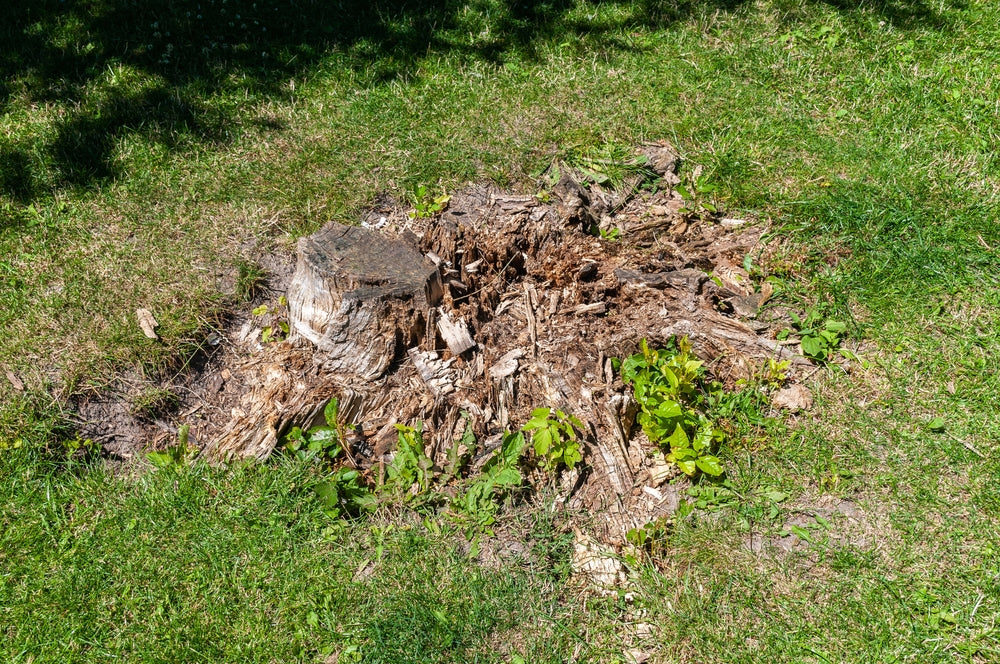
When a stump is left behind after felling a tree, it quickly becomes a nuisance: it gets in the way of your lawn, sends up new shoots, attracts fungi, and blocks any plans to redesign the space. To remove a tree stump, you have several methods to choose from — from a stump grinder to digging it out or simply letting it rot. The right technique depends on the size, location, and soil, as well as how much time and effort you want to invest. FUXTEC has the tools to help you work cleanly, safely, and efficiently: robust chainsaws, rotary tillers, and protective clothing.

Why Remove It at All? – Reasons, Risks & Costs
A remaining stump doesn't just take up space — it can become a trip hazard and the tree's roots may send up new growth. Damp, shaded wood encourages fungi; the area is difficult to mow; and any future redesign becomes more complicated. The cost of removing a tree stump ranges from nothing if you do it yourself, to a professional job with specialist equipment that can quickly add up. With large tree stumps, it's worth honestly weighing up the effort involved: hiring a machine or a contractor is sometimes more cost-effective than spending many hours with hand tools.
Removing a Tree Stump with a Grinder – Fast, Clean, and Thorough

The most effective solution is a stump grinder. Its rotating cutting wheel grinds the tree stump down layer by layer below ground level. For wide stumps with extensive root systems, stump grinding is the most practical approach — all that remains are fine wood chippings that you can remove or use as mulch. Access to the stump must be adequate, and you will need safety goggles and ear defenders. Many hire centres rent machines by the day; anyone who regularly needs to grind stumps may want to consider buying one. Once the work is done, the surface is level, and depending on the tree species, the hole can be filled with topsoil and re-seeded straight away.
Digging Out a Tree Stump – How to Do It Without a Machine
If you want to remove a tree stump without a grinder, the traditional approach uses a spade, axe, and saw. Start by clearing the area around the stump and marking out a working circle. Then loosen the soil and expose the first thick roots. A useful rule of thumb is: dig out the roots all the way around, so that all the main load-bearing roots are visible and can be cut. With deep-rooting species you will need to go deeper than expected; with shallow-rooting types a wide but shallower ring is usually sufficient. Once the diameter exceeds around 30 cm, the physical effort increases noticeably, but with a systematic approach it is achievable: cut thin roots with a hand saw, and sever thicker ones with a chainsaw or sharp axe. Always wear cut-resistant gloves. Keep cut surfaces free of soil and stones — if the chain hits sand or grit it will blunt quickly. Once the main roots are freed, the stump can be rocked back and forth to loosen it; sometimes a short lever made of wood or metal helps. If it is still firmly in place, a cable winch can provide additional pulling force. Remove any remaining roots, then backfill the hole and break up the soil with a rotary tiller to prepare it for replanting.

Burning Out a Tree Stump – Why This Method Is Risky
Some people have heard of the technique of drilling large, deep vertical holes into the stump and then burning it. The process works like this: you create each borehole using a drill and a large wood bit, fill the holes with potassium nitrate, mix it with kerosene to form a thick paste or use diesel or fire-starting paste, and ignite it after a waiting period. In theory this accelerates charring, but in practice you need to guard against wind, dry surroundings, and local regulations — and the fumes are often harmful to the environment. Even where open fires are permitted, the risks remain: smouldering embers, smoke, and damage to the soil. This method is therefore rarely suitable for residential gardens and well-kept borders; safer alternatives are a much better choice.
A Note on Safety and the Legal Position
Lighting fires in the garden, using kerosene or mixtures containing potassium nitrate in boreholes — all of this is hazardous and is prohibited in many areas. Open burning, diesel or fire-starting pastes, and similar approaches are not only potentially harmful to the environment, they also put people, animals, and structures at risk. In England and Wales, burning garden waste and using accelerants in residential areas can fall foul of local council by-laws and the Environmental Protection Act 1990. If in doubt, check with your local council first; better still, choose the safe, controllable method of mechanical or manual removal.
Speeding Up Decomposition – When You Want the Stump to Disappear Naturally
If you would prefer to break down an old tree stump biologically, you can kick-start composting. The best approach is to drill holes into the stump in a grid pattern; multiple holes in the stump increase the surface area. You then fill the cavities with compost accelerator, organic material or an organic general fertiliser. Those who want to avoid chemicals can additionally cover the stump with moist mulch enriched with microorganisms from compost. This activates fungal spores and other microorganisms that attack lignin and cellulose, gradually breaking down the wood.
Products such as Rootblast or similar stump-removal treatments can supplement this process; however, the natural route is more controlled and kinder to the soil. A covering of compost retains moisture and temperature, and once the wood starts to rot, you can eventually break it apart with the blunt side of an axe and lift it from the ground. Depending on the location, climate, and tree species, this can take years without any additives; with consistent care and moisture the waiting time is significantly reduced. The goal is not just to make the stump disappear, but to keep the resulting nutrients in the soil rather than carting them away.
Getting Rid of Tree Roots for Good – What Remains After the Stump
Removing the tree roots is often the second stage. Even once the visible part is gone, underground roots can lift paths, produce suckers, or disturb borders. Work methodically, section by section — expose the thick roots and sever them at several points. With deep-rooting trees, a narrow but deep trench is worthwhile, whilst shallow root networks need to be opened up over a wider area. In heavy soil it helps to use a fork to create air pockets so that water and air can penetrate; this causes remaining pieces to rot more quickly. If you plan to use the area again, fill it with good-quality topsoil and break it up with a rotary tiller — this makes the surface stable and prevents it from sinking later.
Which Method to Choose — and How FUXTEC Can Help
With fresh wood, good access, and limited time, a grinder is unbeatable; using a stump grinder is straightforward to plan, and the area is ready to use immediately afterwards. With medium-sized stumps and a willingness to put in the physical work, digging out delivers a direct result without chemicals or open flames. If patience is available, letting it rot is a quiet, soil-friendly solution. Whatever your approach, FUXTEC tools have you covered: a chainsaw lets you make relief cuts or reduce the stump's height, rotary tillers prepare the soil, and sturdy gloves and cut protection keep you safe. And if you are planning to remove a tree stump in order to redesign the area, remember that thorough preparation saves a great deal of trouble later on — especially with tree stumps near paths, utilities, and borders.
Common Pitfalls — and How to Avoid Them
A common mistake is getting stuck in too quickly without properly opening up the soil first. If you do not expose the roots, you are fighting against leverage forces you cannot see. Sawing close to the ground requires patience; soil, sand, and stones in the cutting zone will make the chain blunt quickly. Also make sure water does not collect in the hole, as this will cause the surrounding soil to wash away. After stump grinding, compact the backfill well and check again after a few weeks: organic fill in particular tends to settle.
Results and Aftercare – Keeping the Area Stable
Once the tree stump is gone, the finishing touches begin: backfill the hole in layers, water it in, check the level after a few days, and loosen if needed. If you want to use the spot as a border straight away, the soil will benefit from good moisture retention and aeration; any remaining fine wood will then rot away without issue. For new lawns, a fine, crumbly seedbed gives the best start. If removing a tree stump has shown you just how much force a trunk can store, you will know that patience, a systematic approach, and good tools are half the battle — and with FUXTEC by your side, you can get the job done reliably.
Summary: How to Remove Your Tree Stump Safely
Whether you grind, dig out, or let the stump in your garden rot, the goal remains the same: to free up the area and make it usable again. For small stumps, manual work is often sufficient; for large tree stumps or extensive root systems, a grinder, cable winch, or block-and-tackle is considerably more efficient. For natural decomposition, drill holes into the stump in a grid pattern and fill them with calcium nitrate, organic fertiliser, or partially rotted compost. This encourages fungal spores and other microorganisms to break down the wood and return valuable nutrients to the soil.
Without any treatment it often takes eight to ten years for a tree stump to rot away completely. Those who want faster results can use stump grinding or aids such as fire-starting paste or stump-removal treatment — though these should be used with care. Sometimes it is worth integrating the stump creatively in situ. With the right method, careful planning, and the appropriate FUXTEC equipment — such as a chainsaw, rotary tiller, or protective clothing — removing the tree stump can be done efficiently, safely, and sustainably.
Everything for your garden

What is the fastest way to remove a tree stump?
A stump grinder is the fastest and most effective method, grinding the stump down layer by layer below ground level using a rotating cutting wheel. The entire process leaves only fine wood chippings that can be removed or used as mulch, and the area is immediately ready for reuse.
Can I remove a tree stump without hiring equipment?
Yes, you can dig out the stump manually using a spade, axe, saw, and hand tools by exposing the roots all the way around and cutting them systematically. This method requires more physical effort and time, but is achievable for stumps up to around 30 cm in diameter with a methodical approach.
How long does it take a tree stump to rot naturally?
Without any treatment, it typically takes eight to ten years for a tree stump to rot away completely, depending on location, climate, and tree species. This process can be significantly accelerated by drilling holes and filling them with compost accelerator, organic material, or organic fertiliser to encourage fungal and microbial breakdown.
Is it safe to burn out a tree stump?
Burning a stump by drilling holes, filling them with potassium nitrate and kerosene, and setting them alight is risky and often prohibited in residential areas. This method poses hazards including smouldering embers, smoke, soil damage, and risks to people and animals; in England and Wales it can also breach local council by-laws and the Environmental Protection Act 1990.
What should I do with the hole after removing the stump?
Backfill the hole in layers with good-quality topsoil, water it in, and check the level after a few days as organic fill tends to settle. If you plan to replant, use a rotary tiller to break up and aerate the soil, which will help establish new growth and prevent the surface from sinking later.
What tools do I need to dig out a tree stump manually?
You will need a spade, axe, sharp saw or chainsaw, and cut-resistant gloves to work safely. A wooden or metal lever, cable winch, or block-and-tackle can also help provide additional pulling force to rock the stump loose once the main roots have been severed.
Why do tree stumps send up new shoots?
Tree roots naturally attempt to regenerate and produce new growth after felling. If left untreated, a stump will send up shoots, becomes a trip hazard, and attracts fungi in damp conditions, making the area difficult to maintain and redesign.
More articles about garden care
Mulchen mit Pinienrinde: So nutzt du organischen Mulch, um Unkraut zu verhindern
Das Mulchen mit Pinienrinde gehört zu den effektivsten Methoden im modernen Gartenbau und in der nachhaltigen Landwirtschaft. Dabei wird eine Schicht Mulchmaterial auf die Bodenoberfläche aufgebrac...
Bodenverbesserung im Garten: So verbesserst du deinen Gartenboden im Frühjahr für gesunde Pflanzen
Inhaltsverzeichnis Warum Bodenverbesserung im Garten im Frühjahr so wichtig für einen gesunden Gartenboden ist Gartenboden nach dem Winter prüfen: Bodenstruktur, Verdichtung und Bodenart erke...
Richtig Düngen im Garten: Schritt für Schritt erklärt
Inhaltsverzeichnis Warum Düngen im Garten so wichtig ist Bodenanalyse: Grundlage für die richtige Düngung Organische vs. mineralische Dünger: Was ist besser? Kompost, Hornspäne & Co.: Organi...


